Fionn's Thumb: The Taste of Prophecy
circa 200 BCE — the mythic age of the Fianna · The River Boyne, and wherever the Fianna traveled throughout Ireland
Contents
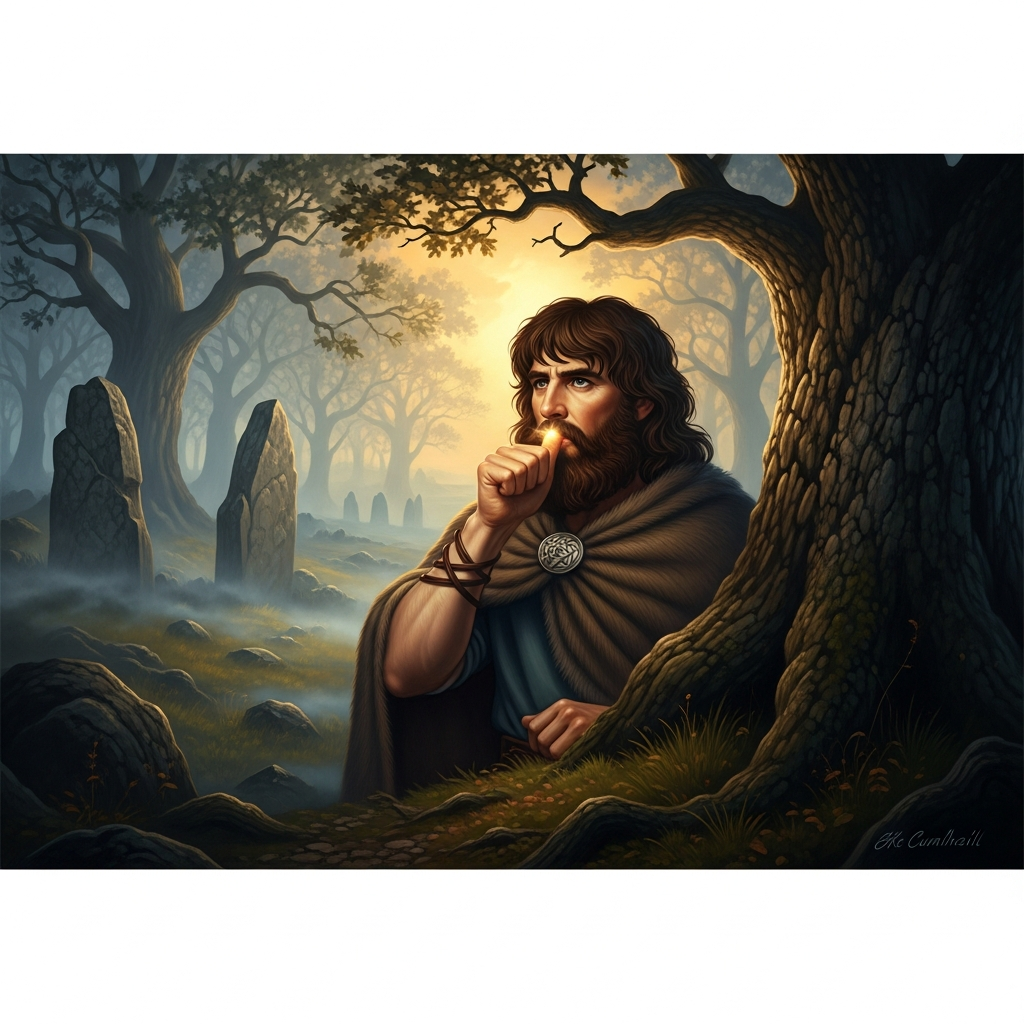
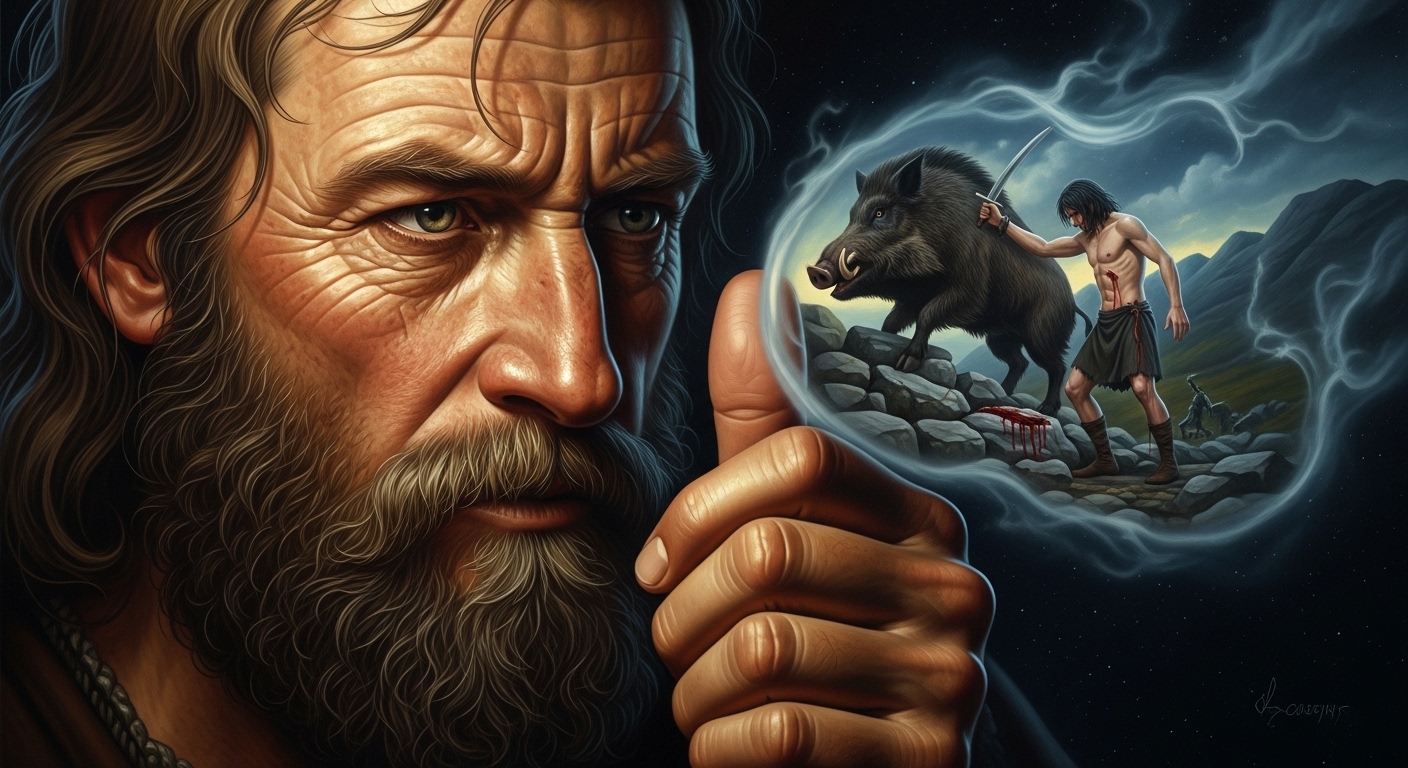
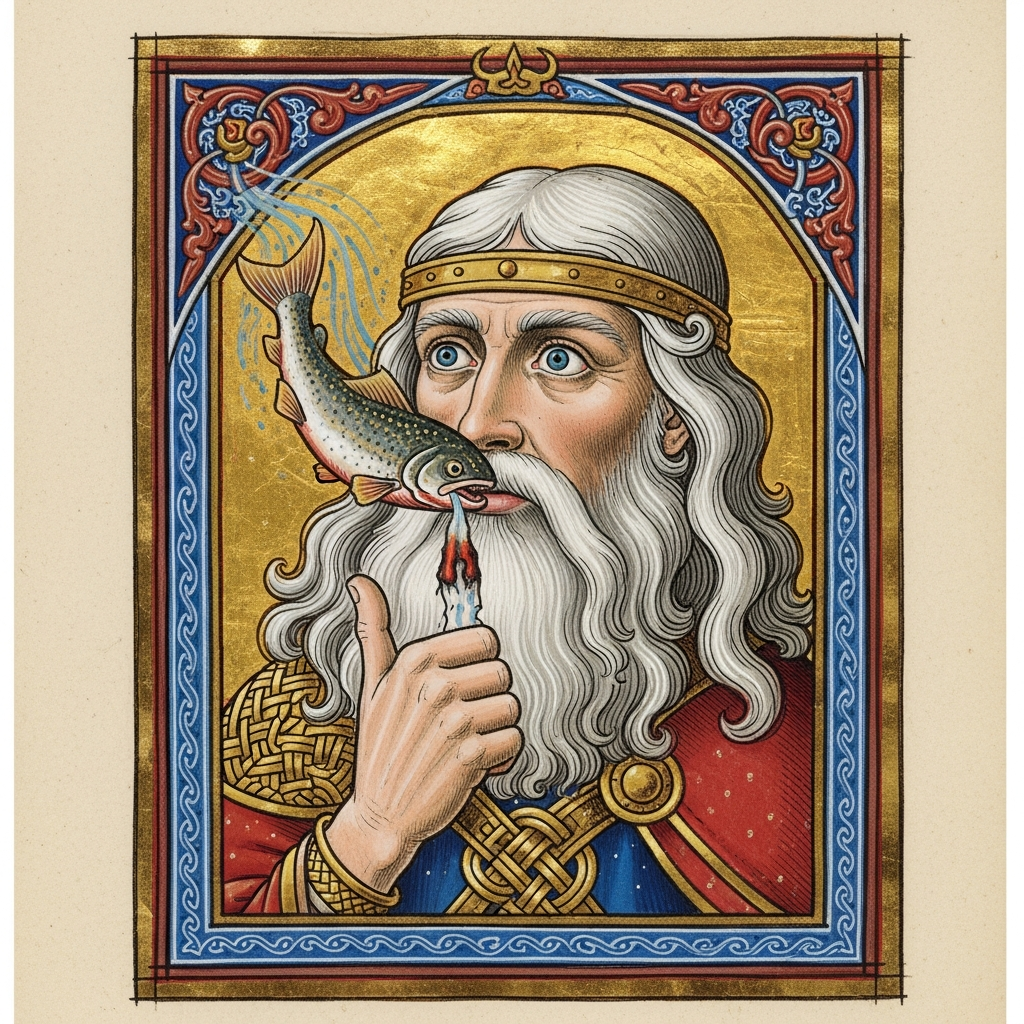
Throughout his long career as captain of the Fianna, whenever Fionn Mac Cumhaill needs knowledge he cannot access any other way, he puts his thumb to his lips and the River Boyne's wisdom flows through him — the permanent residue of a moment of accidental grace.
- When
- circa 200 BCE — the mythic age of the Fianna
- Where
- The River Boyne, and wherever the Fianna traveled throughout Ireland
He does not invoke it casually.
The thumb goes to the lips at specific moments — at the edge of a decision whose stakes justify the knowledge the knowledge costs. Not tactical questions, not logistical ones: those Fionn handles with the competence of a man who has been running Ireland’s most effective military force for thirty years. The thumb is for the things that matter most, the questions where an ordinary man would guess and a great man still cannot see clearly, where only the residue of the Salmon’s wisdom makes the difference.
The mechanism is called teinm laída — illumination by song — in the bardic tradition. Fionn’s version is simpler: the thumb between the lips, the pause, the opening of the channel that the burnt skin of Finnegas’s salmon opened on the morning by the River Boyne. The channel is thirty years old and still clear. The knowledge that flows through it is not personal intelligence — it is borrowed cosmic intelligence, the intelligence of a fish that ate hazelnuts from the nine trees of wisdom at the source of the Boyne for a thousand years.
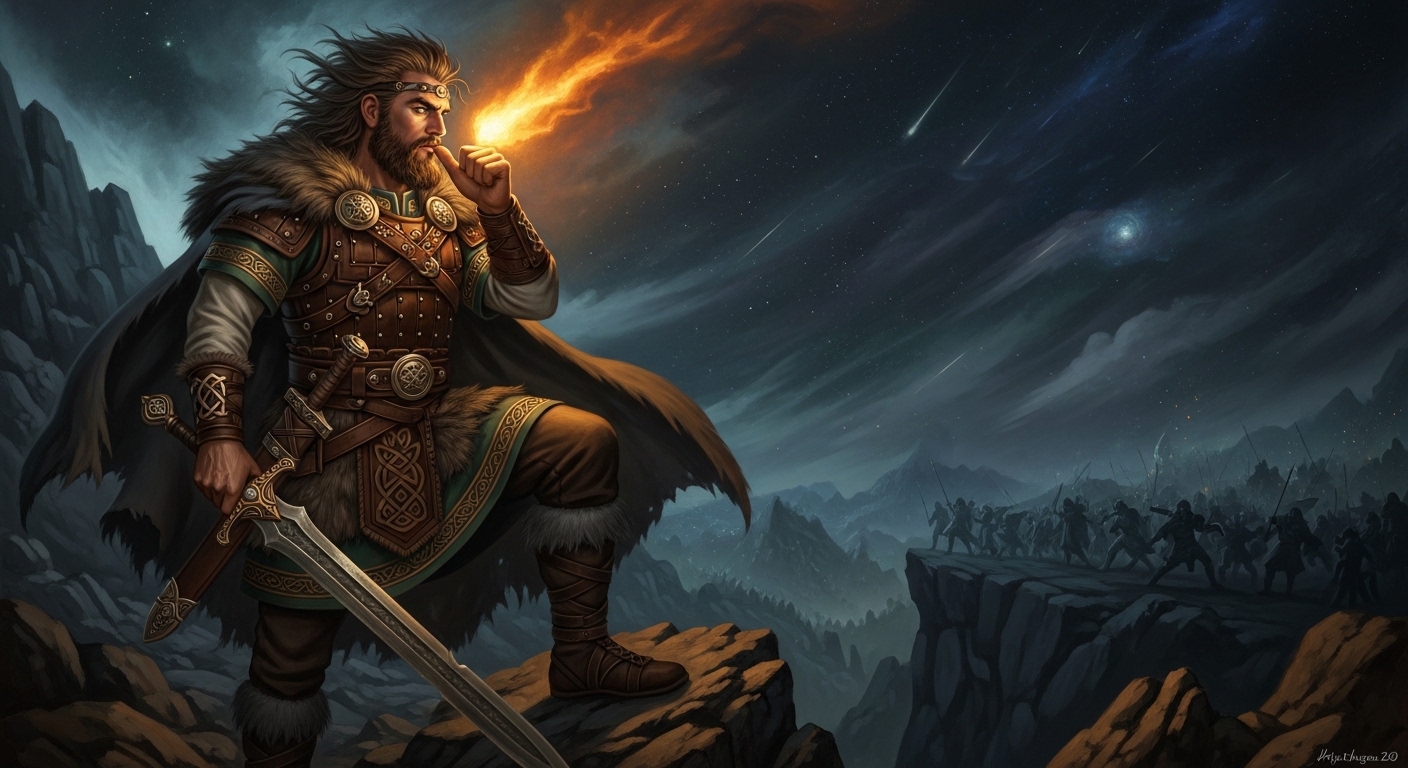
He uses it in battle to identify an enemy’s weak point before the fighting begins. He uses it in diplomacy to know, before the talking starts, whether the man across the table is acting in good faith. He uses it in the Fianna’s judgments to find the truth in cases where everyone is lying. Each use is a small expenditure of something that does not renew itself: the residue in the thumb is not infinite, though it is large.
The old stories show him using it sparingly and decisively, which is the mark of a man who understands his resources. It does not give him omniscience — he makes mistakes, he is deceived, he lets Diarmuid and Gráinne go for sixteen years without catching them, which is either a failure of intelligence or a deeper knowledge that catching them would cost more than it is worth. The thumb does not answer questions the questioner is not ready to hear correctly.
In one of the most poignant uses, he sees through his thumb the death of Diarmuid at Benbulben before it happens. He sees it clearly and goes to the hunt anyway. The prophetic knowledge does not come with the power to change what it shows. He stands over Diarmuid with the healing water and he knows what the water would do and he knows what he is choosing each of the three times he lets it fall, and the thumb does not make the choice for him.
This is the limit of the salmon’s wisdom: it shows, it does not decide. It illuminates the path and does not walk it. Fionn makes every choice himself, with full knowledge of the consequence, which is the most demanding kind of responsibility there is — not the responsibility of the ignorant man who didn’t know, but the responsibility of the man who saw clearly and chose anyway.
He dies — eventually, in whatever version kills him — with the thumb to his lips one last time, and the last thing the Salmon of the Boyne shows him is whatever the last thing is. The sources do not record it. Some things the thumb sees are for the thumb only.
Scenes
Echoes Across Traditions
Entities
- Fionn Mac Cumhaill
- The Salmon of Knowledge
- Finnegas
- The teinm laída
- Cormac Mac Airt
Sources
- Dáithí Ó hÓgáin, *Fionn mac Cumhaill: Images of the Gaelic Hero* (Gill and Macmillan, 1988)
- T.W. Rolleston, *Myths and Legends of the Celtic Race* (Harrap, 1911)
- Kuno Meyer, trans., *The Voyage of Bran Son of Febal* (David Nutt, 1895)