The Salmon of Knowledge
circa 200 BCE — the mythic age of the Fianna, Iron Age Ireland · The Pool of Fec on the River Boyne, County Meath, Ireland
Contents
A young boy called Fionn tends the fire for the poet Finnegas, who has spent seven years waiting to catch the Salmon of All Knowledge — and when the fish is finally caught, the knowledge flows not to the poet but to the boy.
- When
- circa 200 BCE — the mythic age of the Fianna, Iron Age Ireland
- Where
- The Pool of Fec on the River Boyne, County Meath, Ireland
His name is not yet Fionn when he comes to the river.
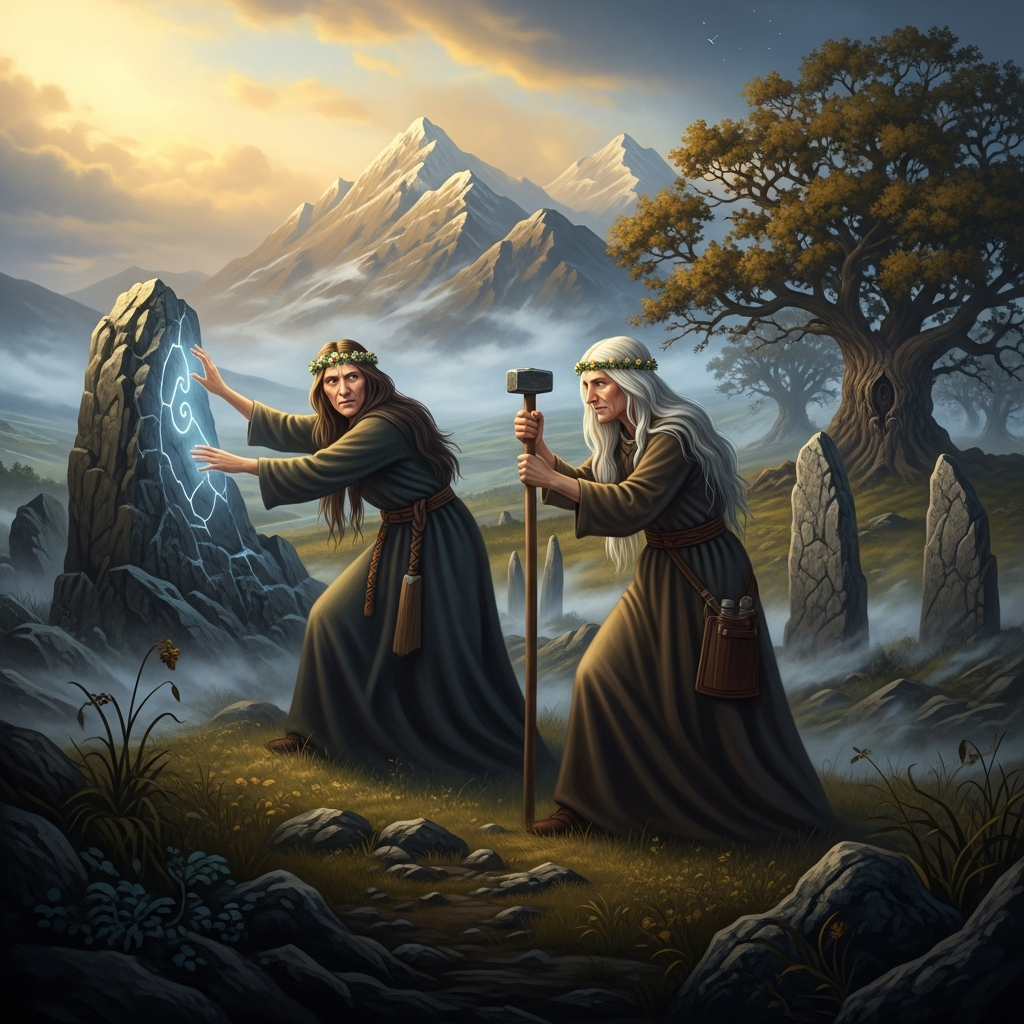
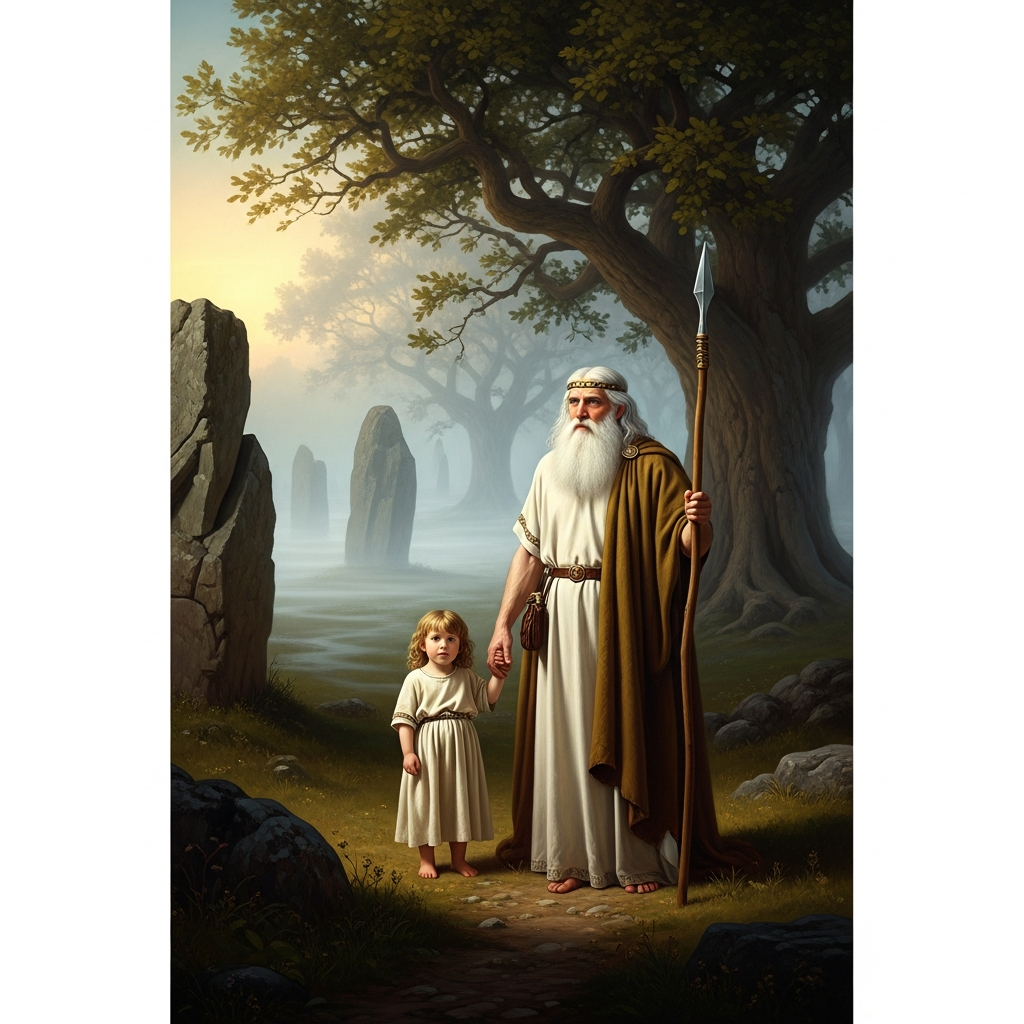
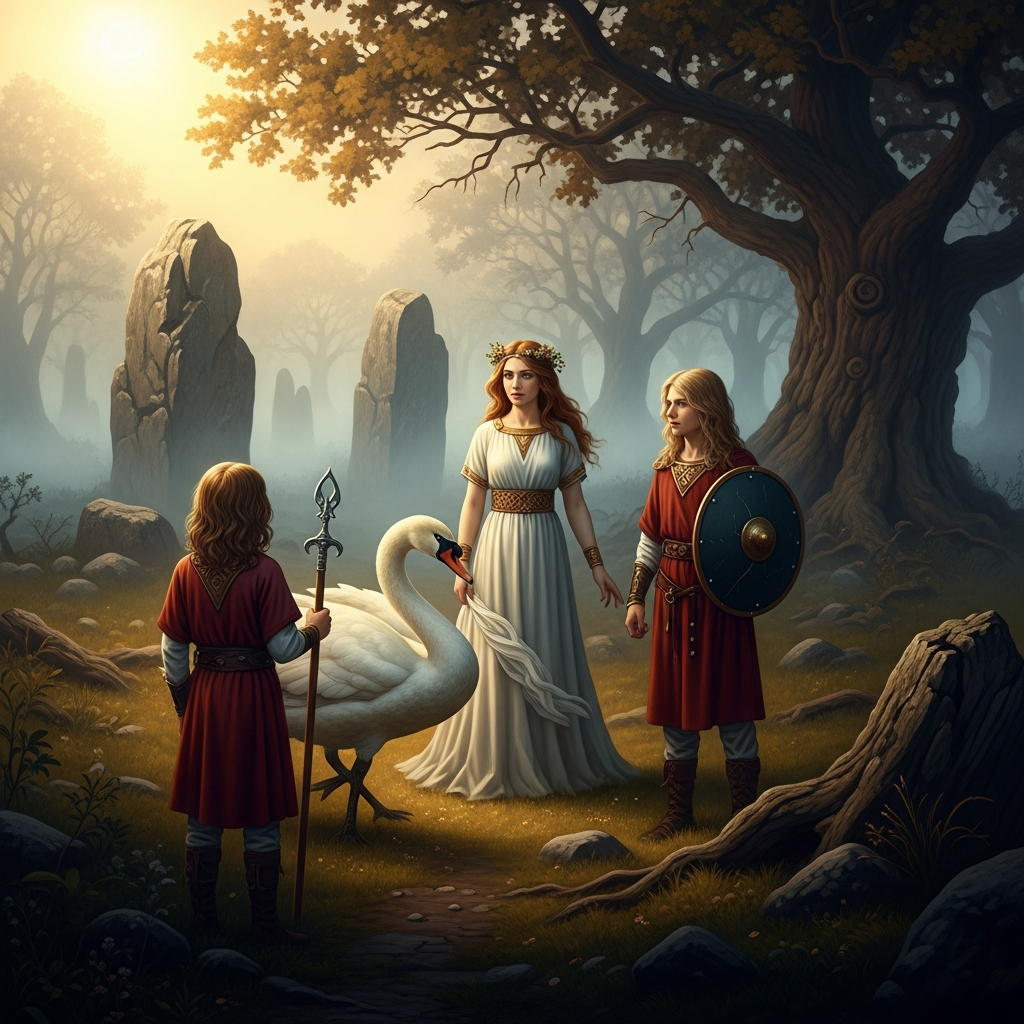
He is called Deimne — a name given to a fair-haired child by a mother who had to hide him, because his father was killed by enemies who would kill the son too if they found him. He has been raised by two women warriors in the woods, learning swordsmanship and running and swimming before he learned anything else. He is not yet the captain of the Fianna. He is not yet anything, except a boy with fair hair who is good with a blade and has run out of teachers in the forest.
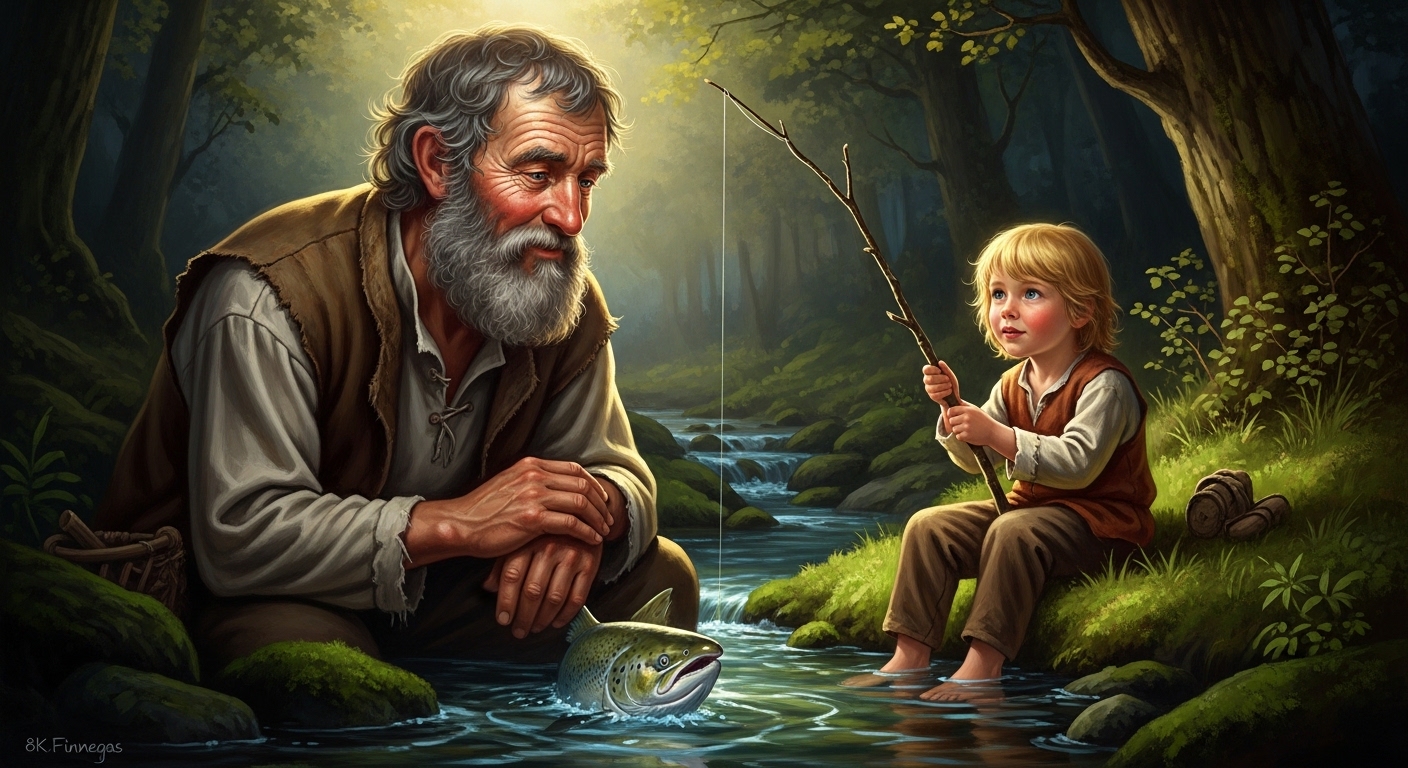
He comes to the River Boyne and finds the poet Finnegas sitting on the bank in the attitude of a man who has been sitting in the same spot for seven years.
Finnegas explains the situation without being asked. There is a salmon. The Salmon of Knowledge — in Irish, Eo Fis — which has lived in the pool of Fec since before anyone can remember, feeding on the hazelnuts that drop from the nine hazel trees of wisdom around the pool. Anyone who eats the Salmon of Knowledge will receive all the knowledge in the world. Finnegas has been trying to catch this salmon for seven years. He will catch it. He is certain he will catch it because a prophecy told him: it is his salmon.
The boy asks if he can stay and help.
Finnegas, looking at the fair-haired child, agrees. He sees nothing alarming here. The prophecy says the salmon is his. The boy will tend the fire.
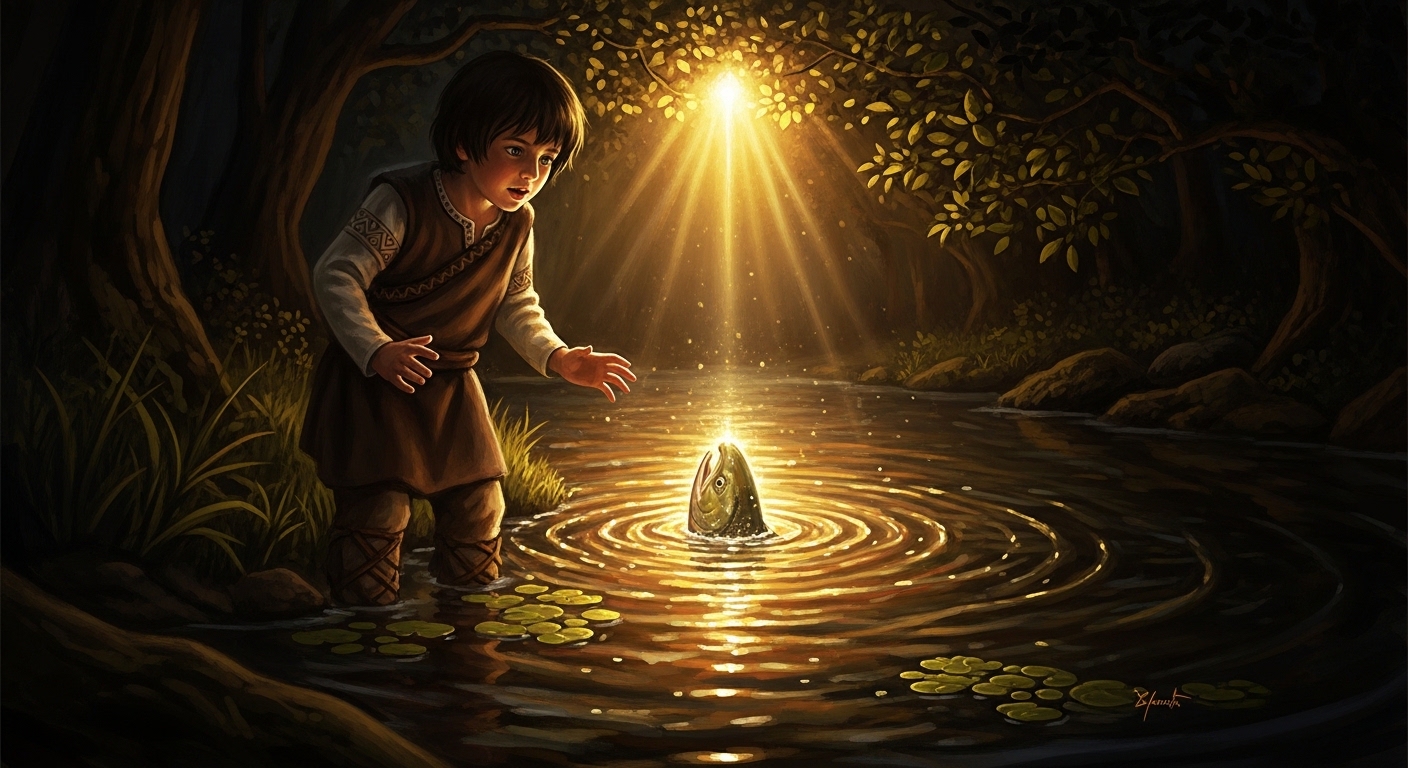
The salmon is caught on a morning so ordinary that Finnegas initially thinks it is a dream. It is simply there, in the net, the fish that has been in this pool since before the hazel trees were planted, bright as hammered silver, fat with seven years of wisdom-hazelnuts. Finnegas takes it to the bank with hands that tremble.
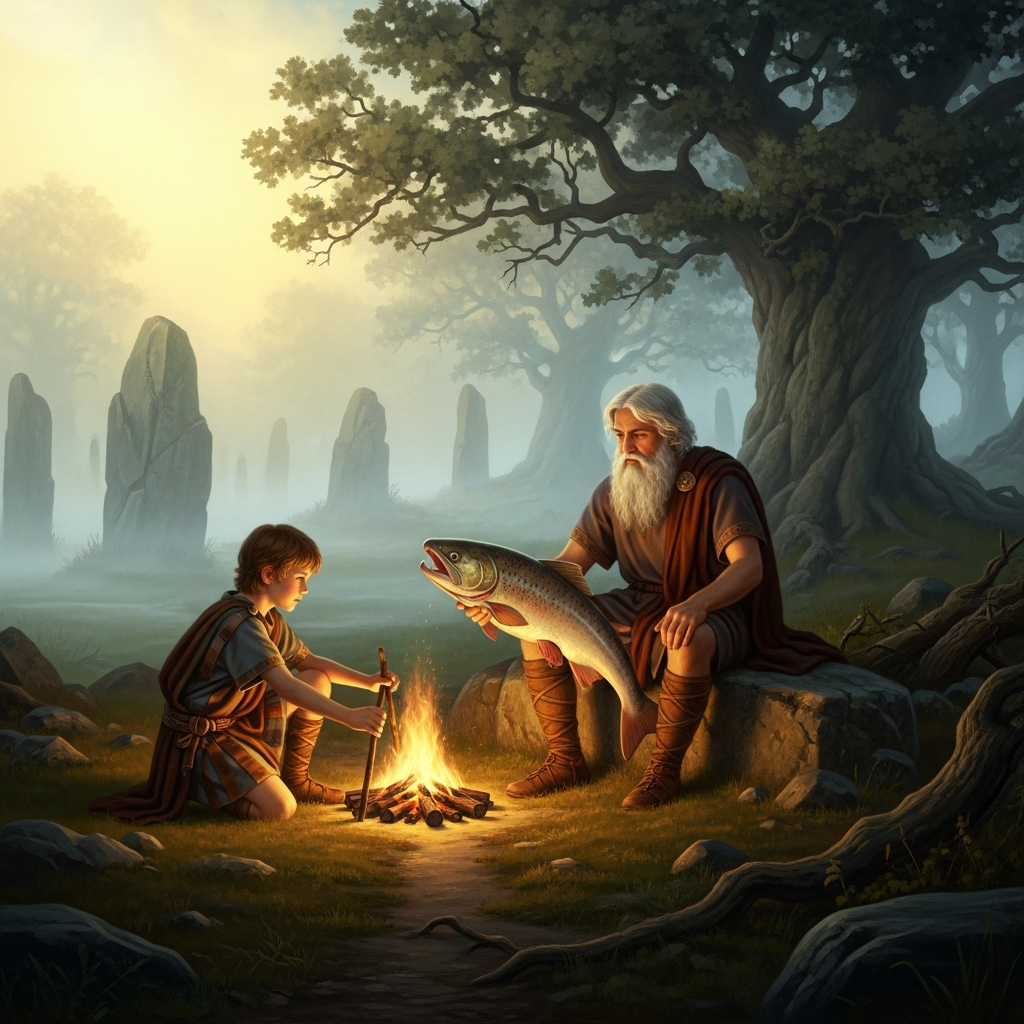
He cannot cook it himself. A man cannot cook and watch the fish and keep the fire simultaneously. He tells the boy to cook the fish over the fire and to bring it to him when it is done, and under no circumstances to eat any of it.
The boy cooks the salmon.
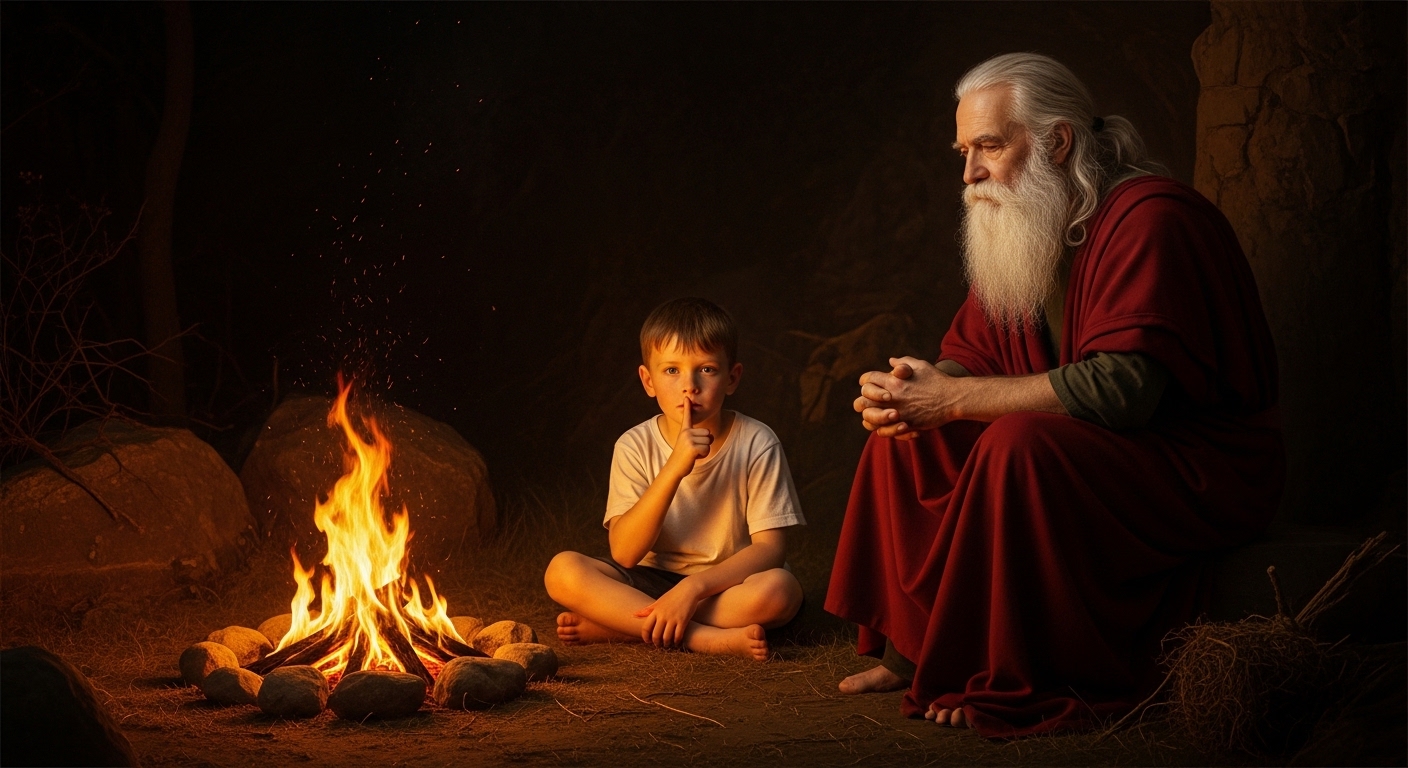
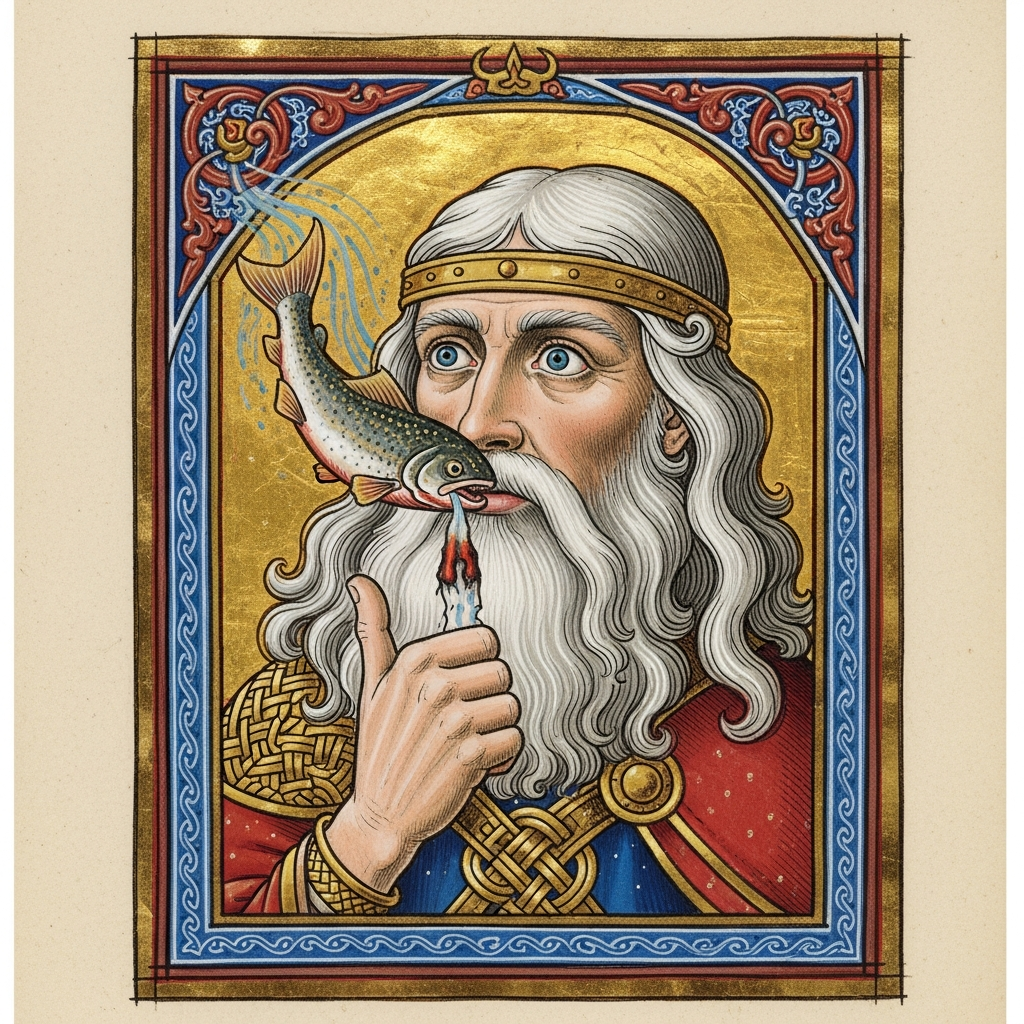
At some point in the cooking a blister rises on the skin of the fish. The boy presses the blister down with his thumb — a reflex, an ordinary cook’s gesture, the instinct of anyone tending a fire who sees a bubble in a skin that might burst and ruin the presentation. He presses it down.
His thumb burns. He puts his thumb in his mouth.
Finnegas comes to the fire and finds the boy sitting very still, thumb to lips, with an expression the old poet has never seen on a child’s face before — an expression of everything arriving simultaneously, the entire world’s coherence dropping into place at once, like a man who has been staring at a puzzle for years and suddenly sees not the pieces but the picture.
“Did you eat the fish?”
“No. I burned my thumb. I put it in my mouth.”
Finnegas is quiet for a very long time. He looks at the salmon, still cooking. He looks at the boy. He has spent seven years on this bank because a prophecy told him the salmon would give him all knowledge. He realizes, sitting on the damp ground by the River Boyne, that prophets are specific about what they say and silent about what they mean. The prophecy said the salmon would be his to catch. It did not say the wisdom would be his to keep.
“Eat the rest,” he says. “The knowledge was meant for you.”
The boy eats the salmon. From that day forward, when he needs to know something he does not know, he puts his thumb to his lips and the knowledge comes. He becomes Fionn — the Fair, the Bright, the One Who Knows — and the Fianna of Ireland and the whole long arc of the Fenian Cycle flows from the taste of a burnt thumb on a morning by the River Boyne.
Finnegas watches the fair-haired boy walk away along the river and returns to his spot on the bank. The pool is still there. The hazel trees drop their nuts into the water in the long afternoon. He has nothing left to wait for and he goes on sitting there anyway, the way men do when they have organized their lives around a purpose that has already been fulfilled without them.
Scenes
Echoes Across Traditions
Entities
- Fionn Mac Cumhaill
- Finnegas
- The Salmon of Knowledge
- Deimne
Sources
- T.W. Rolleston, *Myths and Legends of the Celtic Race* (Harrap, 1911)
- Dáithí Ó hÓgáin, *Fionn mac Cumhaill: Images of the Gaelic Hero* (Gill and Macmillan, 1988)
- Jeffrey Gantz, trans., *Early Irish Myths and Sagas* (Penguin, 1981)