Contents
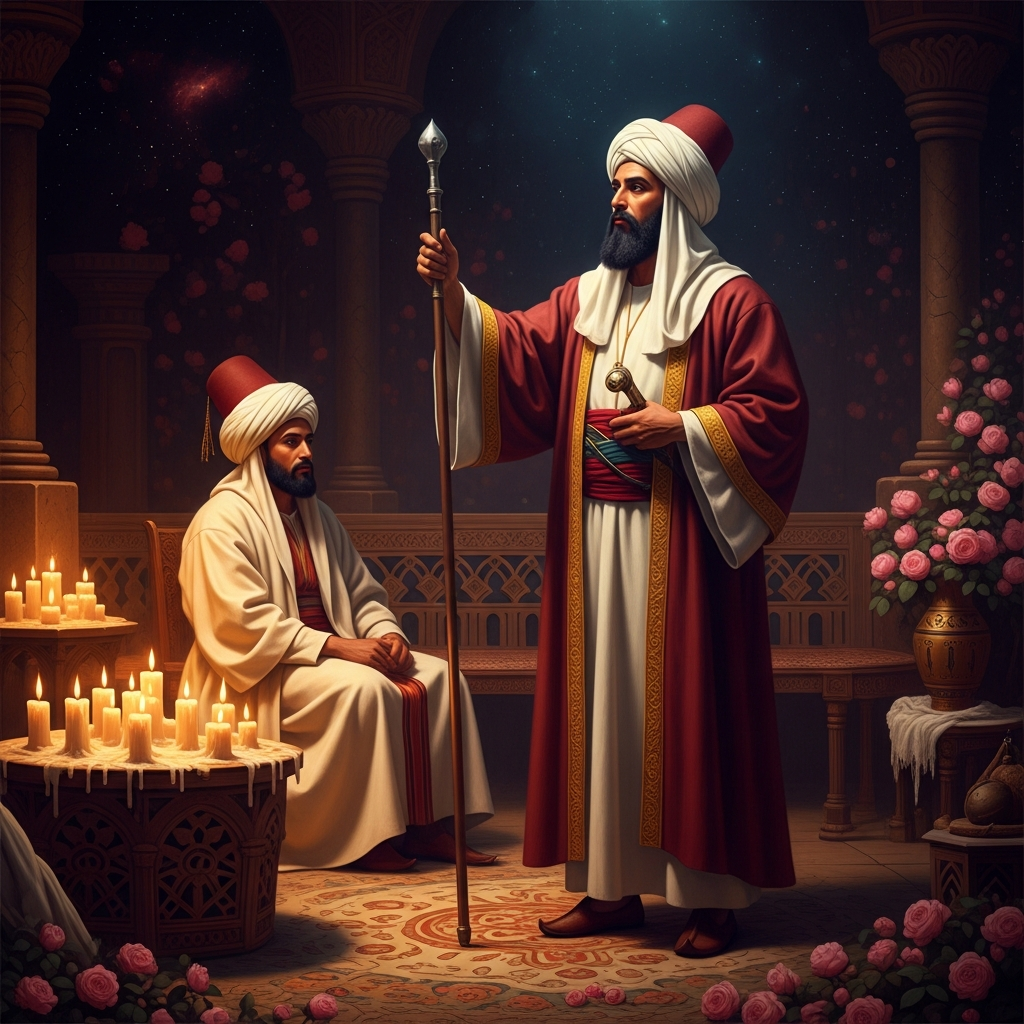
In the taverns and gardens of fourteenth-century Shiraz, Ḥāfiẓ writes poems about wine, music, and the beloved — and the entire tradition of Persian mystical poetry reaches its culmination in a body of work where the divine and the human are so thoroughly intertwined that no reader has ever finally separated them.
- When
- c. 1315–1390 CE — Shiraz, Fars province, Persia
- Where
- Shiraz, Persia — the city of roses, wine, and Persian lyric poetry, under the Muzaffarid dynasty
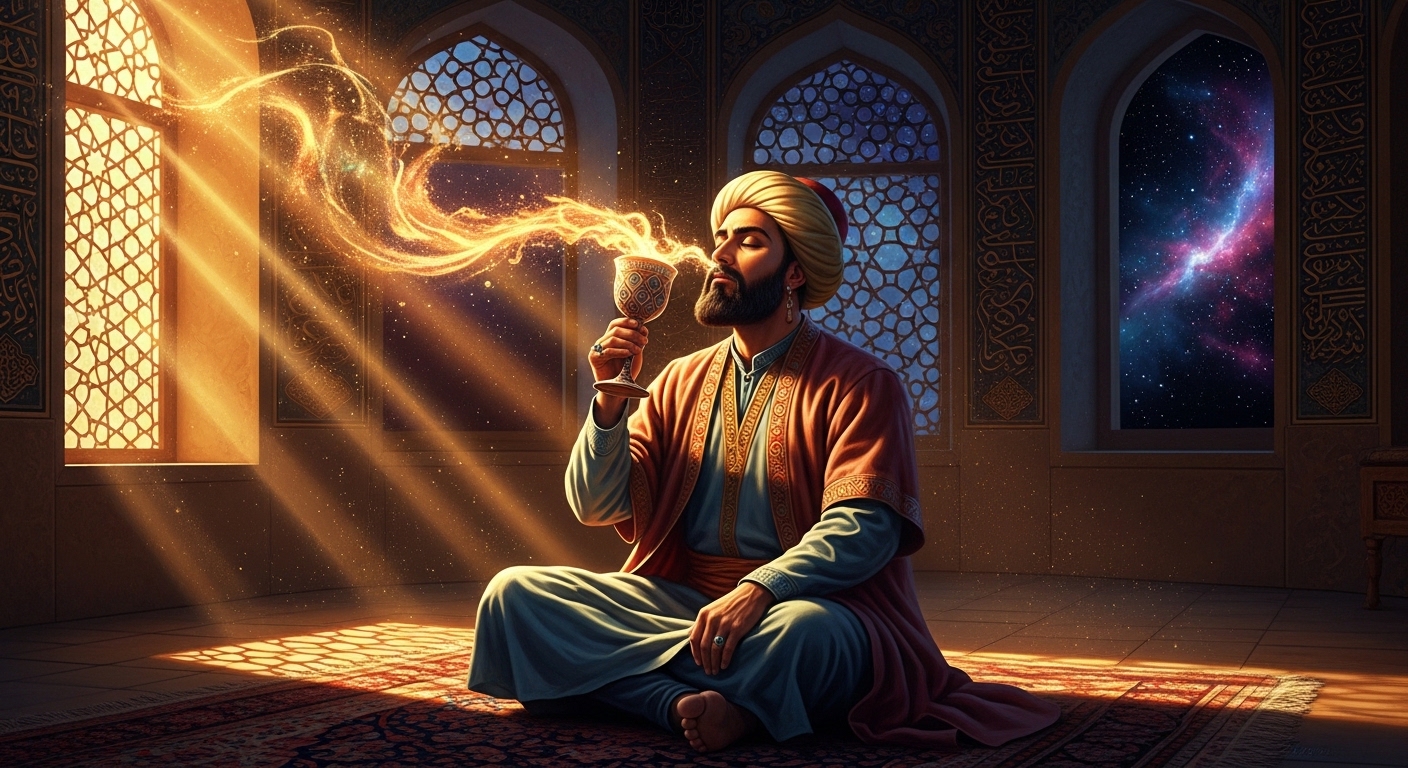
The wine is poured before creation.
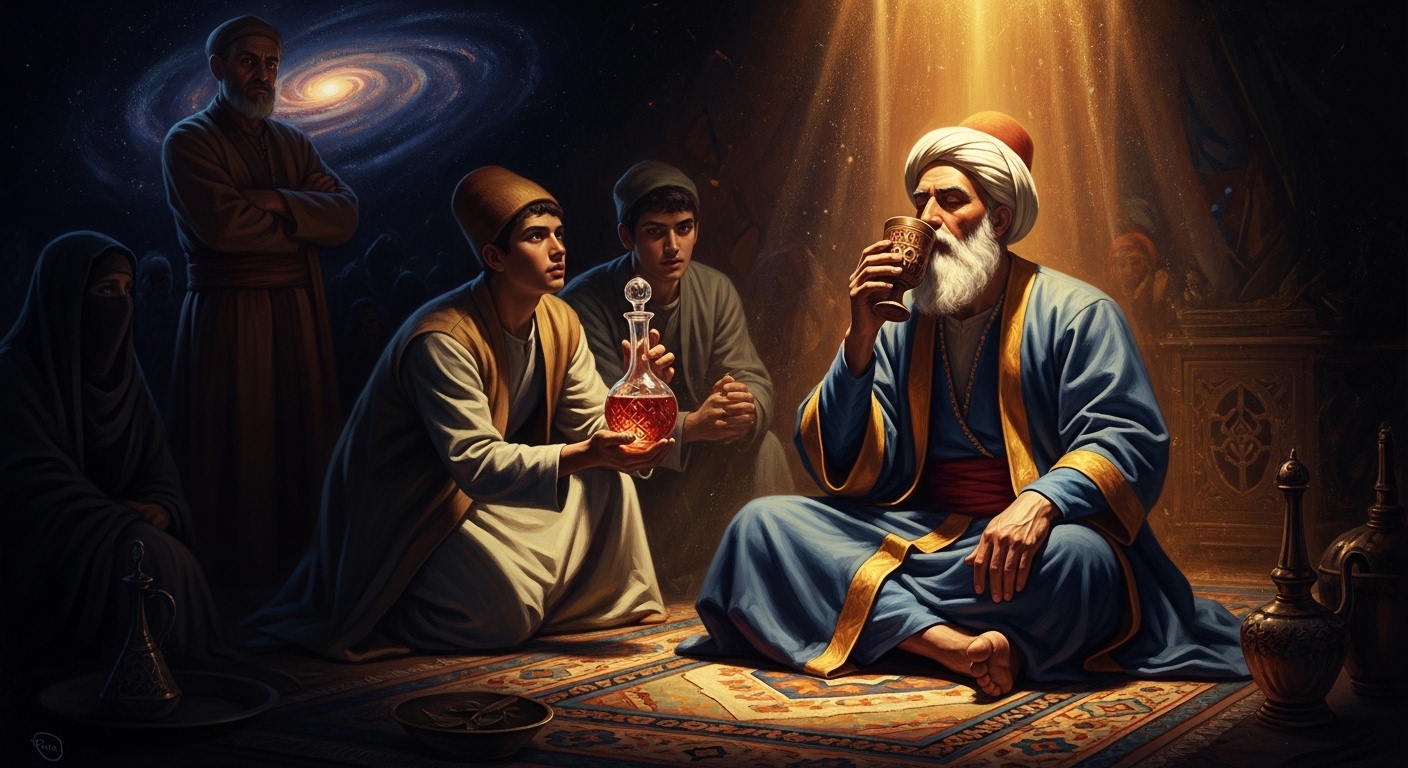
This is where Ḥāfiẓ places the origin of the intoxication he describes. Not in the Shirazi taverns of the fourteenth century, though those are real and their fragrance is in every poem. But before that. The primordial wine — the love that is the ground of existence — was already flowing before the grapes were pressed. This is the Azal in his poems, the eternal before-time, the moment before God and the soul were separate.
On the first day the tavern master’s hand poured from my cup / The love they laid in my clay then remains in my blood.
He means: before I was born, God put love into my constitution. The intoxication I feel is not the intoxication of this wine, this evening, this specific cup. It is the intoxication of my original nature, still present after decades of living in the world that tries to sober you up.
The Divan of Ḥāfiẓ is used as an oracle across the Persian-speaking world.
In Iran, in Afghanistan, in Pakistan, in the Persian-speaking diaspora worldwide, when a person faces a difficult decision or a moment of uncertainty, they open the Divan at random, read the first verse their eye falls on, and take it as a response to their situation. This practice — fal-e Hafez, the omen of Ḥāfiẓ — is not unique to Sufis. It is practiced by secular Iranians, by people who would not describe themselves as religious, by people who observe every Islamic prohibition and by people who observe none of them.
The practice exists because people believe the poems are alive in a way that ordinary poems are not. That the verses speak to the present moment rather than being fixed in the fourteenth century. That Ḥāfiẓ is, in some way that is easier to experience than explain, still here.
This belief is not irrational. The poems contain the kind of compressed truth that makes them applicable to many situations because they address something deep enough in human experience to be perennially relevant. The verse about the ache of separation speaks to every separation. The verse about the wine that was poured before creation speaks to every person who has felt a longing they could not attach to any specific worldly object.
He spends most of his life in Shiraz, rarely leaving.
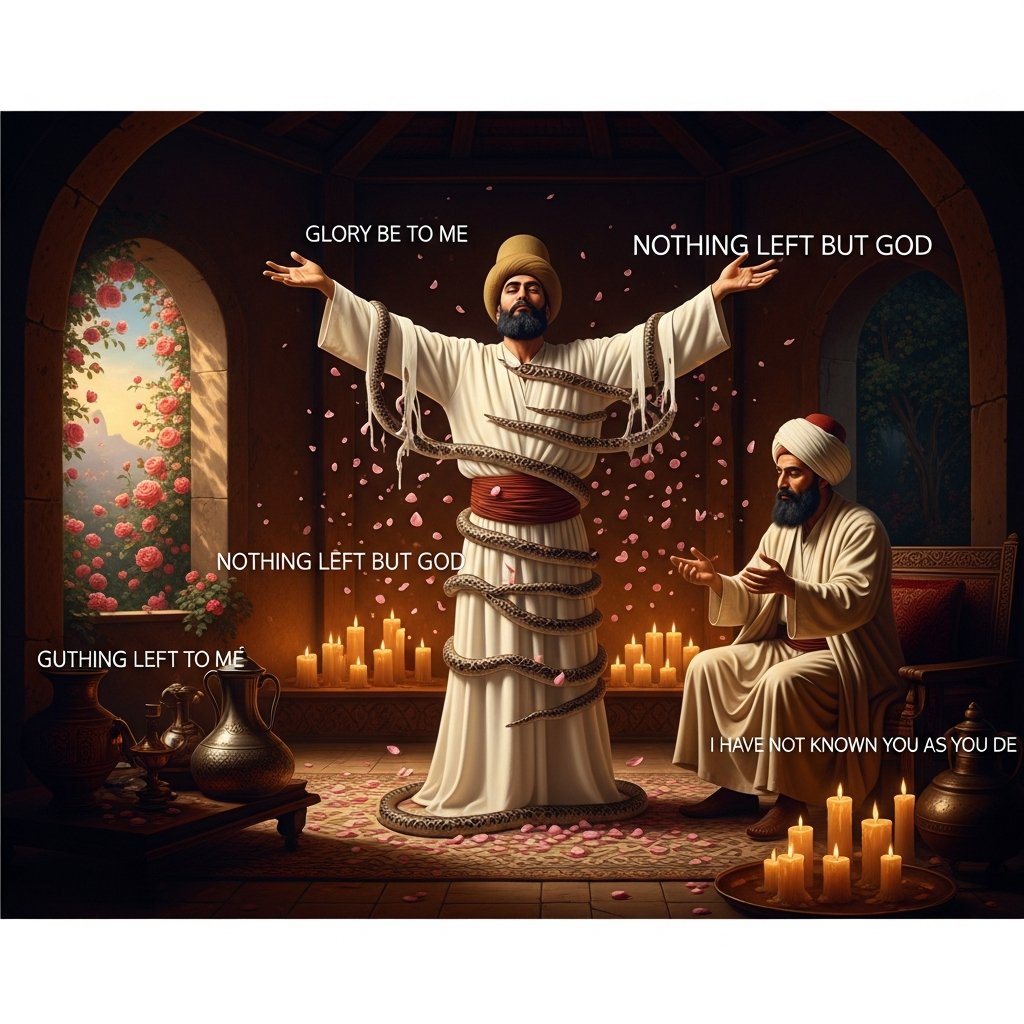
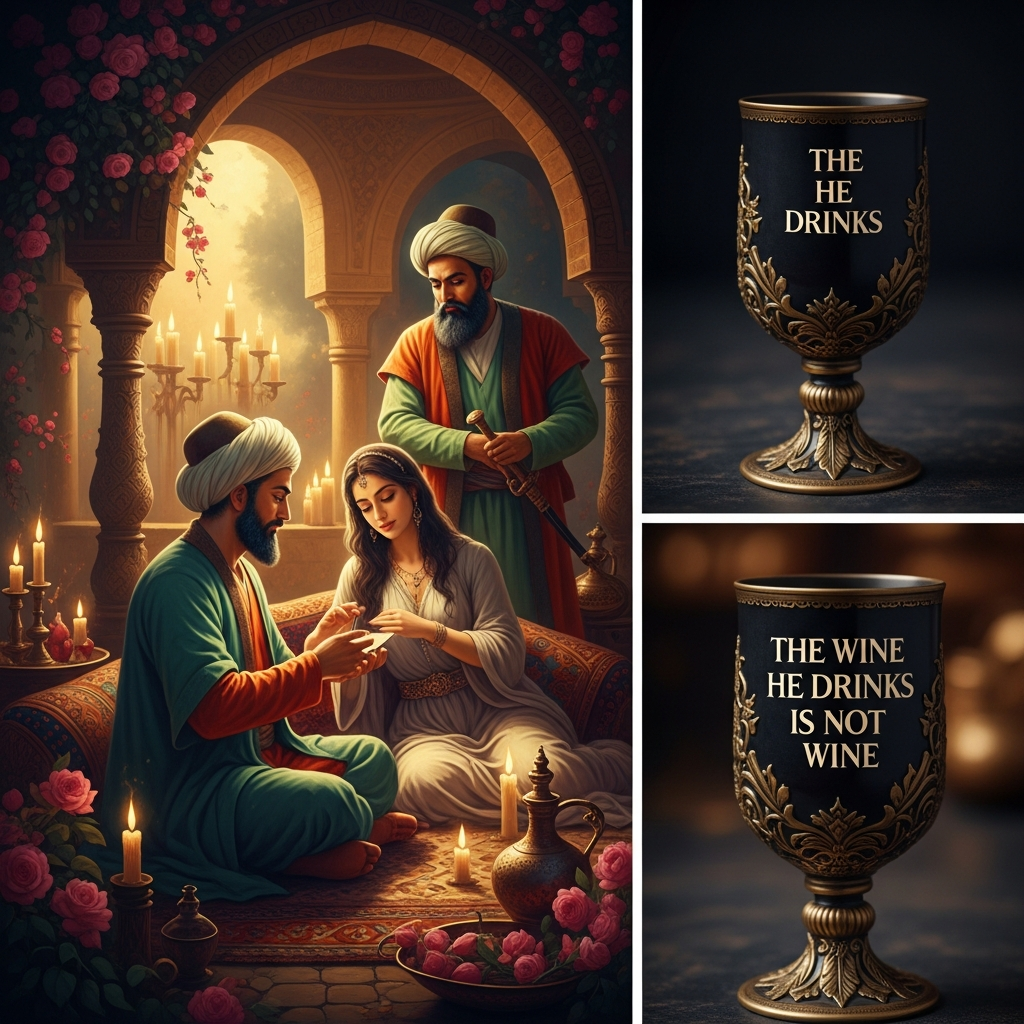
He is approached by rulers who want him at their courts. He declines. He is accused by the pious of actually drinking wine, consorting with inappropriate company, failing to observe Islamic regulations. He responds to the accusations in verse: the pious who condemn him see only the wine, not the intoxication; they see the tavern, not the temple it has always been; they see the beloved’s face, not the Face that shines through it.
His relationship with Shah Shuja — the Muzaffarid ruler of Shiraz who alternately patronized and exiled him — runs through the Divan as a subtext. The earthly patron who gives and withdraws his favor is the earthly parallel to the divine Beloved who is simultaneously present and hidden. The same longing and frustration operate at both levels.
He never resolves the levels into each other. He maintains the productive ambiguity until the end.
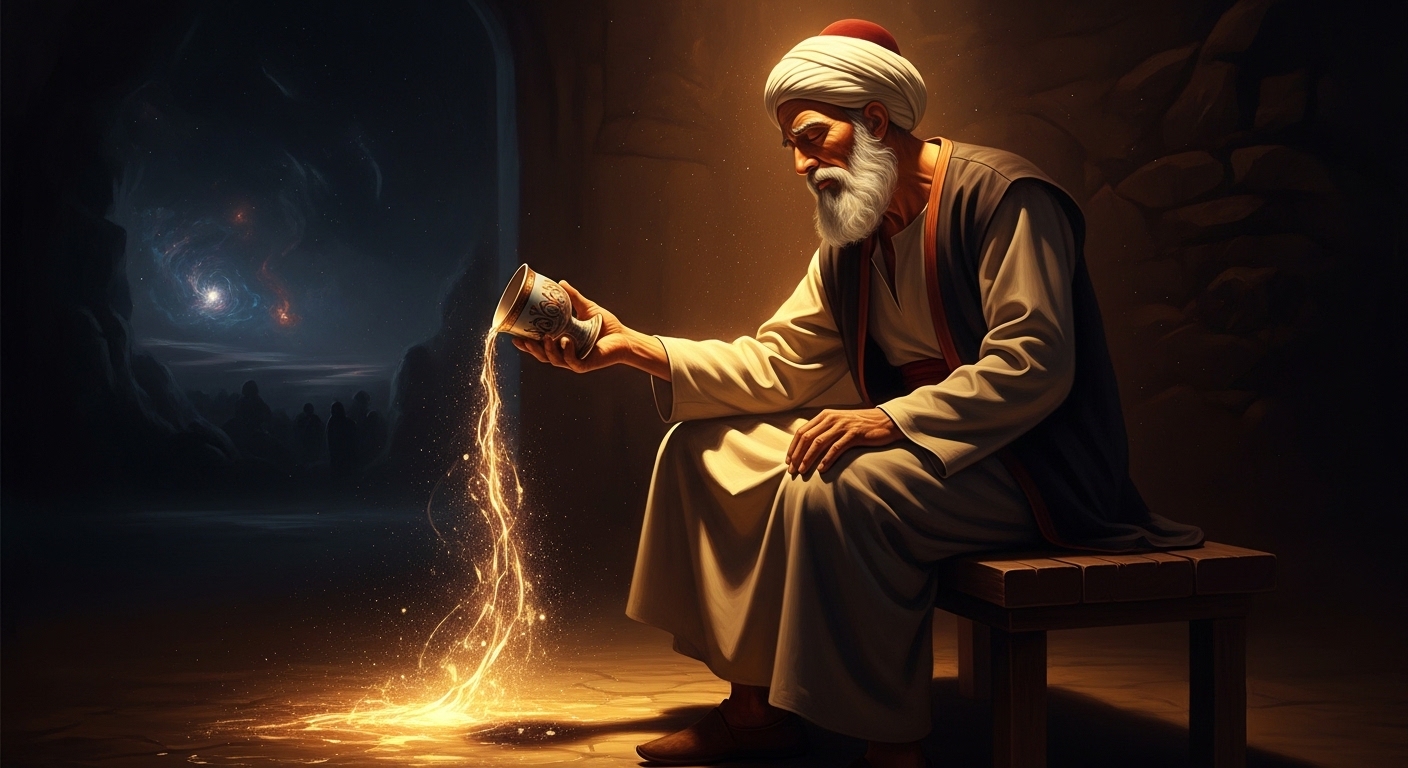
He dies in Shiraz around 1390, between sixty-five and seventy-five years old by various estimates.
His tomb in the Hafezieh — the garden outside Shiraz, still one of the most visited sites in Iran — is open. People come to have their fortunes told by his verses. They come to recite the poems aloud on summer evenings. They come to place their requests at the tomb of the one who knew how to ask for things in a way that reached the right addressee.
The wine in the poems is the love that God placed in human clay before the world began.
When you drink it — if you drink it — the intoxication that follows is not from any grape.
It is from before the grape existed.
Ḥāfiẓ knew this. He spent his life writing it down so you could find it when you needed it.
Scenes
Echoes Across Traditions
Entities
- Ḥāfiẓ
- the Beloved (unnamed)
- Shah Shuja (patron and occasional antagonist)
Sources
- Ḥāfiẓ, *Divan*, trans. Dick Davis as *Faces of Love* (Penguin, 2012)
- Ḥāfiẓ, *Divan*, trans. Robert Bly and Leonard Lewisohn (Penguin, 2008)
- Annemarie Schimmel, *A Two-Colored Brocade: The Imagery of Persian Poetry* (UNC, 1992)
- Michael Hillmann, *Unity in the Ghazals of Hafez* (Bibliotheca Islamica, 1976)