The Night the Kapu Was Broken
November 1819 CE — the abolition of the kapu system · Kailua-Kona, Hawaiʻi Island — the royal compound
Contents
On a November evening in 1819, the young king Kamehameha II sat down at the women's table and ate — and with that act, a thousand-year-old sacred system collapsed in one night, creating a theological vacuum that the first missionary ship would sail into five months later.
- When
- November 1819 CE — the abolition of the kapu system
- Where
- Kailua-Kona, Hawaiʻi Island — the royal compound
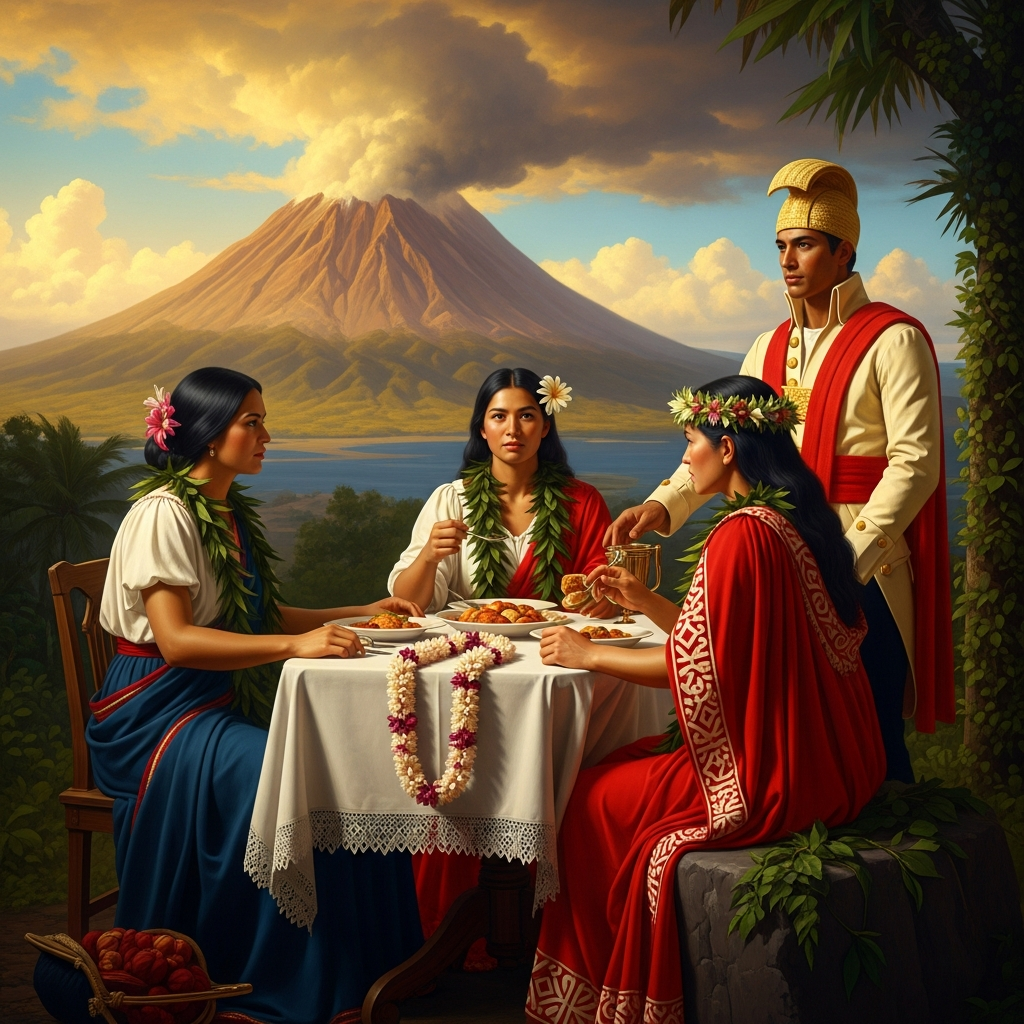
The feast preparations begin at noon.
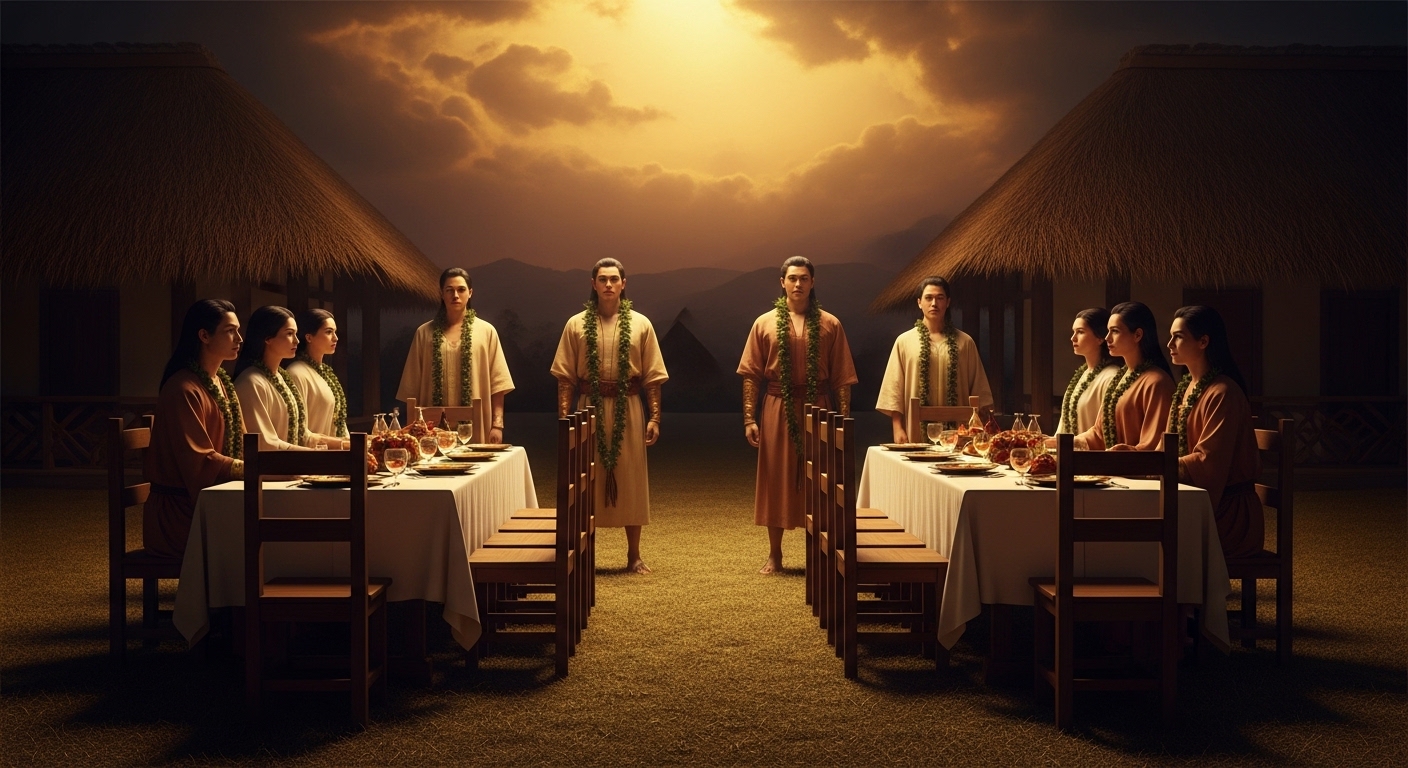
Two tables are being set on the grounds of the royal compound at Kailua-Kona: one for the men, one for the women, as the kapu requires. The men’s table has pork, coconut, certain fish. The women’s table has the foods that are permitted — fish of certain kinds, dog, foods that have not been claimed by the male divine sphere. The division is the division that has governed Hawaiian eating since before any living person was born.
Kaʻahumanu watches the preparations. She is the regent — the most politically powerful person in Hawaii except for the young king himself, possibly more powerful than him in practical terms. She was Kamehameha I’s favorite wife, the woman he trusted with the administration of the kingdom. She is also a woman who has lived her entire life under the eating restrictions and has her own assessment of their spiritual and political meaning.
She has spoken to Liholiho about this before.
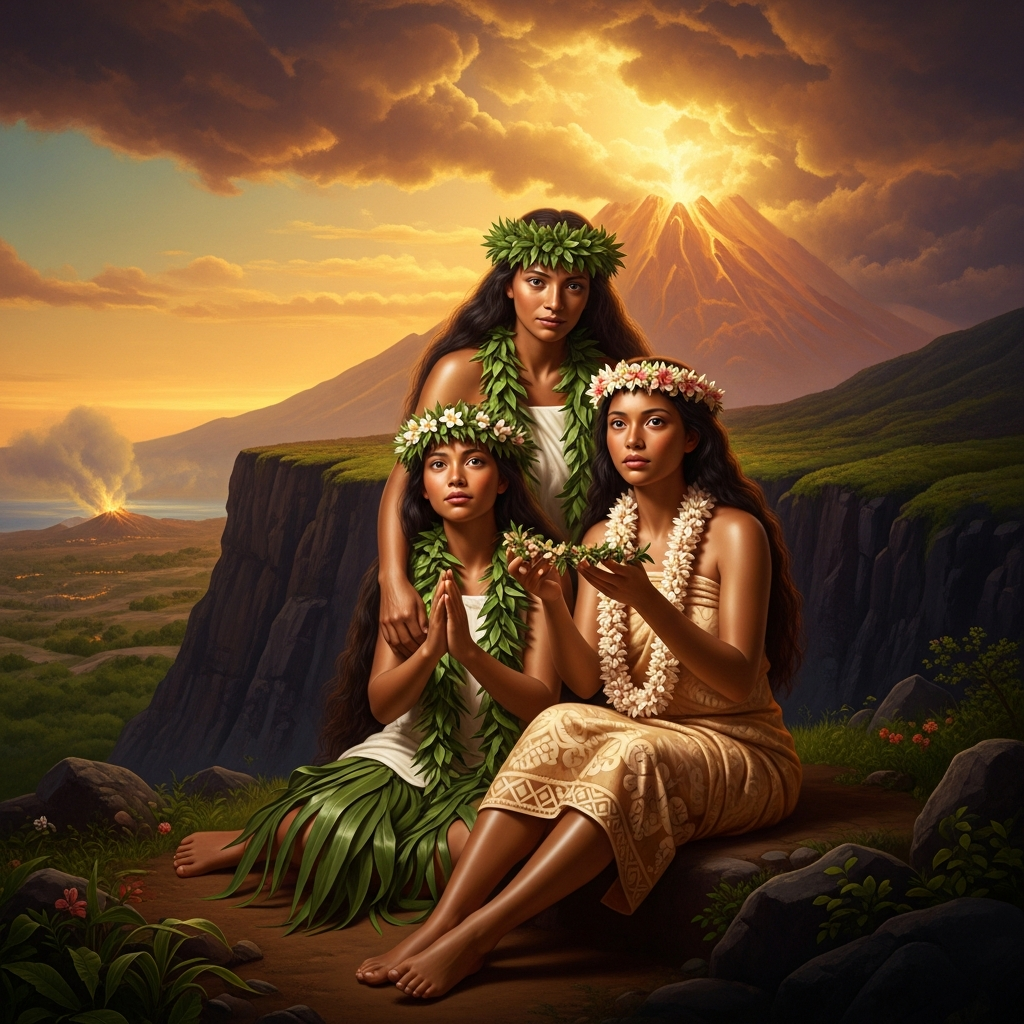
Keōpūolani, his birth mother, the most sacred woman in Hawaii — a woman so sacred that ordinary people had to prostrate themselves in her presence, a woman whose mana was higher than almost any person alive — has also spoken to him. She wants to eat with her son. She wants to share food with him the way a mother shares food with a child, without the boundary that the kapu places between them at every meal.
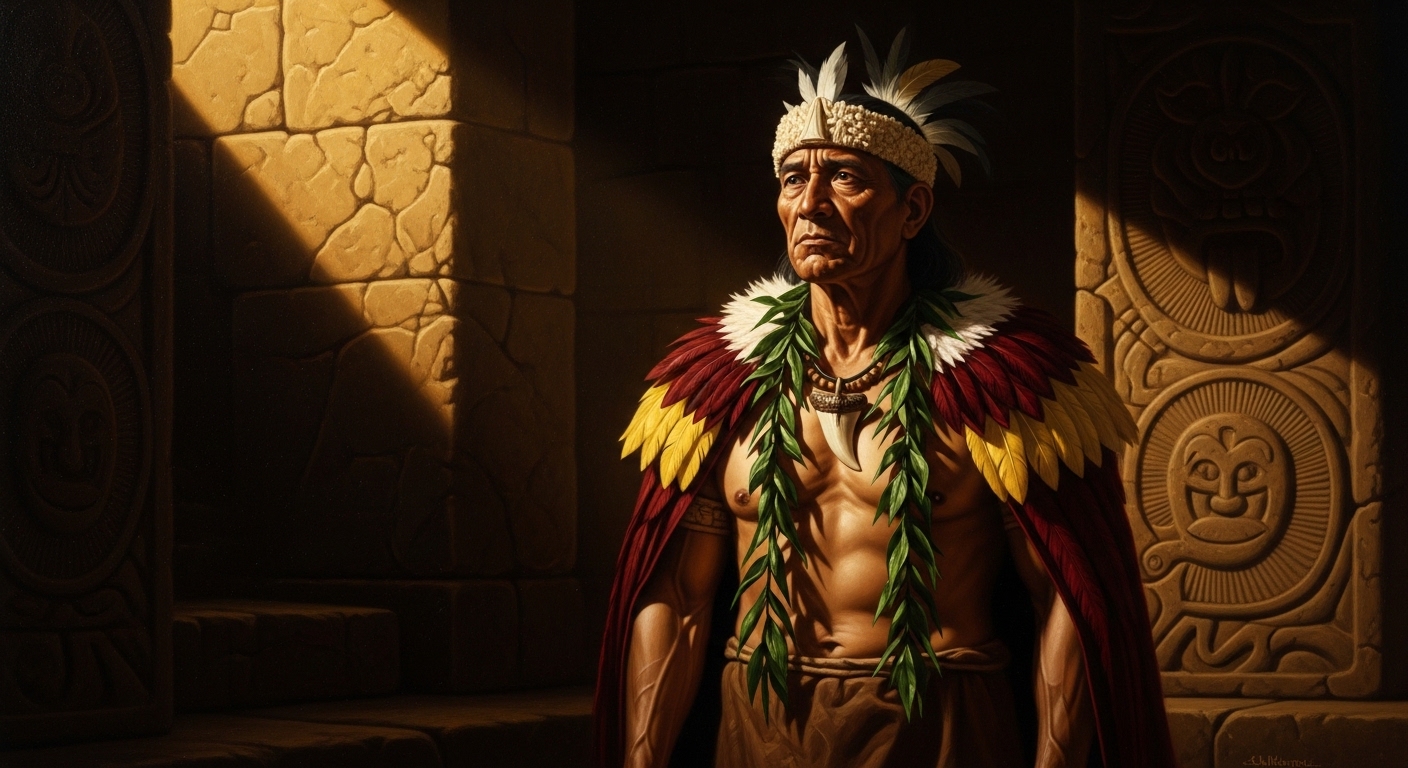
The high priest Hewahewa is present. He knows what is being contemplated. He does not speak against it. He may have already concluded that the system has reached the end of what it can sustain.
Liholiho comes to the feast. He has been drinking. He walks to the men’s table. He sits. He looks at the women’s table across the compound. He looks at his mother there, and at Kaʻahumanu.
He stands. He crosses the space between the tables. He sits at the women’s table.
He eats.
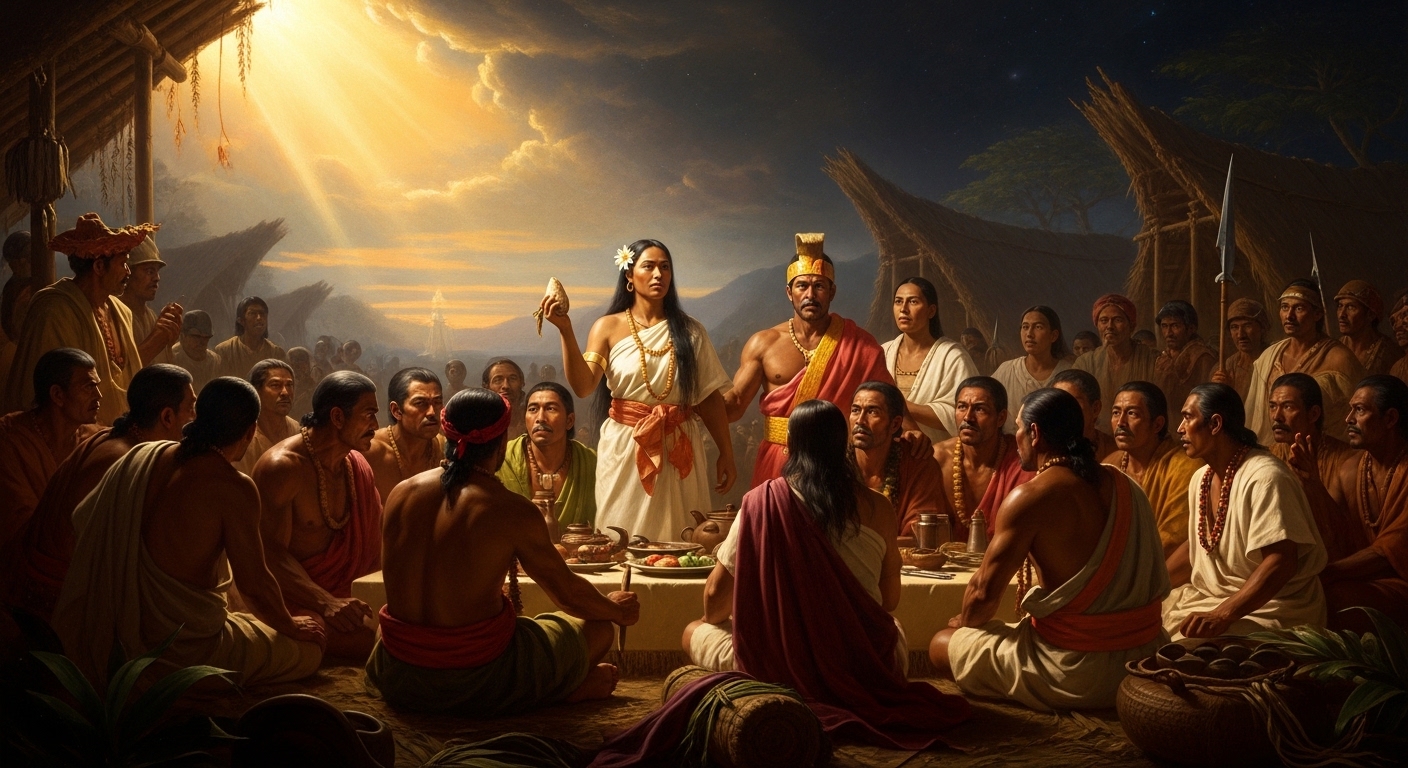
The people who are watching make sounds. Some are shocked. Some appear to have been waiting for this and feel something release. The king of Hawaii has violated the most fundamental restriction of the kapu system in full public view, and the consequences are — nothing. The ground does not shake. No divine fire descends. The food is food. Liholiho is alive and the women are alive and the feast continues.
In the days that follow, the practical consequence of that non-consequence is enormous. The kapu’s authority depended on the certainty of its enforcement — by the gods, by the social pressure of the community, by the spiritual reality that violation had consequences. If the king violates and nothing happens, the theological claim is falsified. The system cannot survive the falsification.
Hewahewa organizes the burning of the heiau. The carved wooden images of the gods are taken from the temples and burned. The sacred objects are destroyed. The system is dismantled systematically, from within, by the people who maintained it.
The first New England missionaries sail into Kailua-Kona harbor in April 1820 and find the temples already smoking ruins. They had prepared themselves to confront an established religion. They find instead a people who have already done the confronting themselves, and who are living in the aftermath, deciding what comes next.
The night the kapu was broken is the night that everything that followed became possible — including things that the people at that feast could not have anticipated, and things they would have prevented if they had known. But they were deciding what comes next, and so was everyone after them.
Scenes
Echoes Across Traditions
Entities
- Kamehameha II (Liholiho)
- Kaʻahumanu
- Keōpūolani
- Hewahewa (the high priest)
Sources
- Patrick V. Kirch, *A Shark Going Inland Is My Chief* (2012)
- Lilikala Kame'eleihiwa, *Native Land and Foreign Desires* (1992)
- Gavan Daws, *Shoal of Time* (1968)
- Marshall Sahlins, *Anahulu: The Anthropology of History in the Kingdom of Hawaii* (1992)