Kapu: The Sacred Law That Holds Society Together
ancient times through November 1819 — the final months of the kapu system · Kailua-Kona, Hawaiʻi — the feast where the kapu was broken
Contents
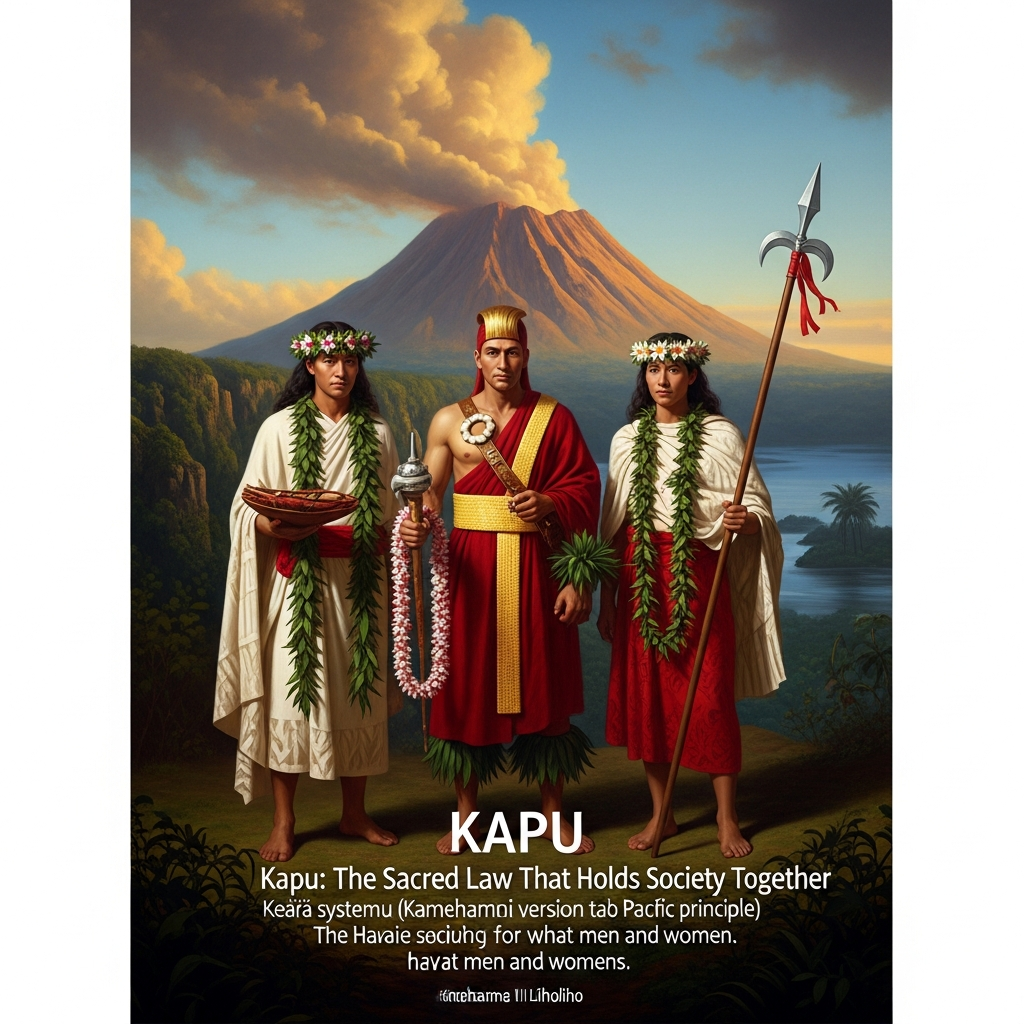
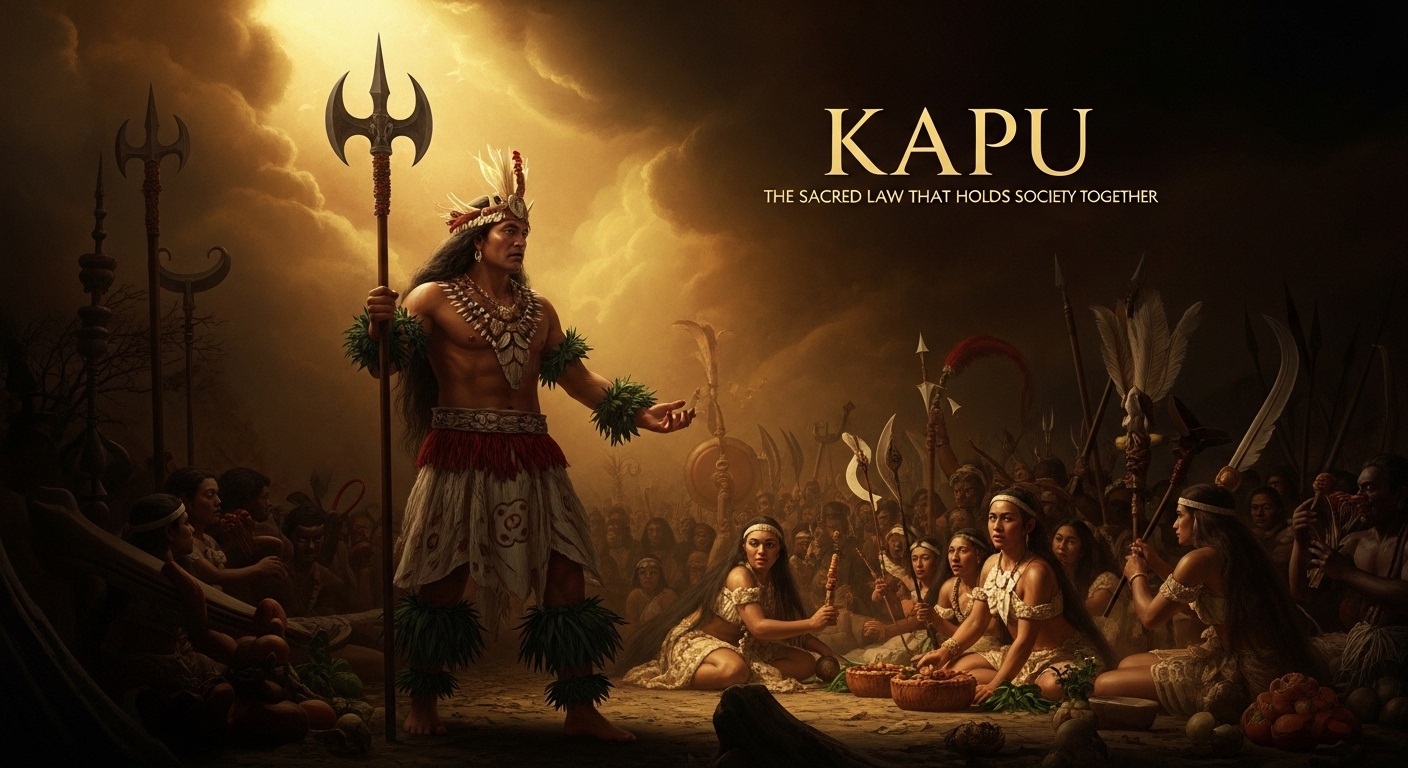
The kapu system — the Hawaiian version of the Pacific-wide tabu principle — governed every aspect of Hawaiian society from what men and women could eat together to who could enter the sacred precinct, until the night in 1819 when King Kamehameha II ate with women and broke it forever.
- When
- ancient times through November 1819 — the final months of the kapu system
- Where
- Kailua-Kona, Hawaiʻi — the feast where the kapu was broken
The kapu was the structure of the world.
Not metaphorically — structurally. The kapu system governed what could be done, who could be present, what could be eaten and by whom and in what sequence and in whose company. Men and women could not eat together. Women could not eat pork, certain fish, coconuts, bananas — foods that belonged to the male sacred sphere, to the gods Kū and Kāne and Lono, whose presence in these foods was real and whose violation had real consequences. The chiefs’ mana depended on the maintenance of the restrictions. The agricultural calendar was governed by the kapu. The fishing seasons were governed by the kapu. War and peace were governed by the kapu.
The kapu system had been operating in Hawaii for approximately five hundred years when Kamehameha I unified the islands by military conquest between 1795 and 1810. He was a devotee of Kū, the war god, and the kapu system was central to his authority. When he died in 1819, he passed the kingdom to his son Liholiho, who became Kamehameha II.
Liholiho was not Kamehameha I. He was young, ambivalent about the priestly system, and surrounded by political figures who had been questioning the kapu’s necessity for reasons that were partly theological and partly pragmatic. The most important of these was Kaʻahumanu, his father’s favorite wife, who had lived her entire life under the eating restrictions and had her own assessment of their value. There was also Keōpūolani, his own birth mother, one of the most sacred women in Hawaii, who wanted to eat with her son.
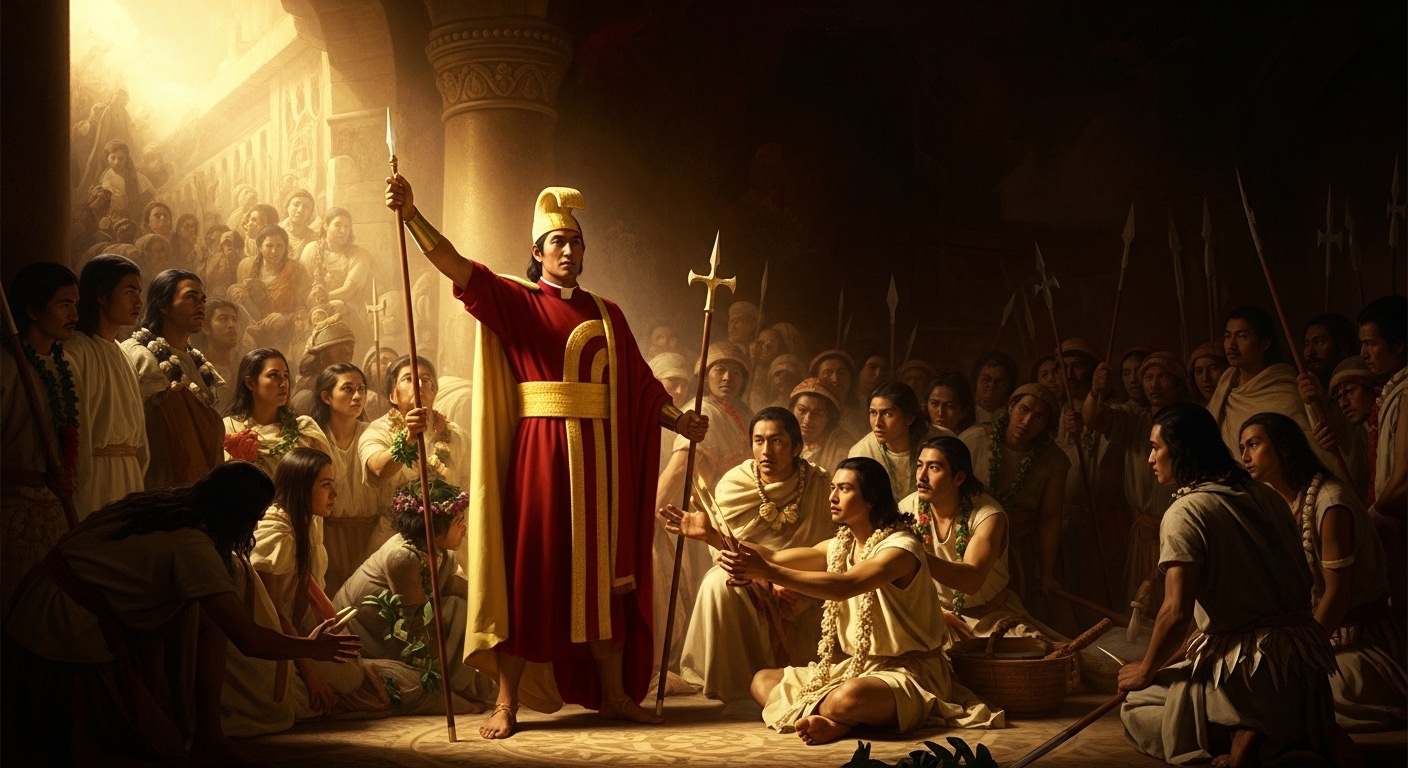
The feast was held at Kailua-Kona in November 1819.
Liholiho prepared himself. He drank. He approached the women’s eating tables. He sat down. He ate with the women.
The kapu was broken.
Not just the eating restriction — the logic of the whole system collapsed at that moment. The kapu derived its authority from the certainty that violation had consequences. If the king himself broke the kapu and the consequences did not follow — if the world continued, if the food was simply food — then the theological foundation was gone. The gods who were supposed to enforce the restrictions had not enforced them. The system’s authority was contingent on its unchallenged operation, and it had been challenged.
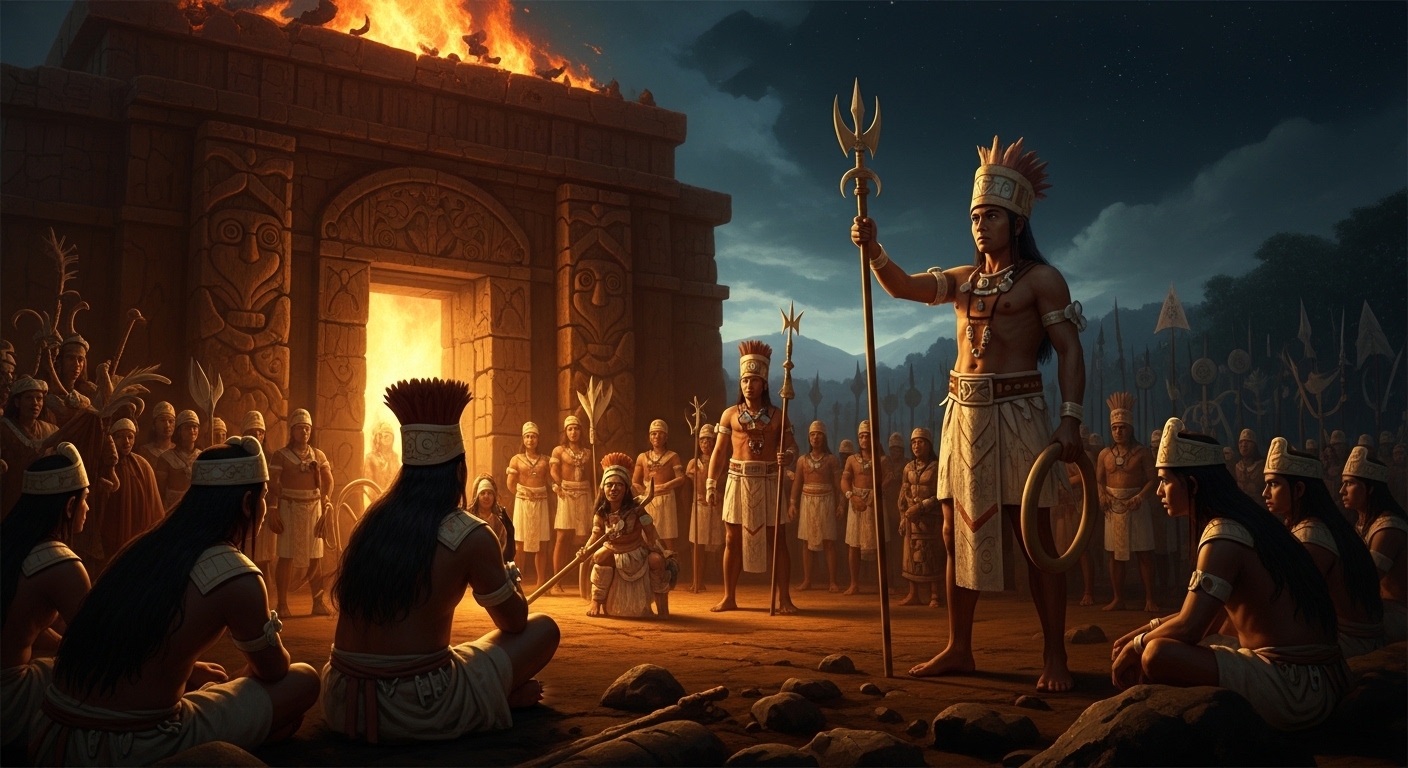
In the days and weeks that followed, the heiau were burned, the carved wooden images of the gods were burned, the priestly system was dismantled. Not by external conquerors but by the Hawaiian ruling class, acting on a decision they had apparently been approaching for years. The abolition was complete and deliberate.
When the first New England missionaries arrived at Kailua-Kona in April 1820, they found the temples already burned and the old religion already dismantled. They had arrived to confront a religious system that was already gone. What they found instead was a people in the middle of a profound theological vacuum — the old structure destroyed, nothing yet to replace it, the question of what held society together entirely open.
The missionaries provided an answer. The Hawaiian elite, particularly the women who had lived under the kapu’s eating restrictions, received the answer with considerable interest. The history of Hawaiian Christianity is partly the history of what happens when a new sacred law arrives among people who have just abolished the old one and are deciding what comes next.
Scenes
Echoes Across Traditions
Entities
- Kamehameha II (Liholiho)
- Kaʻahumanu (regent and queen)
- Keōpūolani (Kamehameha I's sacred wife)
- the kapu system
Sources
- David Malo, *Mooolelo Hawaii* / *Hawaiian Antiquities* (1839, trans. 1951)
- Patrick V. Kirch, *A Shark Going Inland Is My Chief* (2012)
- Lilikala Kame'eleihiwa, *Native Land and Foreign Desires: Pehea Lā E Pono Ai?* (1992)
- Gavan Daws, *Shoal of Time: A History of the Hawaiian Islands* (1968)