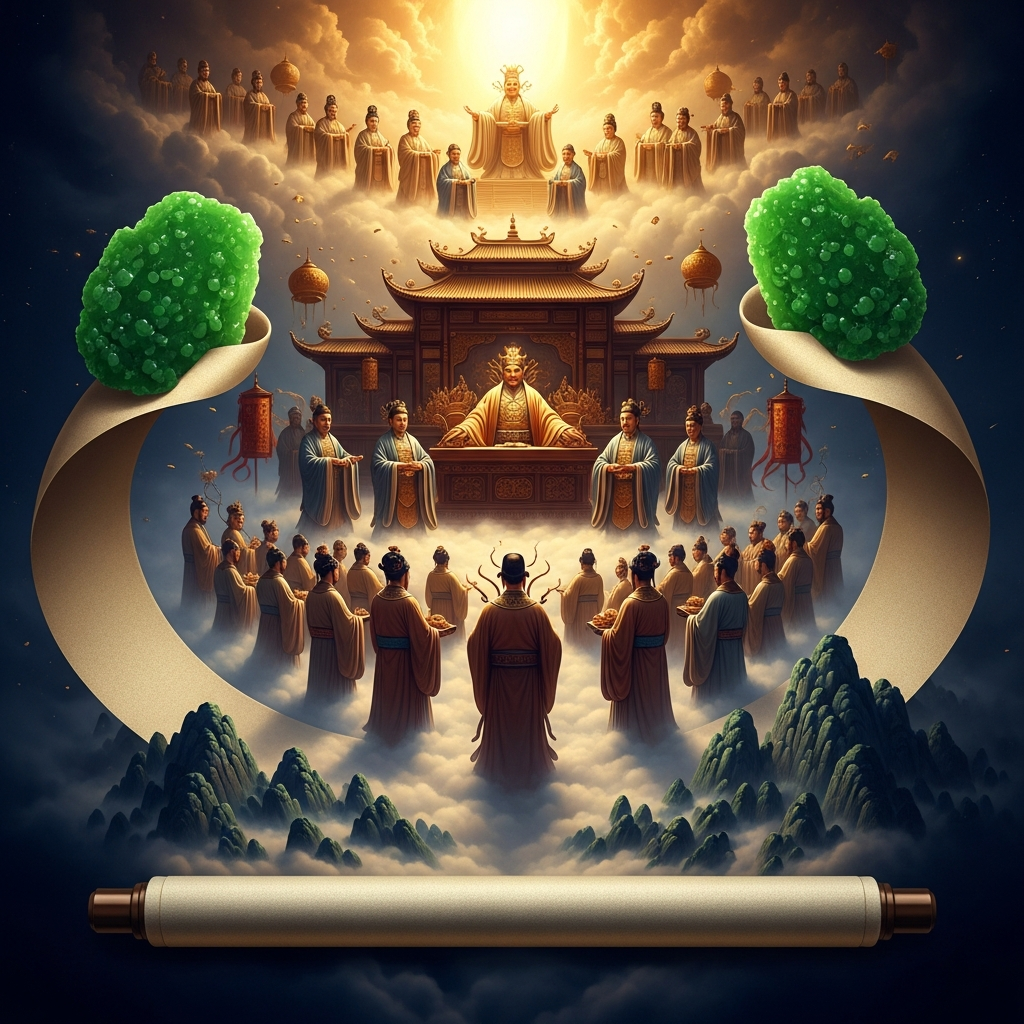
The Jade Emperor's Court Above the Clouds
The eternal present of divine government — codified in Chinese religious thought from the Tang dynasty onward · The Jade Palace at the summit of the thirty-three heavens, above the clouds
Contents
High above the thirty-three heavens, the Jade Emperor holds court over a divine bureaucracy that mirrors the imperial court of China — complete with ministers, generals, censors, and a system for reporting on every human soul.
- When
- The eternal present of divine government — codified in Chinese religious thought from the Tang dynasty onward
- Where
- The Jade Palace at the summit of the thirty-three heavens, above the clouds
Above the thirty-third heaven, above the clouds that are themselves above the sky that is above the sky, there is a palace made of jade.
It is not metaphorically a palace. It has gates. The Southern Heavenly Gate, guarded by the divine soldiers with their long halberds, the officials checking credentials. It has a main audience hall where the Jade Emperor holds court. It has side chambers for the various ministries: the Ministry of Thunder, the Ministry of Fire, the Ministry of Water, the Departments of the Five Sacred Mountains, the Bureau of Seasonal Winds, the Office of Stars, the Department of Fate. It has a kitchen run by the Kitchen God who, before his annual report in the twelfth month, will be given sweet sticky things to make his words slow down before they reach the Emperor’s ears.
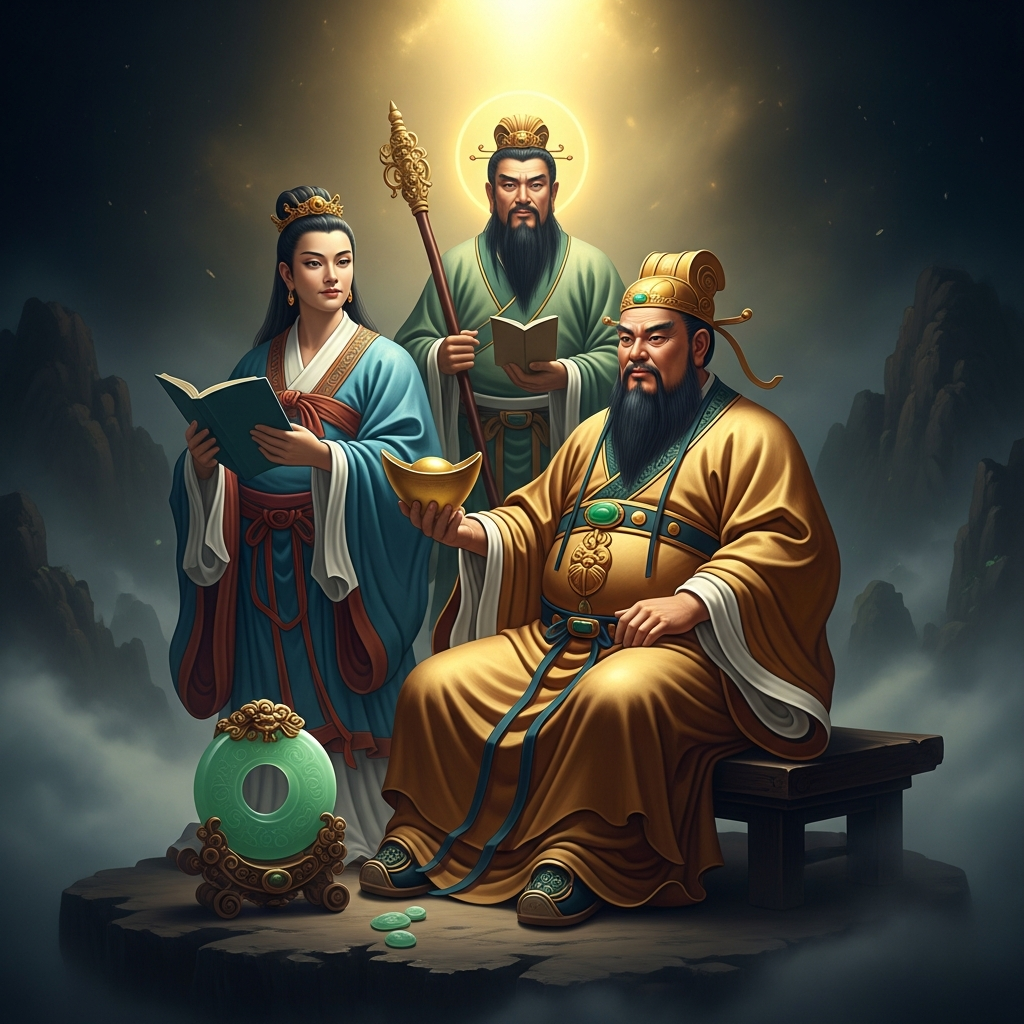
The Jade Emperor sits on his throne in his long robes with the jade bead curtain hanging from his crown and he looks exactly like what he is: an emperor. Not a creator. Not a principle. An administrator.
This is the most distinctively Chinese thing about Chinese heaven: the gods are bureaucrats. Not the divine bureaucrats of Max Weber’s disenchanted world, but literal officials — appointed, with portfolios, with reporting relationships, with the possibility of promotion and demotion and reassignment. The Dragon King of the Eastern Sea has a rank. The God of Literature has a civil service position. The God of Wealth has a budget.
Every piece of territory in the human world has a local Earth God, a Tǔdì Gōng, whose job is to manage that territory’s divine affairs and report up the chain. The Kitchen God in every household reports to the Jade Emperor once a year about the household’s conduct. The City God reports on the city’s moral state. The Ten Courts of Hell report on the disposition of souls. The whole apparatus of Chinese religion is an information management system for a divine government that needs to know what is happening everywhere at all times.
The Jade Emperor receives these reports. He issues edicts. He promotes successful gods and demotes incompetent ones. The Dragon Kings of the four seas are technically civil servants answerable to him. The God of War, Guan Yu, holds a divine military commission. Guanyin holds the portfolio of mercy and compassion, which is a specific and delimited responsibility, not an unlimited authority.
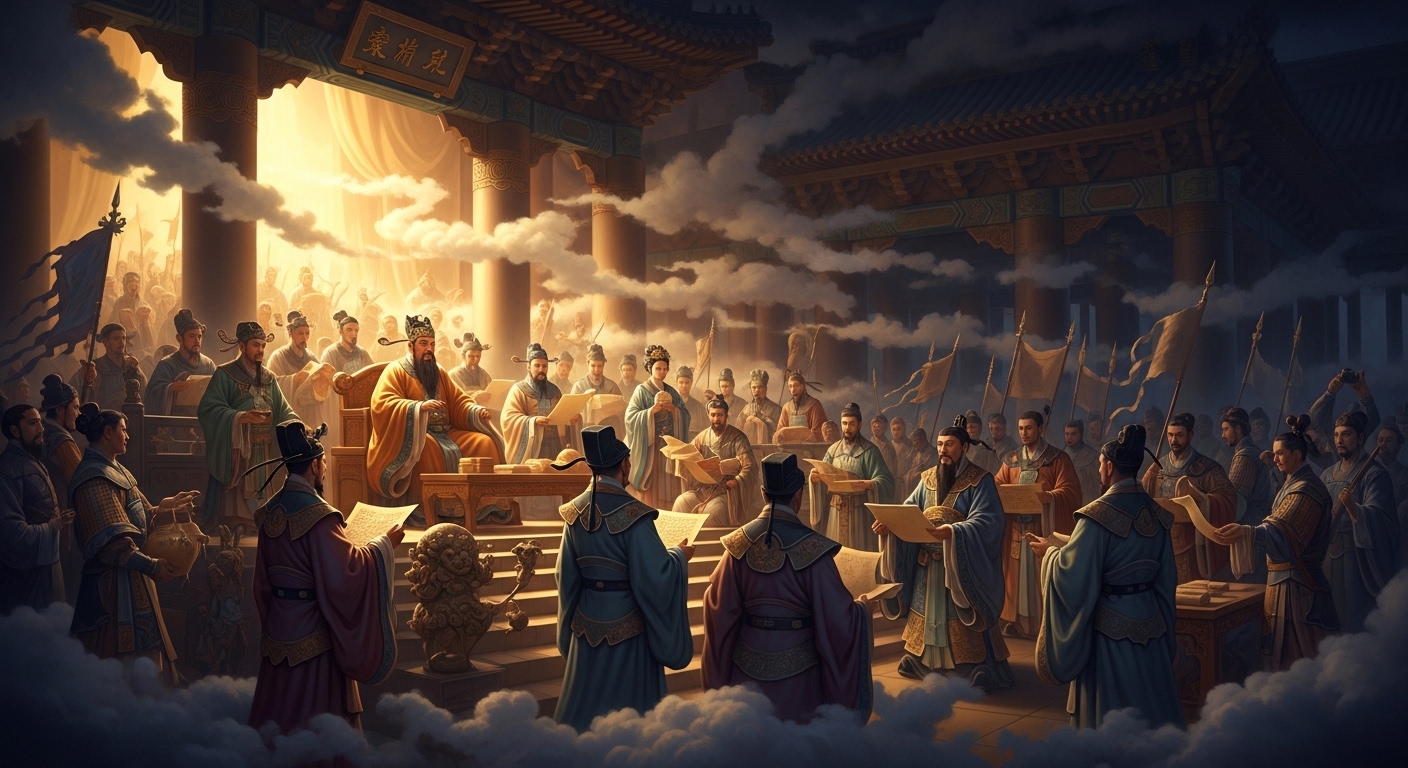
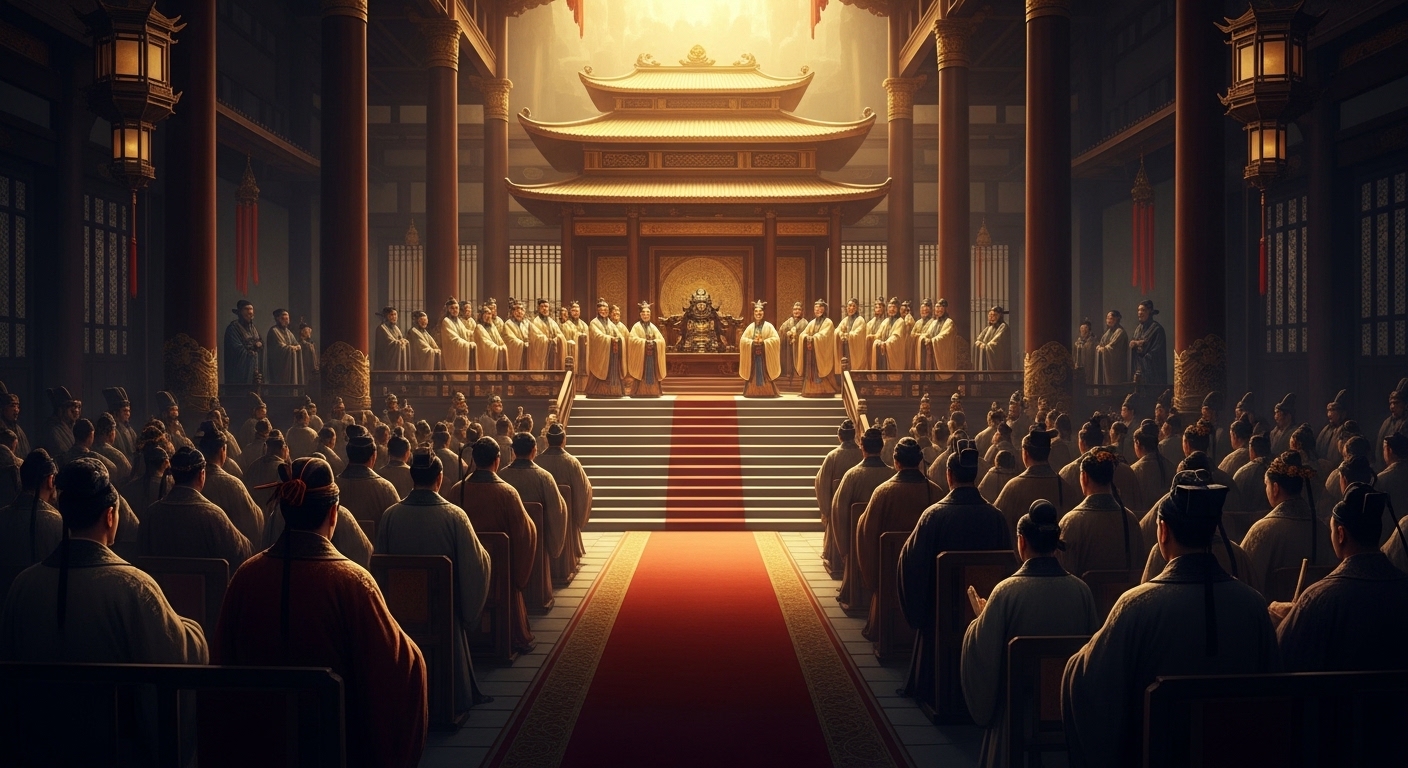
The court meets regularly. The immortals in their ranks gather in the great audience hall — the various classes of celestial beings arranged by grade, as precisely stratified as any Tang or Ming dynasty court. The Jade Emperor hears petitions. He settles disputes between divine officials. He issues the decrees that regulate the seasons, the rains, the harvests, the timing of thunder.
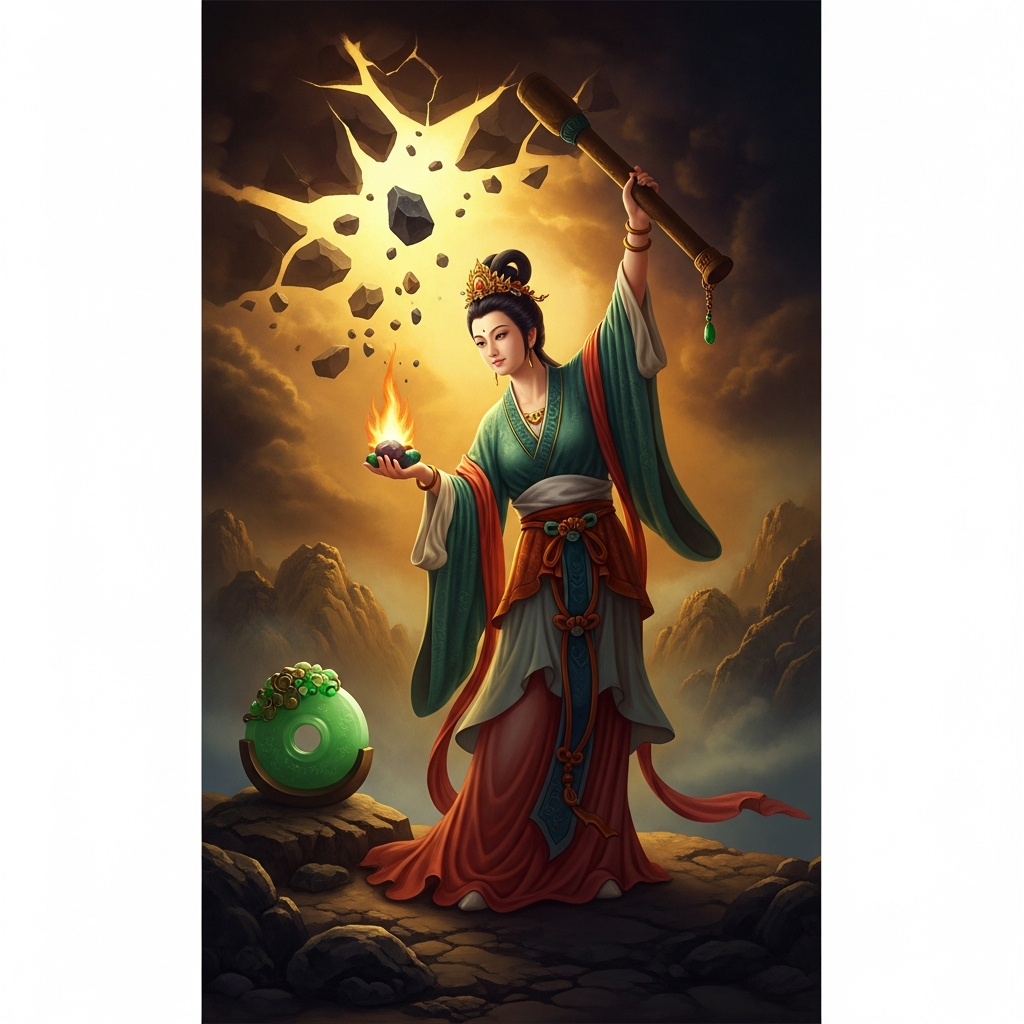
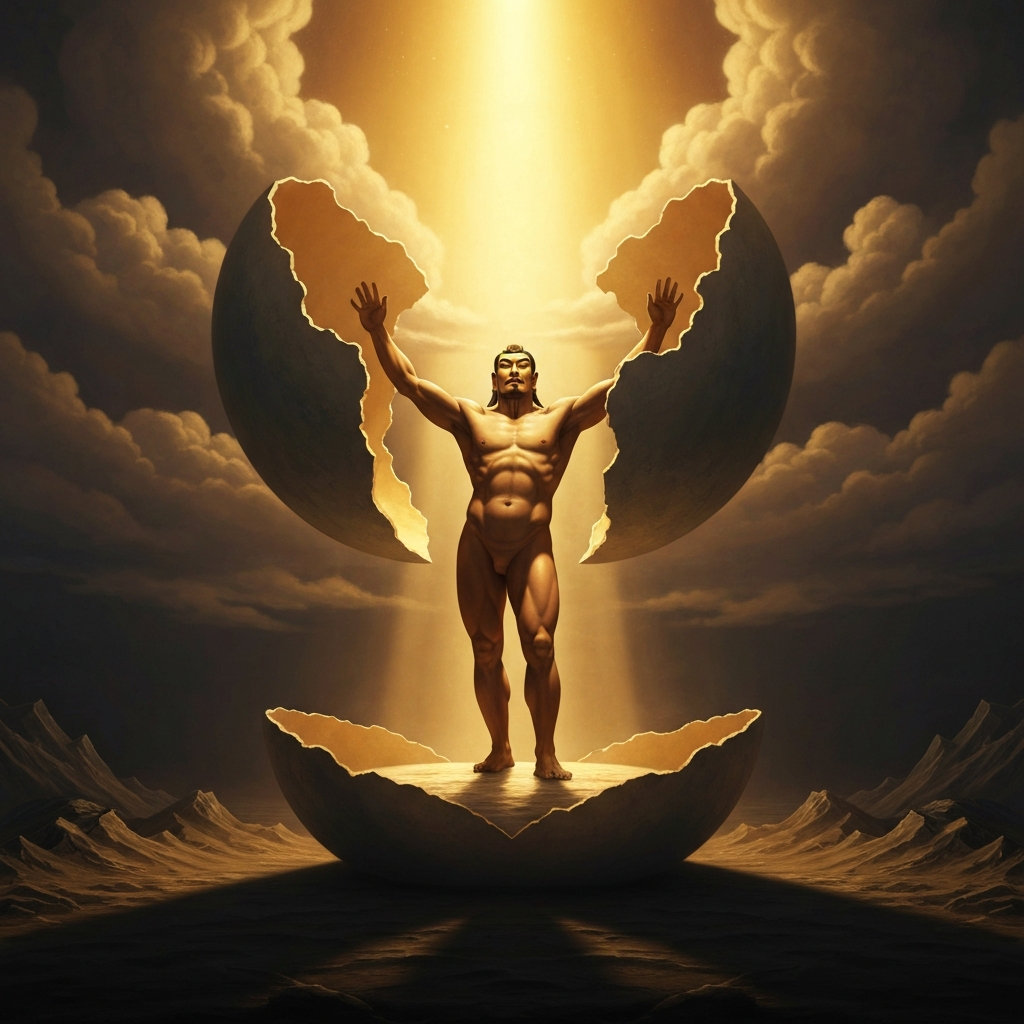
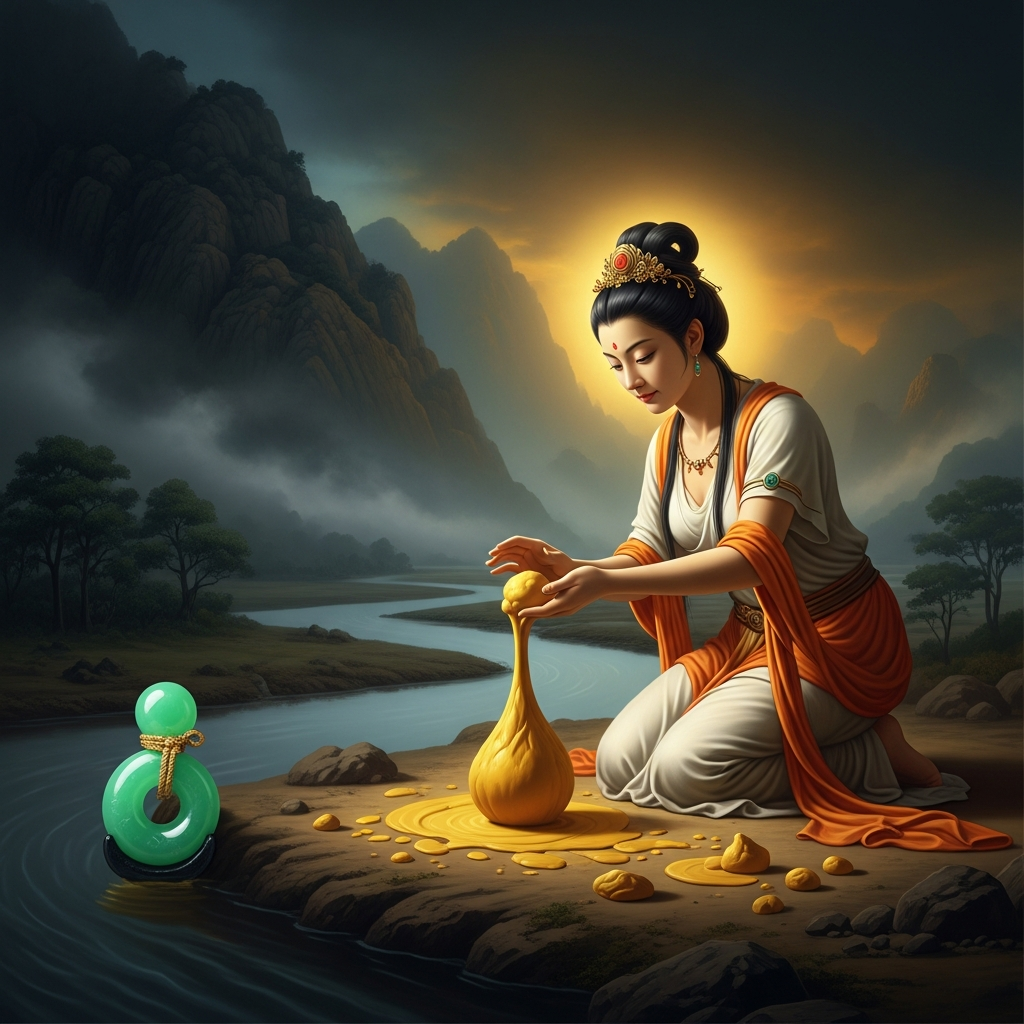
He does not create. He manages. In the Chinese cosmological vision, the universe already exists and always has; what heaven does is maintain it, regulate it, keep the various forces in the proper relationships. The Jade Emperor’s job is not the exciting work of making the world — that was done by Pángǔ, Nüwa, Fúxī, Shénnóng, the ones who came before — it is the unglamorous but essential work of keeping the world running according to law.
Which is why, when Sun Wukong eventually disrupts the court, the disruption is so catastrophic. It is not that the Monkey King breaks the rules. It is that he shows the court to be dependent on compliance — that the entire divine bureaucracy only functions if its subjects agree to be subjects, and a Monkey King who refuses to agree reveals the court’s deepest vulnerability: it can administer everything except the one person who declines to be administered.
The jade palace stands above the thirty-three heavens. The gate is guarded. The officials are at their posts. The reports are coming in from every household, every territory, every sea. The Emperor reads them. He stamps his seal on the decrees. Outside the jade walls, the clouds below him extend in every direction, and below the clouds, the world goes on.
Scenes

Echoes Across Traditions
Entities
- Jade Emperor (Yù Huáng Dàdì)
- the Heavenly Queen Mother
- the Thirty-Three Heavens
- the Celestial Ministers
- the Earth Gods
Sources
- Journey to the West (西遊記), Wu Cheng'en, c. 1592 — canonical literary description of the Jade Emperor's court
- Investiture of the Gods (封神演義), Xu Zhonglin, c. 1620
- Stephan Feuchtwang, *Popular Religion in China: The Imperial Metaphor* (Curzon, 2001)
- Wolfram Eberhard, *A Dictionary of Chinese Symbols* (Routledge, 1986)