The Medicine Buddha's Lapis Lazuli Glow
mythic time — the Medicine Buddha's vows made in a distant cosmic age, the practice brought to Tibet from China and India in the 7th-8th centuries CE · Vaidurya Nirbhasa — the Pure Land of the Medicine Buddha, 'the realm of lapis lazuli radiance,' in the eastern direction
Contents
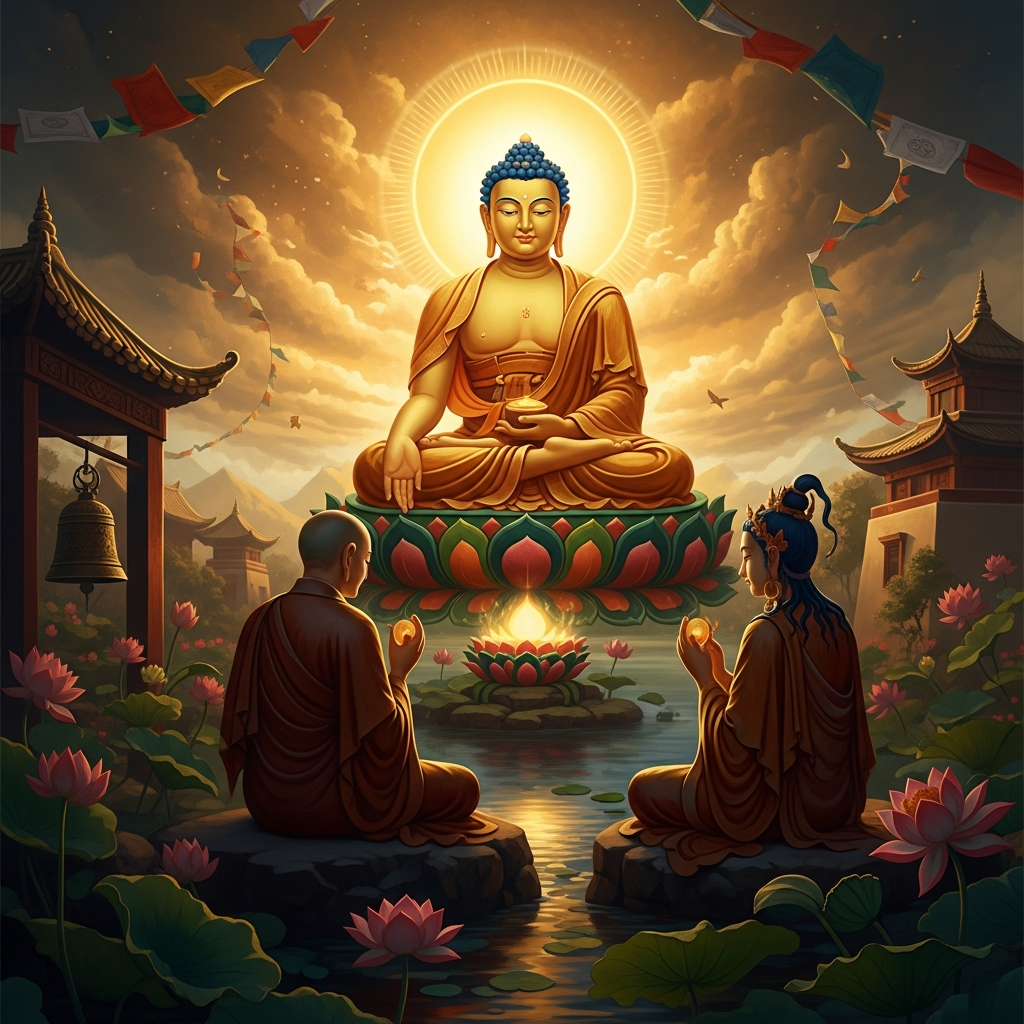
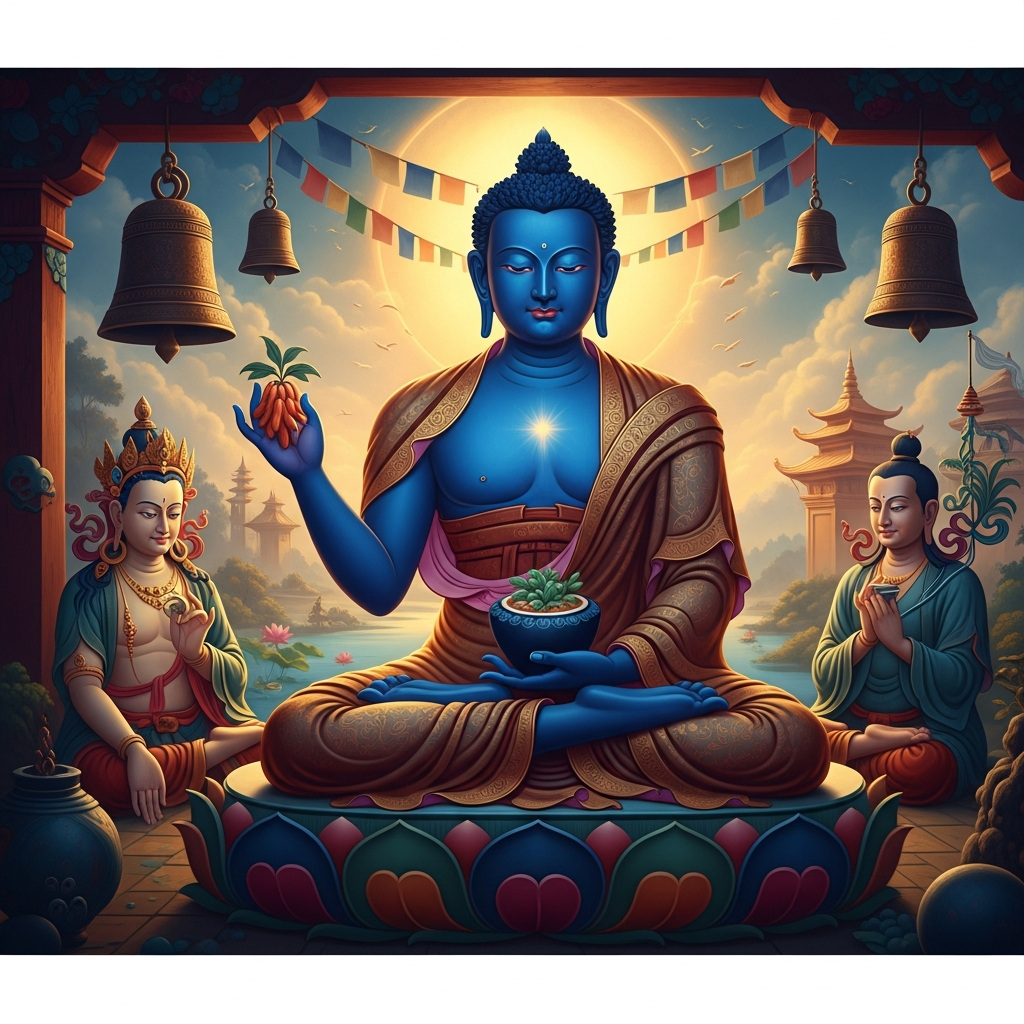
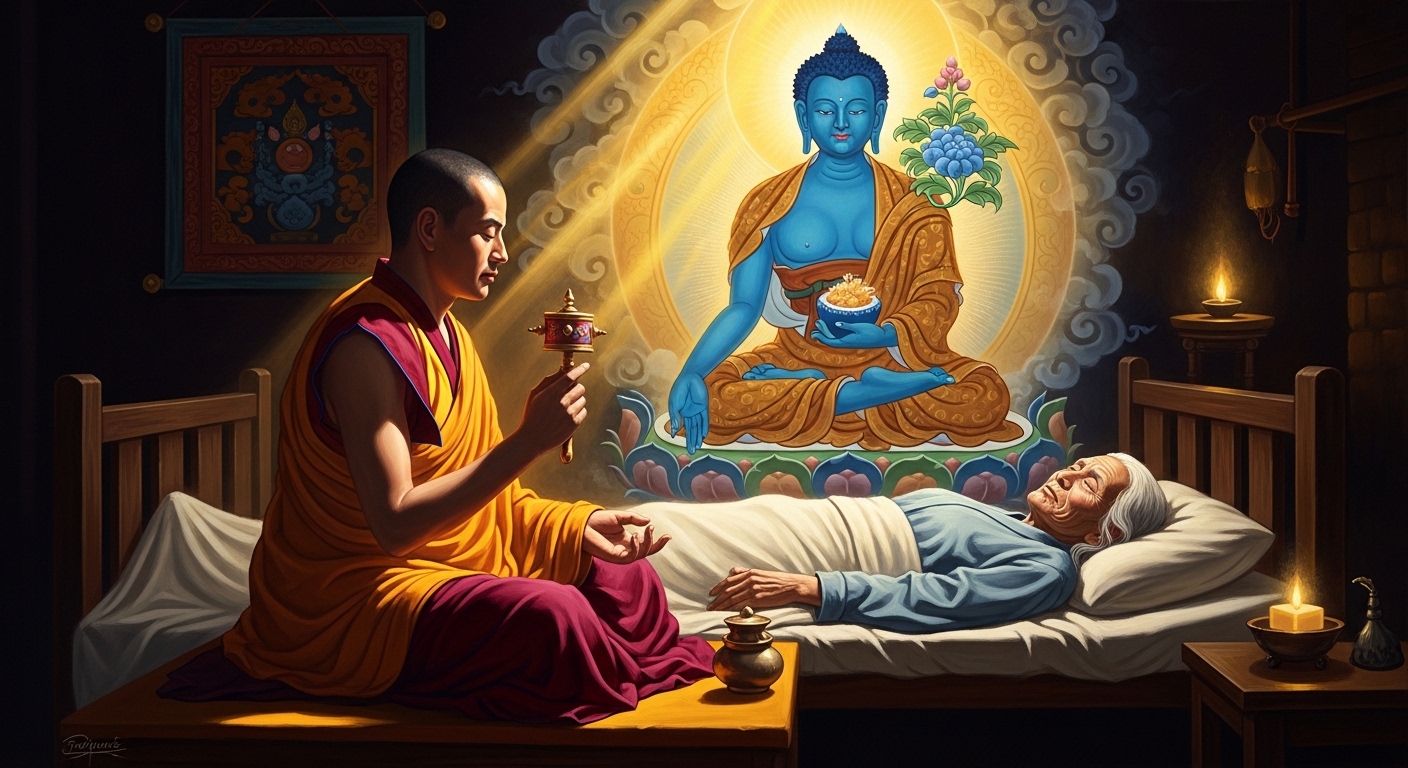
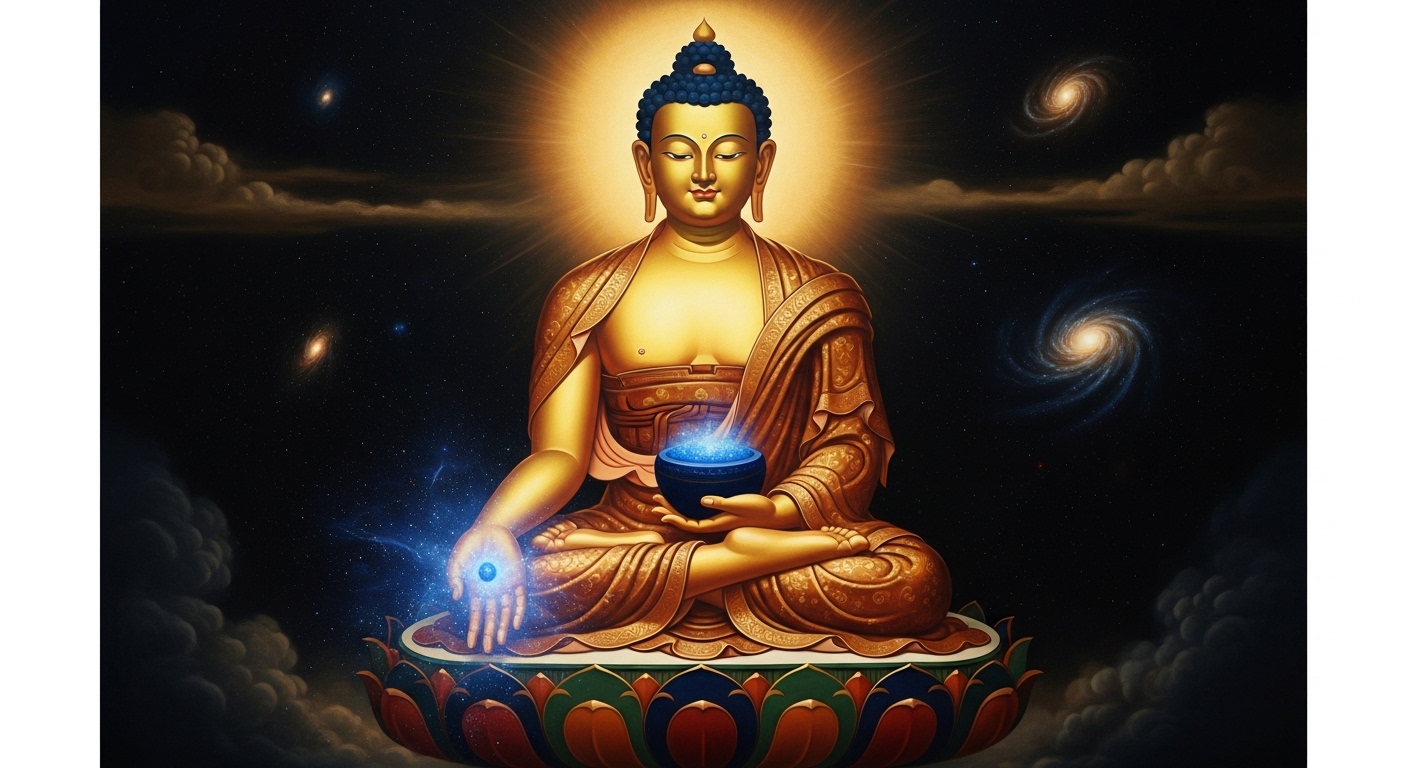
The Medicine Buddha — Sangye Menla, his body the deep blue of lapis lazuli, holding the myrobalan fruit and a bowl of medicine — made twelve vows that established healing itself as a path to enlightenment, and his practice is used throughout Tibet whenever someone is ill.
- When
- mythic time — the Medicine Buddha's vows made in a distant cosmic age, the practice brought to Tibet from China and India in the 7th-8th centuries CE
- Where
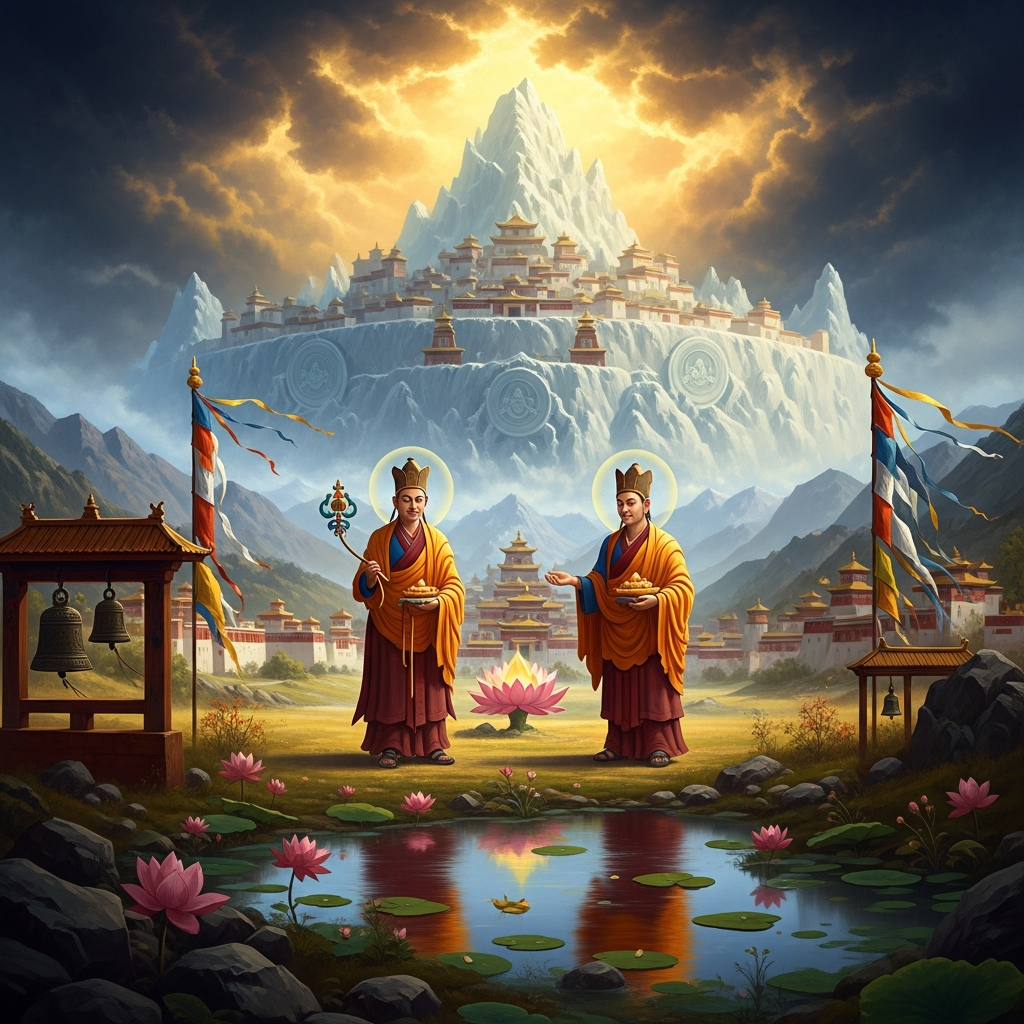
- Vaidurya Nirbhasa — the Pure Land of the Medicine Buddha, 'the realm of lapis lazuli radiance,' in the eastern direction
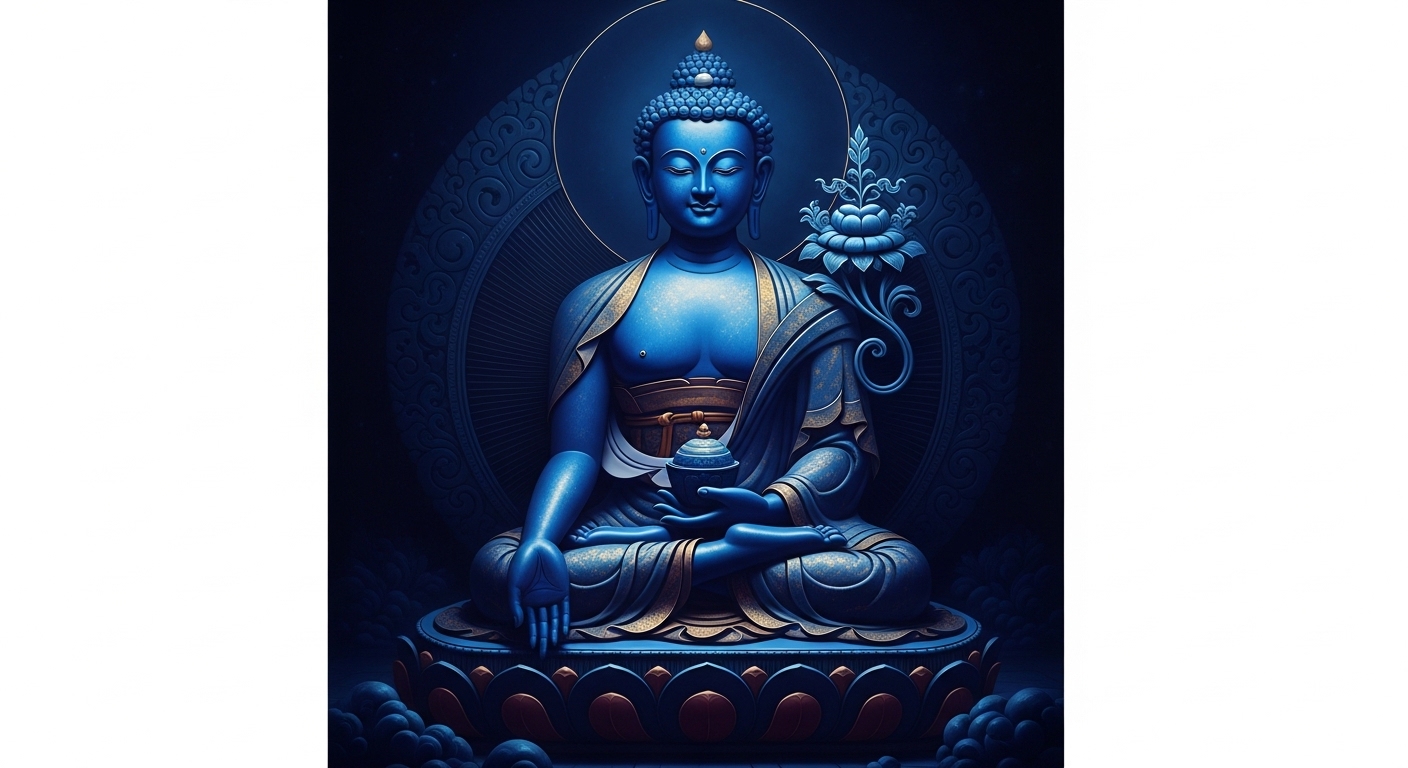
His body is the color of lapis lazuli.
This is the iconographic requirement: the Medicine Buddha must be depicted in the deep, saturated blue of lapis lazuli — the semi-precious stone that was Tibet’s primary export, carried across the Silk Road to the courts of Persia and Rome. The color is not decorative. It is the color of the sky at the precise moment before sunrise, the color of the deepest water, the color that is furthest from the reddish hues of flesh and blood and everything that can be wounded.
He sits in the posture of meditative repose. His right hand, lowered in the gesture of generosity, holds the branch of myrobalan — the Tibetan medicinal fruit arura, the amla, the fruit that Tibetan medical texts say can cure every disease when properly prepared. His left hand holds a bowl of medicine. He is, in posture and in ornament, a physician: the posture of someone who is prepared to give, and the tool of the giving is the branch and the bowl.
The twelve vows he made before achieving Buddhahood are all oriented toward specific conditions of suffering: he vowed to provide light to those in darkness, to heal those who are ill, to feed those who are hungry, to clothe those who are naked. The physical specificity of the vows is unusual in the Mahayana context, where the bodhisattva’s vow tends to be expressed in universal terms. The Medicine Buddha vowed to address particular physical conditions. The divine engagement with body and illness is not peripheral but central.
The practice is performed at sickbeds throughout Tibet.
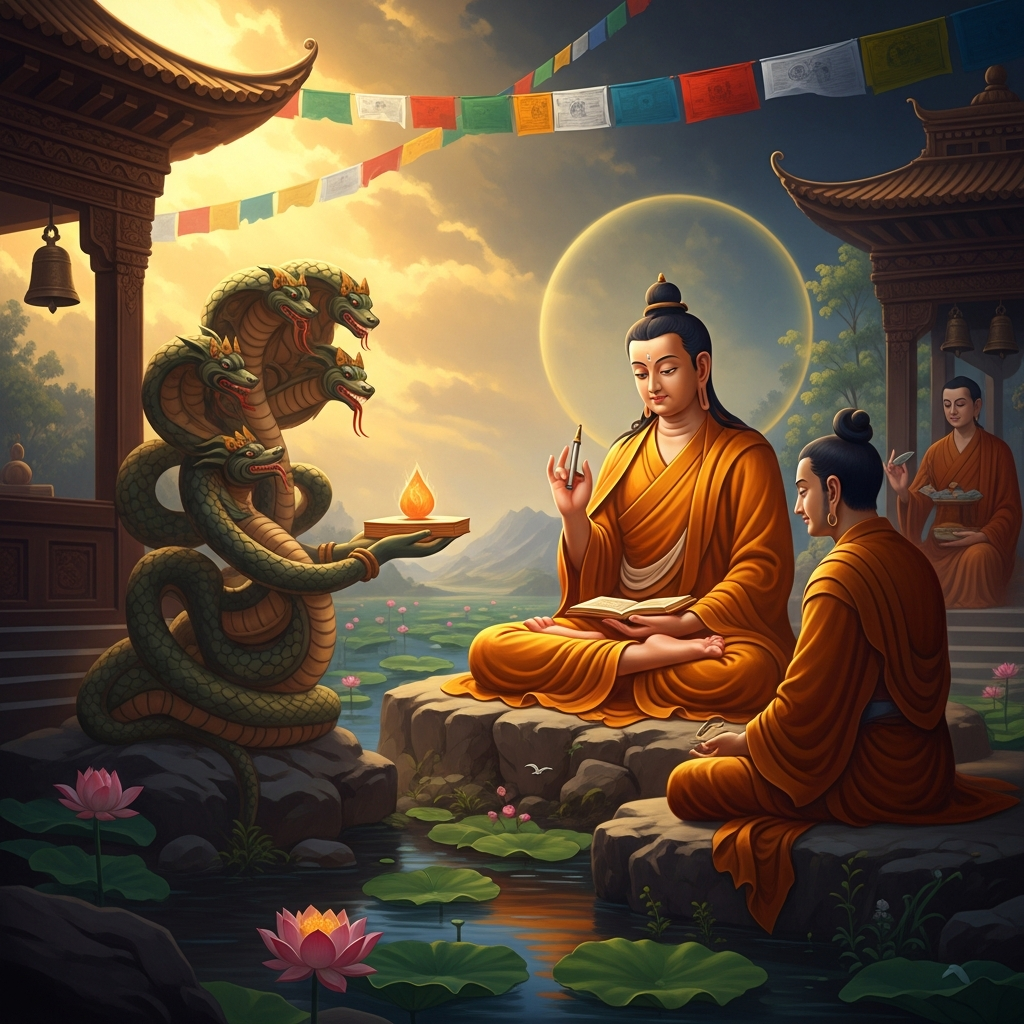
When someone is ill and ordinary medicine is not working, the family calls for a lama who knows the Medicine Buddha practice. The practice involves the visualization of the lapis-blue body, the recitation of the mantra — Tayata Om Bekandze Bekandze Maha Bekandze Radza Samudgate Soha — the offering of prayers, and the specific dedication of merit to the healing of the sick person.
This is not alternative medicine replacing treatment. In the Tibetan medical tradition — which is one of the most sophisticated traditional medical systems in the world — the Medicine Buddha practice is simultaneous with and complementary to physical treatment. The physician who treats the patient is practicing the Medicine Buddha’s vows in physical form. The lama who performs the ritual is addressing the mental and karmic dimensions of the illness. Neither is complete without the other.
The tradition’s understanding of illness includes the recognition that physical disease arises in a context of mental states, karma, and environmental conditions — that treating only the physical manifestation without attending to the context will address symptoms without addressing causes. The Medicine Buddha practice treats the context.
The lapis lazuli glow is the healing itself, visible.
When the practice is done well — when the practitioner has genuinely settled into the visualization, genuinely established the Medicine Buddha’s presence in the space, genuinely made the aspiration for the ill person — witnesses sometimes report a quality of light in the room. Not dramatic, not a blaze of miraculous light. A quality of presence, a quality of attention, the room feeling larger than its dimensions.
This is the Medicine Buddha’s instruction: that healing attention, focused by practice and intention, is itself medicinal. Not as a metaphor. As a physical reality. The compassionate attention of a skilled practitioner — a physician, a lama, a nurse, a family member who has genuinely given themselves to the care of the person in the bed — is physiologically active. It changes the environment of the illness. It changes the ill person’s relationship to their condition.
The myrobalan branch in the outstretched hand is always there. The bowl is always full. The only question is whether the practitioner, in whatever role they occupy beside the sickbed, has aligned themselves with the offering.
Scenes
Echoes Across Traditions
Entities
- Sangye Menla (Medicine Buddha, Bhaisajyaguru)
- the seven Medicine Buddhas (his retinue)
- the pharmacist Bhaisajyaraja (his Bodhisattva aspect)
Sources
- Raoul Birnbaum, *The Healing Buddha* (Shambhala, 1979)
- Tulku Urgyen Rinpoche, *Rainbow Painting* (Rangjung Yeshe, 1995)
- Tenzin Gyatso (Dalai Lama), *Healing Anger* (Snow Lion, 1997)