The Kālacakra Mandala: Built and Destroyed
performed continuously throughout Tibetan Buddhist history — the first Kalachakra initiation in Tibet c. 1027 CE · Wherever a Kalachakra initiation is performed — monasteries throughout Tibet, India, and now worldwide in the diaspora
Contents
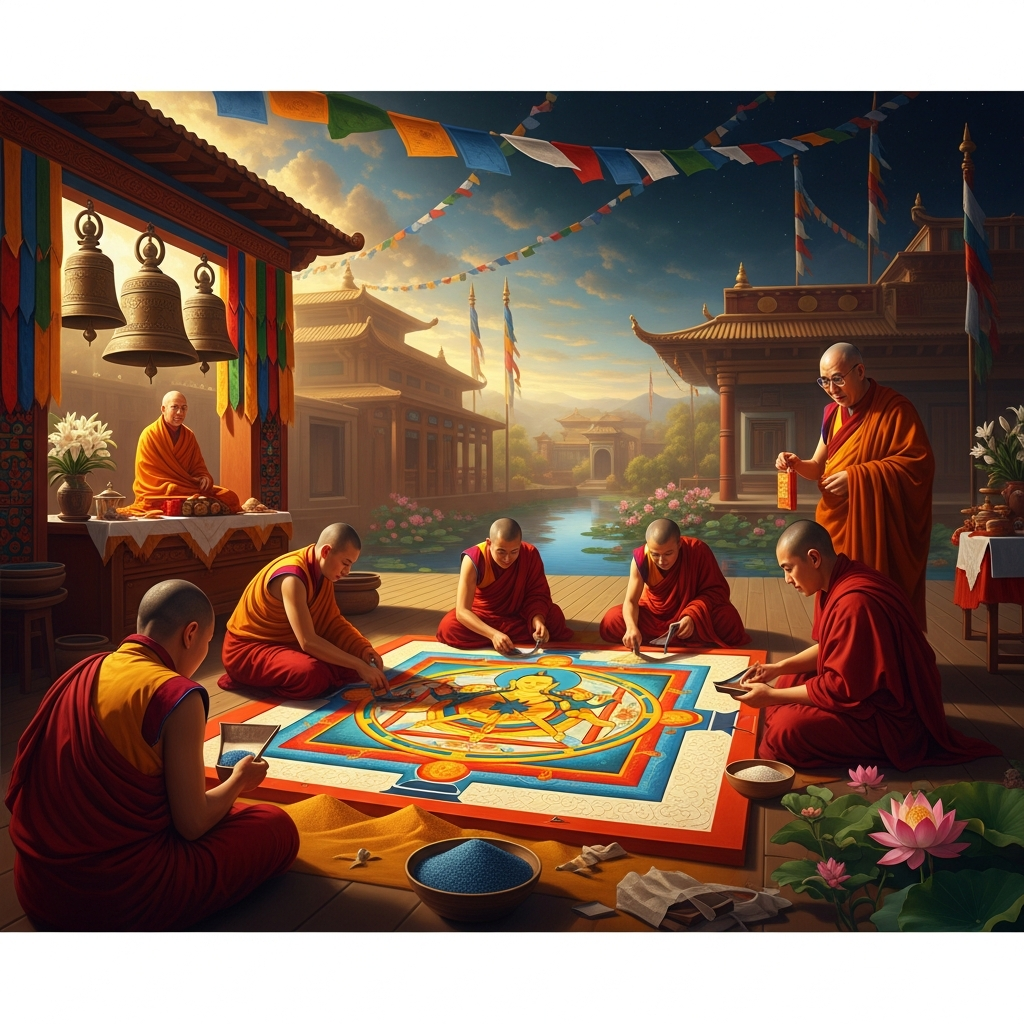
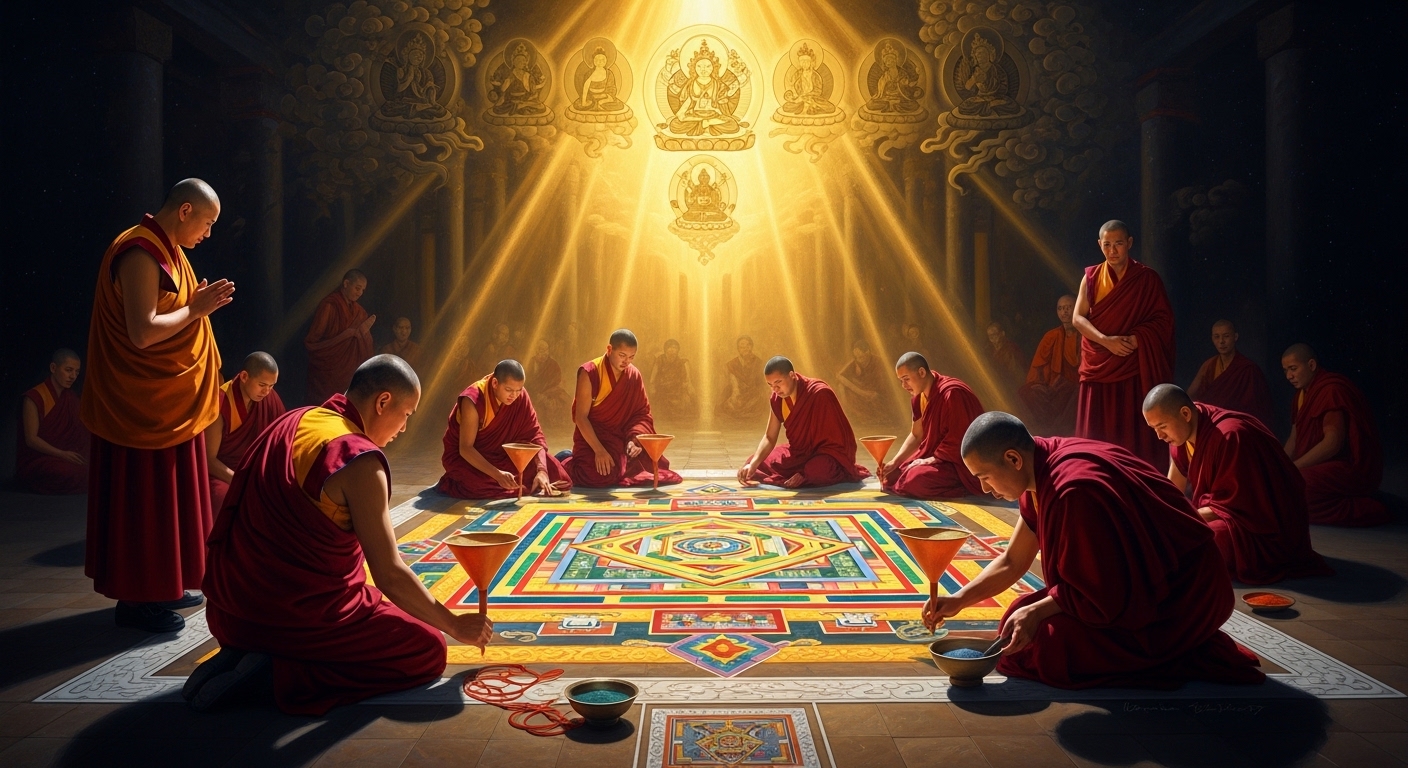
Monks spend weeks building an intricate sand mandala of the Kalachakra deity — laying millions of grains of colored sand with precision instruments to create a cosmological diagram of breathtaking complexity — and then sweep it into a container and pour it into a river.
- When
- performed continuously throughout Tibetan Buddhist history — the first Kalachakra initiation in Tibet c. 1027 CE
- Where
- Wherever a Kalachakra initiation is performed — monasteries throughout Tibet, India, and now worldwide in the diaspora
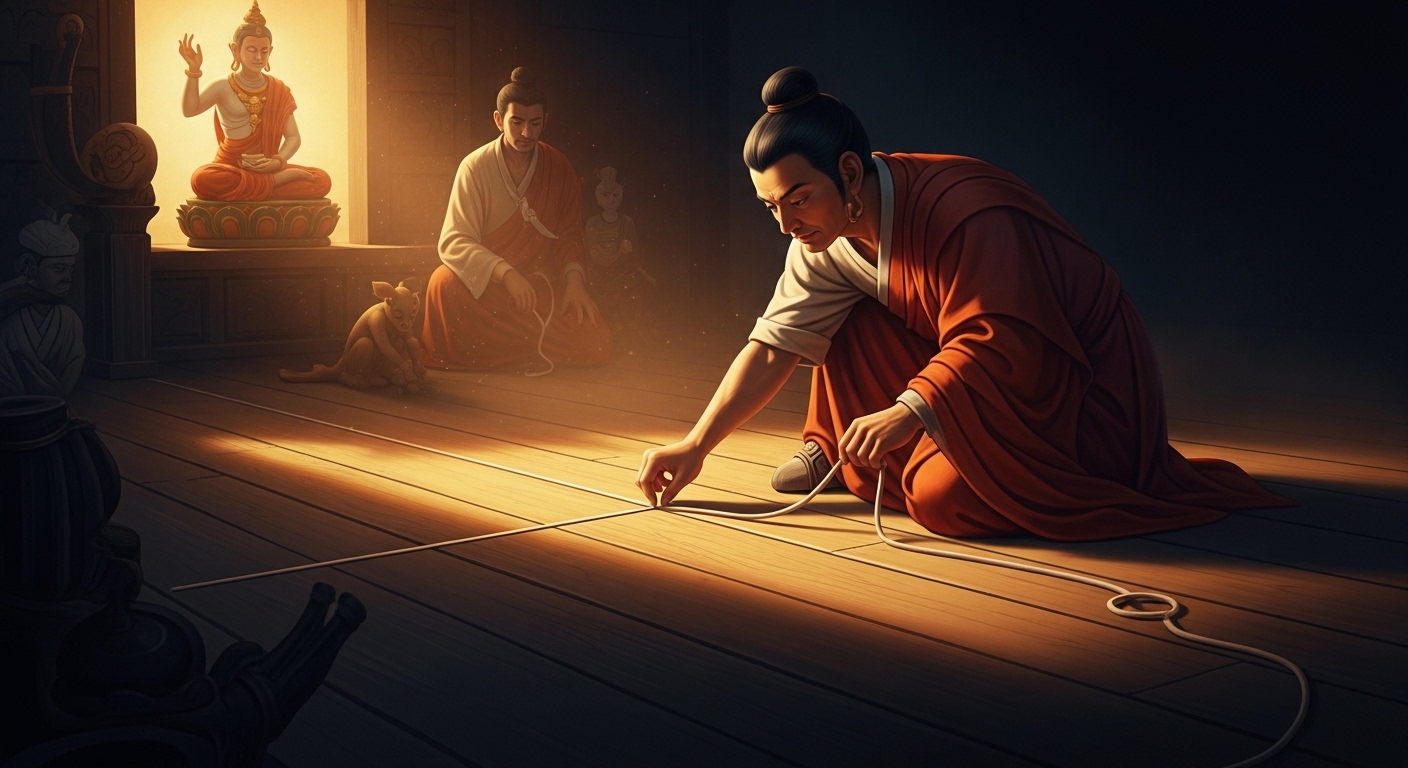
The monks begin with a chalk line.
A single line, drawn on a wooden platform with a measuring cord, establishing the center point from which everything else will be calculated. The Kalachakra mandala has a precisely defined structure: four concentric circles, five mandalas nested within each other, 722 deities occupying specific locations within the palace architecture. Every element is specified in the text. The monks who build it have been trained in the specifications for years.
The sand is colored. The colors are created by grinding minerals — lapis lazuli for the blues, vermillion for the reds, malachite for the greens, gold for the yellows and whites. The colored sand is funneled into metal cones called chak-pur — traditional Tibetan sand-pouring instruments — and the monks sit for twelve hours a day applying sand grain by grain to the board, working from the center outward, following the specifications.
This takes weeks.
What emerges is a diagram of reality.
The Kalachakra mandala is not decorative. It is a map — of the universe, of the human body, of the relationship between time and consciousness. The outer mandala represents the physical universe. The inner mandala represents the body’s energy system. The “alternative” mandala represents the purified mind. The three are superimposed, identical in structure: the universe and the body and the mind are the same thing, mapped at different scales.
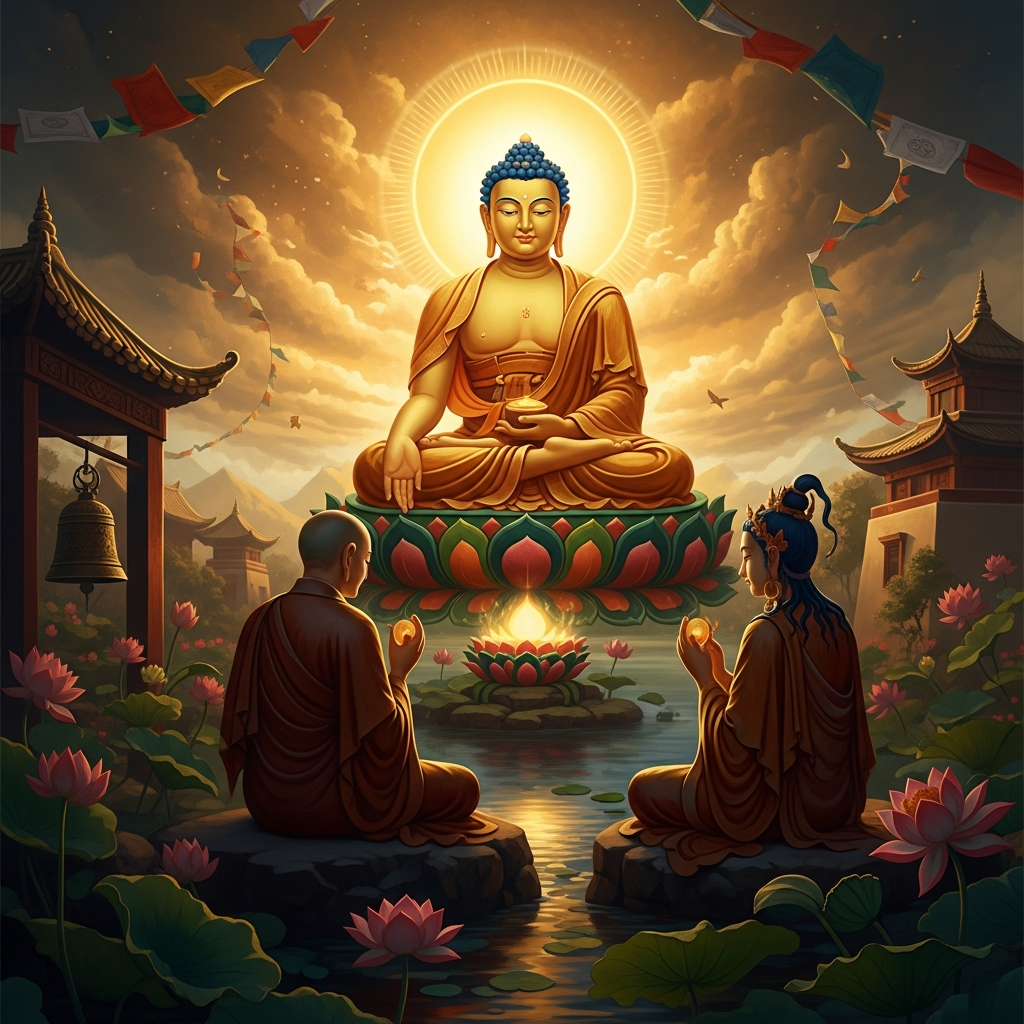
The 722 deities who inhabit the mandala’s architecture represent the complete range of possible consciousness states — the entire spectrum of experience, each one assigned a specific location in the palace. The deity at the center — Kalachakra himself, in union with his consort Vishvamata — represents the integration of all of them: time and space and consciousness resolved into the union of awareness and emptiness.
The mandala that the monks are building is a training ground. Practitioners who receive the Kalachakra initiation are being introduced to this map — given the authorization to practice with the deities in their specific locations, to inhabit the palace mentally in meditation, to work with the mandala as an internal landscape rather than an external diagram.
The external diagram is built so that practitioners can have something to look at. Once seen, the internal mandala can be worked with without the sand board.
On the final day, the Dalai Lama performs the dissolution.
He chants the final verses. The monks bring out small rakes and, starting from the outer edges, begin sweeping the sand toward the center. The weeks of work disappear in twenty minutes. The colors that were separate become, as they mix, a uniform dark grey-brown — the color of nothing in particular, the color of potential before differentiation.
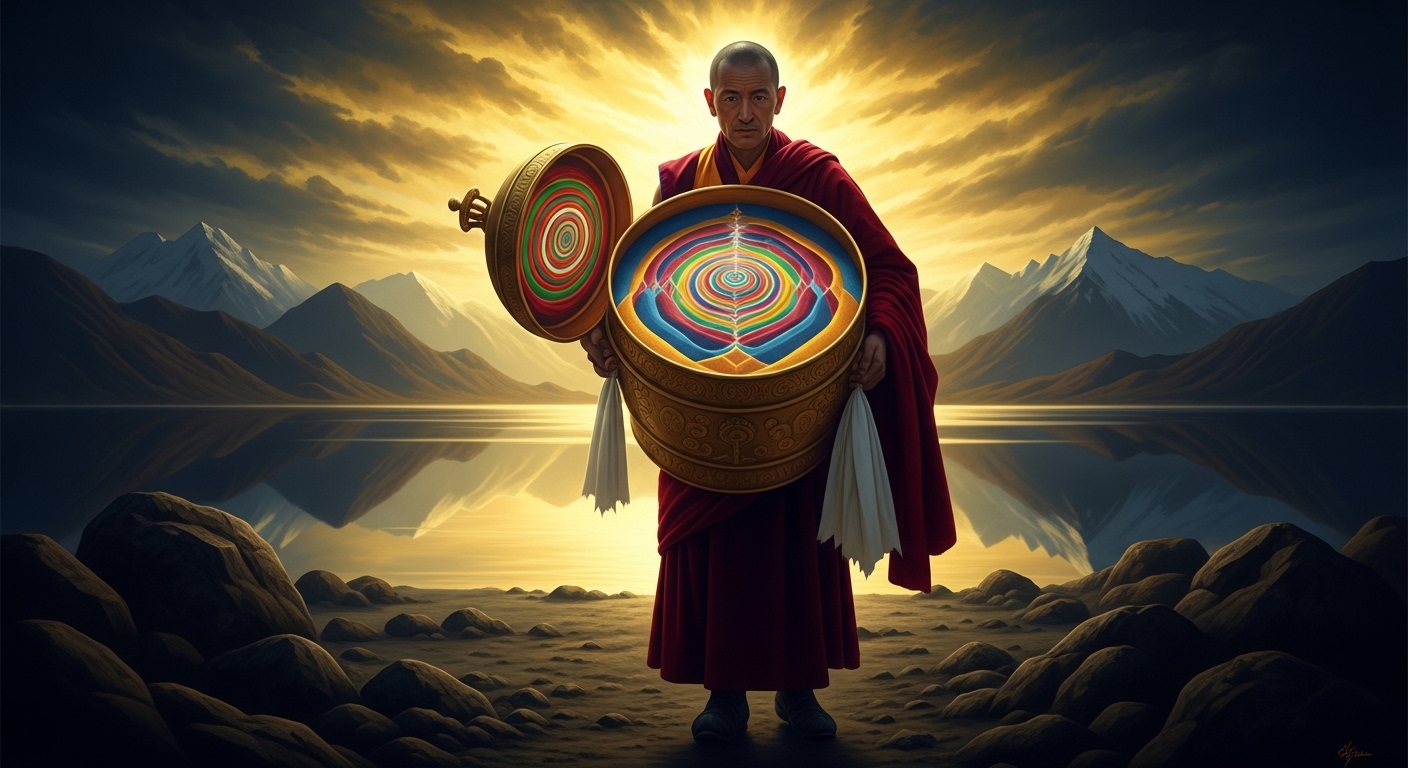
The mixed sand is gathered into a container. The container is carried to the nearest significant body of water. The sand is poured in.
The ritual explanation is that the mixed sand carries the blessings generated during the construction and the initiation, and that these blessings are distributed through the water to all the beings that water touches — which, since water connects to other water, is all the beings of the world.
The practical explanation is that every element of the construction was offering. The offering was given. The blessing was distributed. The cycle is complete. There is nothing left to hold on to.
Practitioners who have attended these ceremonies often report that the dissolution is more moving than the completion. The completed mandala is beautiful. The dissolution is true. The weeks of precision and the minutes of sweeping are together the teaching that no verbal instruction could accomplish: beauty is real; beauty is impermanent; these are not two facts that contradict each other. They are one fact, and it is this.
The river carries the sand to the sea.
Scenes
Echoes Across Traditions
Entities
- the monks who build and destroy the mandala
- Kalachakra (the Wheel of Time deity)
- the Dalai Lama (the traditional officiant)
- Suchandra (the first king who received the Kalachakra)
Sources
- Vesna Wallace, *The Kalachakra Tantra* (Oxford University Press, 2001)
- Roger Jackson, trans., *Is Enlightenment Possible? Dharmakirti and rGyal tshab rje on Knowledge* (Snow Lion, 1993)
- John Newman, 'A Brief History of the Kalachakra,' in *The Wheel of Time* (Snow Lion, 1985)