Contents
Qays ibn al-Mulawwah falls in love with Layla at school, is refused by her father, loses his mind and his name — becoming Majnūn, the Possessed One — and wanders the desert with wild animals, writing her name on every rock, until death is the only reunion possible.
- When
- 7th century CE — the original Arabic story, recast by Nizami Ganjavi c. 1188 CE
- Where
- The Arabian desert in the original; Nizami's version set in the Caucasus and eastern Islamic world
His name was Qays, but that name is almost gone.
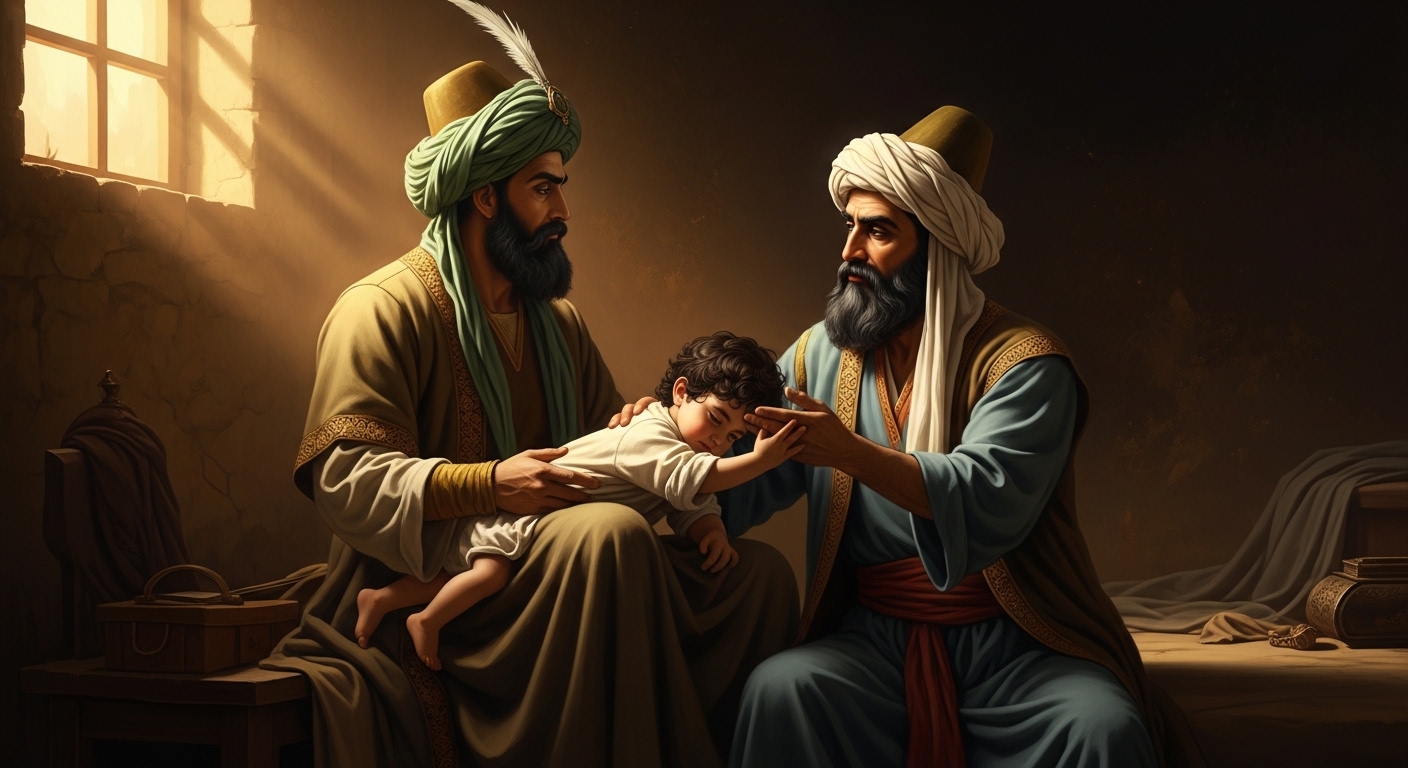
He fell in love at school — or at the age when boys and girls in the story’s setting still mixed freely, before the social separations hardened. Layla was there, and Layla was beautiful, and Qays fell in love with a completeness that had no room in it for anything else. They were children. They held hands perhaps. Perhaps only eyes.
Then the separations came: Layla went to the women’s quarters, Qays to the men’s world, and the distance that opened between them had the specific cruelty of distances that are social rather than geographical — she was not far away, but she was in a different country.
He petitioned her father.
The father refused. The refusal was not arbitrary cruelty — in the story’s social logic, Qays by this point had already begun to exhibit the behavior that would earn him his epithet: he was visibly, publicly, embarrassingly besotted. He wrote poems about Layla on every flat surface. He said her name at inappropriate moments. He wept in public. He was a young man who had lost the regulation of his emotional life to a love that would not be regulated, and a father looking for a husband for his daughter saw exactly what was in front of him: a man already lost.
He became Majnūn — the possessed one, the one seized by a jinn, the Arabic word for madman.
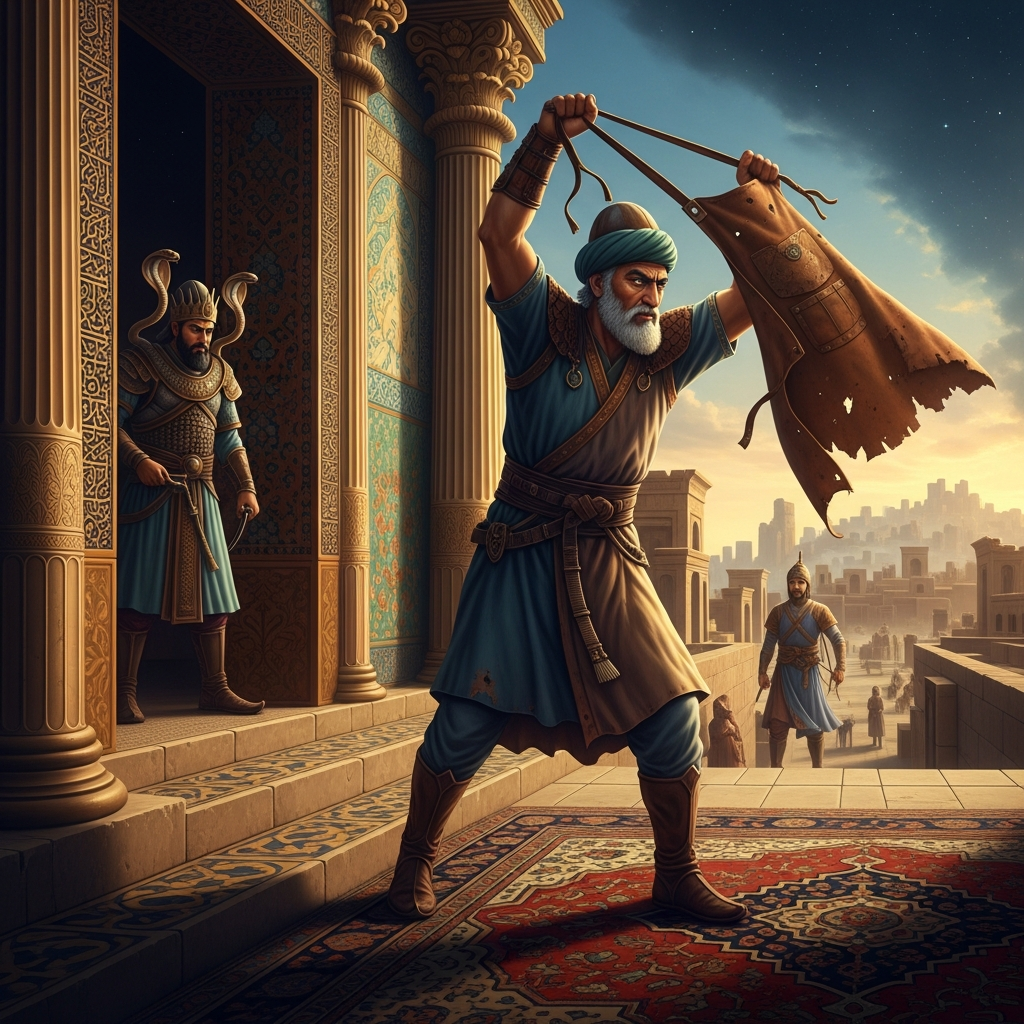
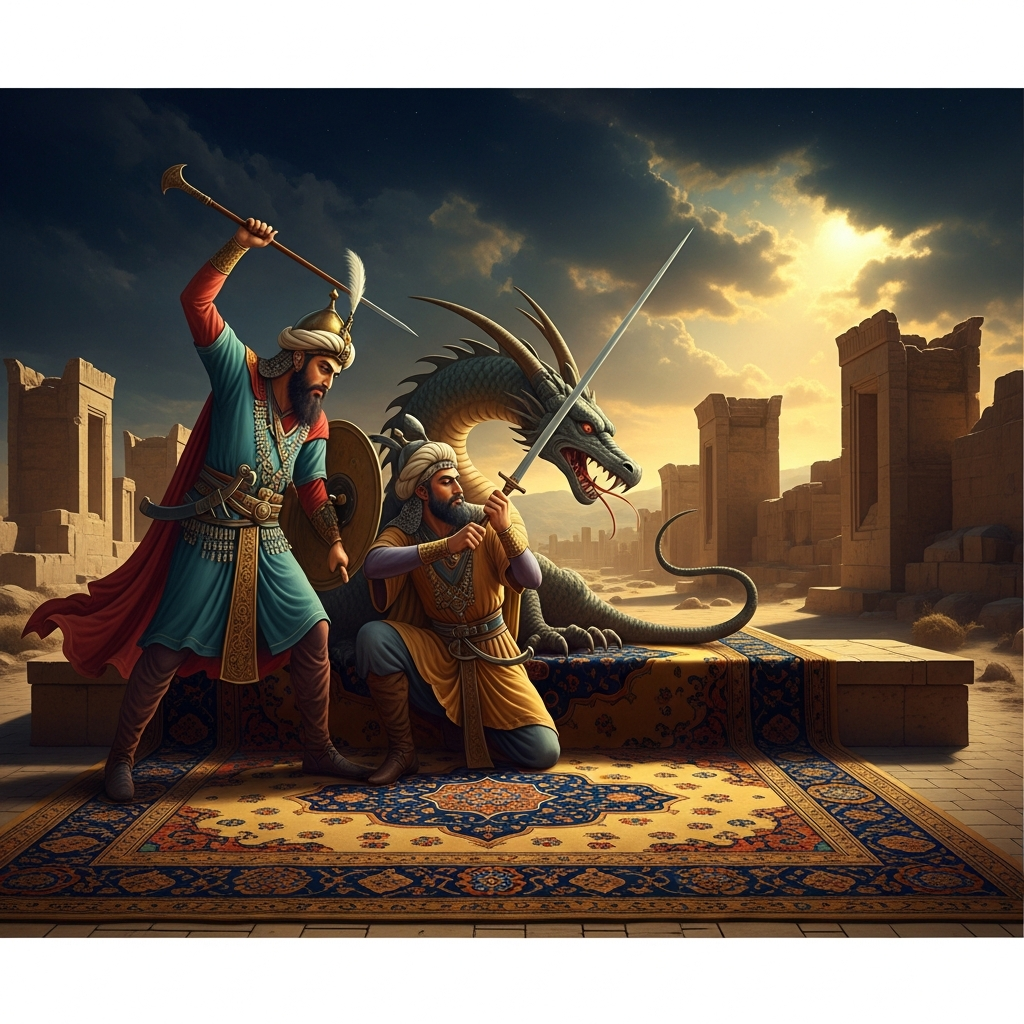
Nawfal, a powerful man who took pity on Majnūn, assembled an army and went to war against Layla’s tribe to win her by force. The campaign succeeded militarily: Nawfal’s forces defeated Layla’s tribe. But Layla’s father still refused, and the victory converted into a negotiated peace in which Layla remained where she was. Nawfal, humiliated, withdrew.
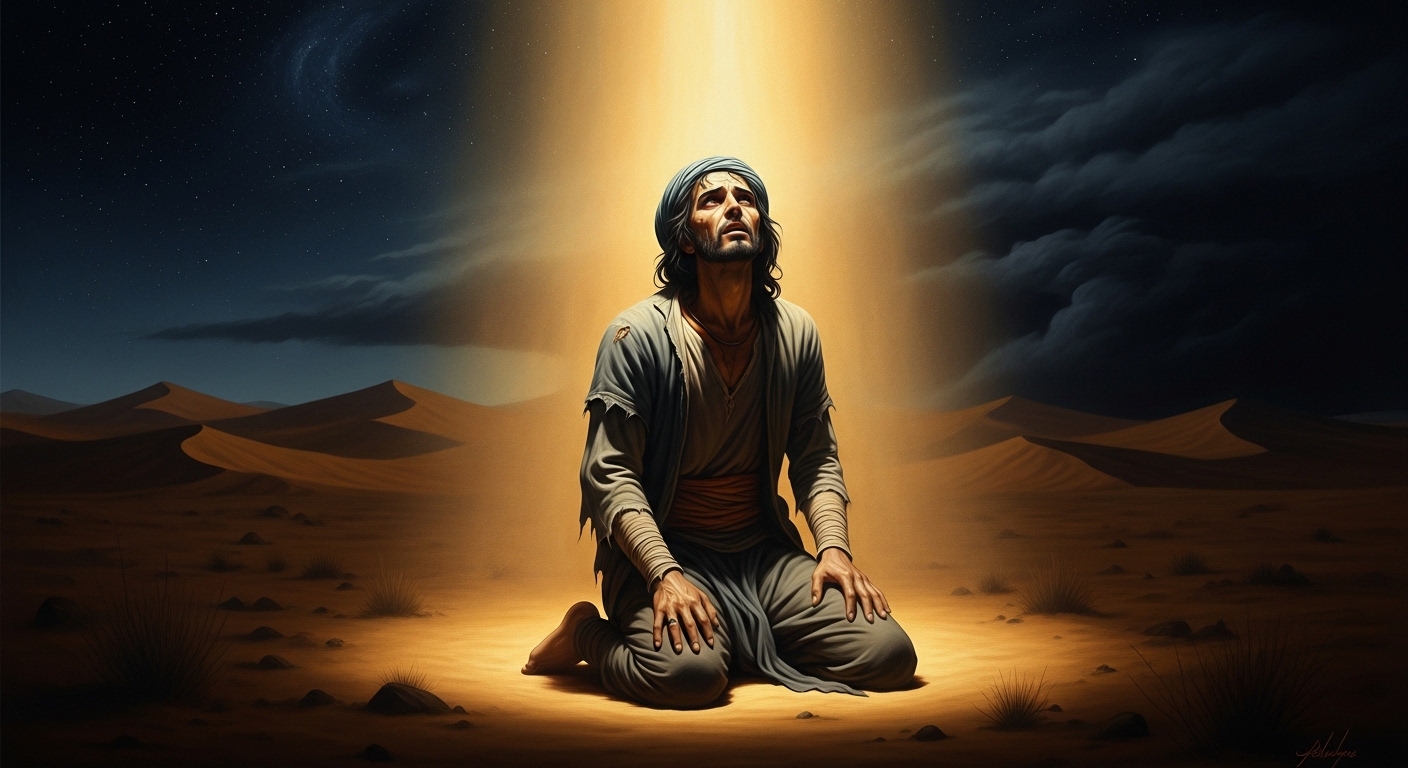
Majnūn went to the desert.
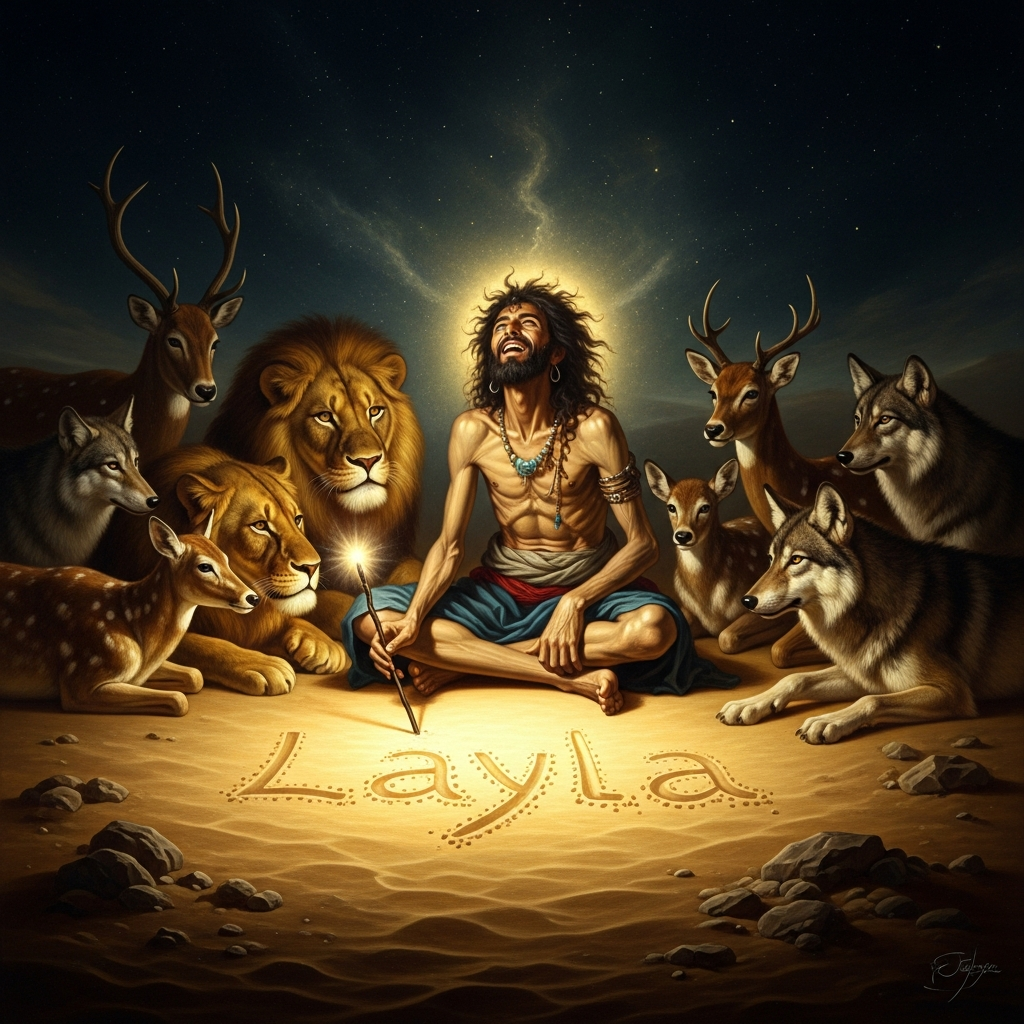
This is the central image of the story: the wanderer in the wilderness, too mad for human company, too devoted for the human world’s accommodations. The animals of the desert began to accompany him — lions, wolves, deer — because they recognized in him a creature who had gone beyond the human social world into something closer to raw natural existence. He was fed by strangers who recognized his holiness, because in the Islamic world the mad lover of God (and Layla was always potentially God in this story) has the status of a saint.
He wrote her name on rocks.
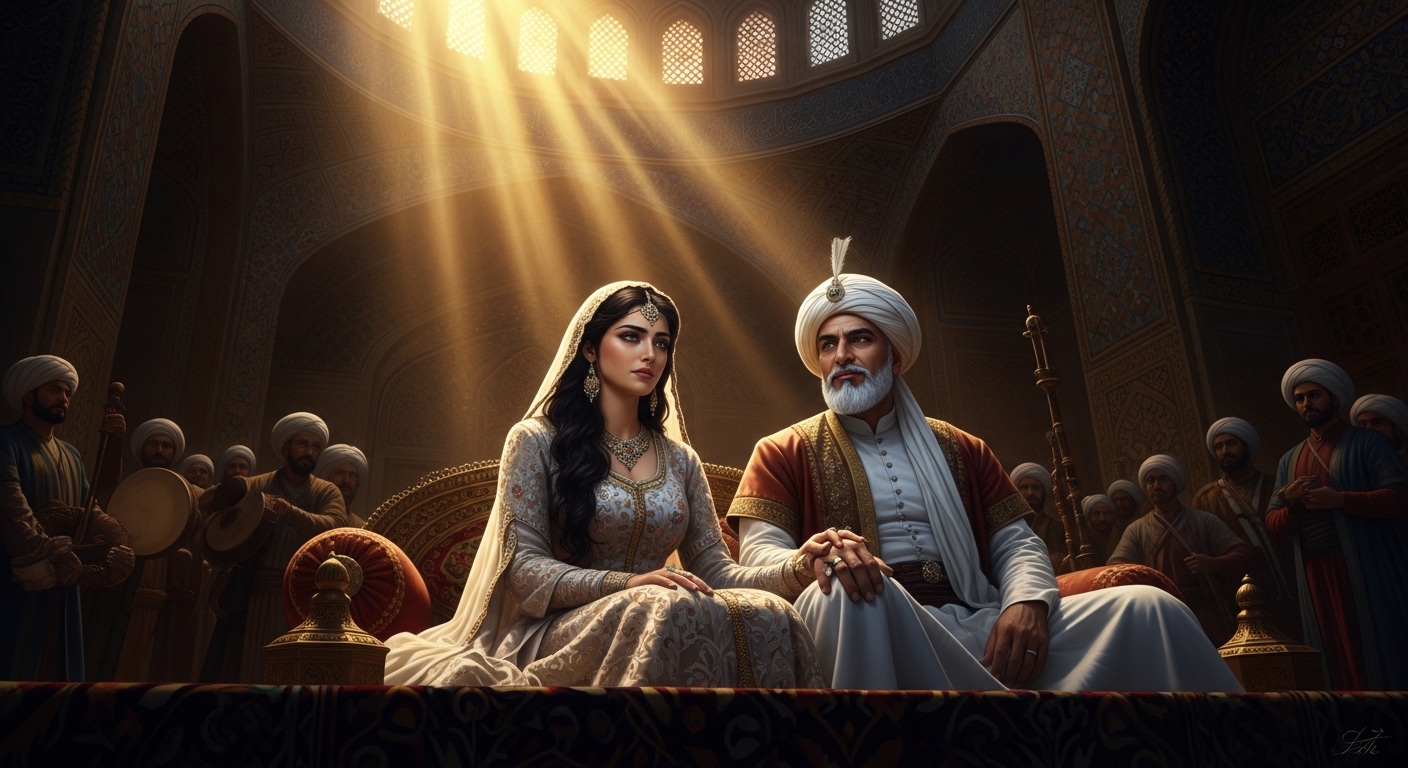
Layla, meanwhile, was married to Ibn Salam — a respectable match, a wealthy man, a man who was not Majnūn. She was a good wife by the social standards of the story’s world. She did not betray her husband. She also, in the privacy of what only Nizami knows, loved Majnūn with a steadiness that the story’s surface can’t contain — the Layla who is God doesn’t stop being the Beloved just because she is unavailable.
They met, eventually, under supervision, through intermediaries, in the constrained formats that the social world allowed.
Ibn Salam died. Layla was free. But she was also dying. The grief of years of constrained love, the weight of the name written on all the rocks, the knowledge of what she was to Majnūn and what Majnūn was in the world — it had done its slow work. She died.
Majnūn died on her grave.
The union the social world prevented, the death accomplished. The two graves side by side became a pilgrimage site, the way the graves of all great lovers become pilgrimage sites — because the lovers who went to the end of love, who paid the full price, who refused all the substitutions the world offered, are considered to have done something sacred.
Rumi read this story and said: Majnūn is the soul. Layla is God. The madness is correct. The desert is correct. The rocks with her name are correct. The lover who loses the social mind and wanders with lions, writing the name of the Beloved on everything — that lover is the only lover who has understood what love requires.
The sane ones go home.
The possessed ones go to the desert.
The desert is where the name is.
Scenes
Echoes Across Traditions
Entities
- Majnūn (Qays)
- Layla
- Layla's father
- Nawfal
- Ibn Salam
Sources
- Nizami Ganjavi, *Layla and Majnun*, translated by Rudolf Gelpke (Omega, 1966)
- Annemarie Schimmel, *A Two-Colored Brocade: The Imagery of Persian Poetry* (UNC, 1992)
- Ali Asghar Seyed-Gohrab, *Layla and Majnun: Love, Madness and Mystic Longing in Nizami's Epic Romance* (Brill, 2003)
- Rumi, *Masnavi* I — on Majnun as the archetype of divine love-madness