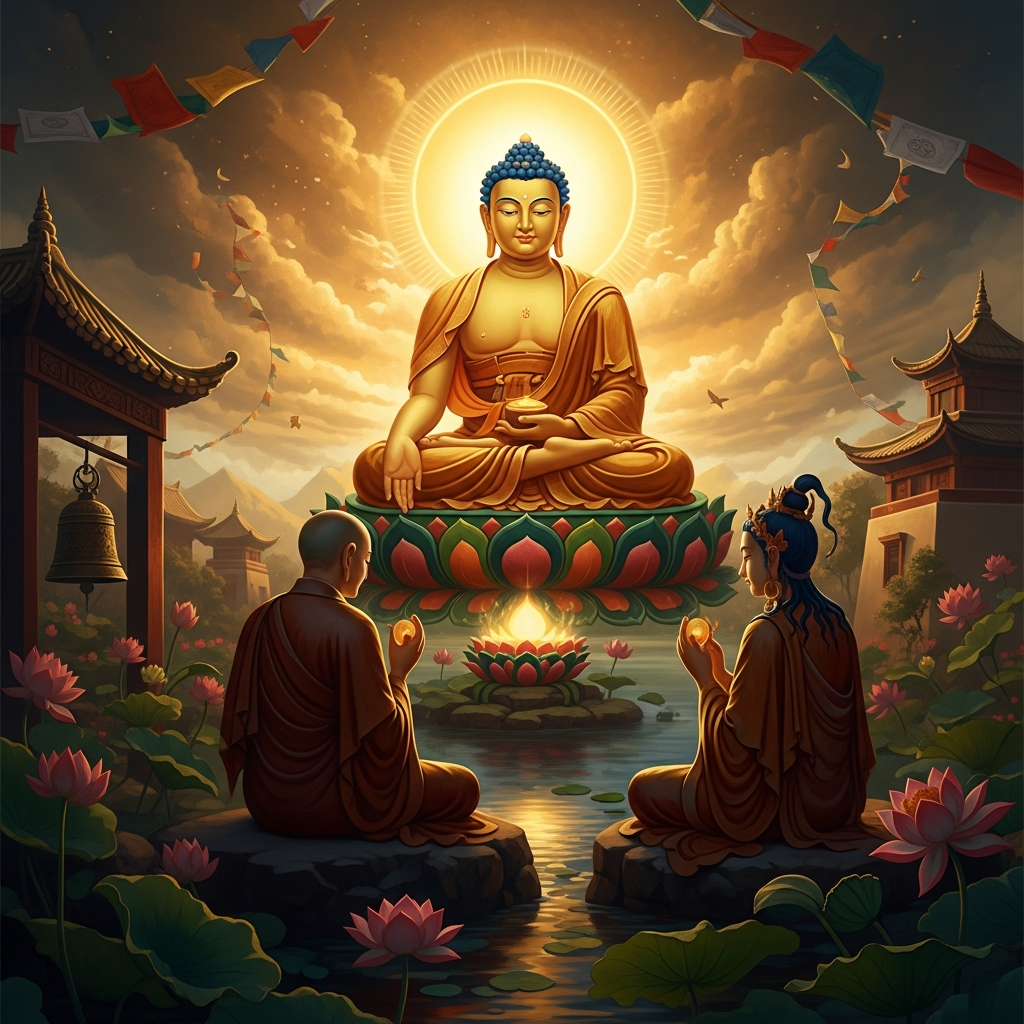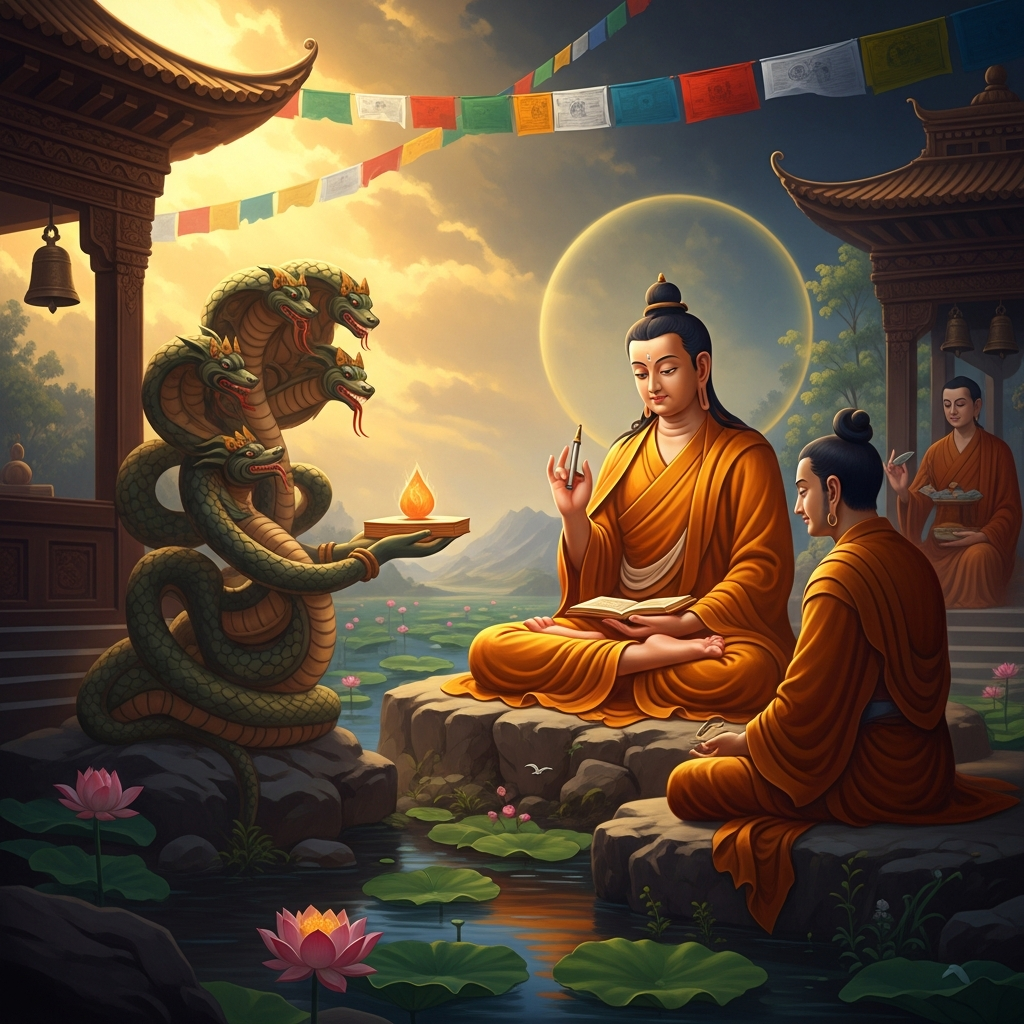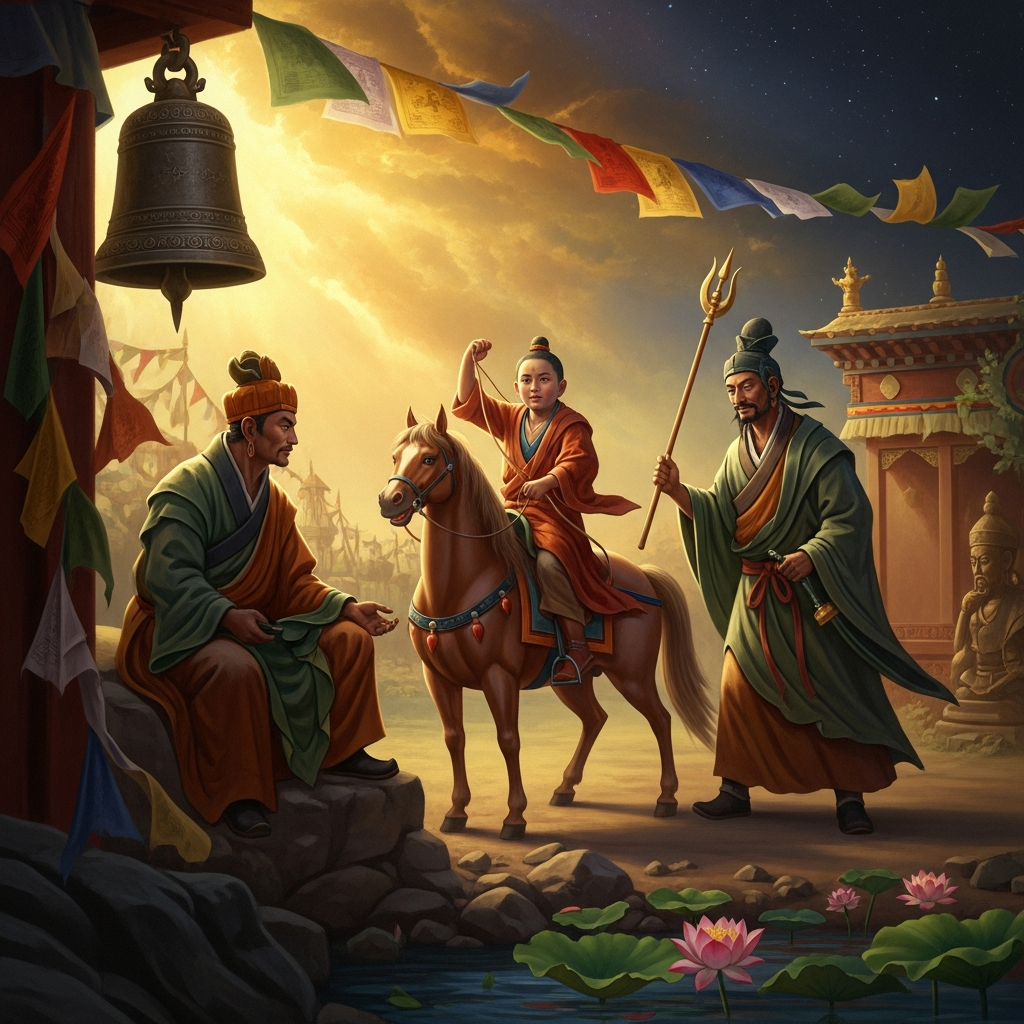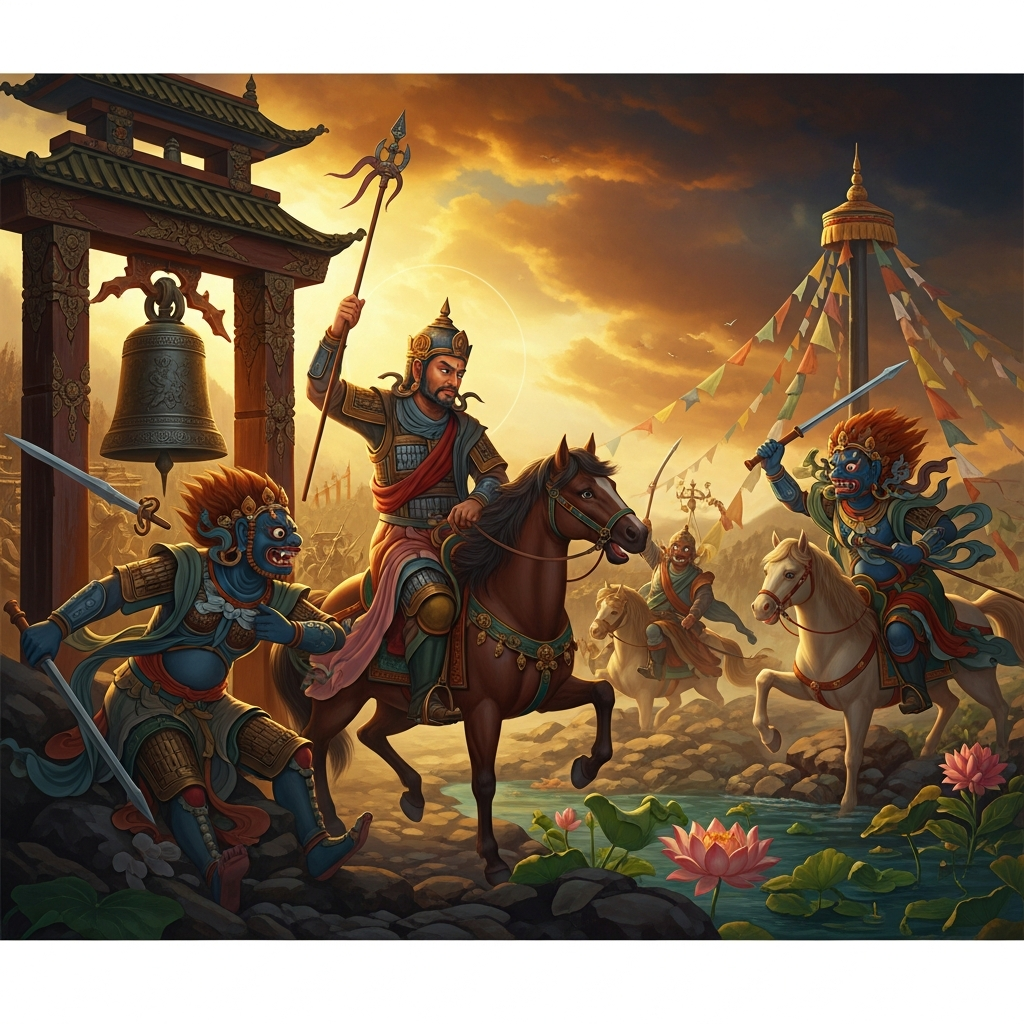
Longchenpa and the Natural State
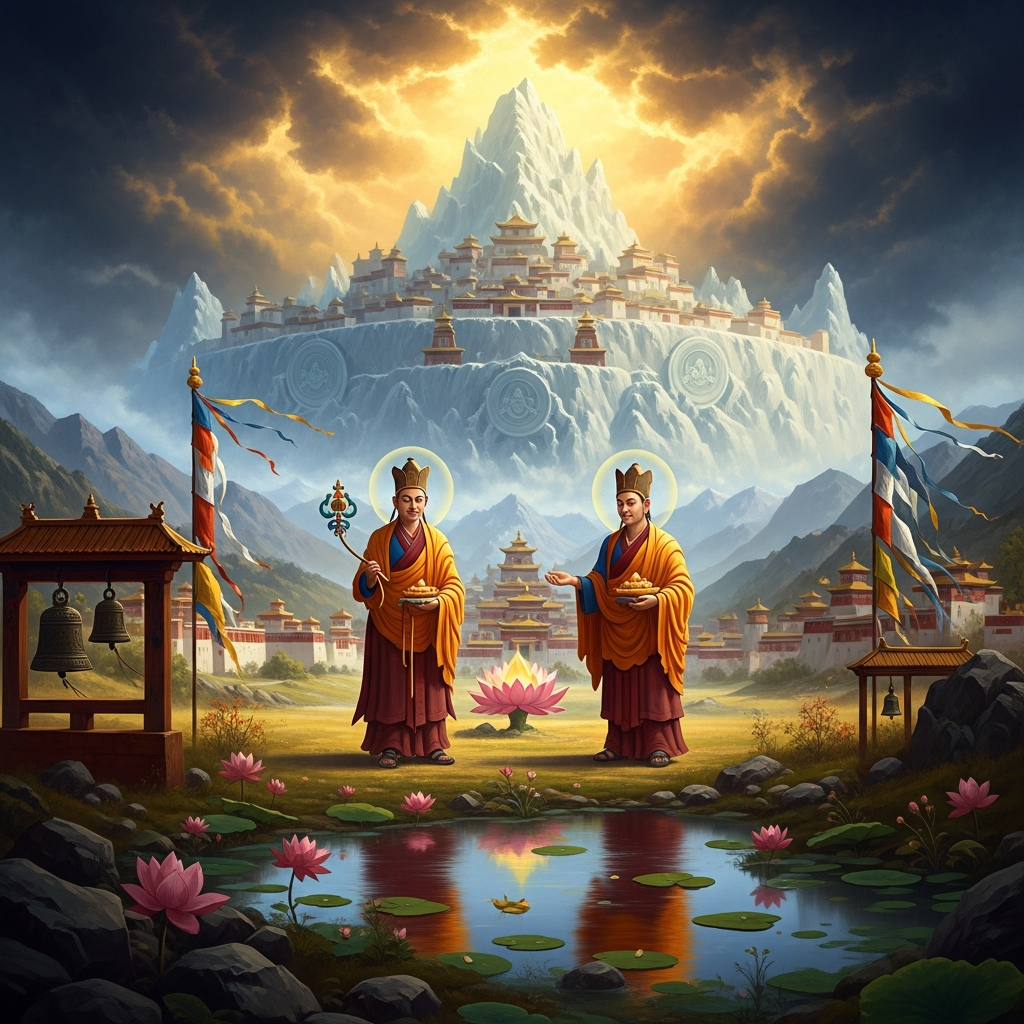
c. 1308–1364 CE — 14th-century Tibet · Gangri Tökar (White Skull Snow Mountain), Tibet — a barren hillside where Longchenpa lived in a cave with almost no possessions, and later Bhutan where he spent years in exile
Contents
The greatest systematizer of Dzogchen teaching spends years as a homeless wanderer on a barren Tibetan hillside, possessing almost nothing, and produces in that poverty the Seven Treasuries — the most comprehensive philosophical works in Tibetan Buddhist history.
- When
- c. 1308–1364 CE — 14th-century Tibet
- Where
- Gangri Tökar (White Skull Snow Mountain), Tibet — a barren hillside where Longchenpa lived in a cave with almost no possessions, and later Bhutan where he spent years in exile
He has one blanket and no food.
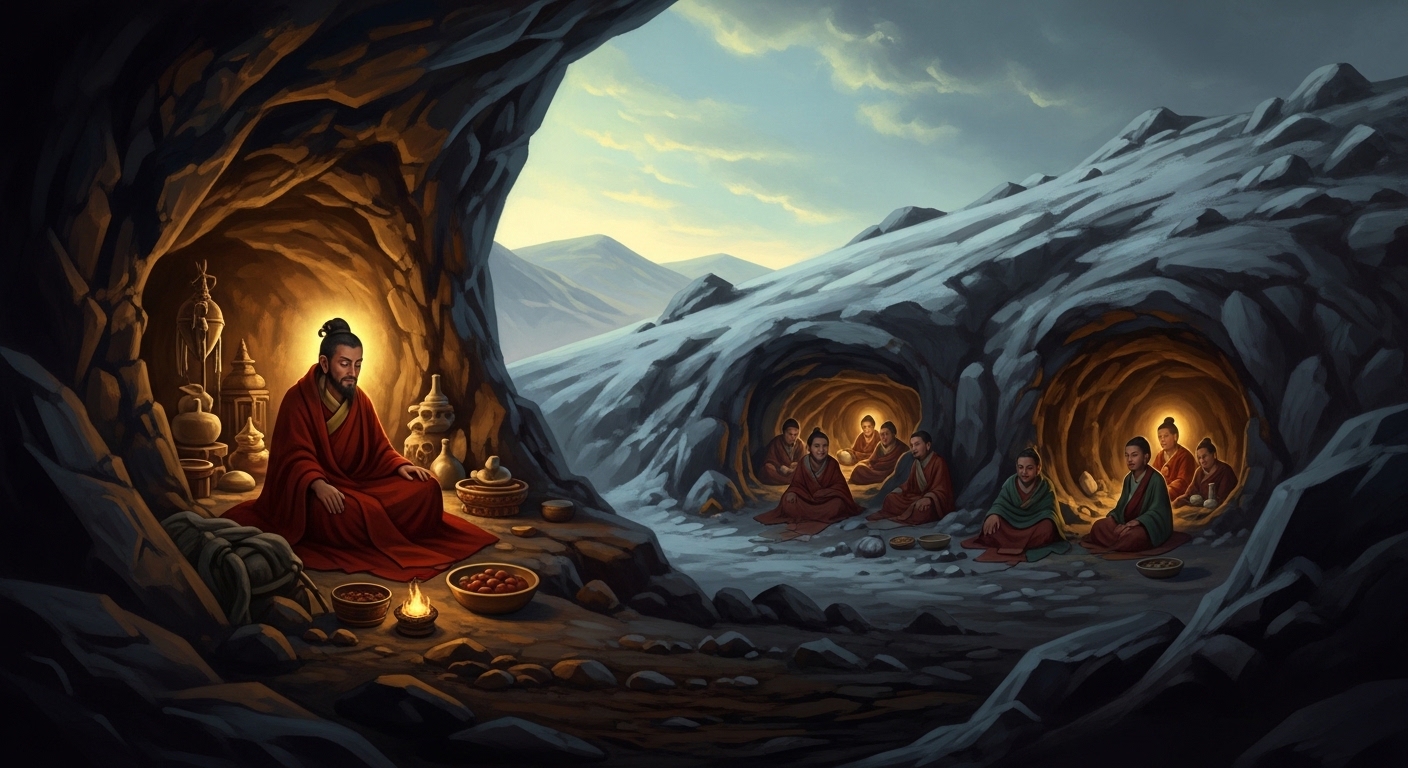
This is not metaphor. Longchenpa’s autobiography records the winter at Gangri Tökar in detail: he is living in a cave on a barren hillside, he has almost no provisions, and his group of students — who are nearly as destitute as he is — shelter in caves nearby. The blanket is the piece of information that recurs: it is not adequate for the winter at this altitude, but it is what he has, and he continues to write.
The Seven Treasuries are written here, in this cold. The Nyingtig Yabzhi, the Choying Dzod, the Tshigdon Dzod — texts that will organize the entire theoretical architecture of the Dzogchen teaching, that will be studied for centuries, that are still the primary reference works for anyone who wants to understand what the Nyingma tradition means by the “natural state.” They are written by a man who is, in material terms, one of the most impoverished people on the Tibetan plateau that winter.
The connection between the poverty and the teaching is not accidental.
Dzogchen means “Great Perfection” — the teaching that the nature of mind is already perfect, already complete, and that practice is not the acquisition of something absent but the recognition of something always present. The recognition cannot be forced. It cannot be purchased. It cannot be made to arrive through the accumulation of virtue or knowledge or material support. It is available in every moment to anyone in any circumstance, which means it must be available in this cold cave with this insufficient blanket.
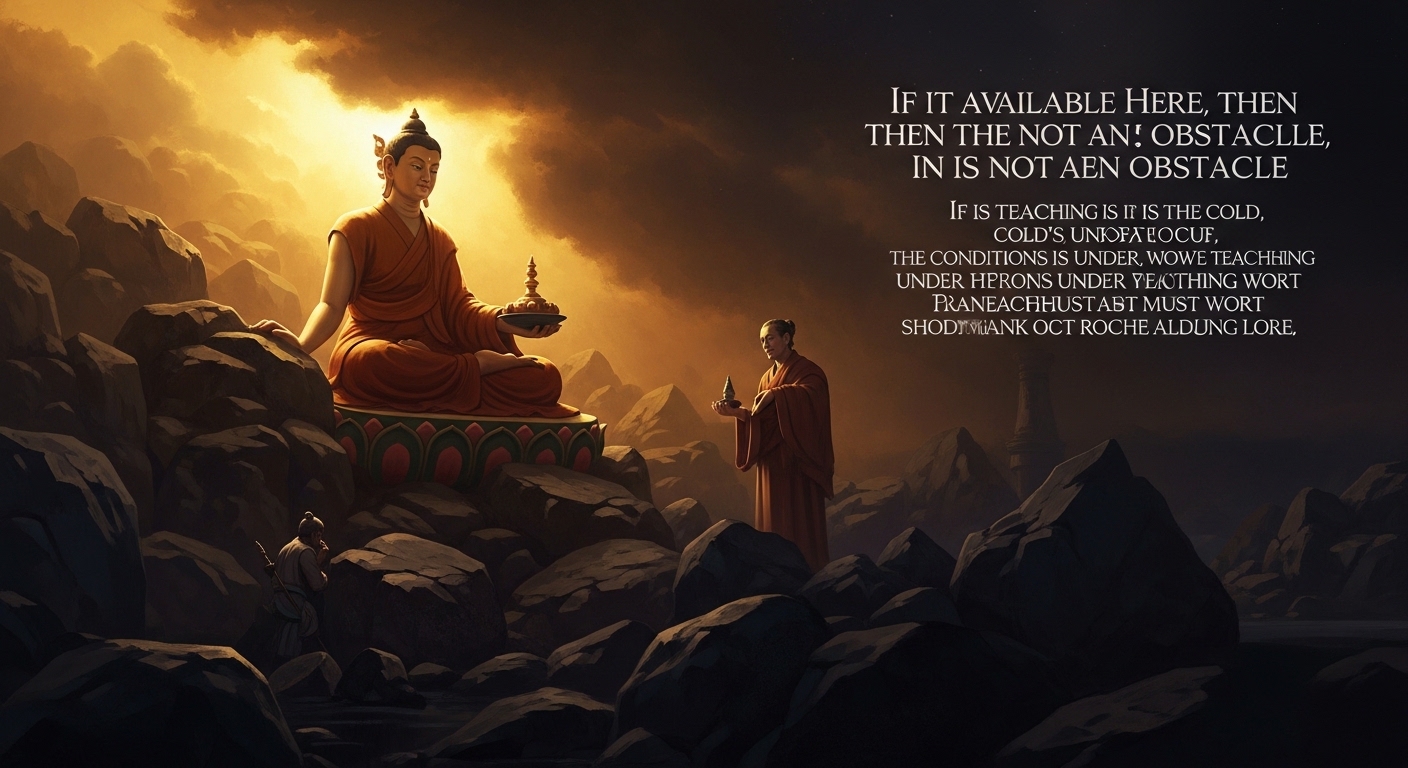
If it is available here, then the cold is not an obstacle. It is a teaching about the conditions under which the teaching must work. If the vast view that Longchenpa describes in the Choying Dzod — the view of phenomena as the display of awareness’s own expanse — exists only when circumstances are comfortable, it is not the natural state. It is a mood. The cave proves it is not a mood.
He writes with the calm of someone who has verified what he is writing about. The texts are precise — philosophically rigorous in a way that comes from someone who has done the work rather than summarized it from other sources. He synthesizes previous Dzogchen materials and his own realization, and the synthesis creates something new without departing from the tradition.
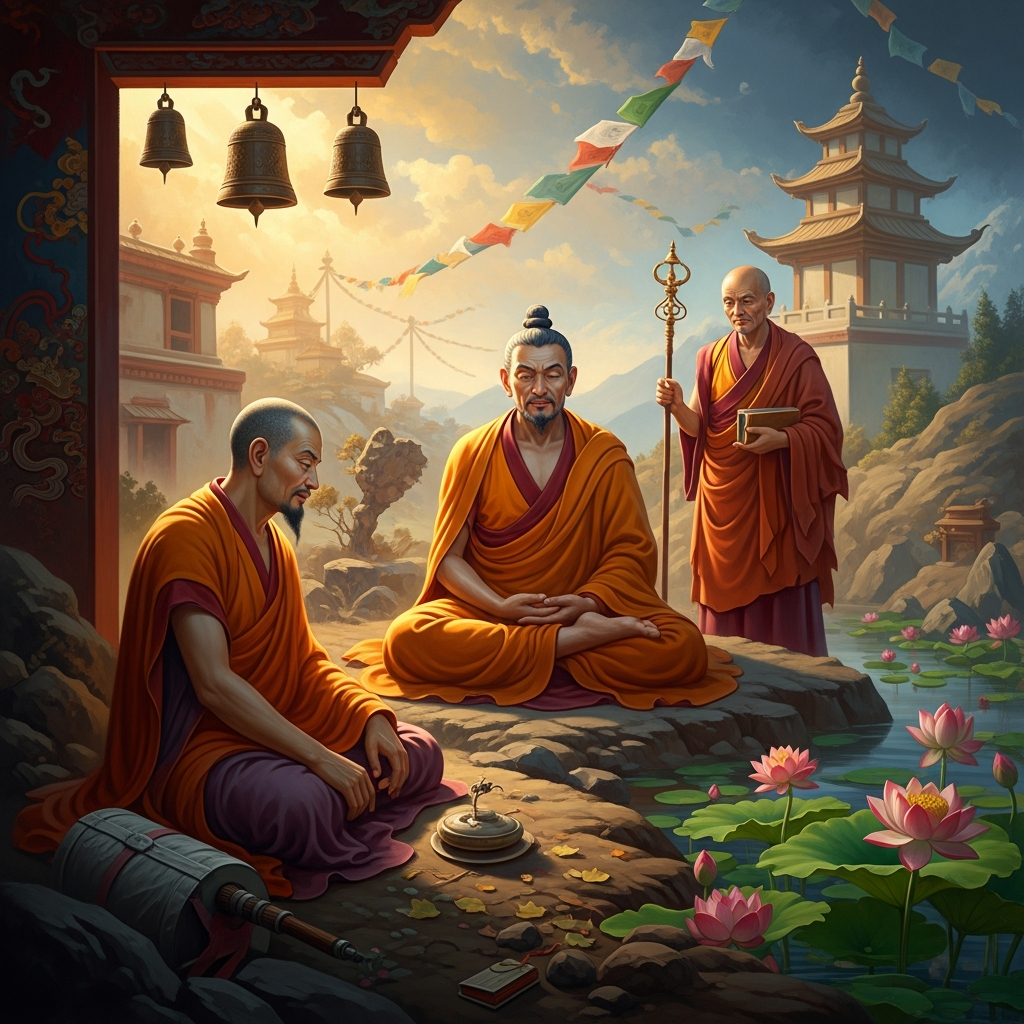
His teacher Kumārādza is even poorer than he is.
Kumārādza travels with a group of students and owns literally nothing — no tent, no property, no provisions. The group survives on whatever they find. Longchenpa receives his primary transmissions from this man in conditions that make Gangri Tökar look comfortable: they are on the move, often without shelter, eating what local people give them.
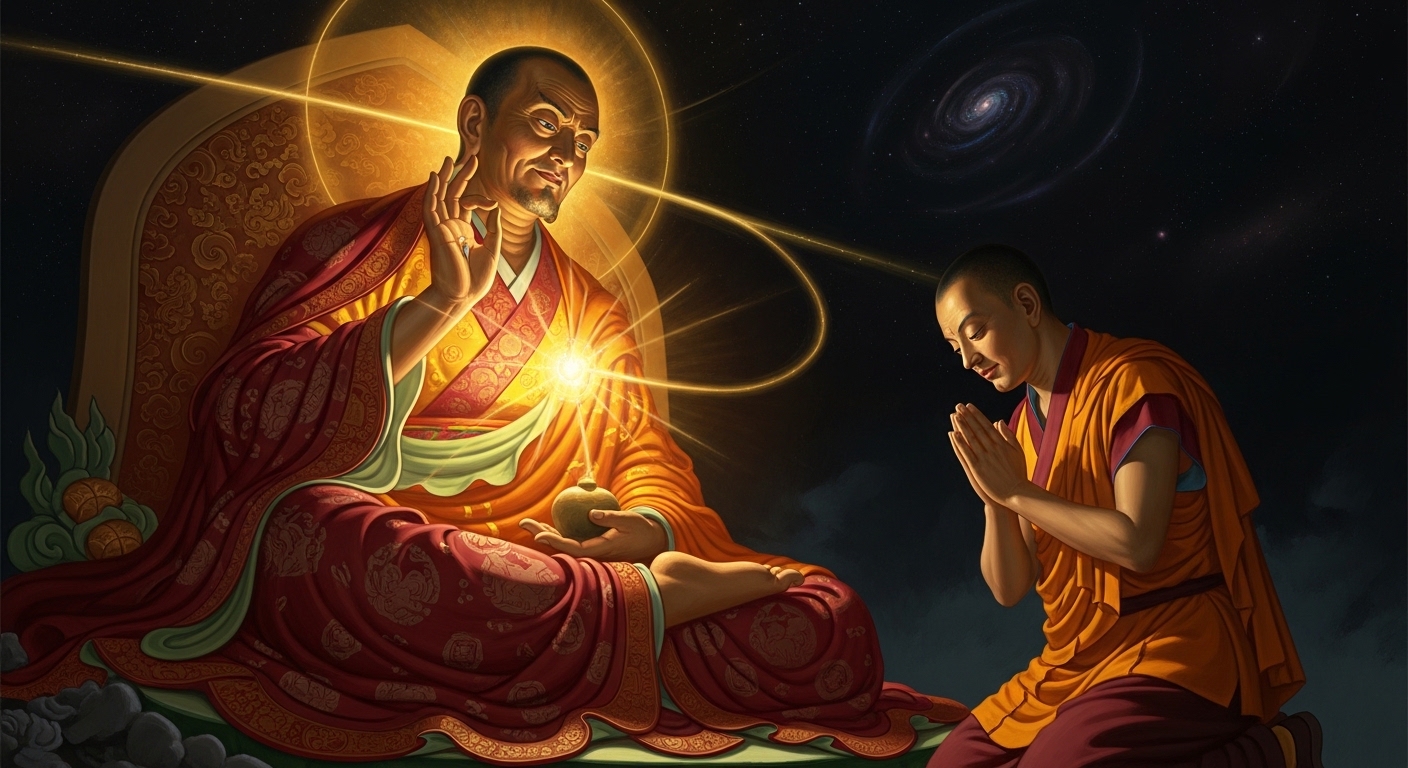
The transmission Kumārādza gives is the Nyingtig — the Heart Drop teachings, the innermost cycle of Dzogchen instruction. You cannot receive this teaching in a book. It requires the teacher to point directly at the nature of the student’s mind, and the pointing only works when the student’s mind is clear enough to recognize what is pointed at. The poverty and the cold, in this context, are preparation: they strip away the layers of comfort and identity that obscure recognition.
Longchenpa recognizes. The recognition does not transport him out of the cold cave. It transforms his relationship to the cold cave. He continues to be cold. He continues to be hungry. He writes the Choying Dzod — the Precious Treasury of the Basic Space of Phenomena — and the cold is in it, not as complaint but as evidence: this is what the natural state looks like from inside a blanket that is not enough.
The Nyingma tradition regards him as the mind-emanation of Vimalamitra, one of the Indian masters who first brought Dzogchen to Tibet. Whether this is true in the literal Tibetan sense or in the functional sense that his understanding is indistinguishable from the masters’ understanding, the texts support the claim.
He is cold, poor, rigorous, and awake. The Seven Treasuries are the record.
Scenes
Echoes Across Traditions
Entities
- Longchenpa (Longchen Rabjam)
- Kumārādza (his teacher)
- Vimalamitra
Sources
- Longchenpa, *The Precious Treasury of the Basic Space of Phenomena*, trans. Richard Barron (Padma Publishing, 2001)
- Tulku Thondup, *Masters of Meditation and Miracles* (Shambhala, 1996)
- Nyoshul Khen Rinpoche, *A Marvelous Garland of Rare Gems* (Padma Publishing, 2005)