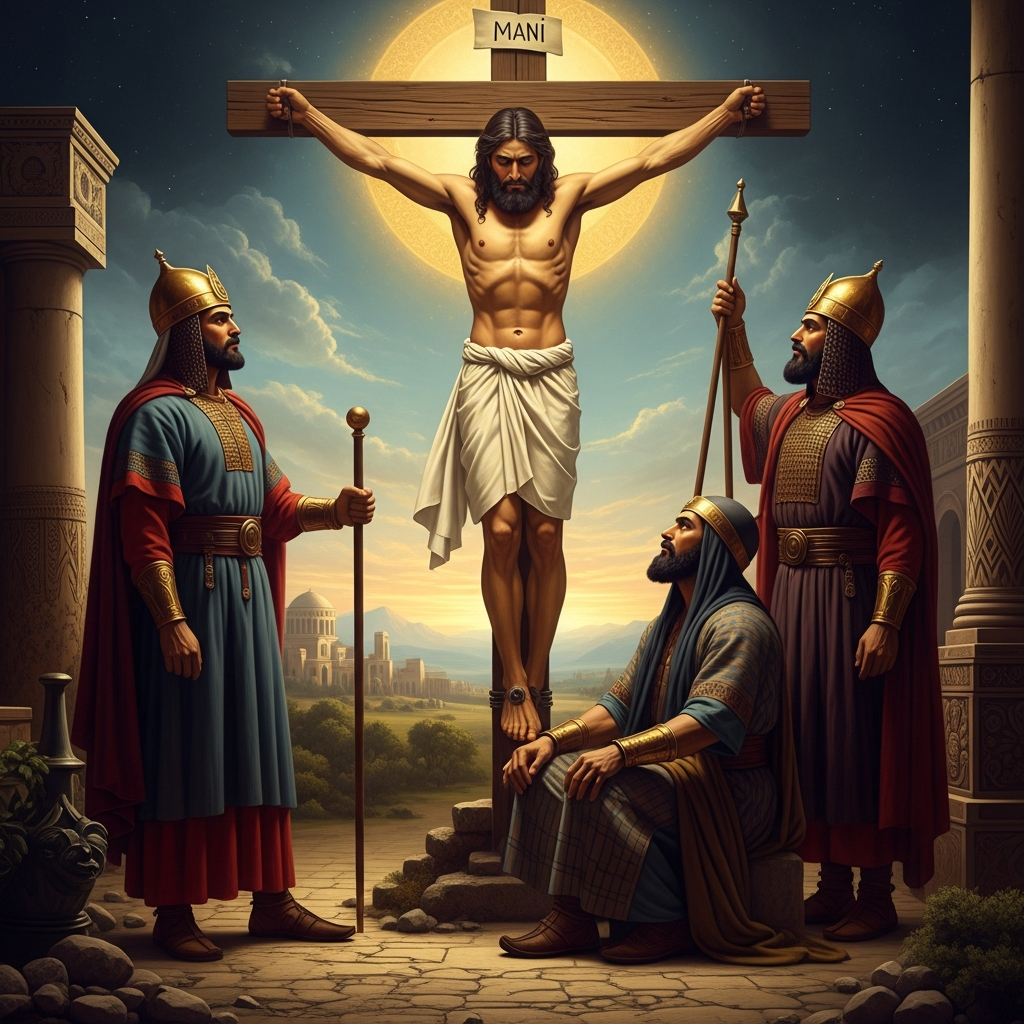
Mani's Crucifixion of Light
276 CE — the end of Mani's prophetic ministry · Gundeshapur (Beth Lapat) — the Sassanid city where Mani was imprisoned and died
Contents
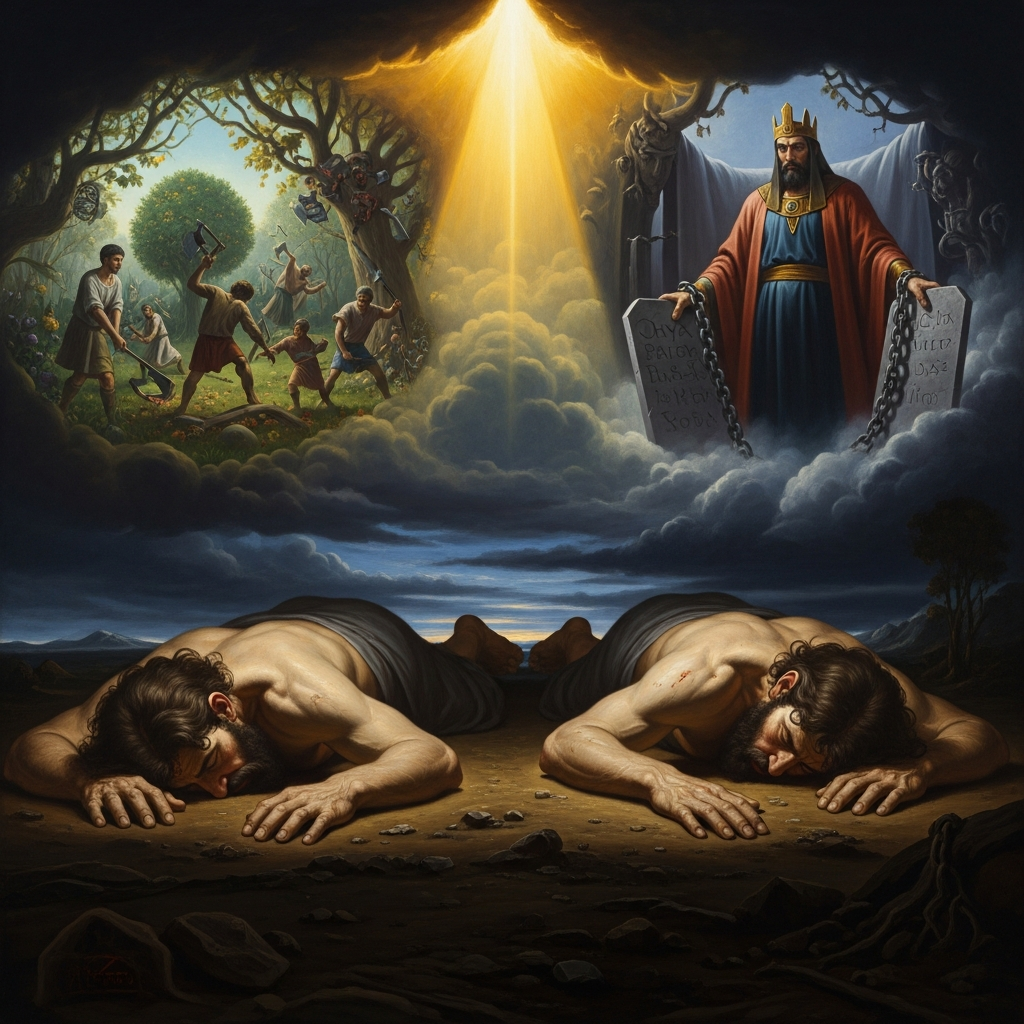
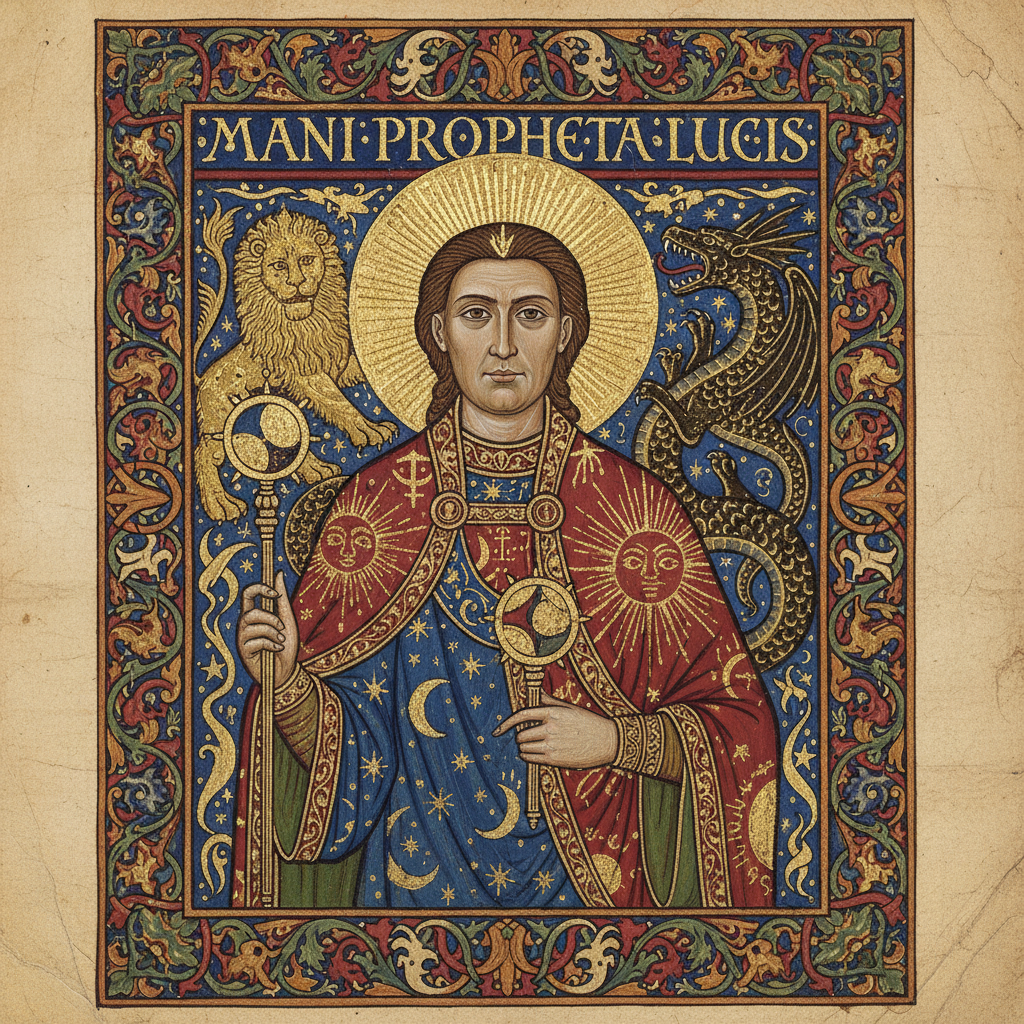
In 276 CE, the prophet Mani is imprisoned by the Sassanid king Bahram I at the insistence of the Zoroastrian high priest Kartir — and after twenty-six days in chains dies a death his followers compared to the Crucifixion, his skin displayed at the city gate as a warning.
- When
- 276 CE — the end of Mani's prophetic ministry
- Where
- Gundeshapur (Beth Lapat) — the Sassanid city where Mani was imprisoned and died
Kartir has been waiting for this.
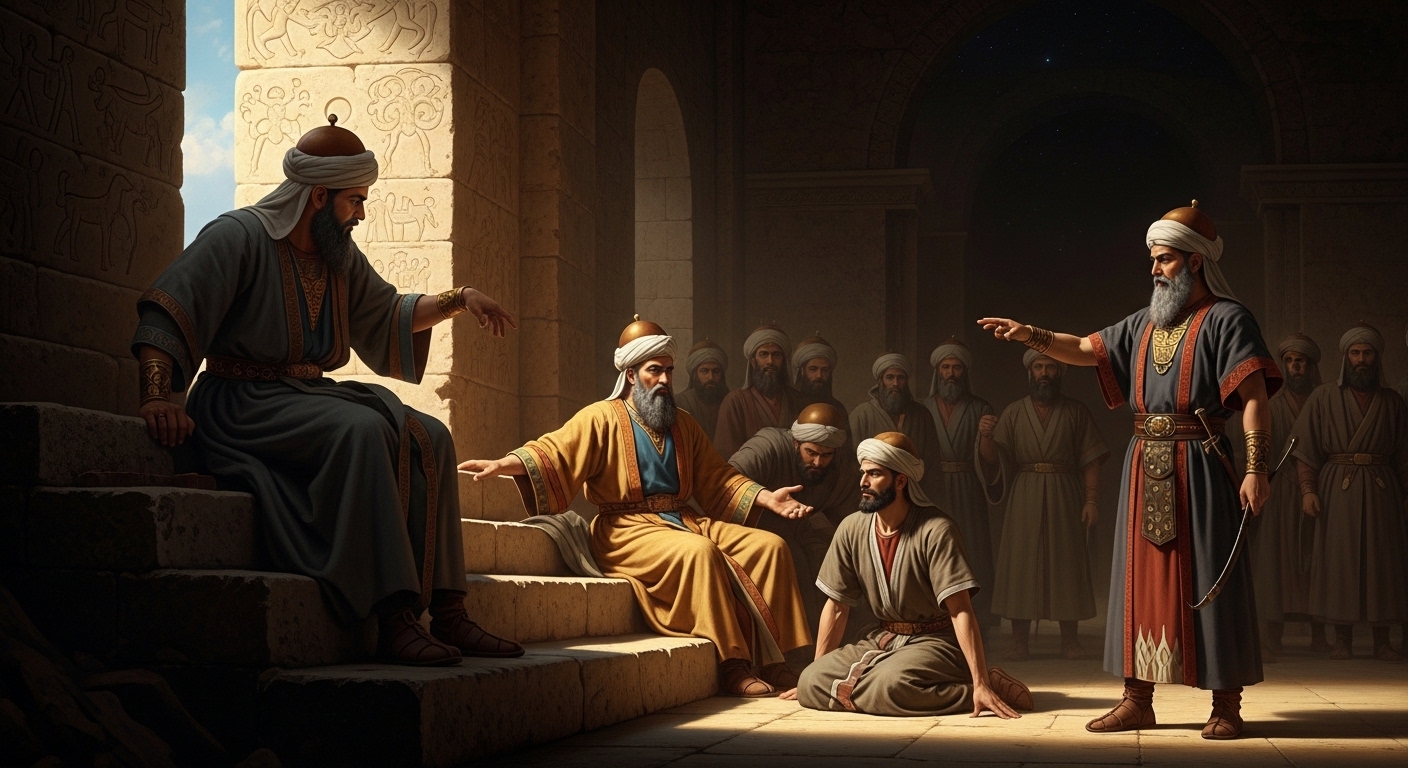
The Zoroastrian high priest — whose monumental rock inscriptions across the Sassanid empire record his career with the self-satisfaction of a man who has made himself indispensable to three consecutive kings — has been watching Mani’s missionary success with the professional attention of someone who understands that two universalist religions cannot coexist in the same empire indefinitely. Mani has been protected by Shapur I and Hormizd I. But Hormizd died after only one year, and Bahram I, the new king, is more inclined to listen to Kartir.
Mani is summoned to Gundeshapur.
He travels from his base in Mesopotamia to the Sassanid court at Gundeshapur with a group of his disciples. The summons is officially a theological audience — the king will hear the prophet and the high priest debate. The actual purpose is what Mani knows it is: the king is going to let Kartir have him.
The debate, if it occurs, is not recorded.
What is recorded — in the Arabic and Syriac and Middle Persian sources that preserve the account — is that Mani is imprisoned. He is put in heavy chains. He is held in prison for twenty-six days.
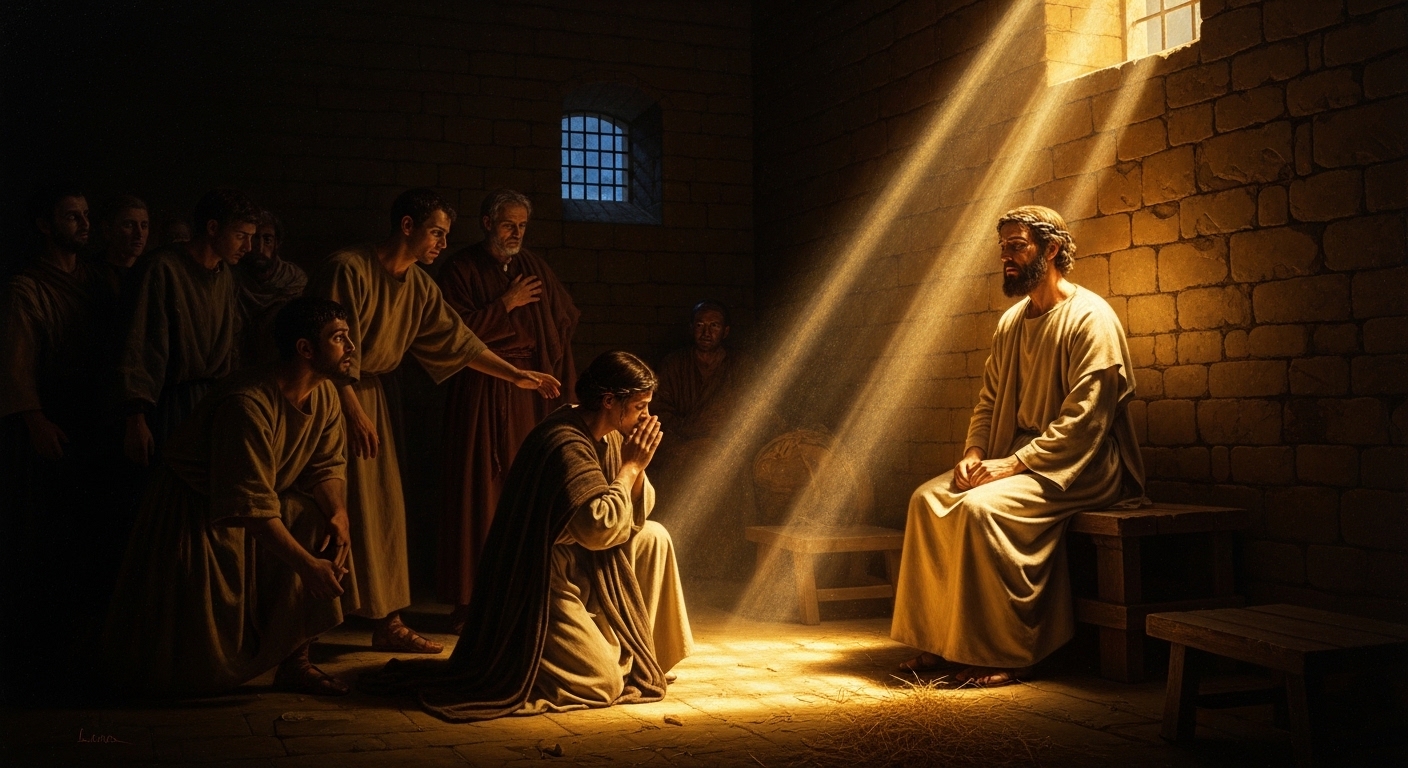
In those twenty-six days, Mani’s followers come to him in the prison.
He speaks to them through the bars. He teaches them. He instructs them on how the community is to be governed after he is gone, which missionaries should go where, how the texts are to be preserved and copied. The prison scene in the Manichaean hagiographic tradition has the quality of the Socratic prison conversations, of the Pauline prison letters: the condemned teacher in chains whose words to his students become the foundation of everything that comes after.
On the twenty-seventh day, he dies.
The sources differ on exactly how. The chains themselves may have been the instrument: Mani, who was not young and who had traveled and fasted and preached intensively for decades, may have simply died of the weight of the chains and the conditions of imprisonment. Some sources say he was executed directly. What all sources agree on is the aftermath: his body was treated in a way designed to mock and warn, his skin displayed at the city gate of Gundeshapur as a demonstration of what Bahram I and Kartir thought of universal revelation.
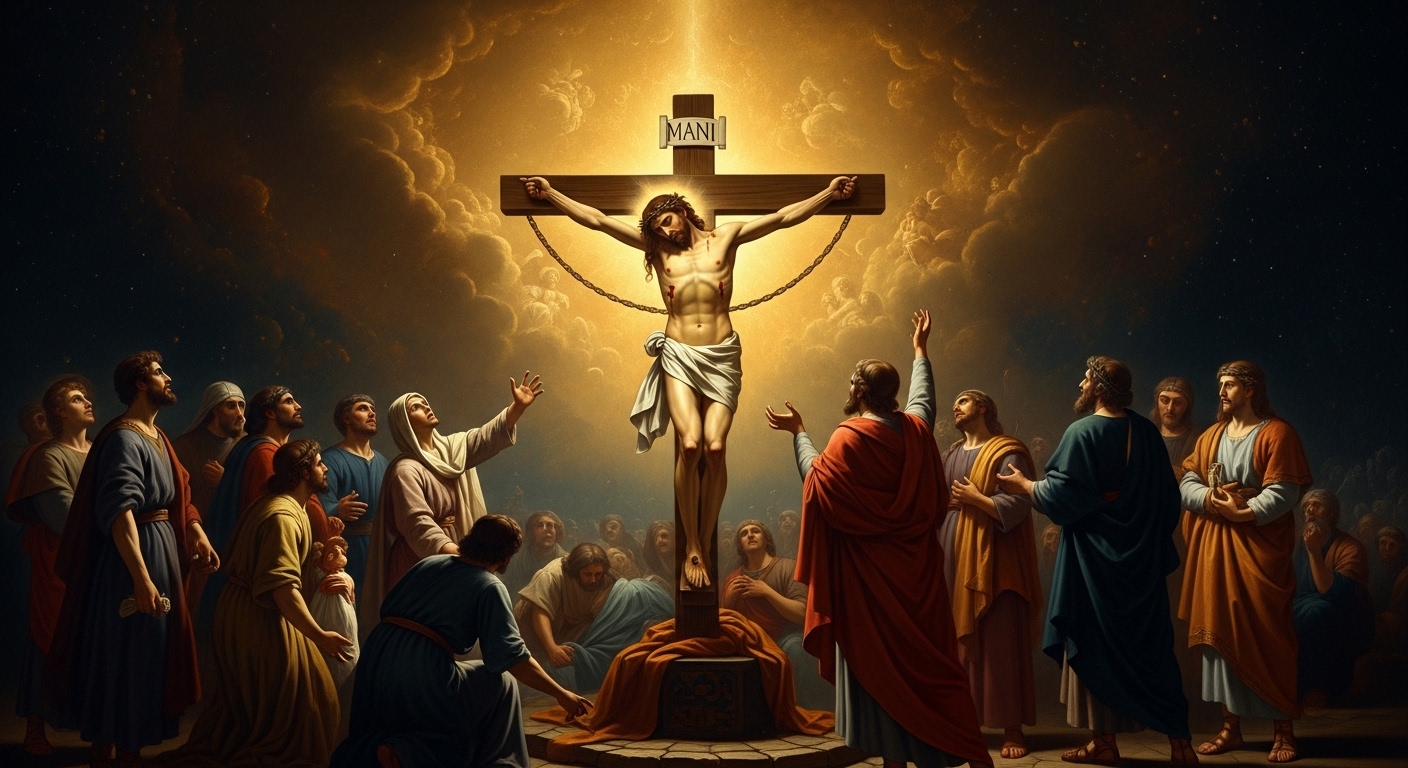
His followers called it the Crucifixion of Light.
The parallel with Jesus was drawn from the beginning, and it was not accidental — Mani himself had claimed to be the Paraclete, the Comforter whom Jesus promised would come after him. His death in chains was, in the Manichaean interpretation, the same event as the Crucifixion: the divine light concentrated in a prophet’s body, destroyed by the powers of material darkness, the light scattered and distributed by the death to be carried by the faithful wherever they went.
Kartir’s inscriptions record his success. He lists the communities he has suppressed, the heretics he has driven out, the temples he has established. He records Mani’s suppression as one item in a long list of achievements.
The missionaries Mani trained before his imprisonment went east to Central Asia and China, where Manichaeism became the state religion of the Uighur Khanate in the eighth century. They went west to North Africa, where a young man named Aurelius Augustinus spent nine years as a Manichaean Hearer before he became Augustine of Hippo and wrote the Confessions and The City of God.
Kartir’s inscriptions can still be read in the rock faces at Naqsh-e Rostam and Sar Mashhad.
The missionaries kept traveling until the Mongol invasions of the thirteenth century, and by then the light had been in China and Uighuria and Sogdiana and Egypt and Italy and Carthage and perhaps the borderlands of Ireland.
The skin at the city gate was a warning.
The light was already in the road.
Scenes
Echoes Across Traditions
Entities
- Mani
- Bahram I
- Kartir (Zoroastrian High Priest)
- The Manichaean community
Sources
- Samuel Lieu, *Manichaeism in the Later Roman Empire and Medieval China* (Tübingen, 1992)
- Jason BeDuhn, *The Manichaean Body* (Johns Hopkins, 2000)
- Iain Gardner and Samuel Lieu, *Manichaean Texts from the Roman Empire* (Cambridge, 2004)
- Werner Sundermann, Mani's Crucifixion, *Manichaean Studies Newsletter* 1 (1988)