Sultan Walad Founds the Whirling Order
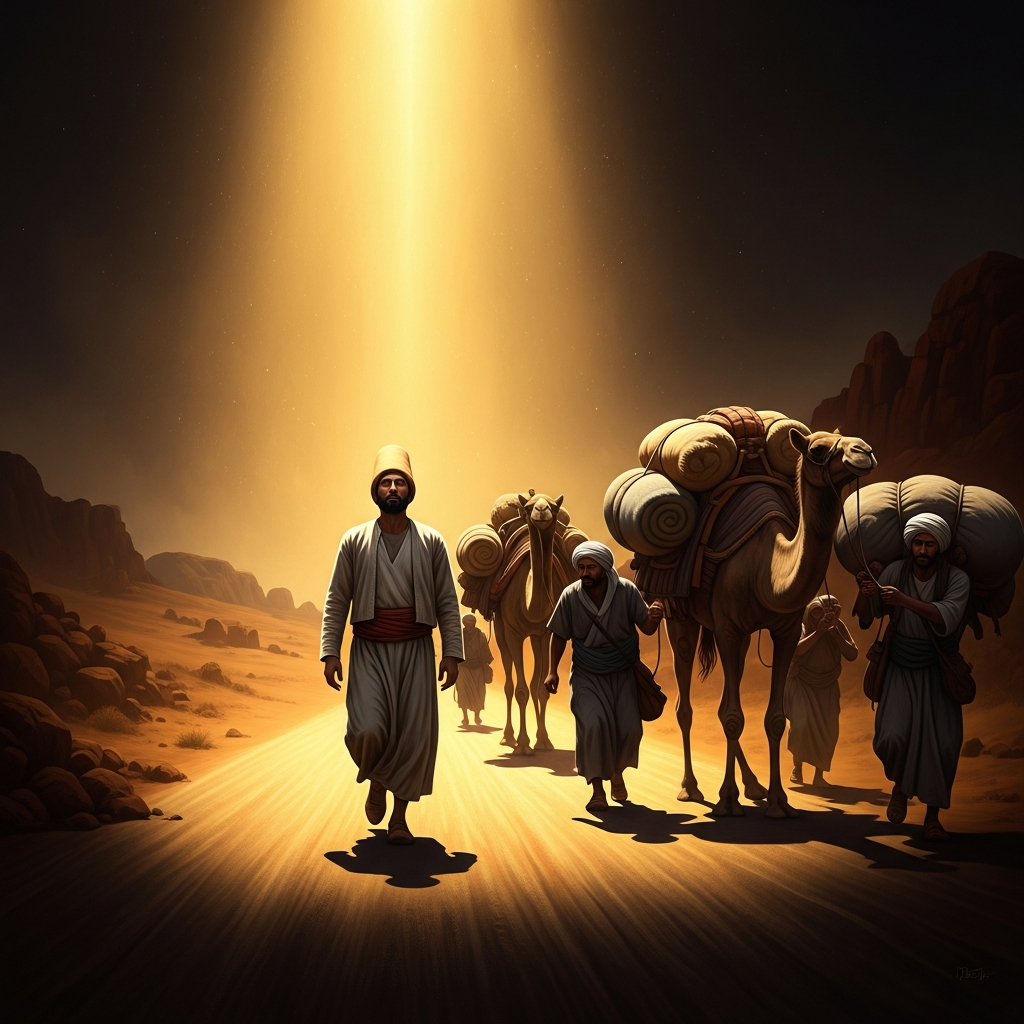
1273–1312 CE — Konya, Anatolia, after Rumi's death · Konya, Seljuk Anatolia — the city that Rumi never left after settling there, where the Mevlevi tekke was established
Contents
After Rumi's death in 1273, his son Sultan Walad transforms the informal circle of dervishes that had gathered around his father into the Mevlevi order — the institutionalized ceremony, the succession, the distinctive dress, the calendar of practice — turning a father's ecstasy into a transmissible teaching.
- When
- 1273–1312 CE — Konya, Anatolia, after Rumi's death
- Where
- Konya, Seljuk Anatolia — the city that Rumi never left after settling there, where the Mevlevi tekke was established
Sultan Walad knows what he has watched.
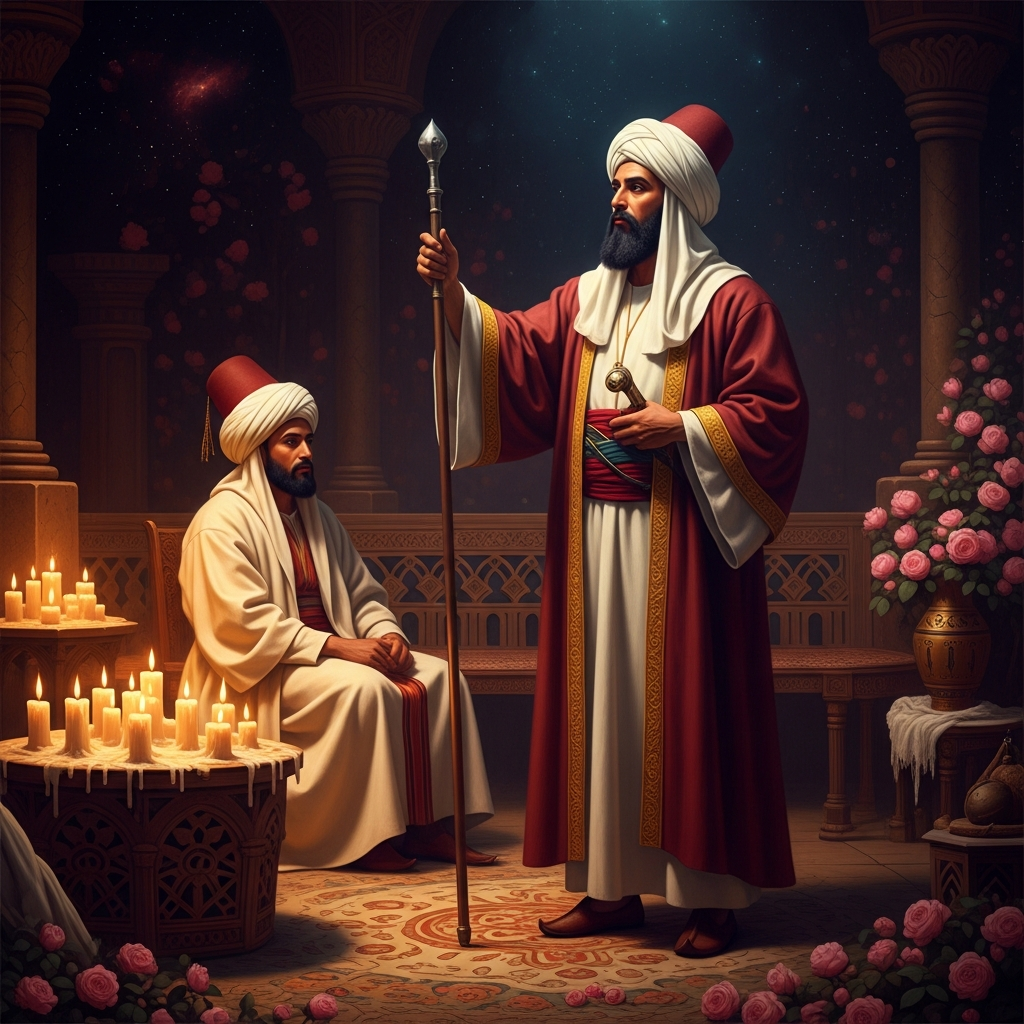
He was six years old when Shams-i-Tabrizi arrived. He watched his father transform from the most respected jurist in Konya to the whirling poet whose productions filled notebooks that Husam Chalabi could barely keep pace with. He was present for the seclusions, for the arguments with the students, for the grief of Shams’s disappearance, for the years of composition. He watched Husam read back the Masnavi couplets and his father confirm them. He was there on December 17, 1273, when Rumi died with music playing.
He is now thirty-six years old. He is the most senior person in the circle his father left. He has to decide what to do with it.
The circle that existed around Rumi during his lifetime was not an order in the formal sense.
There was no written rule. There was no standardized initiation. There were students of varying commitment, gathered around a teacher of extraordinary spiritual force, maintaining informal practices — the sama, the communal meals, the periods of teaching and silence — that arose naturally from proximity to Rumi. The force that held the circle together was the man at its center.
Without the man at the center, the circle could disperse. This was common in Sufi history: a master dies, the students scatter to other masters or found their own informal circles, and the particular form of teaching that existed with the master dies with him.
Sultan Walad decided it would not happen to his father’s circle.
The steps he takes over the next decades are the institutional founding of the Mevlevi order.
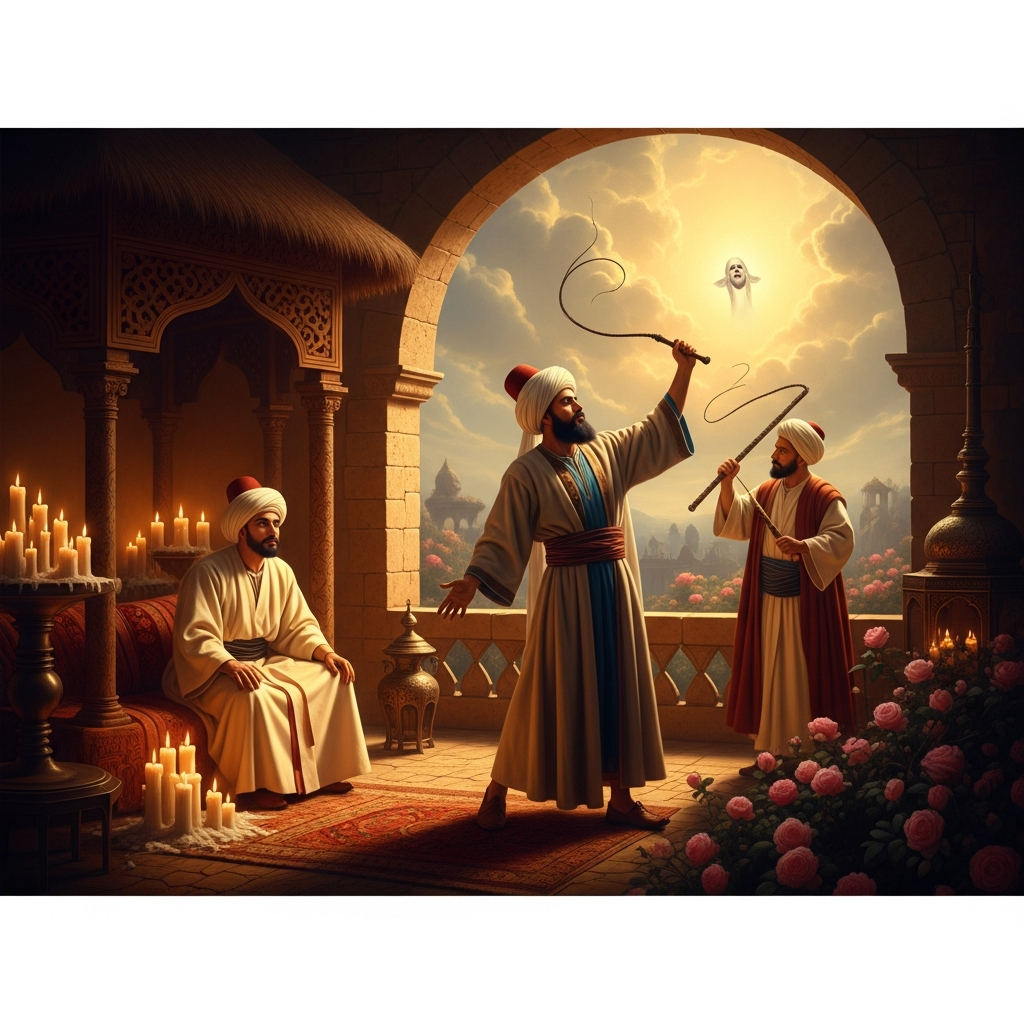
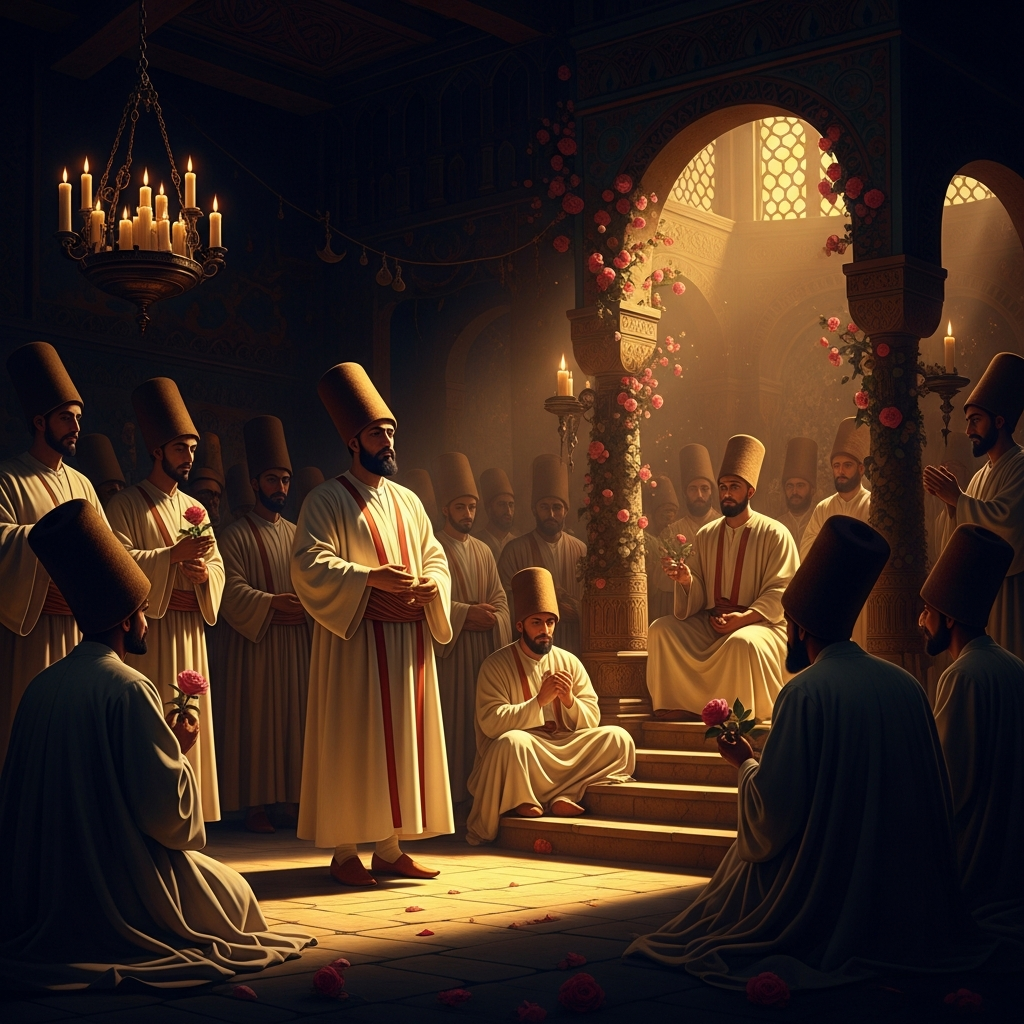
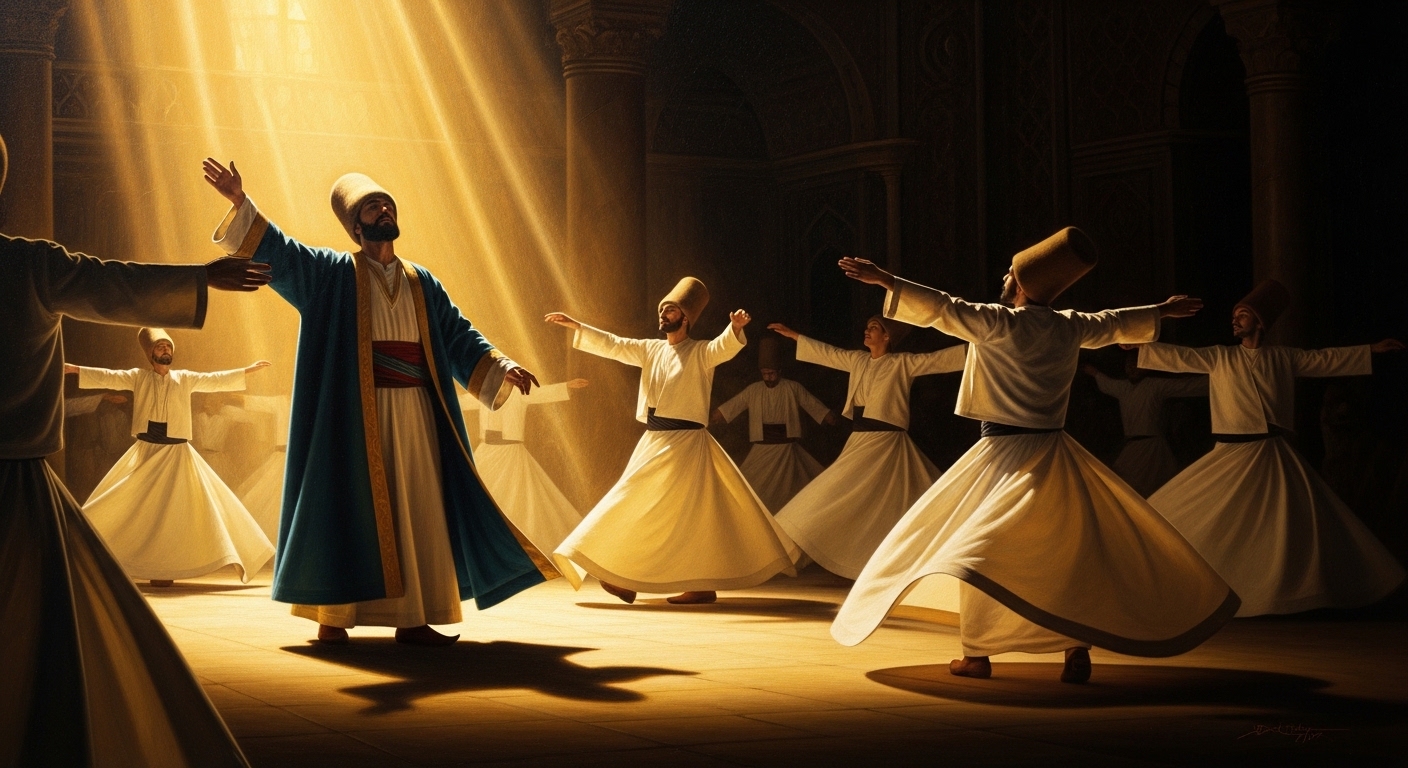
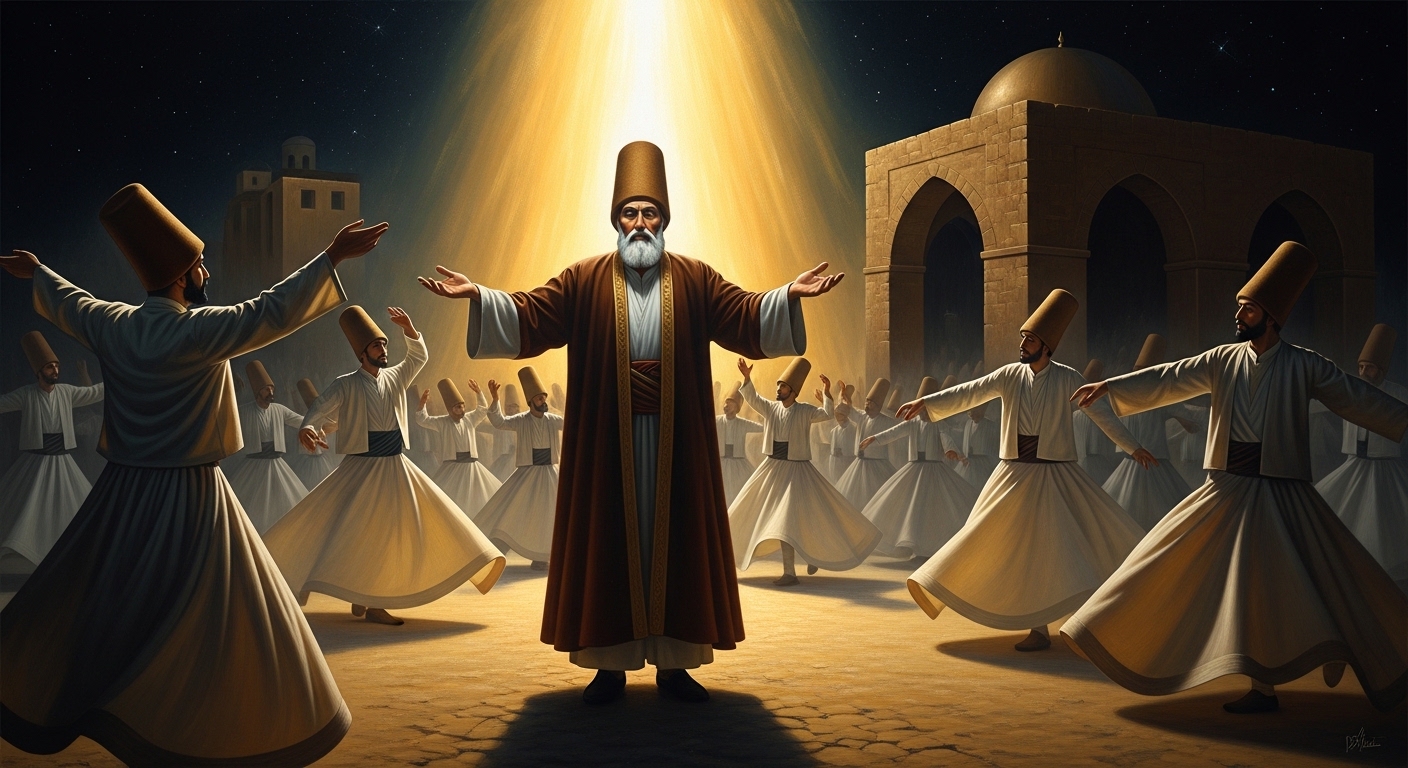
He establishes the dergah — the formal lodge — on the grounds of the property in Konya associated with Rumi’s teaching. He standardizes the sama ceremony: the opening, the musical forms, the particular character of the whirling, the clothing (the white shroud-robe and the conical hat), the number of selams, the closing prayer. What had been Rumi’s involuntary ecstasy becomes a reproducible ceremony that people who have not reached Rumi’s state can perform in order to approach it.
He establishes the succession: after him, the leadership of the order (the chelebi, a Turkish honorific for nobility) will pass through the Rumi family line. The order has a hereditary spiritual leadership that continues for generations, giving it stability against the fragmentation that strikes most orders in their second or third generation.
He writes his own poems — in Persian and in Turkish — that carry the teaching forward in a somewhat more accessible register than his father’s most ecstatic compositions. He is a theologian as well as a poet, and his work bridges between Rumi’s heights and the practical questions of an order’s daily life.
The Seljuk court of Konya and then the Mongol administration that replaces it support the dergah.
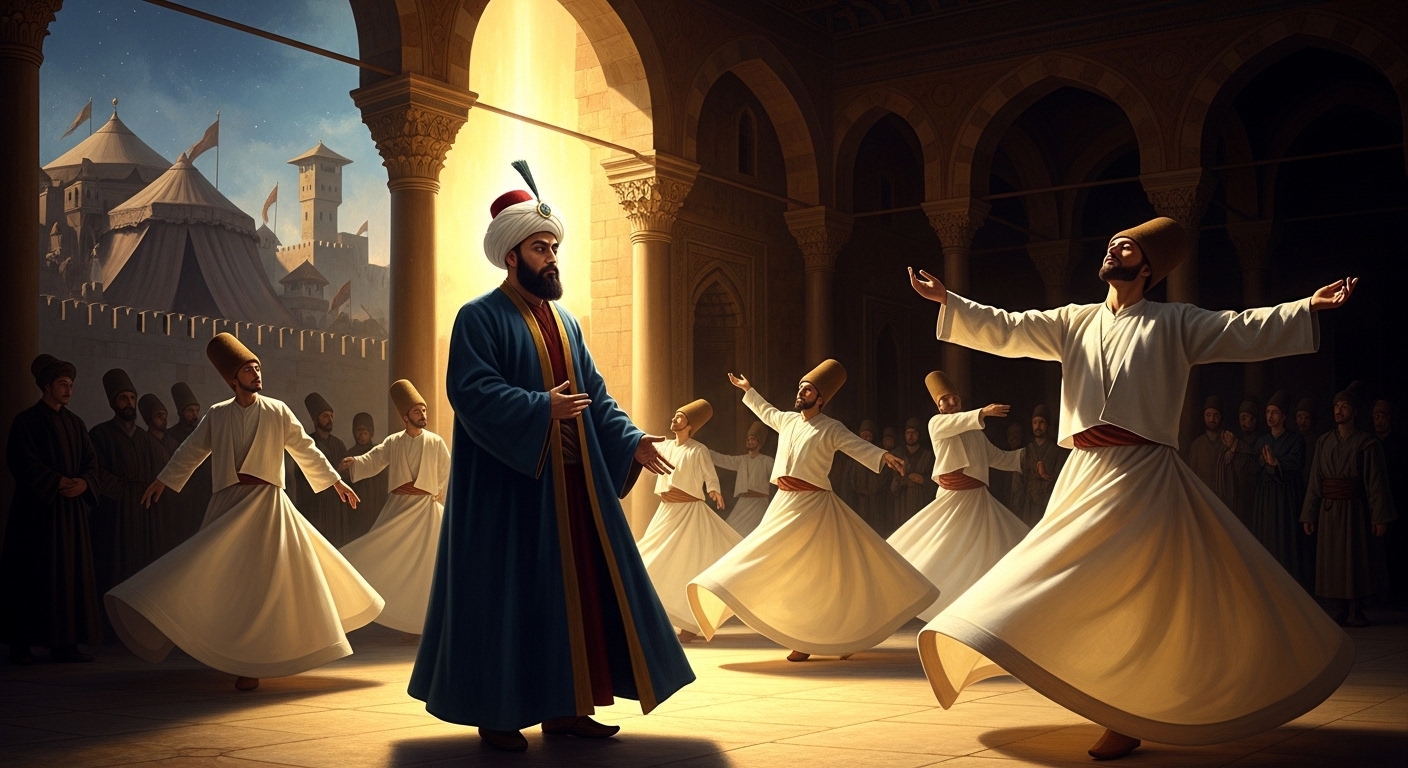
Sultan Walad navigates the political transitions of thirteenth-century Anatolia — the decline of the Seljuks, the Mongol suzerainty, the emergence of the early Turkish principalities — with the same skill his father had navigated them. The Mevlevi dergah becomes a point of cultural continuity in a politically turbulent region, associated with the highest Persian literary culture and with a spiritual practice whose beauty transcends political boundaries.
The Ottoman dynasty, which consolidates its power in the region in the fourteenth and fifteenth centuries, becomes the Mevlevi order’s primary patron. The sultans fund the Konya dergah. They attend the sama. The order’s headquarters in Konya — the Mevlana Museum today, with the characteristic conical dome visible from across the city — becomes one of the most visited religious sites in the Ottoman world.
Sultan Walad dies in 1312, having served as the order’s first shaikh for nearly forty years.
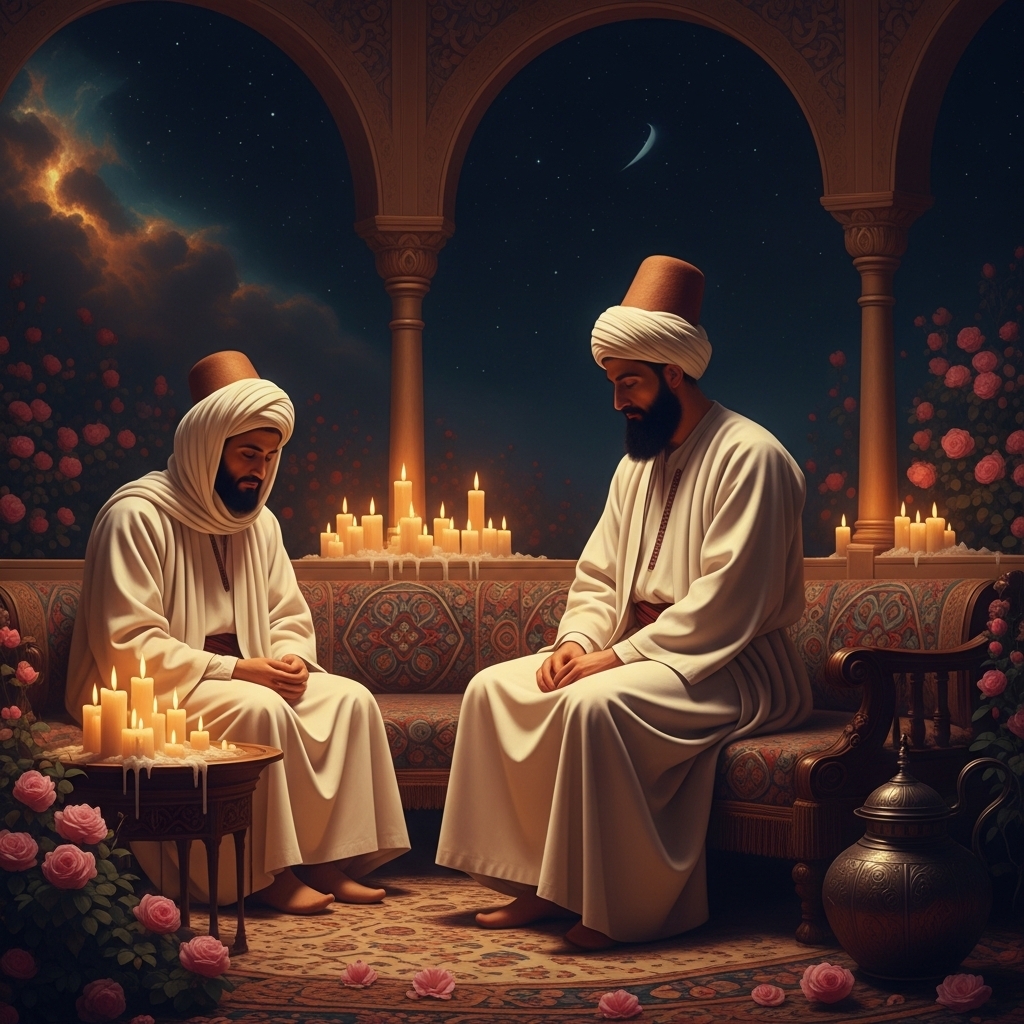
His father’s ecstasy now had a form. The form was a building, a ceremony, a calendar, a succession, and a body of poetry read aloud by the light of oil lamps in the dergah in Konya while the ney sounded and the white-robed figures turned.
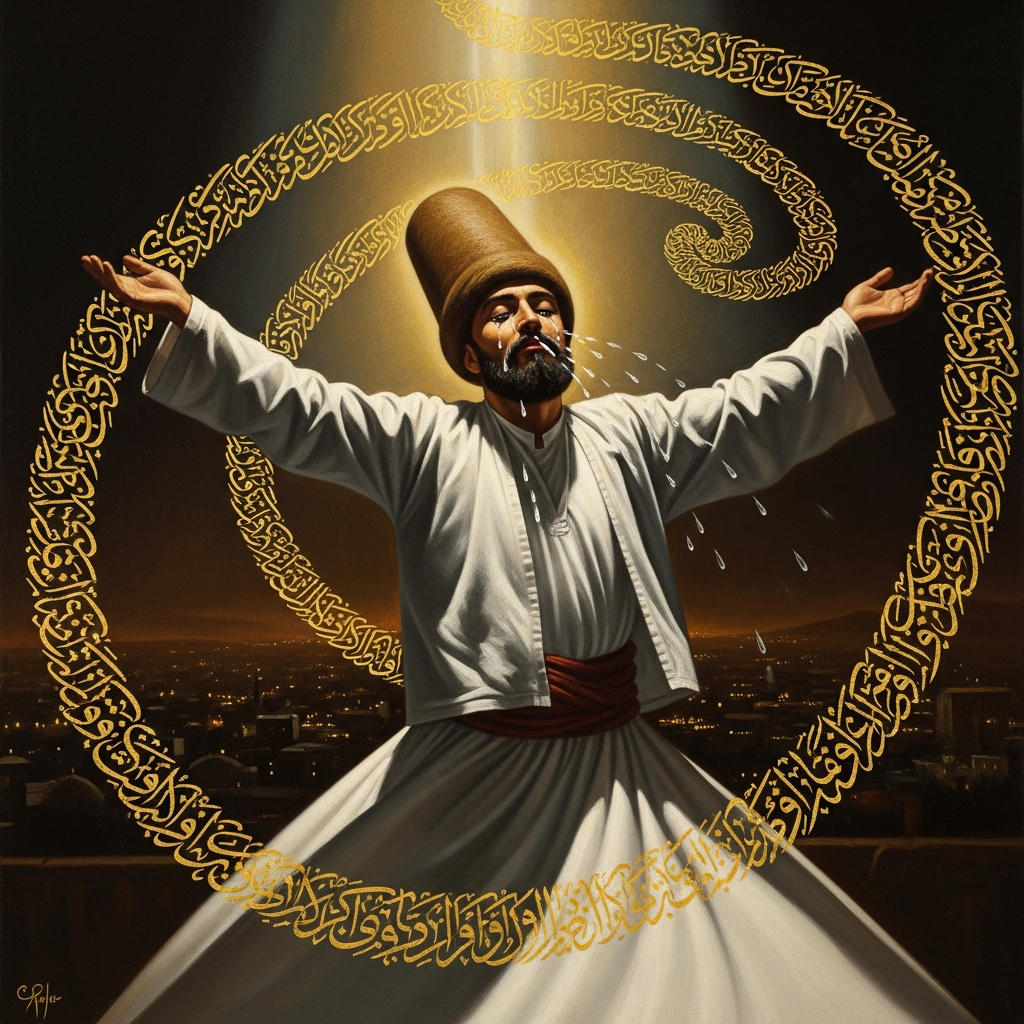
The institutionalization is always a trade-off. Something of the wild, unrepeatable quality of the origin is lost when the origin becomes a ceremony. But something else is gained: the teaching reaches people across centuries and continents who will never meet Rumi, who can only meet what Sultan Walad built from what Rumi was.
The building is not the man. The ceremony is not the ecstasy.
But the ecstasy needed the building to go where it went.
Scenes
Echoes Across Traditions
Entities
- Sultan Walad
- Rumi
- Husam Chalabi
- the Seljuk court of Konya
Sources
- Sultan Walad, *Walad-nama* (Book of Walad) and *Rebab-nama* (Book of the Rebab)
- Franklin Lewis, *Rumi: Past and Present, East and West* (Oneworld, 2000)
- Aflaki, *Manaqib al-Arifin* (Acts of the Gnostics), c. 1353
- Mehmet Önder, *Mevlana* (Kültür Bakanlığı, 1971)