Milarepa Buys Hailstones to Kill His Enemies
c. 1052 CE — 11th-century Tibet, Gungthang district near the Nepali border · Kya Ngatsa village, western Tibet — the family estate on the edge of the mountains
Contents
A young man returns to a village that stole his inheritance, learns black magic from a sorcerer, and summons a hailstorm that kills thirty-five relatives at a wedding feast — launching the most celebrated spiritual biography in Tibetan history.
- When
- c. 1052 CE — 11th-century Tibet, Gungthang district near the Nepali border
- Where
- Kya Ngatsa village, western Tibet — the family estate on the edge of the mountains
The estate is taken while Milarepa is still a child.
His father dies when Mila is seven. The father’s brother — a man trusted with the family’s land, herds, and house — simply keeps everything. He explains to the village that the widow and her children are his to house, and that housing them is the same as owning them. The mother, Nyangtsa Kargyen, works her own fields as a servant. Mila and his sister Peta wear rags. This lasts for years. The aunt and uncle eat at the carved wooden table his father built; Mila and his mother eat what is left.
The mother endures it until Milarepa reaches adolescence. Then she begins to talk.
She reminds him every morning of what was taken. She takes him to the rooftop and points at the fields and the animals that should be his. She has saved, for years, hidden in a crack in the wall, a small bag of gold dust — enough to pay a sorcerer. She tells him that if he will not avenge her she will kill herself before his eyes. She means it. He can see that she means it.
He goes to find a teacher in the dark arts.
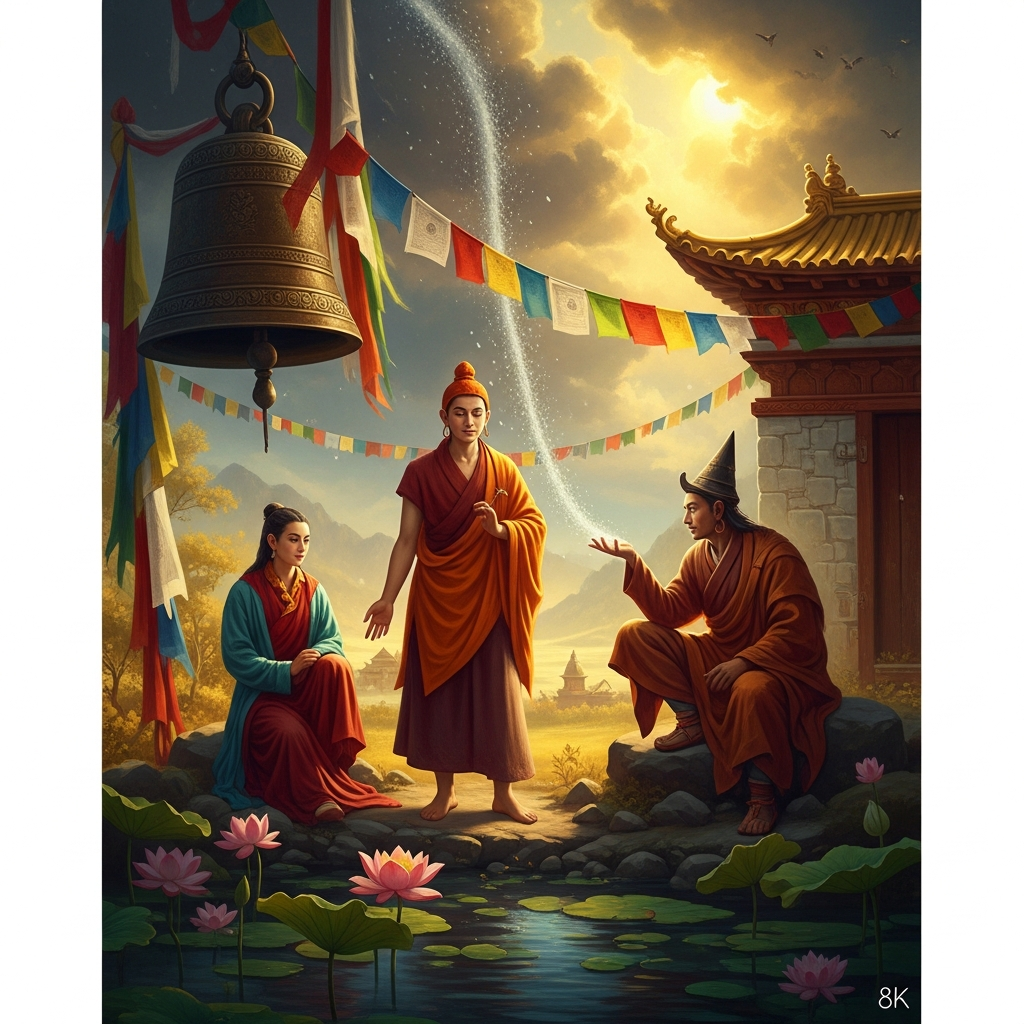
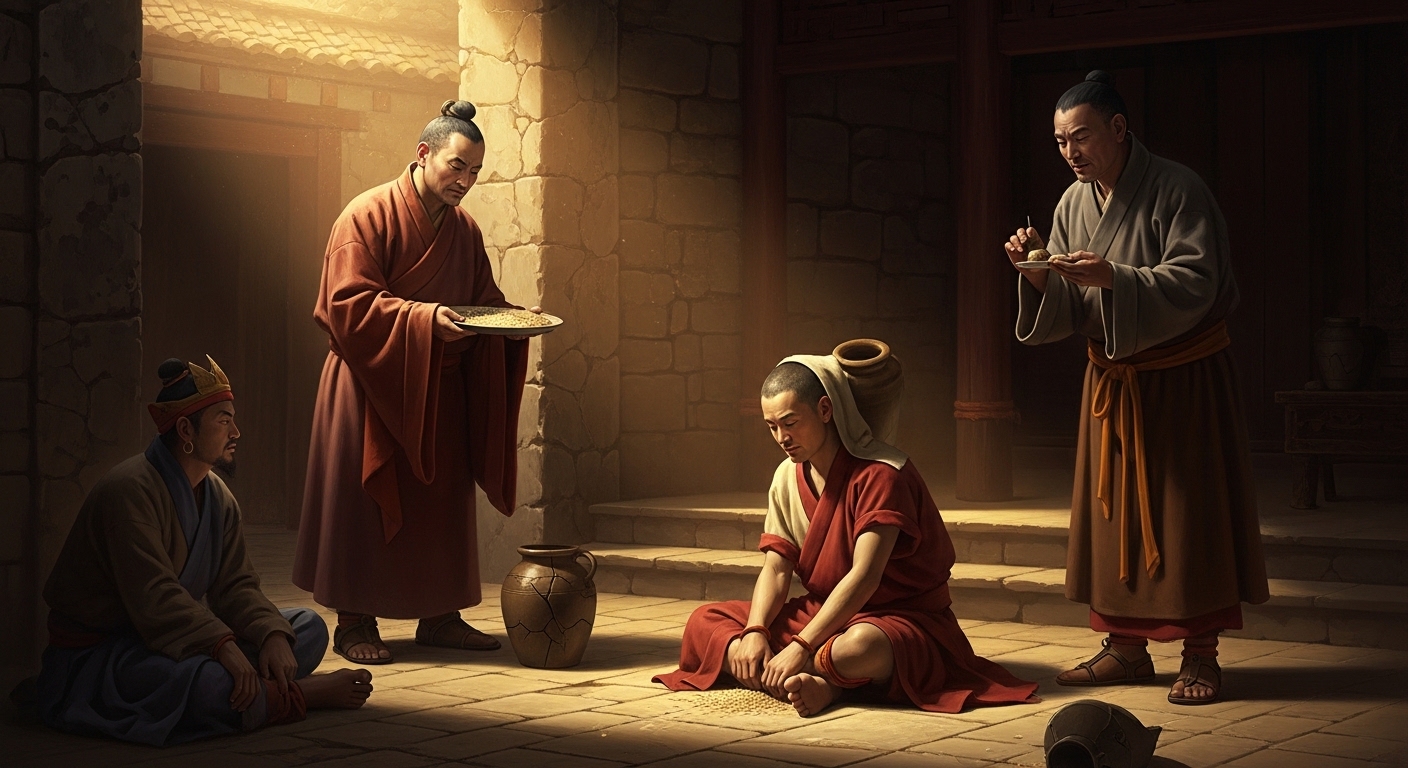
The sorcerer Yungdrungbar is skeptical. He tests Milarepa’s sincerity with weeks of humiliation: he makes him carry water in a cracked jar, grind barley from midnight to dawn, sit in the cold courtyard until the skin on his knees cracks. Milarepa does not leave. The sorcerer, recognizing something extraordinary in the boy’s capacity for suffering, teaches him.
The teaching involves long rituals, specific syllables, the precise arrangement of effigy figures, the summoning of what the Tibetan tradition calls dön — malignant forces that can be directed like arrows. Milarepa learns quickly. He learns too quickly; the sorcerer notes this and is almost afraid.
By the time word arrives that his cousin is holding a wedding feast at the family house — the house that belongs to Milarepa by right — the preparation is complete.
Milarepa performs the ritual alone, in a cave, over three days.
The result is not subtle. The horse carrying the festivities suddenly rears. The central pillar of the house cracks and falls. Thirty-five people are crushed or trampled. The wedding guests who survive scatter into the fields. Among the dead: the uncle, several cousins, most of the people who had eaten at his father’s table.
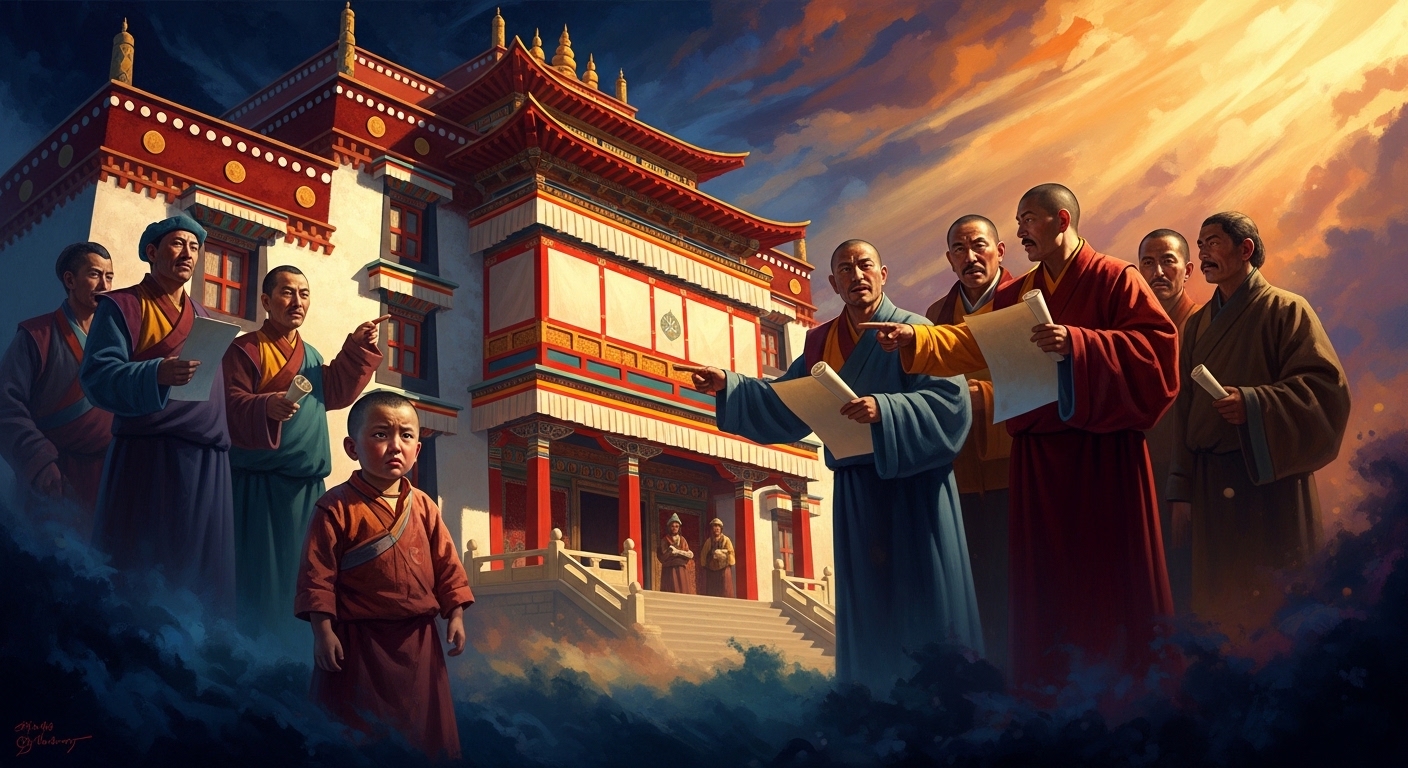
The aunt survives. She is the one who comes to the village afterward and says she knows who did it.
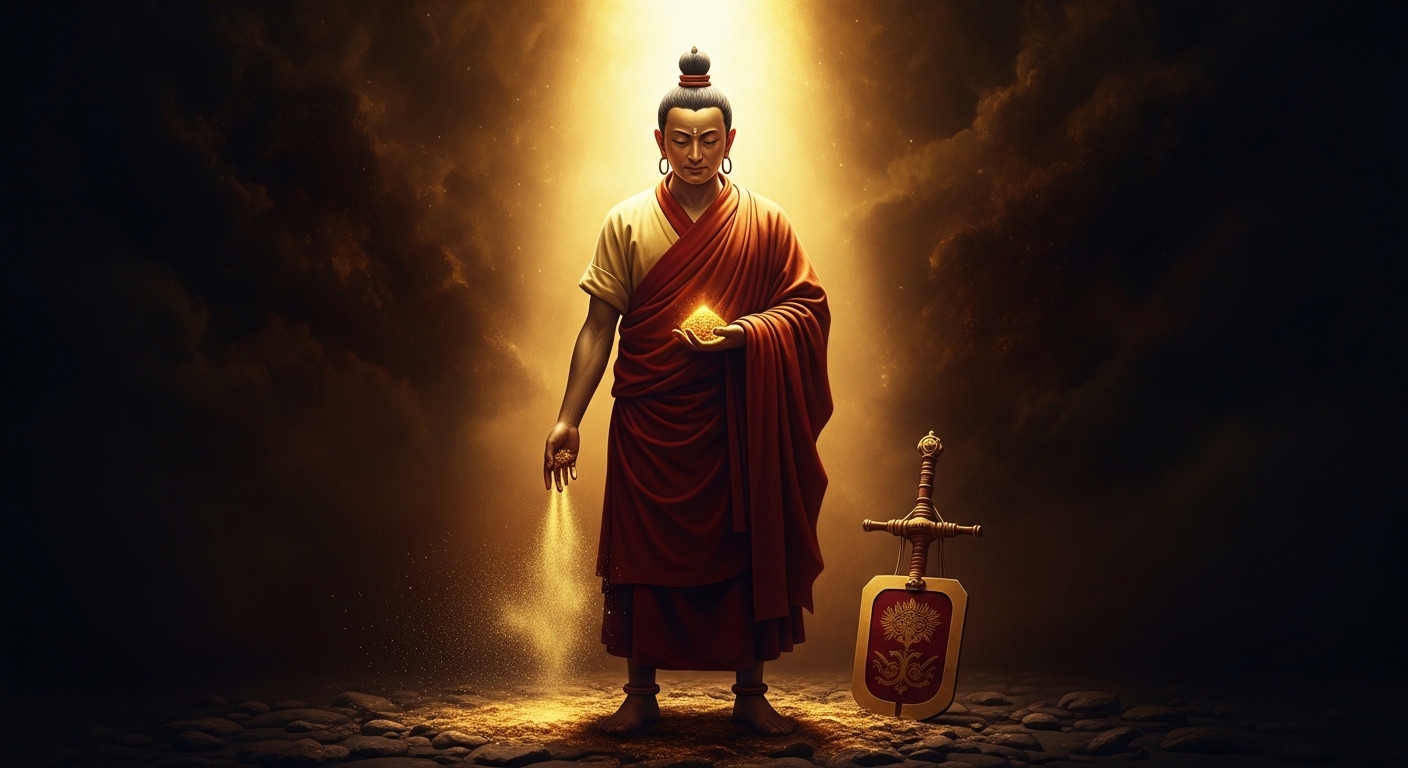
Milarepa stands in the aftermath with the gold dust his mother gave him, with a sorcerer’s abilities that now belong entirely to him, and with thirty-five deaths on his hands.
The elation lasts about three days. Then it breaks.
What replaces it is not guilt exactly — guilt implies the option of having chosen differently, and he cannot see that he had one. What replaces it is the weight of the karma he has accumulated. In Tibetan Buddhist cosmology, each intentional killing binds the killer to a corresponding suffering in future lives: thirty-five is not a large number in a country that has seen armies, but for a young man who began with a small house and a bag of gold dust, it is everything.
He goes to the sorcerer and says: teach me something that can undo this. The sorcerer says: this I cannot teach. But I know of a man who can.
The man’s name is Marpa. He lives to the east. He is said to have brought certain teachings from India that no one else in Tibet possesses — teachings capable of burning away even the darkest karma in a single lifetime.
Milarepa walks east.
He is twenty-two years old. He has killed thirty-five people. He carries nothing but the syllables his sorcerer taught him and a hunger that will eventually, over decades of suffering and grace, become the songs that Tibetans still sing.
Scenes
Echoes Across Traditions
Entities
- Milarepa
- Yungdrungbar (the sorcerer)
- Peta (Milarepa's sister)
- the aunt and uncle who stole the estate
Sources
- Tsangnyön Heruka, *The Life of Milarepa* (Namthar), 15th century, trans. Lobsang P. Lhalungpa (Shambhala, 1984)
- Andrew Quintman, trans., *The Life of Milarepa* (Penguin Classics, 2010)
- Garma C.C. Chang, trans., *The Hundred Thousand Songs of Milarepa* (Shambhala, 1999)