Milarepa's Faithful Student Rechungpa Rebels
c. 1100–1120 CE — early 12th century Tibet · Milarepa's cave retreat areas in central and western Tibet — the high-altitude settings where the exchanges between teacher and student occur
Contents
Rechungpa — Milarepa's beloved principal disciple — returns from India with extraordinary teachings and an inflated pride, and Milarepa must find the precise method of deflating that pride without destroying the student who will carry the lineage.
- When
- c. 1100–1120 CE — early 12th century Tibet
- Where
- Milarepa's cave retreat areas in central and western Tibet — the high-altitude settings where the exchanges between teacher and student occur
He comes back from India with more than Milarepa sent him for.
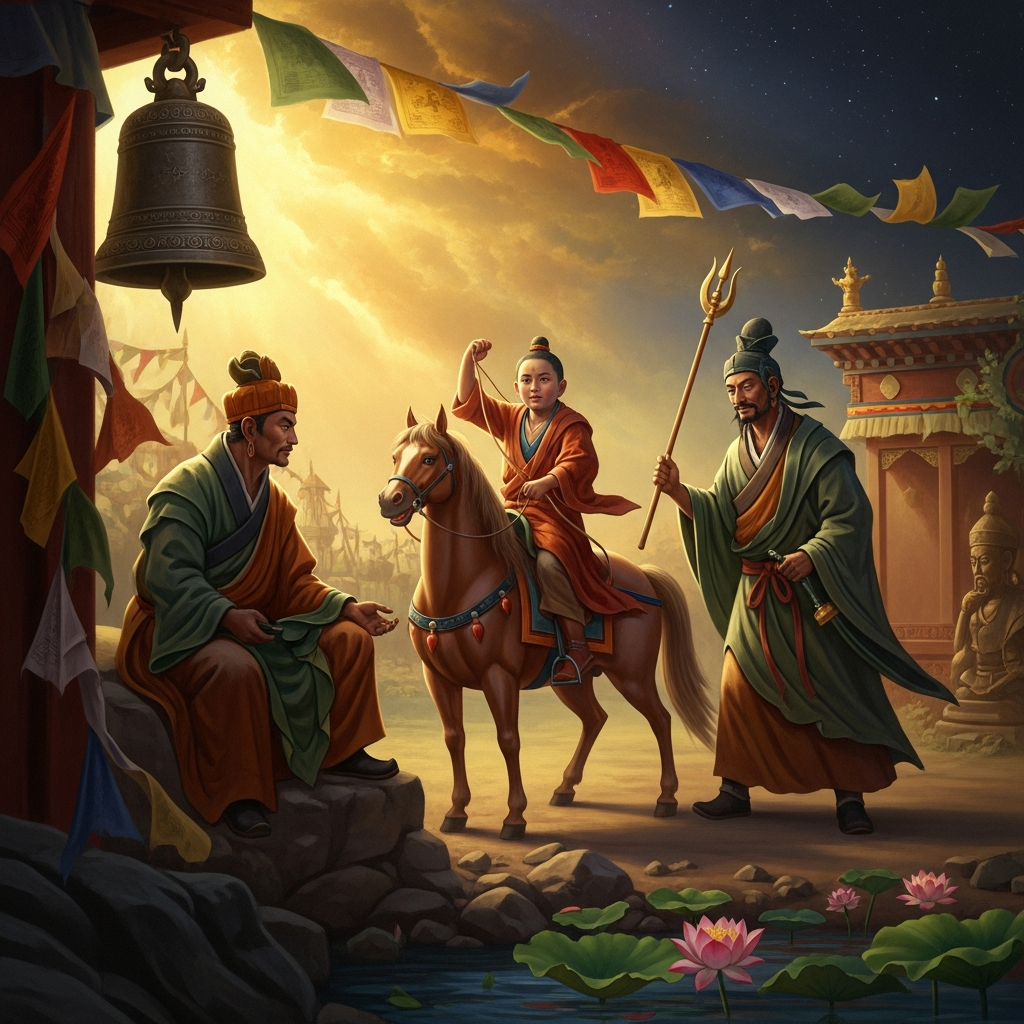
Milarepa has sent Rechungpa to India twice to retrieve specific teachings that Milarepa himself wants but cannot go to get — the master is old and the high passes are dangerous for an aging yogi, but the transmissions need to be brought to Tibet. Rechungpa is the right student for this: capable, devoted, intelligent enough to study with difficult Indian masters, reliable enough to bring the teachings back intact.
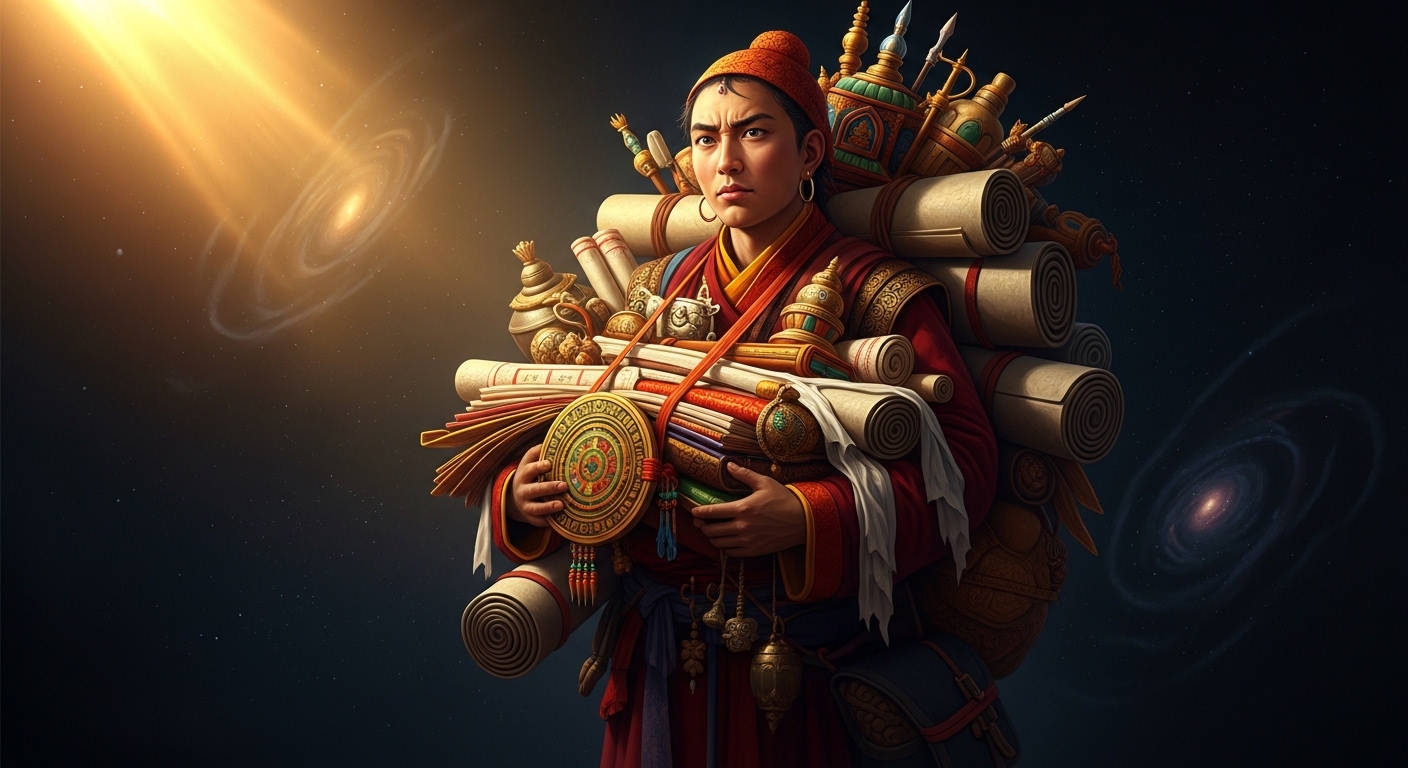
He brings the teachings back intact. He also brings back something Milarepa did not send him for: the conviction that the additional transmissions he received make him, in certain respects, more qualified than his teacher.
This is not fabricated. Rechungpa has received a transmission in India that Milarepa does not have. The transmission is genuine. His pride in it is the problem — not because pride is always wrong, but because pride in a particular teaching, at the stage of realization Rechungpa has reached, is an obstruction to the next step. It is the same obstruction that Naropa carried when the hideous old woman appeared to ask him if he understood the meaning.
Milarepa’s methods are different from Marpa’s.
Marpa worked with massive, structural obstructions — the karma of thirty-five deaths, the fundamental self-importance of someone who had never been genuinely humbled. He used massive, structural methods: towers, humiliations, public beatings, years of exclusion.
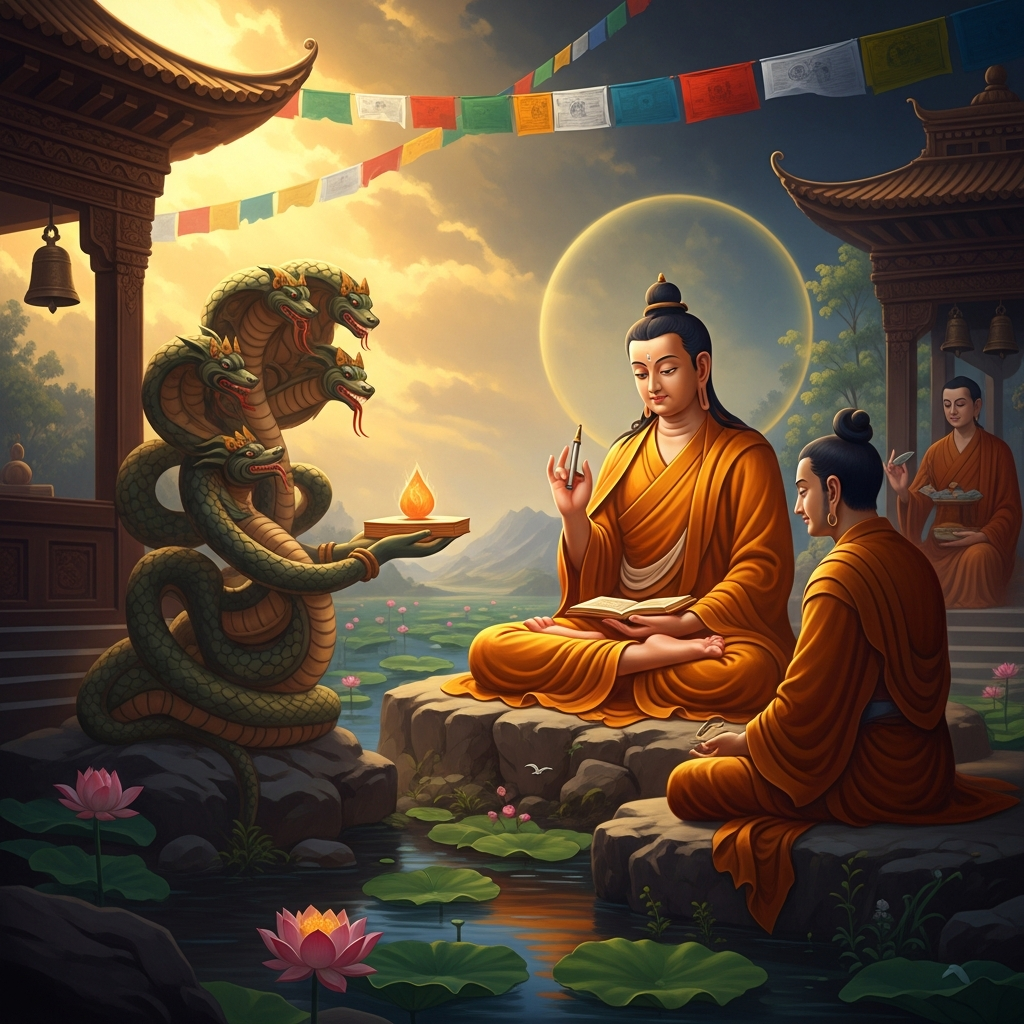
Rechungpa’s obstruction is subtler: a refined pride in genuine attainment. The method Milarepa uses is correspondingly subtler. He sings. He tells stories. He disappears into a yak horn when Rechungpa arrives — the accounts are specific about this: Milarepa enters a yak horn and continues to be present inside it, an impossible spatial demonstration that the pride Rechungpa holds about his additional teachings is a pride about something much smaller than what Milarepa inhabits.
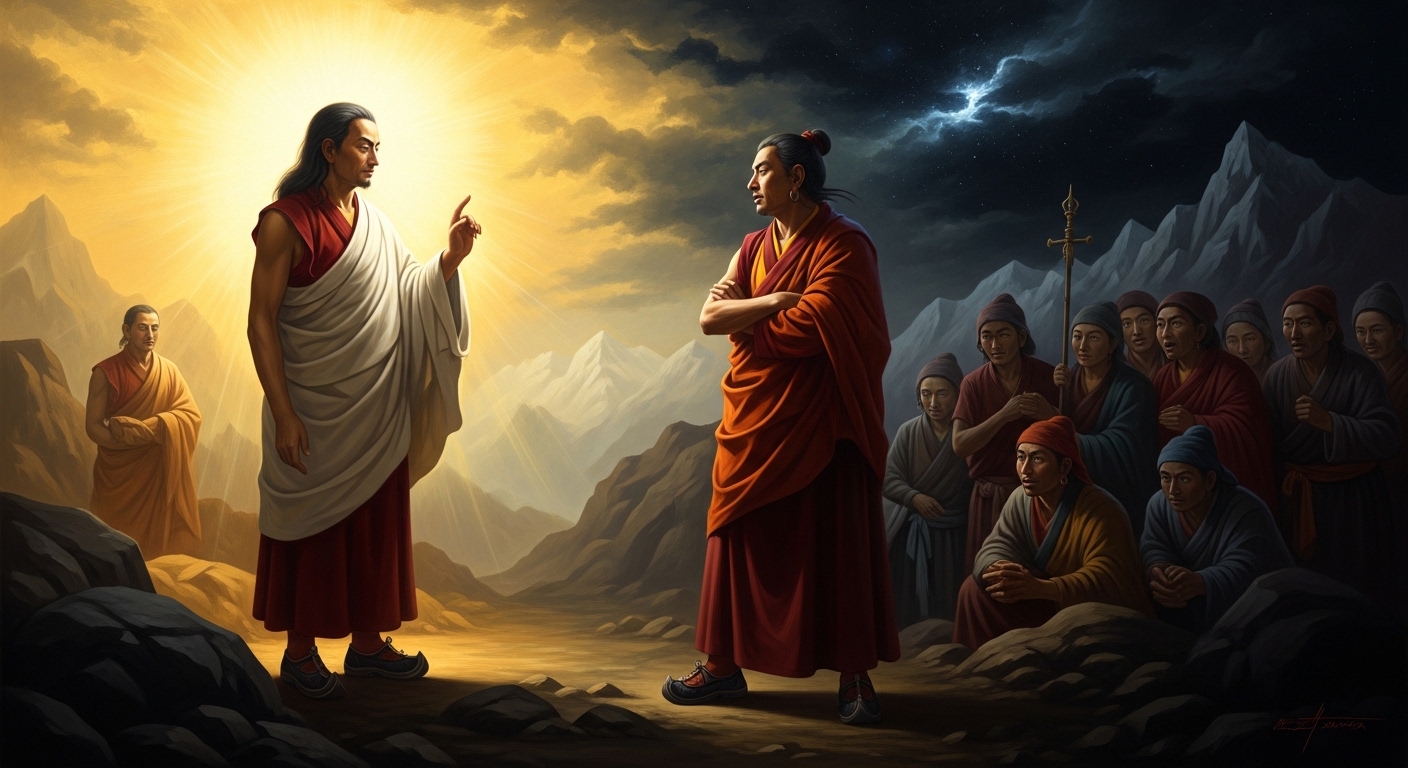
He uses the songs. The Hundred Thousand Songs contain numerous exchanges between Milarepa and Rechungpa in which the teacher demonstrates, through verse, that the additional transmission Rechungpa received is real but is not larger than the view Milarepa holds — that Rechungpa’s extra accomplishment is a room in a house, while Milarepa’s ordinary state is the sky.
The difficult part is that Rechungpa knows it.
He knows his teacher is right. He knows the pride is an obstruction. This is different from the early students who genuinely couldn’t see it. Rechungpa has sufficient realization to see exactly what the problem is and to find that the seeing does not automatically resolve it. The pride has a momentum of its own.
This is the Kagyu teaching about the intermediate stages: the early obstructions are cleared by the gross methods. The intermediate obstructions are visible, named, known — and they are cleared by the finesse of a teacher who can find the exact angle from which the known obstruction can be dislodged without damaging what it is attached to.
Milarepa keeps teaching him. He does not expel Rechungpa. He does not remove him from the transmission. He sings at him, argues with him, demonstrates the yak-horn impossibilities, and waits. He waits with the patience of someone who knows both what Rechungpa is and what is in the way of Rechungpa being what he is.
The transmission eventually holds. Rechungpa carries the Rechung Kagyu sub-lineage. He is the teacher who preserves the specific transmission of the formless dakinis — the Formless Aural Lineage — that comes through his Indian teachers and through Milarepa to the present. His pride was an obstruction and a stage and both. The teacher knew how to hold both simultaneously, which is the qualification that made Milarepa a teacher.
Scenes
Echoes Across Traditions
Entities
- Rechungpa
- Milarepa
- the Indian teachers who gave Rechungpa additional transmissions
Sources
- Garma C.C. Chang, trans., *The Hundred Thousand Songs of Milarepa* (Shambhala, 1999)
- Tsangnyön Heruka, *The Life of Milarepa*, trans. Lobsang P. Lhalungpa (Shambhala, 1984)
- Andrew Quintman, *The Yogin and the Madman* (Columbia University Press, 2014)