Al-Ghazālī Rebuilds Islamic Learning from the Ruins
c. 1106–1111 CE — Tus, Khurasan; preceded by wandering through Syria, Jerusalem, Mecca, and Medina · Tus, Khurasan (northeastern Iran) — Al-Ghazālī's hometown, where he builds a Sufi school and a madrasa side by side
Contents
After eleven years wandering as a penniless Sufi, Al-Ghazālī returns to teaching and writes the Ihya Ulum al-Din — the Revival of the Religious Sciences — the most influential work in Islamic intellectual history after the Quran and Hadith, a book that reconciles law, theology, and mysticism into a single integrated practice.
- When
- c. 1106–1111 CE — Tus, Khurasan; preceded by wandering through Syria, Jerusalem, Mecca, and Medina
- Where
- Tus, Khurasan (northeastern Iran) — Al-Ghazālī's hometown, where he builds a Sufi school and a madrasa side by side
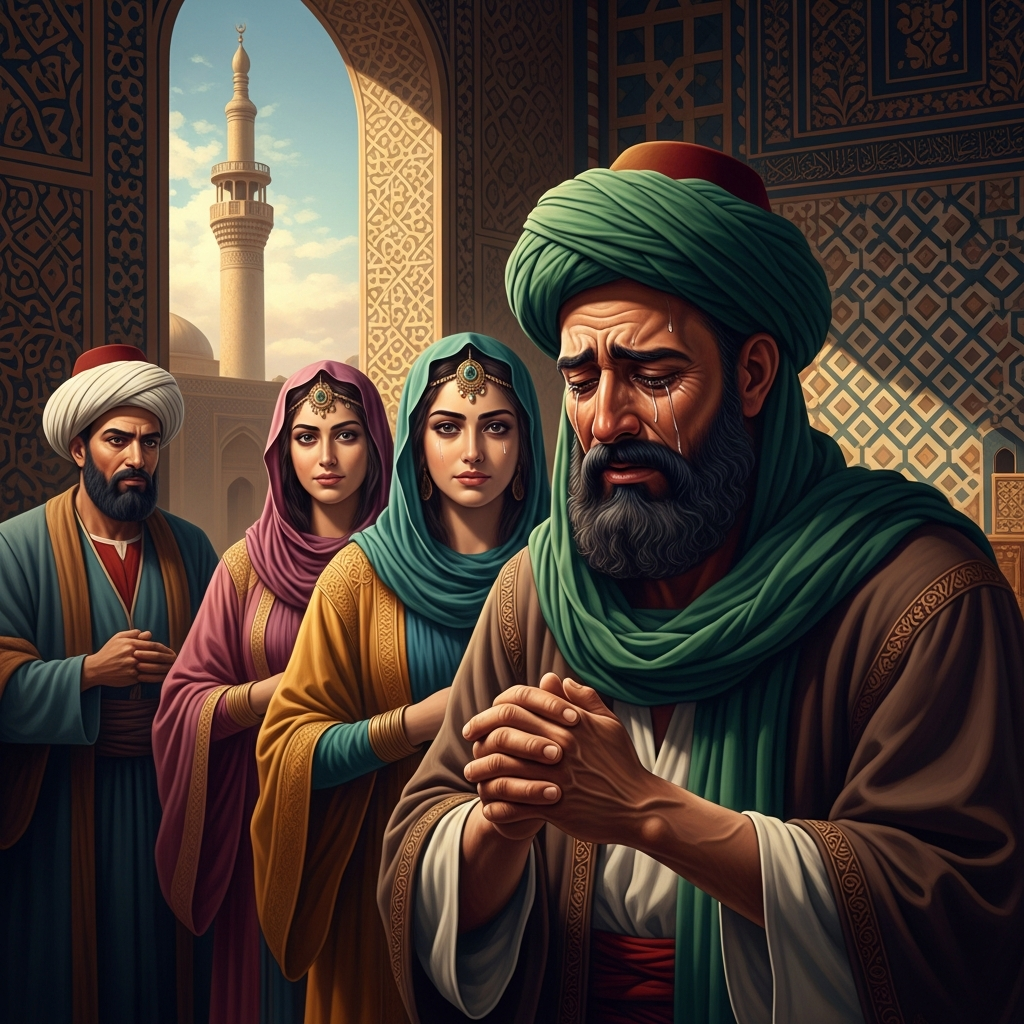
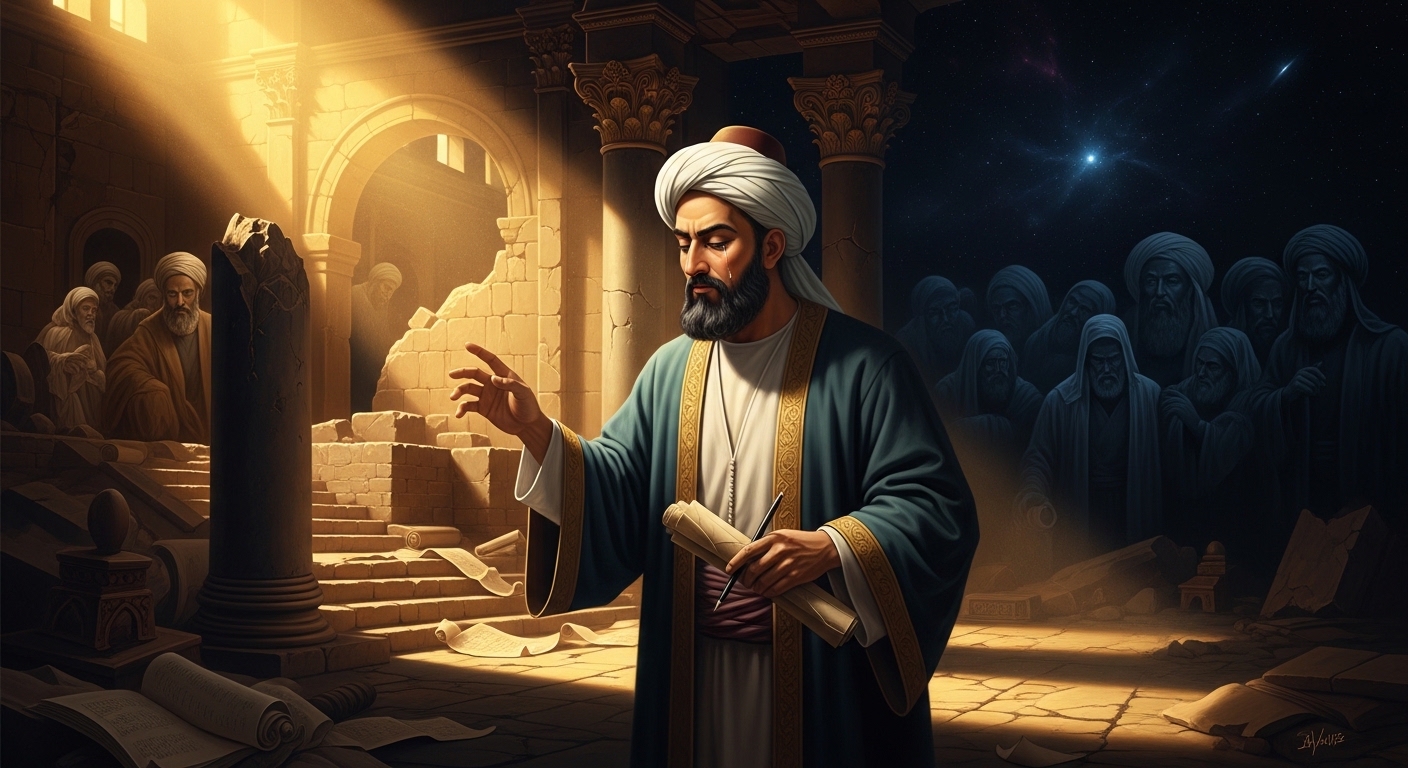
He returns to Tus thin and barefoot.
The man who had been the most prestigious professor in the Islamic world — whose annual salary at the Nizamiyya madrasa in Baghdad was the equivalent of a senior court official’s — returns to his hometown in northeastern Iran with nothing. He is forty-nine years old. He has been wandering for eleven years: Damascus, Jerusalem, Mecca twice, Medina, a Sufi school in Tus for a while, then back to wandering. He has performed the hajj, which he had not done during the years of his eminence because he was too busy being eminent.
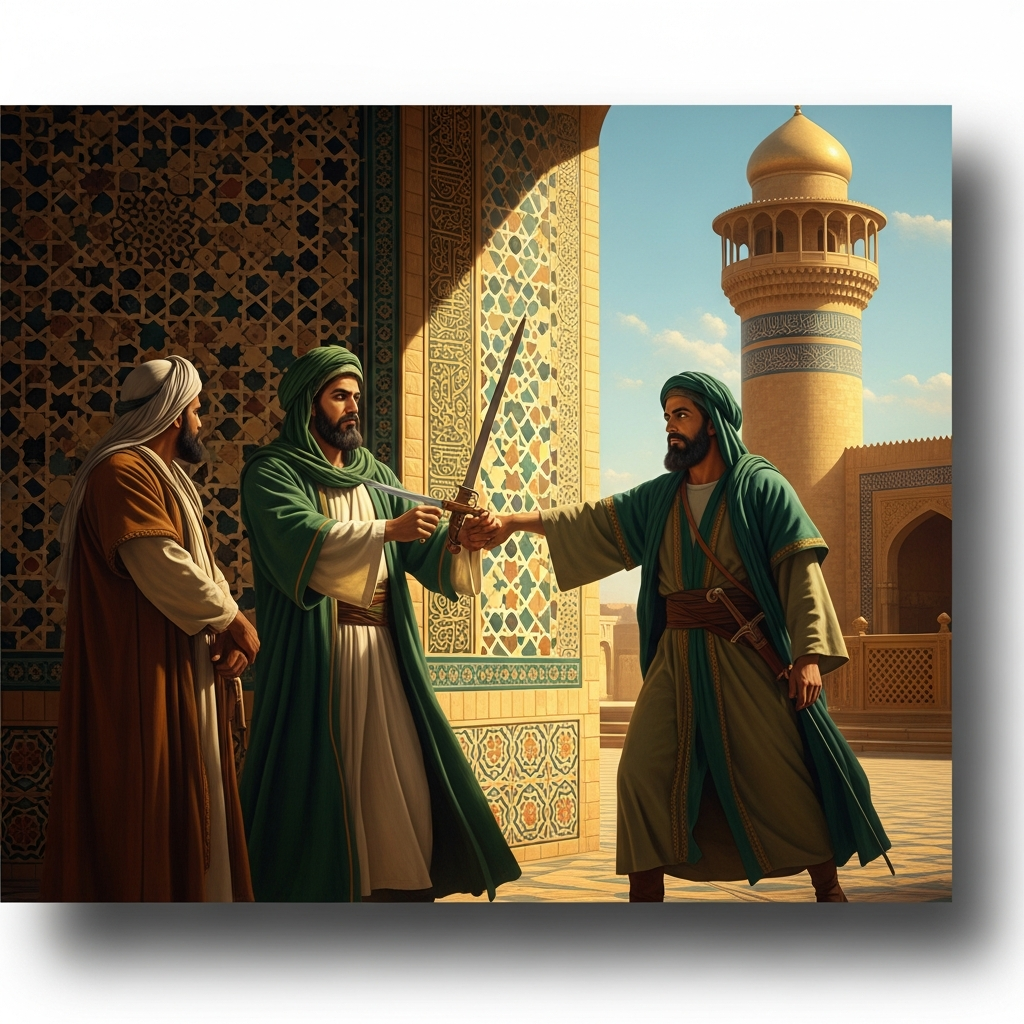
He asks the sultan for a very small thing: a room to write in.
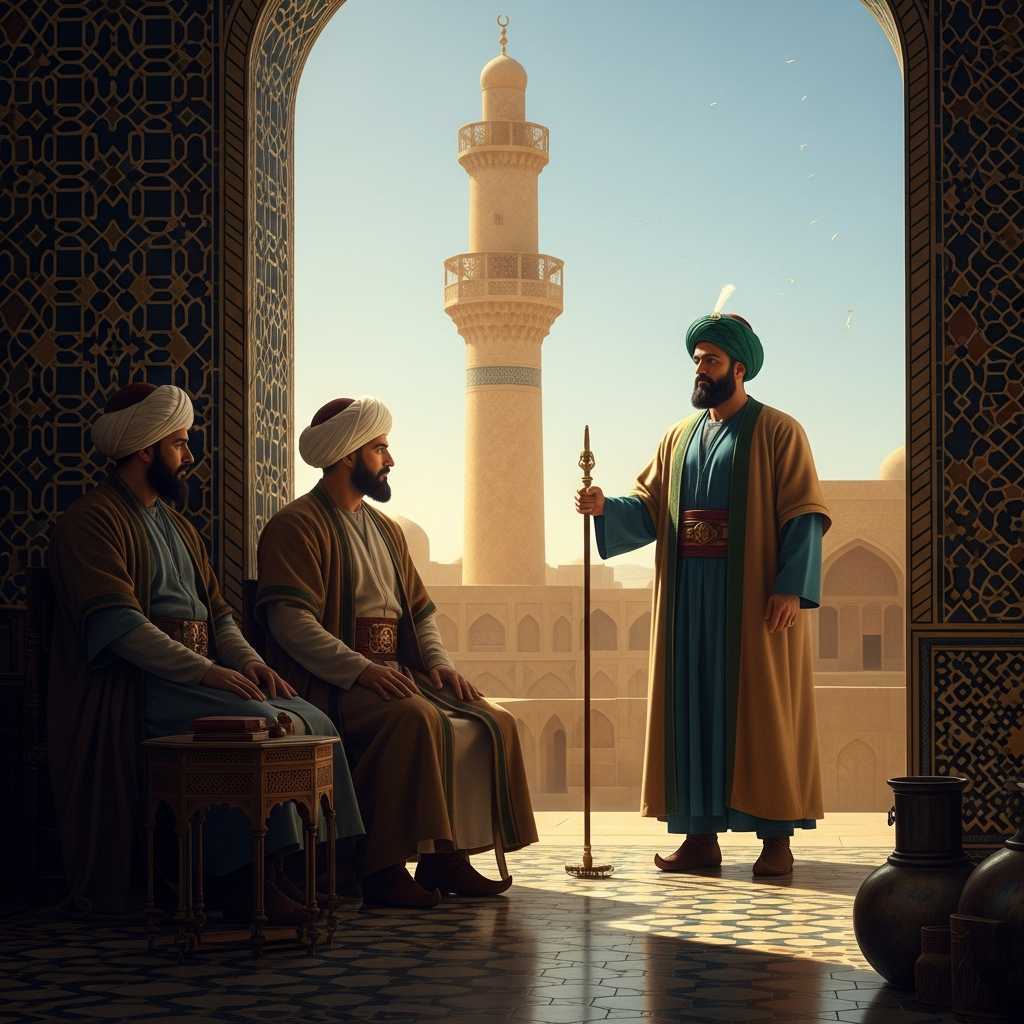
The room becomes a madrasa and a khanqah — a legal school and a Sufi retreat house — built side by side on the same property in Tus. This is not accident. The two buildings are his architectural argument: you cannot have one without the other. He will spend the years that remain to him teaching law students in one building and Sufi students in the other, and insisting, to both groups, that their neighbor’s building contains something they need.
The Ihya Ulum al-Din takes several years to write.
It is forty books. The organizational logic is a master’s long-prepared argument. The first quarter: Acts of Worship — the five pillars of Islam, explained not as obligations to be correctly performed but as practices with an inner dimension that makes the outer dimension meaningful. The second quarter: Customs — eating, marriage, earning a living, friendship, travel — the ordinary texture of daily life shown as an arena for spiritual practice. The third quarter: The Things That Destroy — the destructive moral qualities of the soul, examined in the clinical detail of a physician who knows each disease from the inside. The fourth quarter: The Things That Save — the virtues that open the soul toward God, culminating in love, longing, and nearness.
The structure is a diagnosis followed by a treatment plan. This is deliberately medical. Al-Ghazālī studied medicine as a young man, or at least absorbed its metaphors from the intellectual culture of Khorasan. He brings the physician’s diagnostic precision to the soul’s ailments: not you are a sinner but here is the specific mechanism by which this kind of self-deception operates, here is why it feels like virtue from inside, here is what it produces if untreated.
The crisis he came back from is the crisis he writes about most honestly.
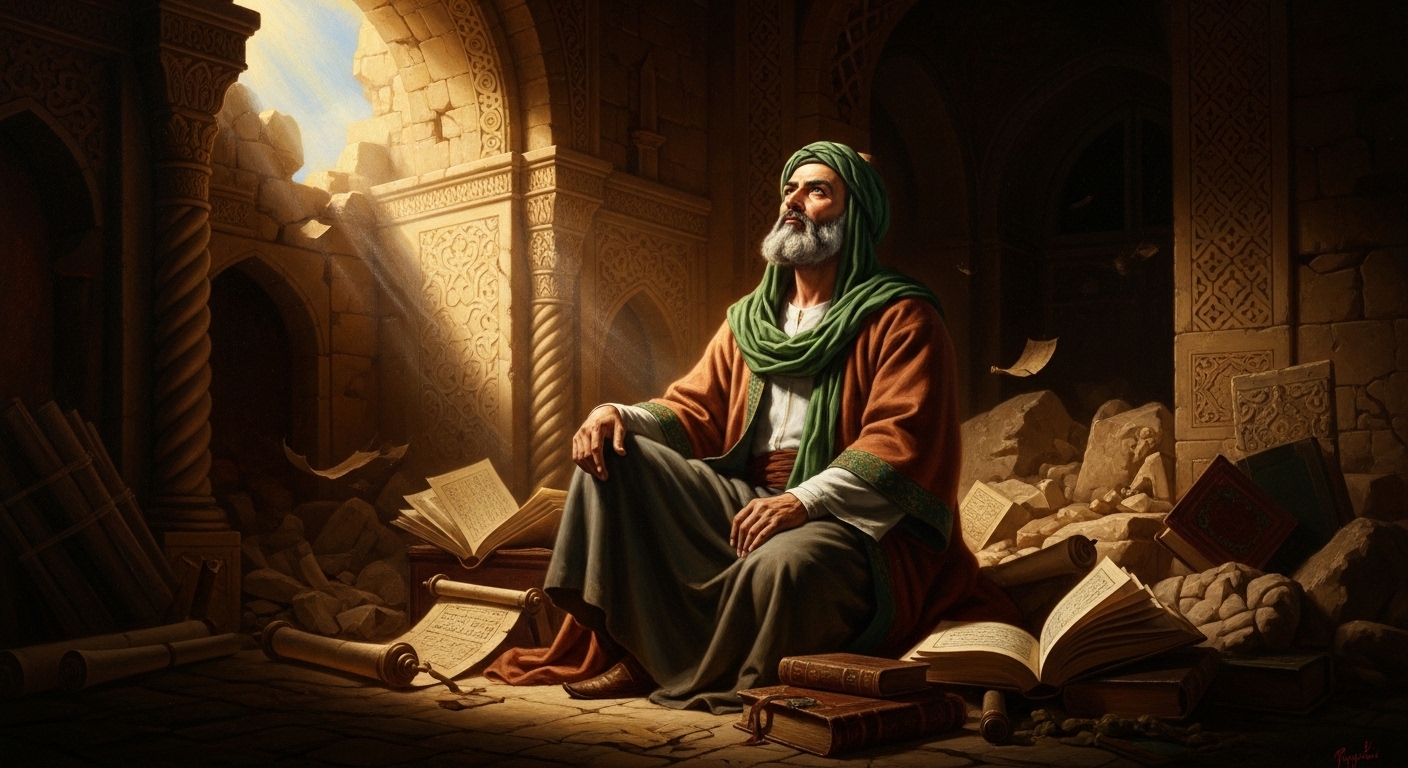
In his autobiographical Deliverance from Error, written around the same time as the Ihya, he describes the eleven years not as a vacation or a spiritual retreat but as a breakdown. He stopped lecturing in Baghdad because his throat closed — he physically could not continue saying things he no longer believed to be true. He had been teaching Islamic sciences for a religious audience that wanted the performance of knowledge, not the reality of transformation. He had been that performance. He could not be it anymore.
The Sufis he had always dismissed as insufficiently rigorous had something he lacked: certitude that came from experience rather than argument. He could construct proofs for the existence of God. He could not taste God. The word he uses repeatedly is dhawq — taste, direct experience — and he compares it to the difference between a description of drunkenness and actually drinking wine. You can describe every effect of alcohol on the body with perfect accuracy and never have been drunk. This is the condition of Islamic scholarship, he says, when separated from the Sufi interior practice.
The Ihya is his attempt to give people both the description and the drink.
He dies in 1111. He is fifty-three years old. He has been teaching in Tus for five years, and his students include both lawyers and mystics who no longer argue about which tradition is complete.
The book he left outlasted everything else from the Islamic medieval period except the canonical religious texts. It was memorized in the Sufi orders. It was taught in the legal schools. It was burned in Andalusia by jurists who considered it too mystical and then reprinted and retaught in the same region two generations later. It was translated into Persian and Persian verse and Turkish and then, via the Ottoman empire, into every language of the Islamic world.
Every page argues the same thing in forty different registers: law without love is bureaucracy. Love without law is chaos. The integration is the point.
The two buildings in Tus — the madrasa and the khanqah — stood side by side.
He taught in both.
Scenes

Echoes Across Traditions
Entities
- Al-Ghazālī
- the Sultan of Khurasan
- Nizam al-Mulk (posthumously)
Sources
- Al-Ghazālī, *Ihya Ulum al-Din* (Revival of the Religious Sciences), completed c. 1109
- Al-Ghazālī, *Deliverance from Error* (Al-Munqidh min al-Dalal), autobiography, c. 1108
- W. M. Watt, *The Faith and Practice of al-Ghazali* (Allen & Unwin, 1953)
- Eric Ormsby, *Ghazali: The Revival of Islam* (Oneworld, 2008)