Yoshitsune Betrayed by His Brother
1185-1189 CE — late Heian / early Kamakura period · From Kyoto northward through Yoshino and Ōshū to Hiraizumi, ending at Koromogawa no Tachi
Contents
The warrior who won every battle for his brother Yoritomo finds himself hunted by that same brother — his victories turned into threats, his loyalty rewarded with a death warrant — as the Minamoto victory swallows its own greatest hero.
- When
- 1185-1189 CE — late Heian / early Kamakura period
- Where
- From Kyoto northward through Yoshino and Ōshū to Hiraizumi, ending at Koromogawa no Tachi
The Genpei War is over.
The Taira, who ruled Japan for a generation from their palaces in Kyoto, have been annihilated. Dan-no-ura, the naval battle in the Kanmon Strait where the last of the Taira were driven into the sea — where the child-emperor Antoku was carried into the water by his grandmother, who chose drowning over surrender — ended five years of war. The Minamoto have won.
Yoshitsune won it.
He won the Uji River crossing in midwinter when everyone said the river was impassable. He won the Battle of Ichi-no-tani by attacking from a cliff that everyone said was unscalable. He won Yashima by attacking with a handful of boats in a storm that everyone said made naval combat impossible. He won Dan-no-ura by a tactics so unexpected that the Taira admirals did not recognize the threat until it was too late.
His brother Yoritomo received the surrender.
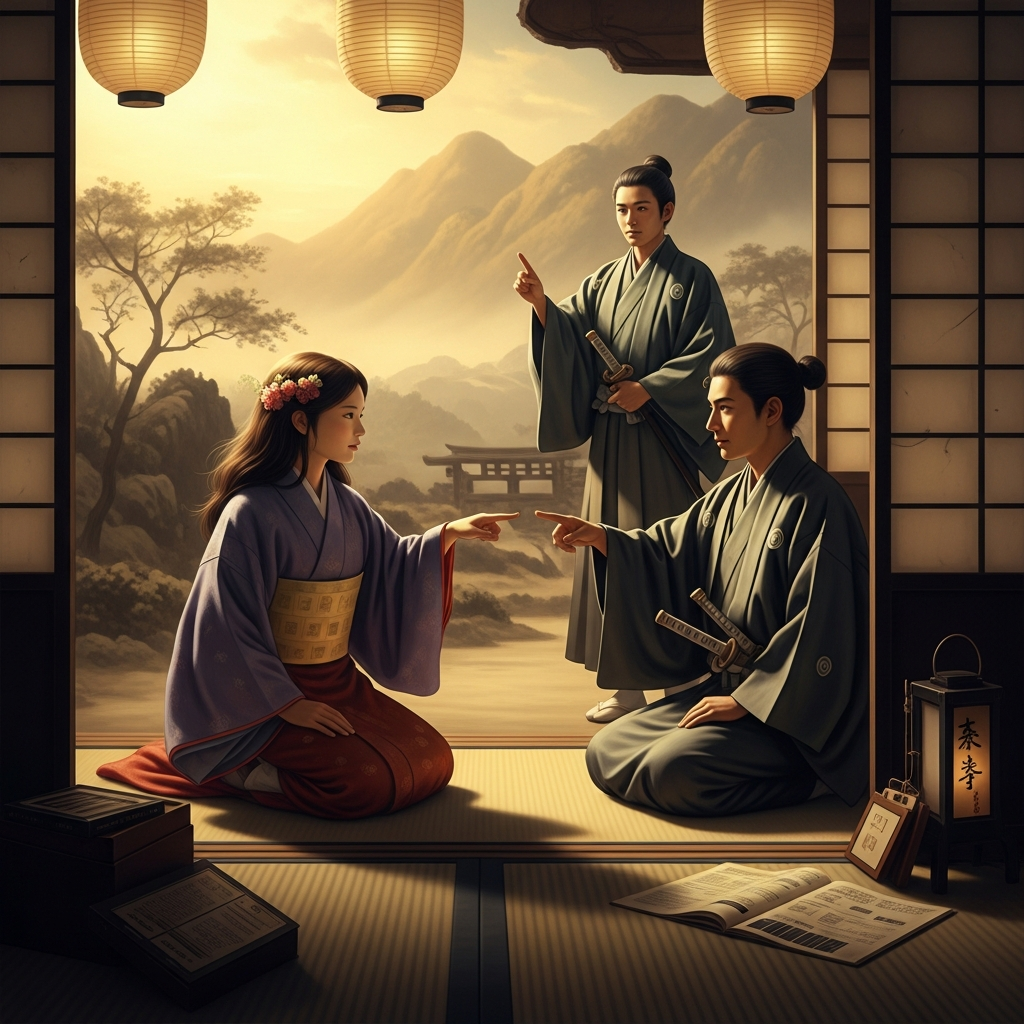
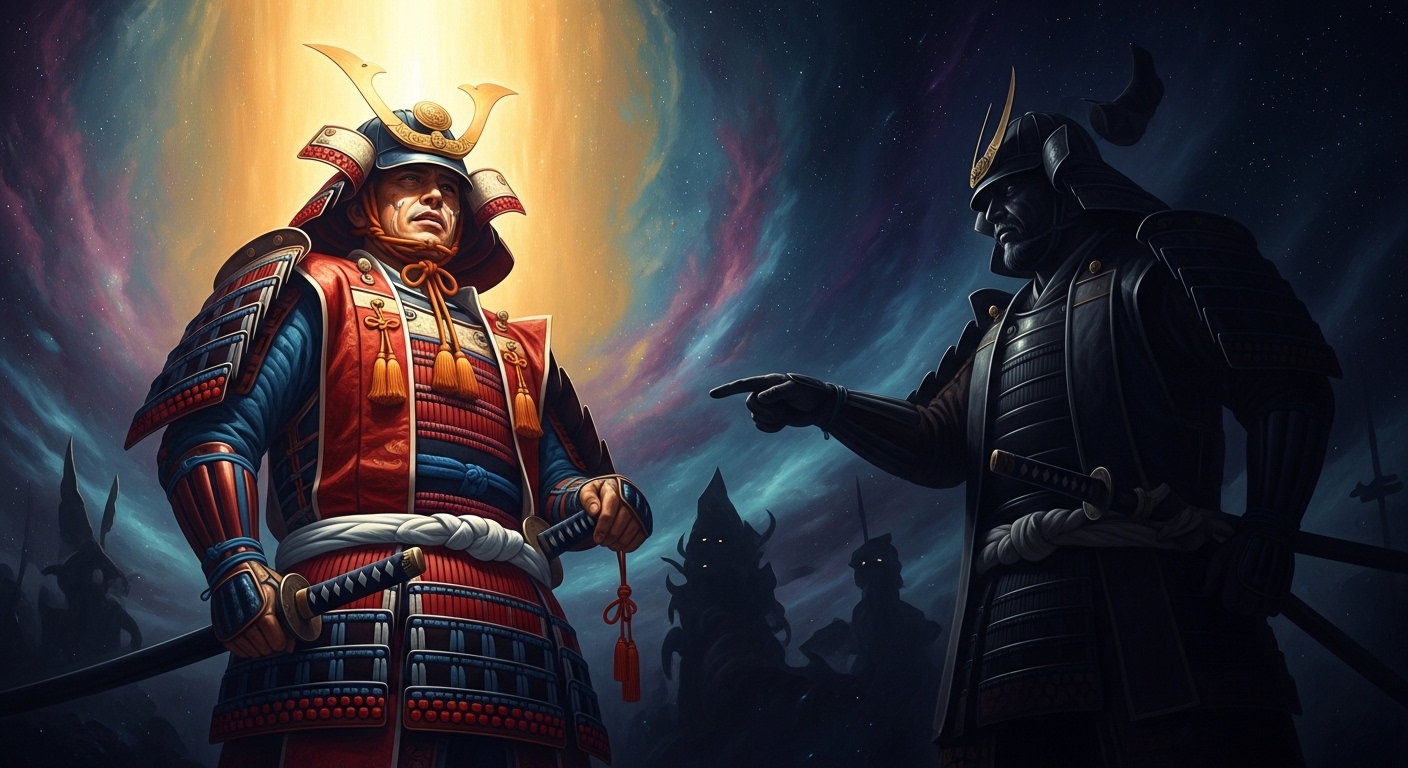
The distance between the brothers was already a problem before the war ended. Yoritomo, establishing himself as the first shogun at Kamakura, far from Kyoto, was not a battlefield commander. He was a political architect, and political architects fear the people they cannot control. Yoshitsune, in the eyes of the Kyoto aristocracy — who loved him, who wrote poems about him, who gave him titles that Yoritomo had not authorized — was becoming a separate power center. A hero with his own following. A general with victories that were his, not his brother’s.
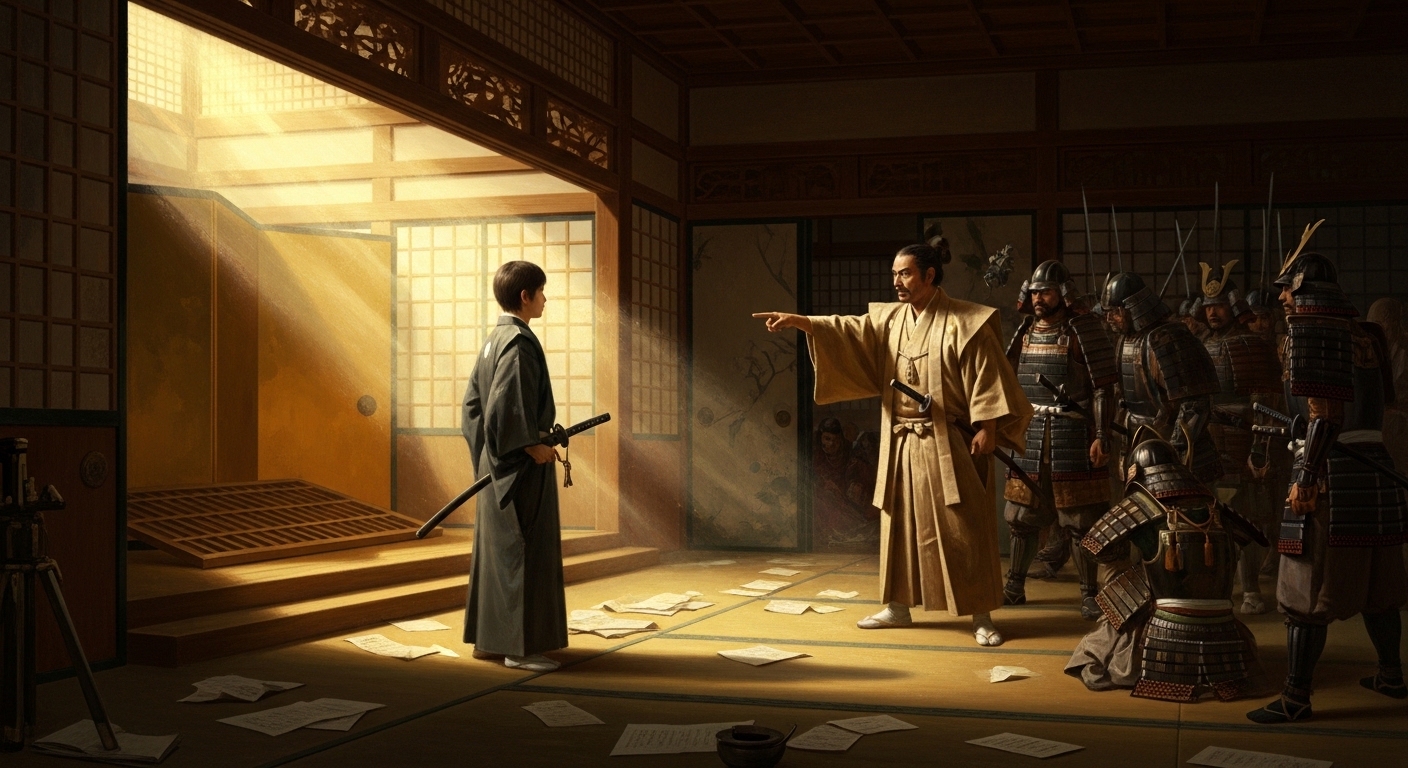
Yoritomo had him declared an outlaw in 1185.
The brother who won the war was now a fugitive from the brother who received its fruits.
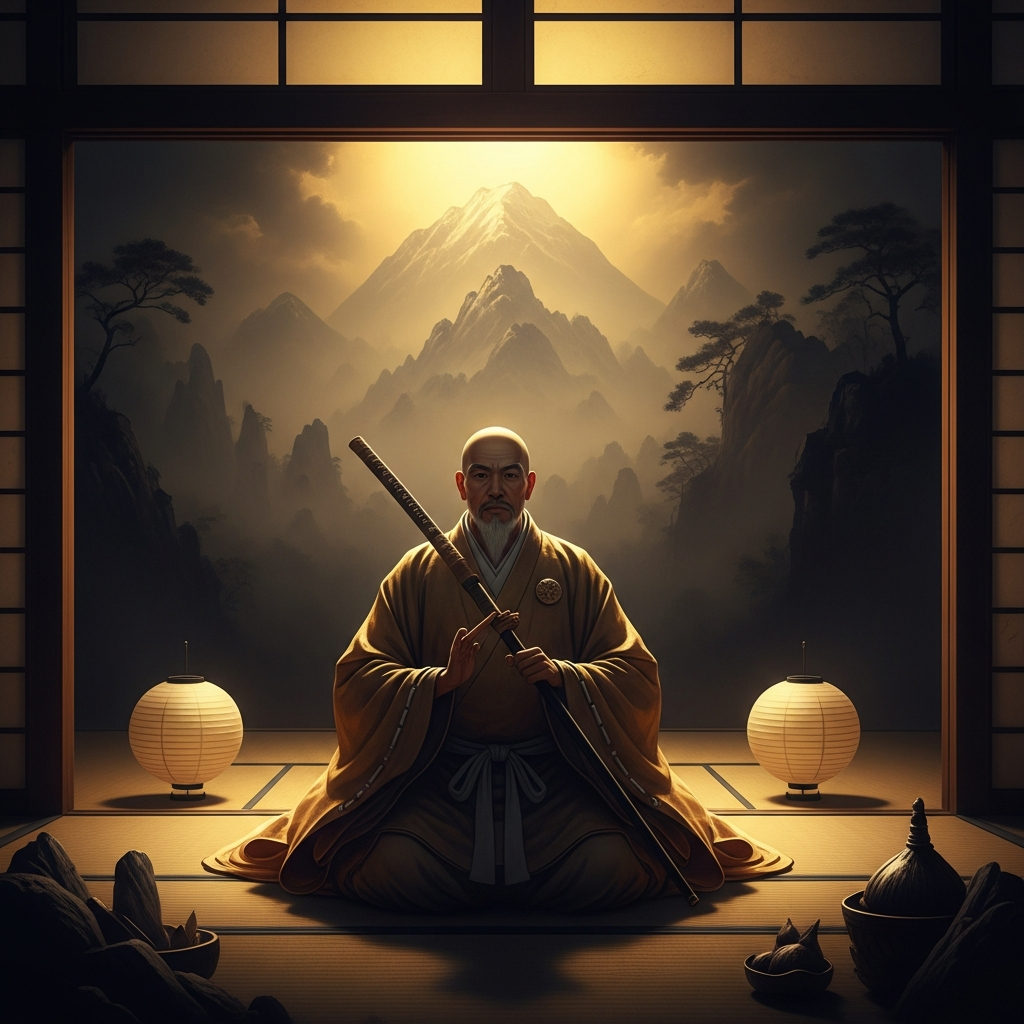
The flight north is long and terrible. With a small group of loyal retainers — Benkei, his great monk-warrior, always at the front; Shizuka Gozen, the dancer who was his mistress, captured by Yoritomo’s forces at Yoshino — Yoshitsune traveled through mountain passes and disguised themselves and were turned back at barriers and nearly caught a dozen times.
Shizuka was brought to Kamakura. She was pregnant with Yoshitsune’s child. Yoritomo ordered her to dance at a shrine celebration. She danced — and she sang a song about Yoshitsune. The song was a declaration of love and defiance performed in the court of the man hunting him. Yoritomo was furious. His wife Masako restrained the punishment. Shizuka’s son was killed at birth.
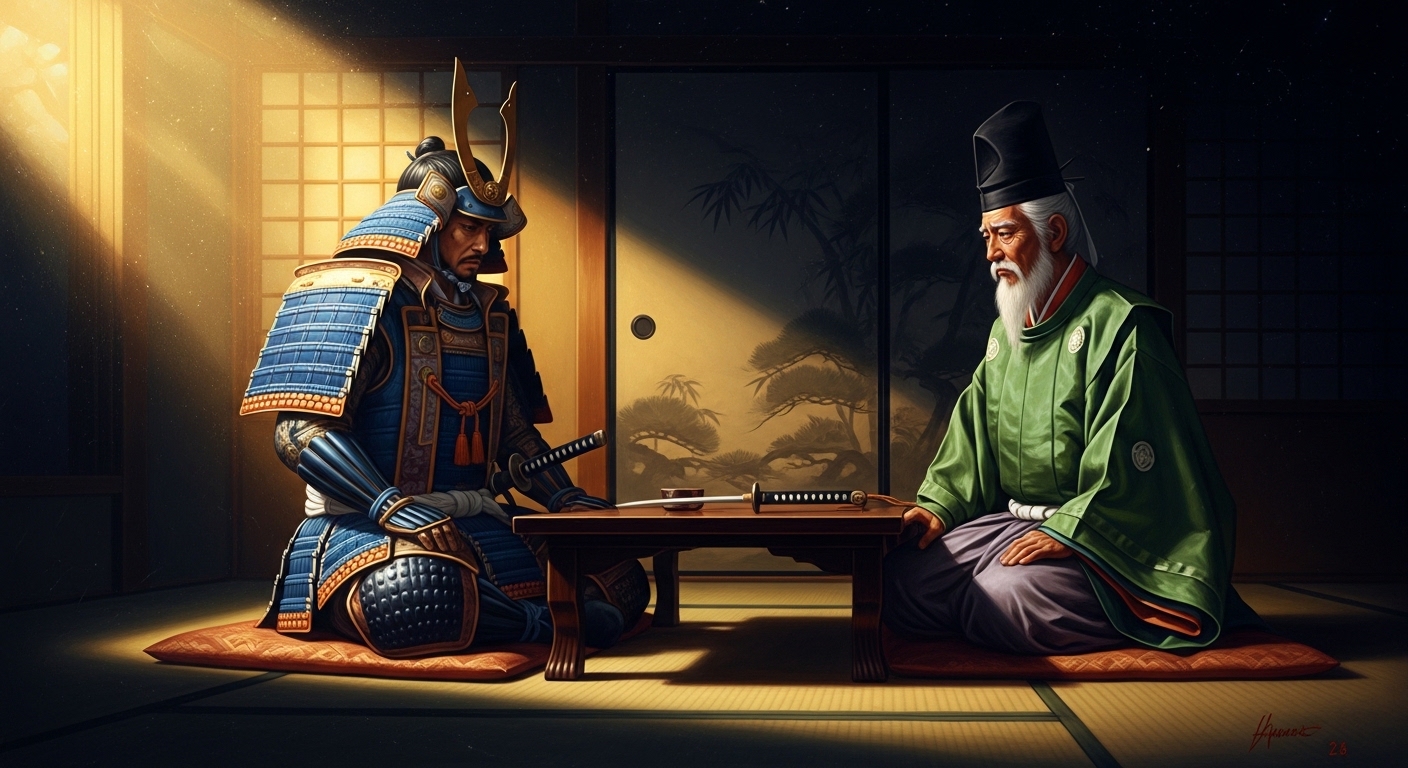
Yoshitsune made it north to Ōshū, to Hiraizumi, to the court of Fujiwara no Hidehira who had sheltered him in youth.
Hidehira died the following year.
Hidehira’s son Yasuhira, under pressure from Yoritomo, sent his warriors against Yoshitsune’s small holdout at Koromogawa no Tachi.
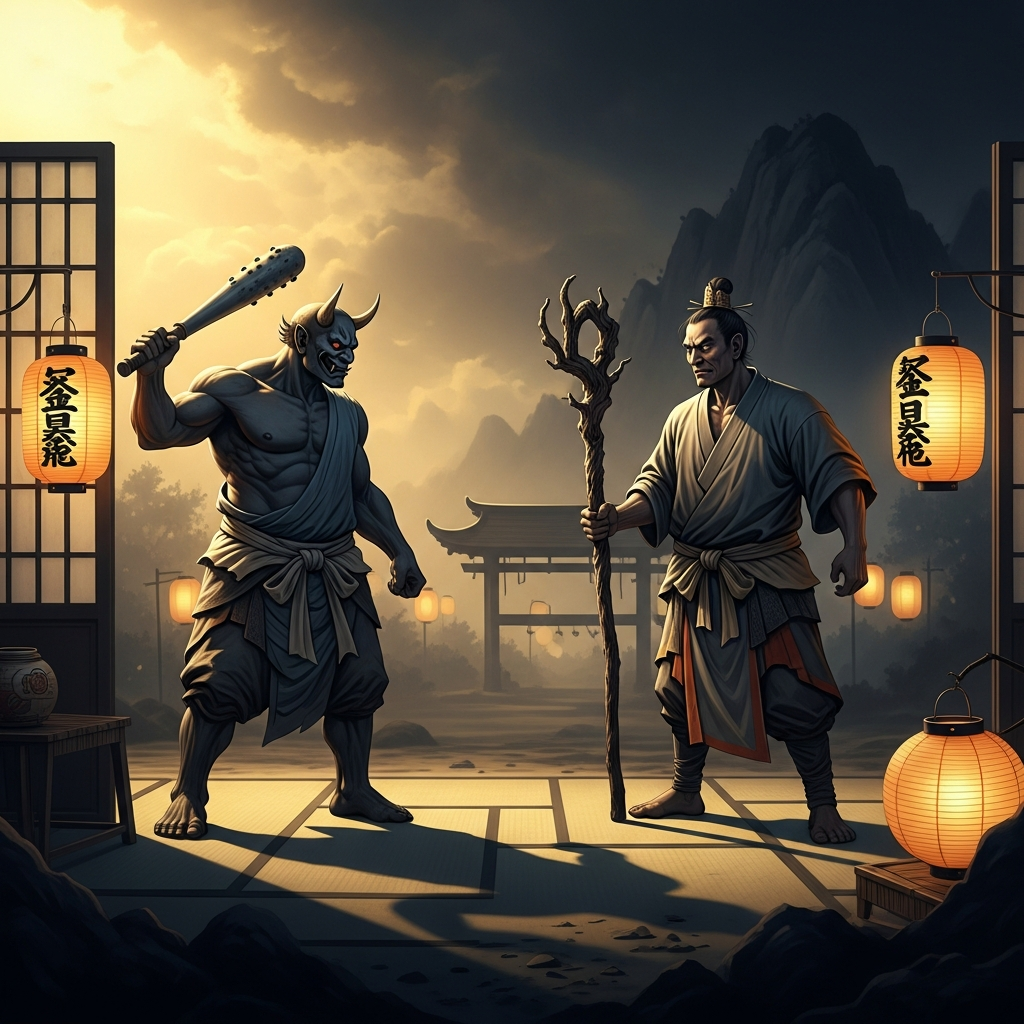
Benkei fought at the bridge.
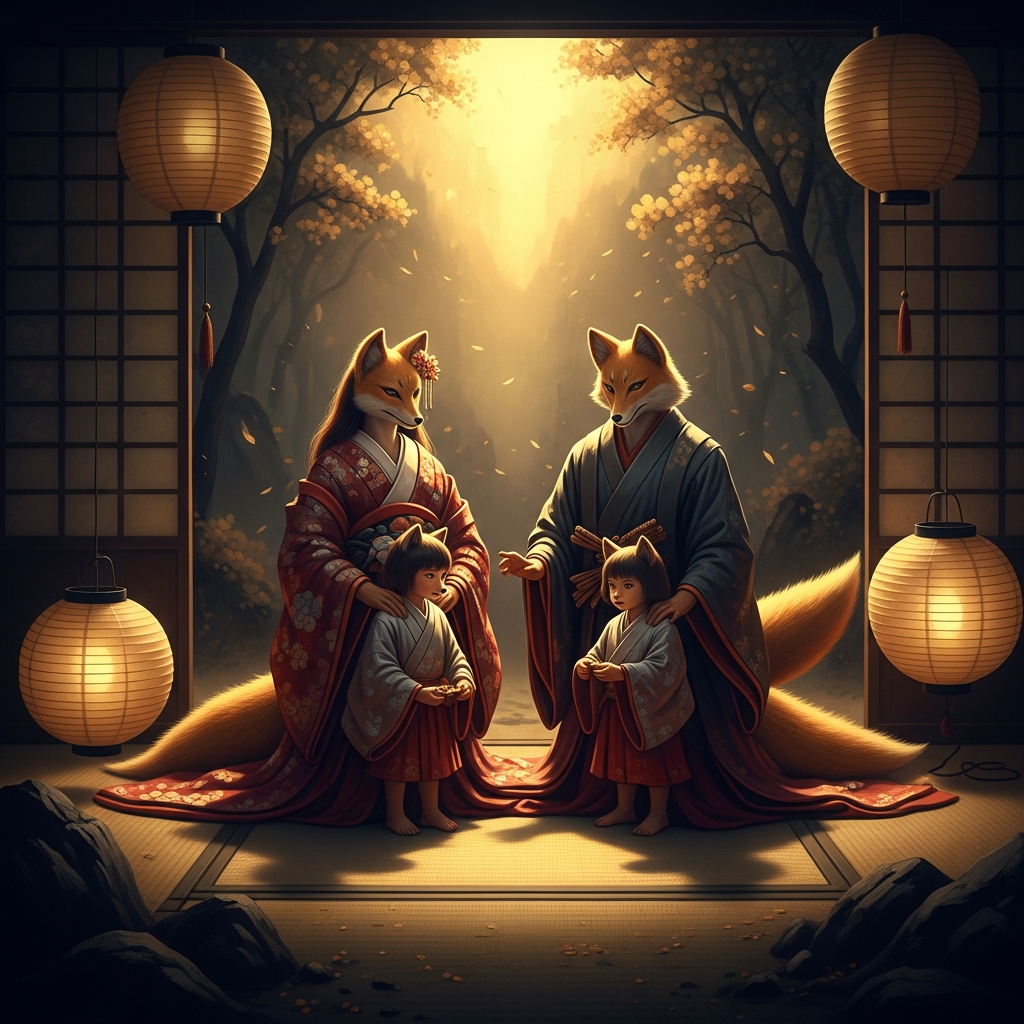
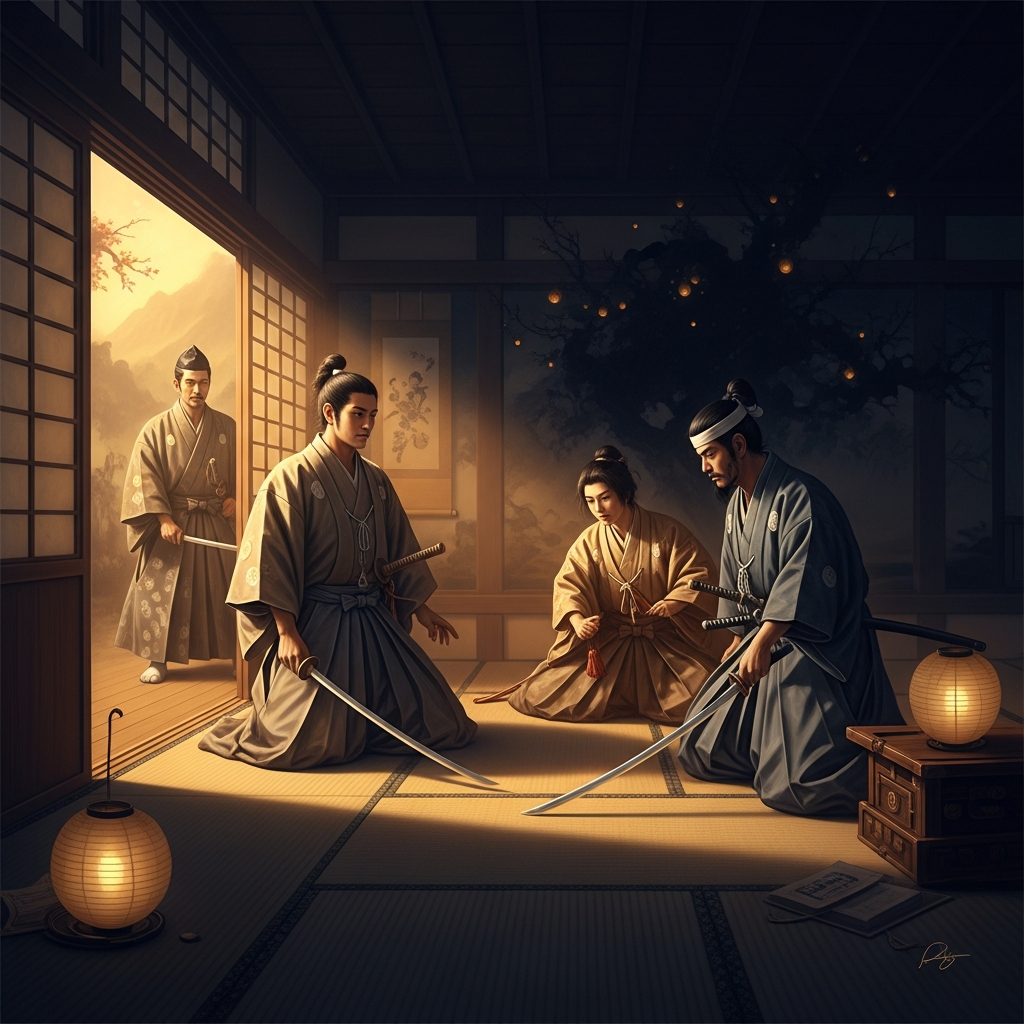
Yoshitsune, inside the hall, killed his family rather than let them be taken, and then killed himself.
He was thirty-one years old.
Japan never recovered from this.
Hōgan biiki — sympathy for the lieutenant — became a named psychological phenomenon, the specific emotion of watching someone gifted destroyed by the superior they served. Every subsequent Japanese tragedy is in his shadow. The Heike Monogatari preserves his story in the same text as the war he won.
He is worshipped at shrines.
He is the subject of a hundred plays.
Some traditions say he escaped north and became Genghis Khan, which is not historically plausible and tells you everything about what Japan could not accept: that he simply died in a burning hall at thirty-one, before he had a chance to know what he was.
Scenes
Echoes Across Traditions
Entities
- Minamoto no Yoshitsune
- Minamoto no Yoritomo
- Benkei
- Shizuka Gozen
- Fujiwara no Hidehira
Sources
- Heike Monogatari (Tale of the Heike), c. 13th century, translated by Royall Tyler (Viking, 2012)
- Gikeiki (Chronicle of Yoshitsune), 14th century
- McCullough, Helen, trans., *Yoshitsune* (Stanford, 1966)
- Turnbull, Stephen, *The Samurai: A Military History* (Osprey, 1977)