The Ghosts of the Taira at Dan-no-ura
1185 CE battle; ghost traditions from Kamakura period onward · Dan-no-ura — the Kanmon Strait between Honshū and Kyūshū (modern Shimonoseki)
Contents
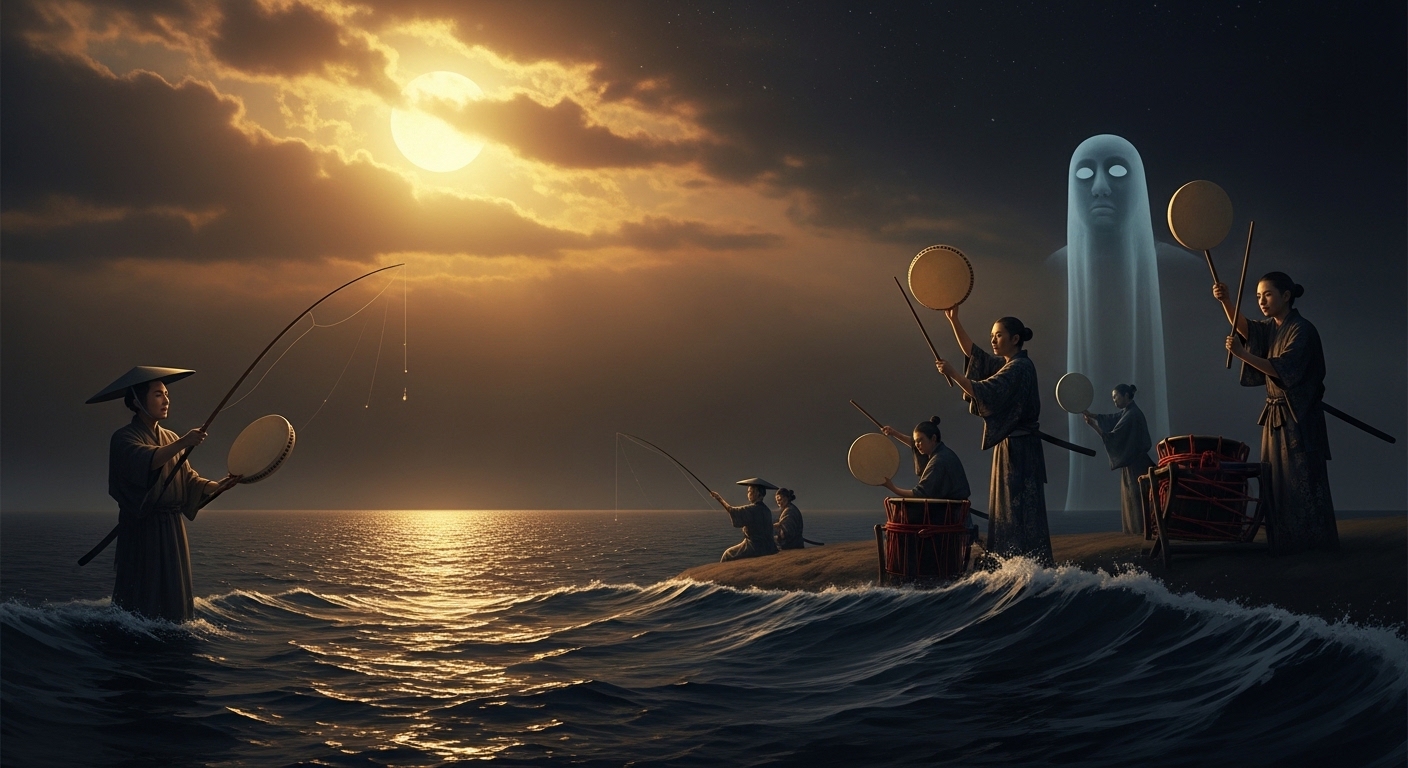
At the bottom of the Kanmon Strait where the Taira clan drowned at Dan-no-ura, they did not rest — fishermen hauling nets in the dark pull up armored samurai crabs, and on clear nights hear the drums and conch-horns of a fleet still fighting.
- When
- 1185 CE battle; ghost traditions from Kamakura period onward
- Where
- Dan-no-ura — the Kanmon Strait between Honshū and Kyūshū (modern Shimonoseki)
The sea at Dan-no-ura is not quiet.
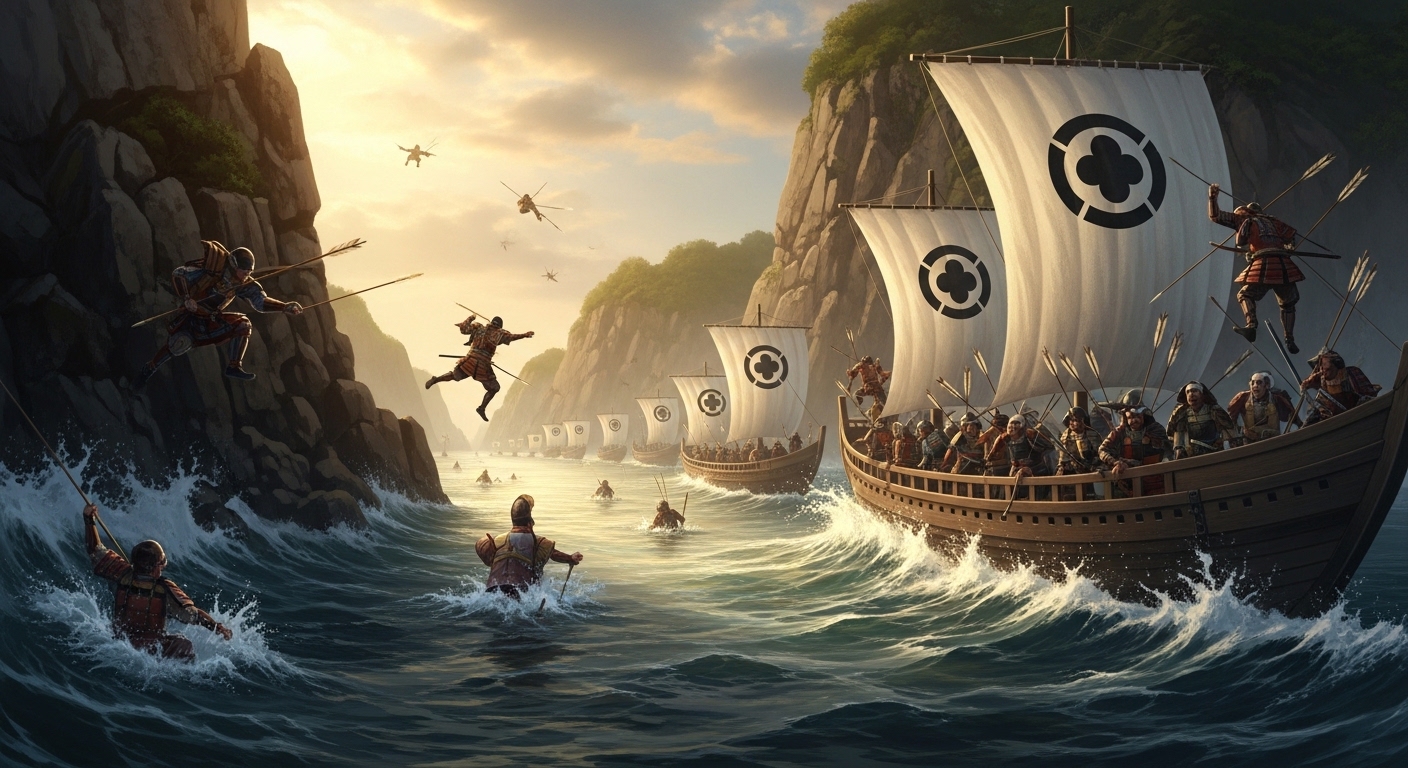
It was not quiet in 1185 when the Taira fleet made its last stand in the narrow strait between Honshū and Kyūshū — when the tide turned against them at noon and the Minamoto arrows found every advantage and the Taira commanders began jumping overboard in their armor. It was not quiet when the grandmother of the child-emperor Antoku held the eight-year-old boy and told him the sea was another capital, a pure land beneath the waves, and stepped off the ship’s side with him.
The strait swallowed the Taira.
It has not been quiet since.
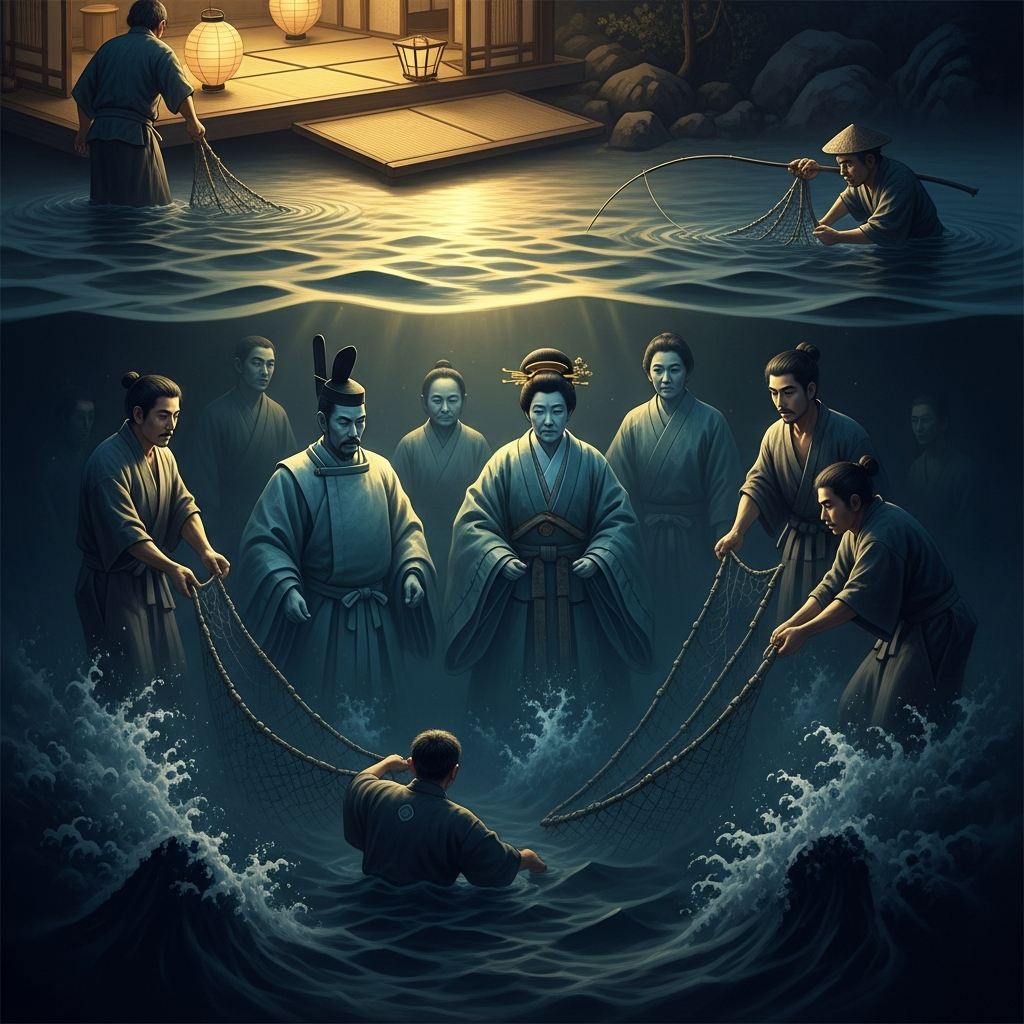
The fishermen who have worked the Kanmon Strait for the centuries after 1185 know the particular quality of the water there at night. The crabs they pull from the bottom are the Heike-gani — the Taira crabs — whose shells bear markings on the back that look, unmistakably and unsettlingly, like a face beneath an angry brow. These are the faces of drowned samurai, working their way up through the crab population of the strait across eight centuries.
This is either natural selection — fishermen throwing back crabs whose shells resemble human faces out of superstition, selecting for the trait — or it is the Taira, who cannot rest, finding forms to inhabit.
The fishermen do not spend much time on the distinction.
On certain clear nights, when the current is running the way it ran at the turn of the tide in 1185, the fishermen hear drums. Conch-horns. The sound of a naval engagement conducted below the surface, the muffled percussion of a battle that does not know it ended.
The blind biwa-player Hōichi is the story that concentrates all of this into a single night.
He lives near the shore at Akamagaseki, at the temple Amidaji that was built on the banks of the strait for the repose of the Taira dead. He plays the biwa — the four-stringed lute — and sings the Heike Monogatari, the tale of the rise and fall of the Taira, which is the greatest composition in the biwa tradition. He plays it so well that he plays it, unknowingly, better than anyone who was alive to hear the events should be able to play it.
The ghosts hear him.
They come from the water at night and take him to their encampment — which looks like a military camp of the Heian period, which looks exactly like what it is — and he plays for them the story of their fall. He plays for several nights before his absence from the temple is noticed. When the priests find him, they understand the danger: the ghosts will eventually take him with them.
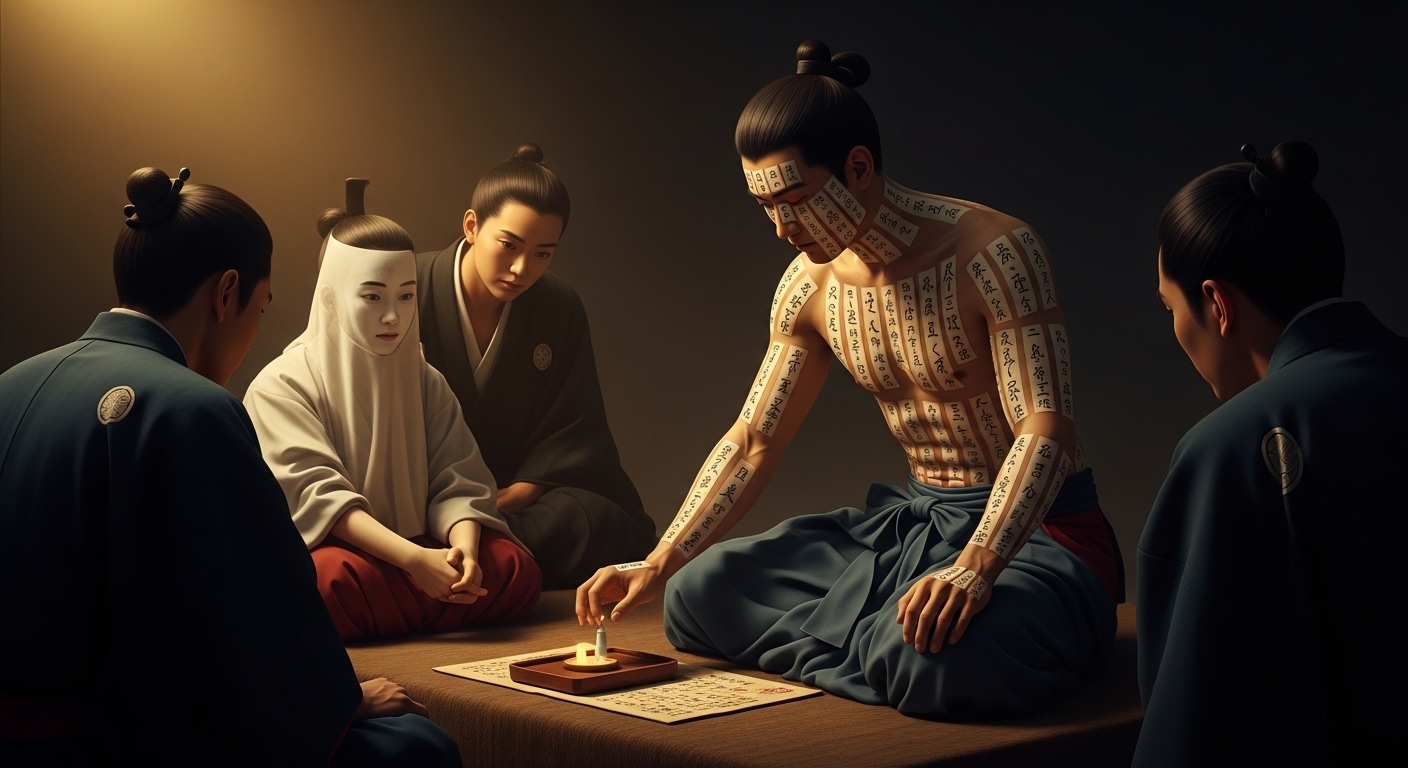
The solution is to write the sutras on his entire body — on his skin, on his face, on his hands. Every inch of him covered in sacred text, so that the ghosts cannot find him.
In the urgency of the preparation, the priests forget his ears.
The ghosts come and find nothing — only two ears floating in the darkness, written around but not on. They take the ears.
Hōichi lives. Hōichi plays the Heike Monogatari for the rest of his life, earless, at the temple by the strait.
The crabs are still there.
Their faces have not changed.
Scenes
Echoes Across Traditions
Entities
- the Taira clan
- Emperor Antoku
- Nii-no-ama (Antoku's grandmother)
- the Heike-gani (Taira crabs)
- the blind biwa-player Hoichi
Sources
- Heike Monogatari (Tale of the Heike), c. 13th century, translated by Royall Tyler (Viking, 2012)
- Lafcadio Hearn, 'The Story of Mimi-nashi-Hōichi,' in *Kwaidan* (1904)
- Amino Yoshihiko, *Rethinking Japanese History* (University of Michigan, 2012)
- McCullough, Helen, *The Tale of the Heike* (Stanford, 1988)