Contents
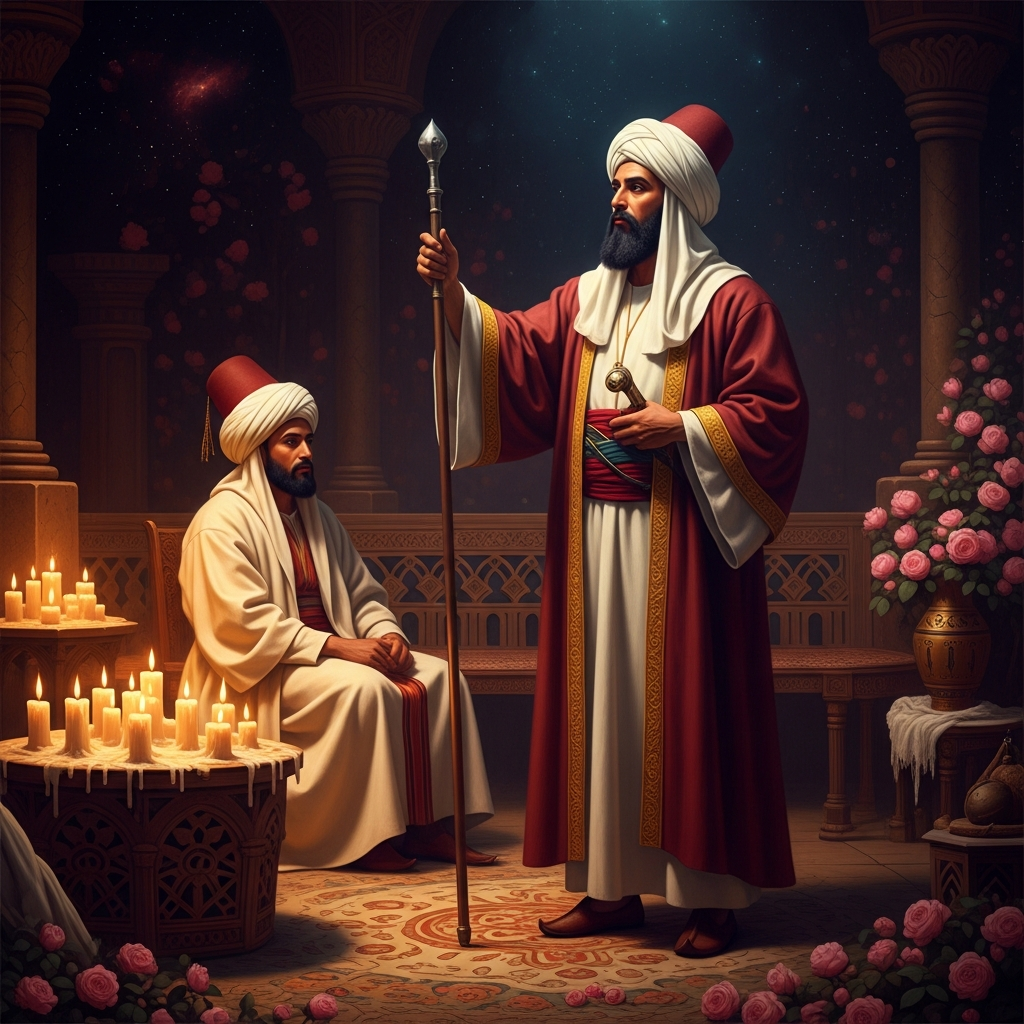
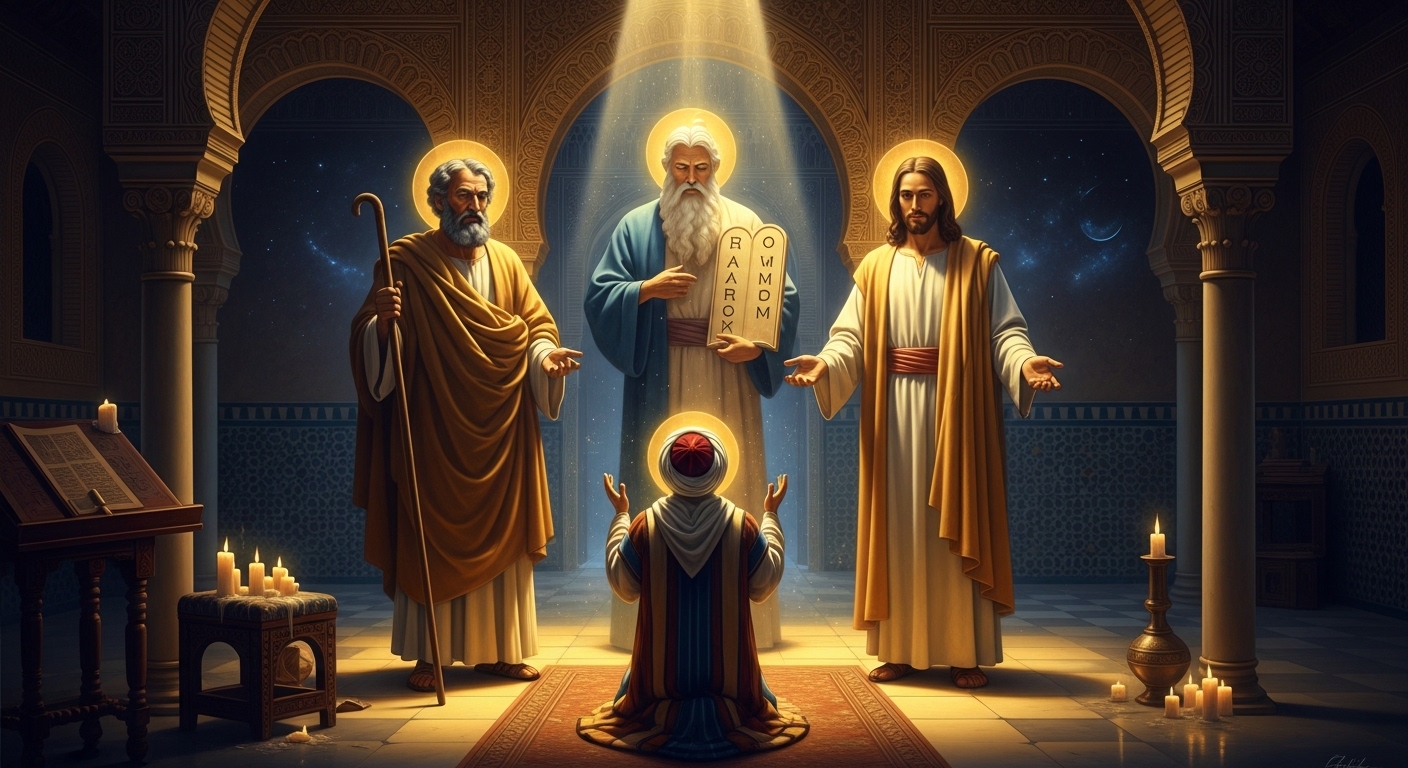
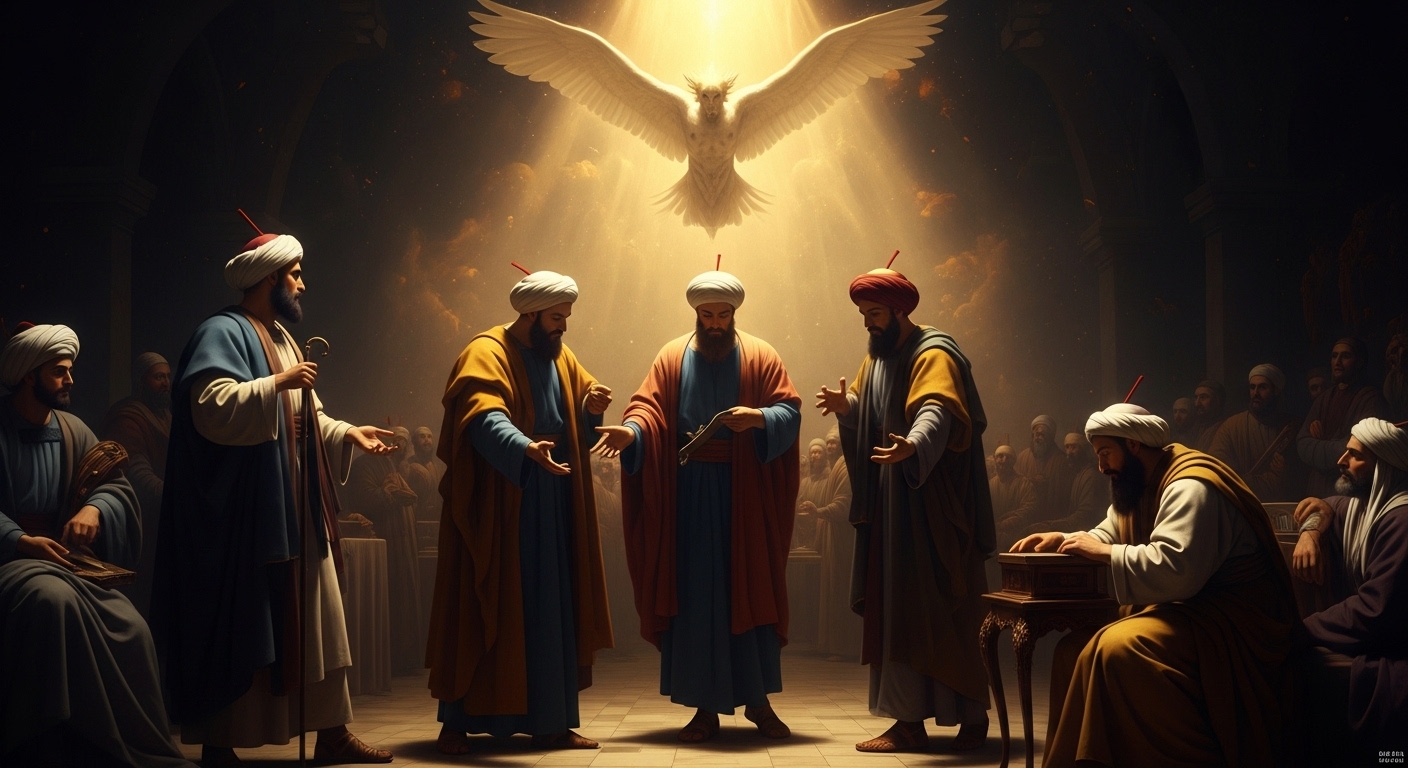
As a young man in Seville, Ibn ʿArabī has a vision in which Moses, Jesus, and Muhammad appear to him simultaneously — a vision that becomes the seed of everything he will write, and his first intimation that the divine truth is not the exclusive possession of any single tradition.
- When
- c. 1184 CE — Seville, Andalusia
- Where
- Seville, Al-Andalus — the cosmopolitan Islamic city where Ibn ʿArabī grew up and had his first mystical experiences
Seville in the 1180s is one of the most intellectually diverse cities in the world.
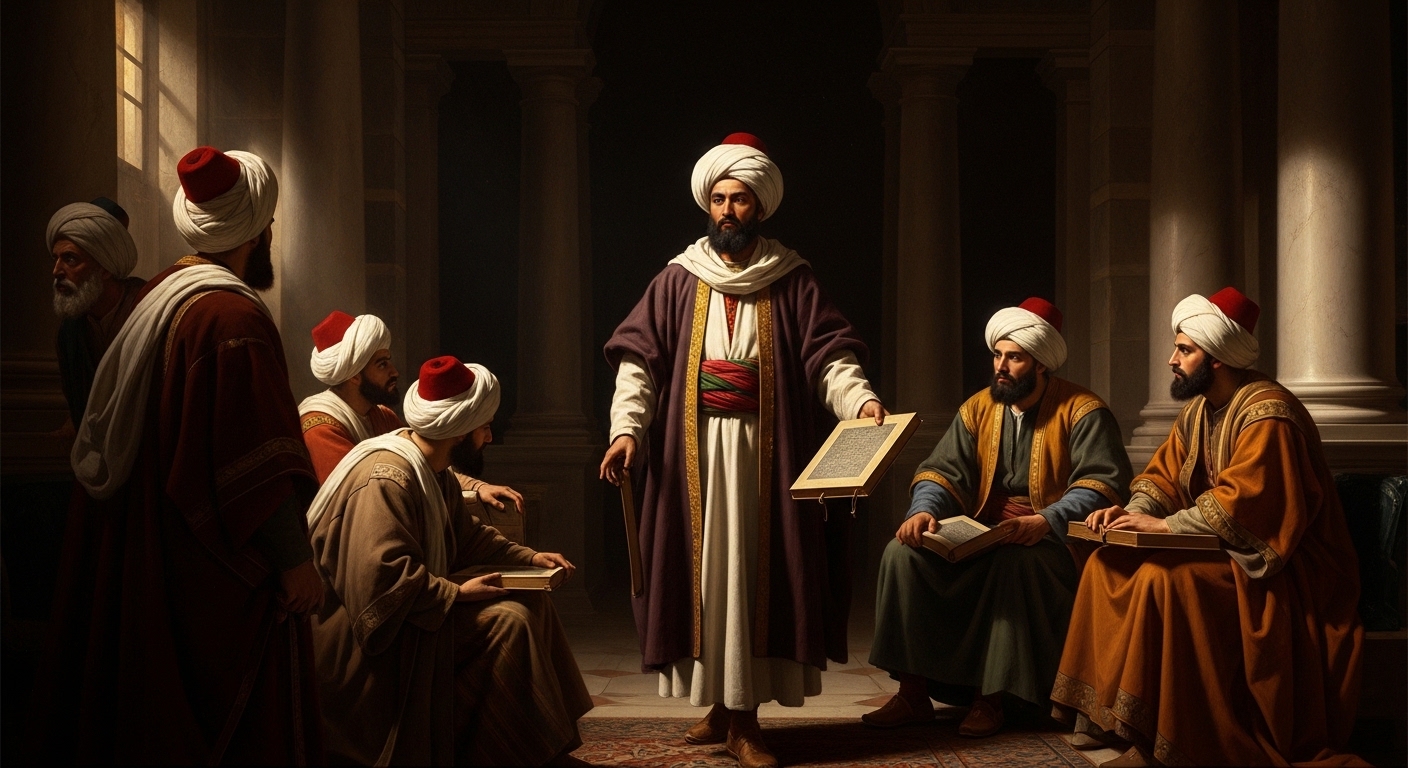
The capital of Almohad Andalusia sits at the crossing of Muslim, Christian, and Jewish civilizations — not peacefully, the Almohads are not known for tolerance, but intensely. The intellectual world of Seville in the young Ibn ʿArabī’s time contains Arabic philosophy filtered through Avicenna and Averroes, mystical Islam filtered through the Sufi orders, Hebrew scholarship filtered through the great Andalusian Jewish tradition, and Christian theology filtered through the cathedral and its scholars. Ibn ʿArabī’s father has connections at the Almohad court and knows the philosopher Ibn Rushd — Averroes himself.
In this context, Ibn ʿArabī has his first major mystical experience.
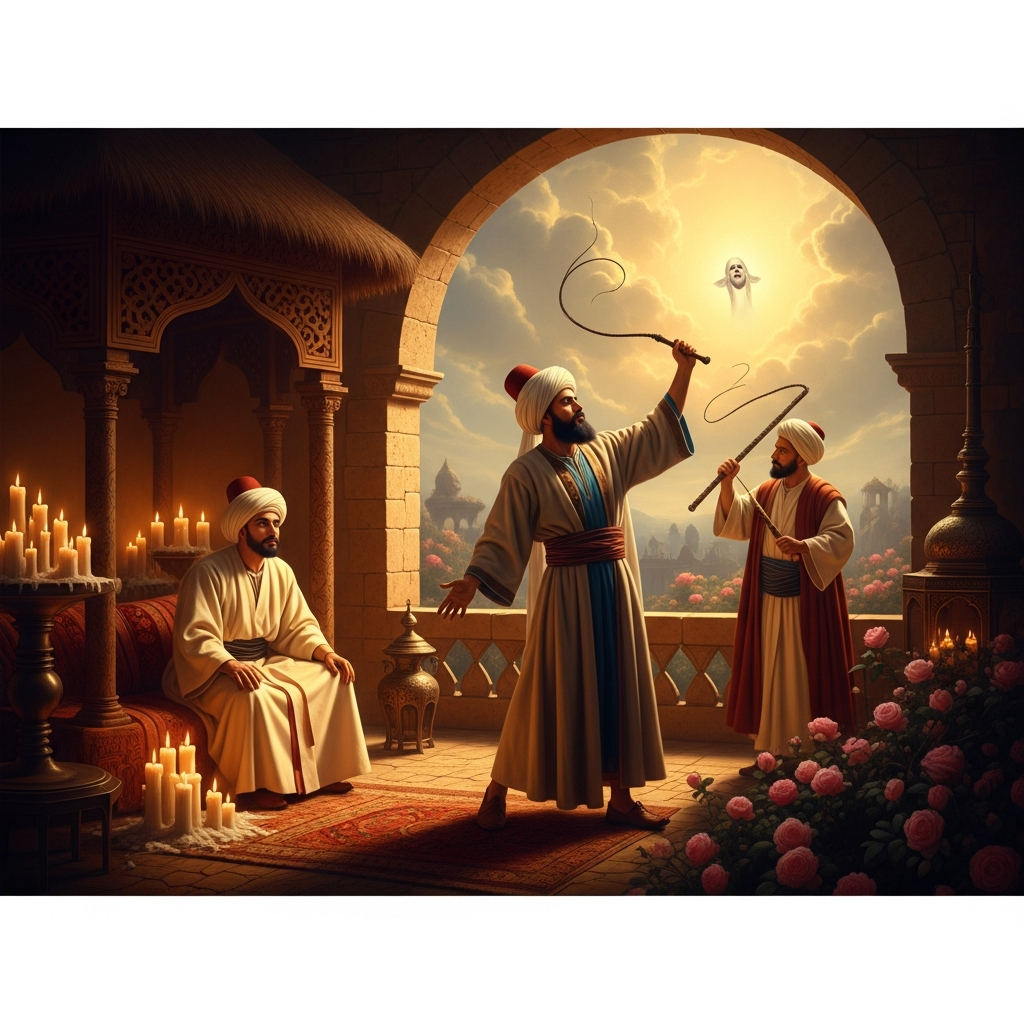
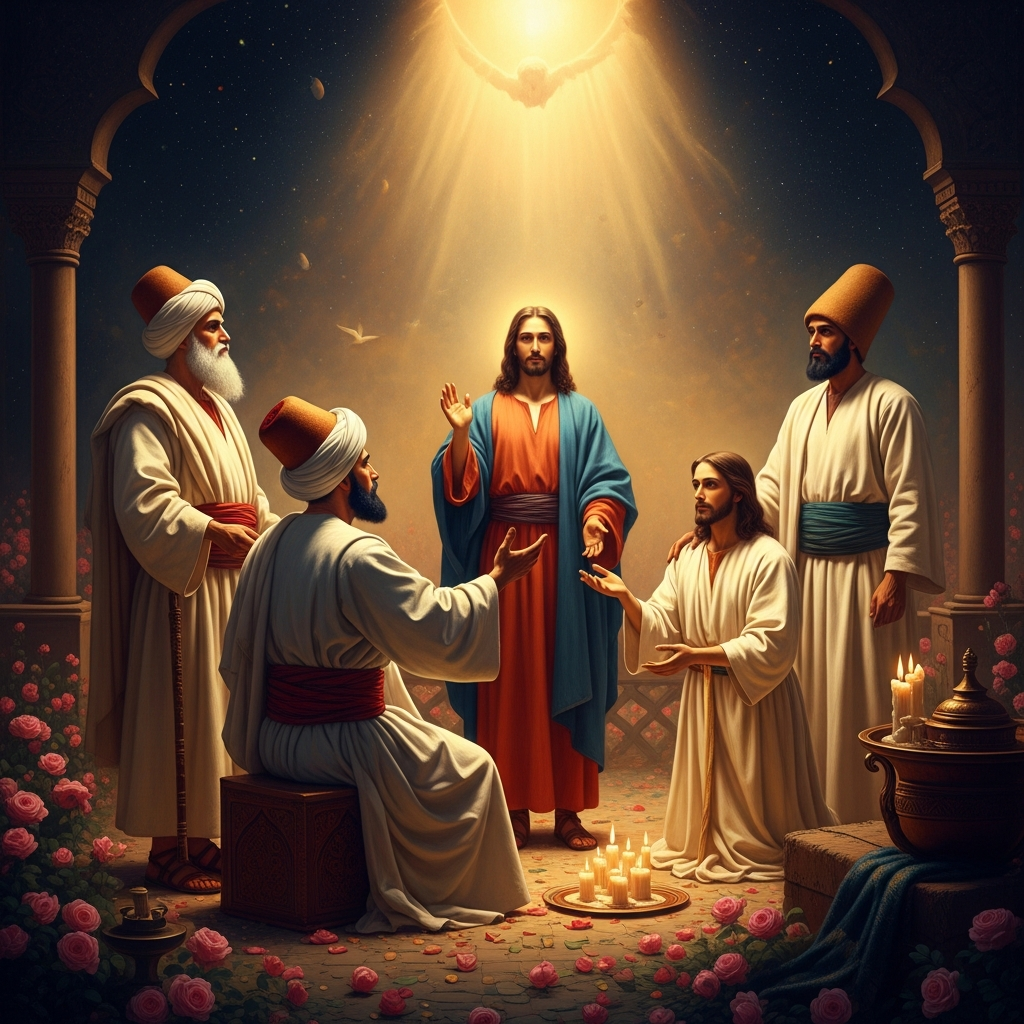
He is between fourteen and twenty years old, the accounts vary. He falls into an illness — a fever, perhaps, or a state of spiritual crisis — and in the fever he sees three figures.
They are Moses, Jesus, and Muhammad.
Not sequentially — not Moses first, then Jesus, then Muhammad — but simultaneously, present together in the space of the vision. Each one addresses him. The content of what each says is not fully recorded in the autobiographical accounts, but the structure of the vision — three prophets together, each distinct and each addressing the same young man — carries its own theological content.
The three Abrahamic prophets are in Islamic theology distinct messengers — each carrying a specific revelation to a specific people at a specific time. The Muslim position is that they are not contradictory: each brought the truth that their people needed in their historical moment, and Muhammad’s revelation is the final and most complete. But the standard position does not have them gathered in a single space, addressing a single person, simultaneously.
Ibn ʿArabī’s vision does.
The theological implication that he draws from this — and that shapes everything he subsequently writes — is not that all three religions are the same. He maintains throughout his work that Islam is the fullest expression of divine revelation and that Muhammad holds the highest prophetic rank. But the simultaneous presence of all three prophets in one vision suggests something about the divine reality that all three access: it is not parceled out, one piece to each tradition. It is one reality that each tradition receives in the form appropriate to its recipients.
The concept he develops from this is al-din al-kamil — the complete religion, the religion of love that underlies all particular revelations. The mystic who reaches the deepest level of divine reality finds a space where Moses and Jesus and Muhammad are all pointing in the same direction, because at the deepest level there is no direction to point — only the reality itself.
This is not universalism in the watered-down modern sense: all religions are equal, all paths lead to God, it doesn’t matter which you follow. Ibn ʿArabī is a practicing Muslim, maintains Islamic law, argues vigorously that Islam is the fullest form of the divine teaching. But he also argues that the divine reality that Islam most fully expresses is the reality that every authentic prophet has touched, in their different ways. The difference is not in the reality but in the completeness of the disclosure.
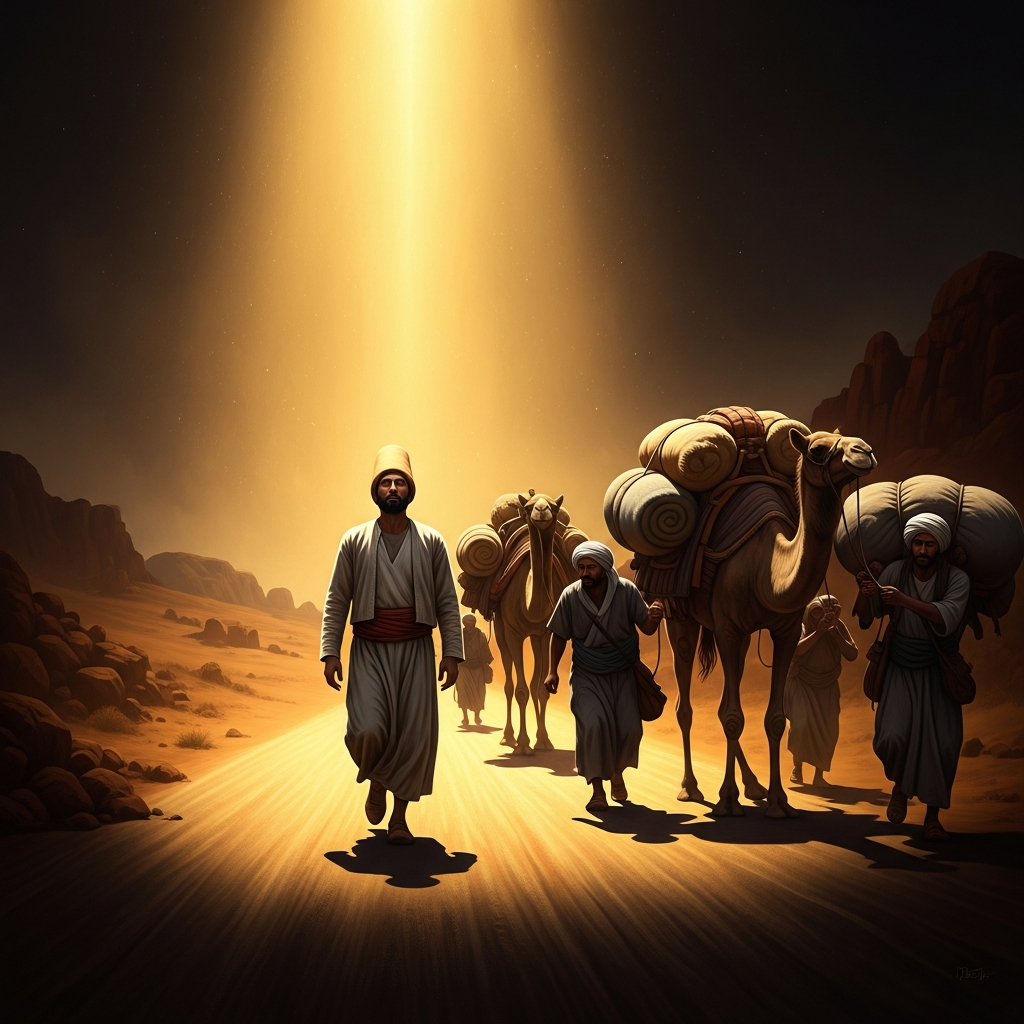
He leaves Seville as a young man and begins the decades of travel and study that will produce the Futuhat, the Fusus, and the hundreds of other works.
He returns to Andalusia only briefly. He makes his way east, eventually arriving in Mecca for the hajj, then settling in Damascus. The three figures of the vision travel with him — not as haunting presences but as the theological framework that organizes everything he encounters.
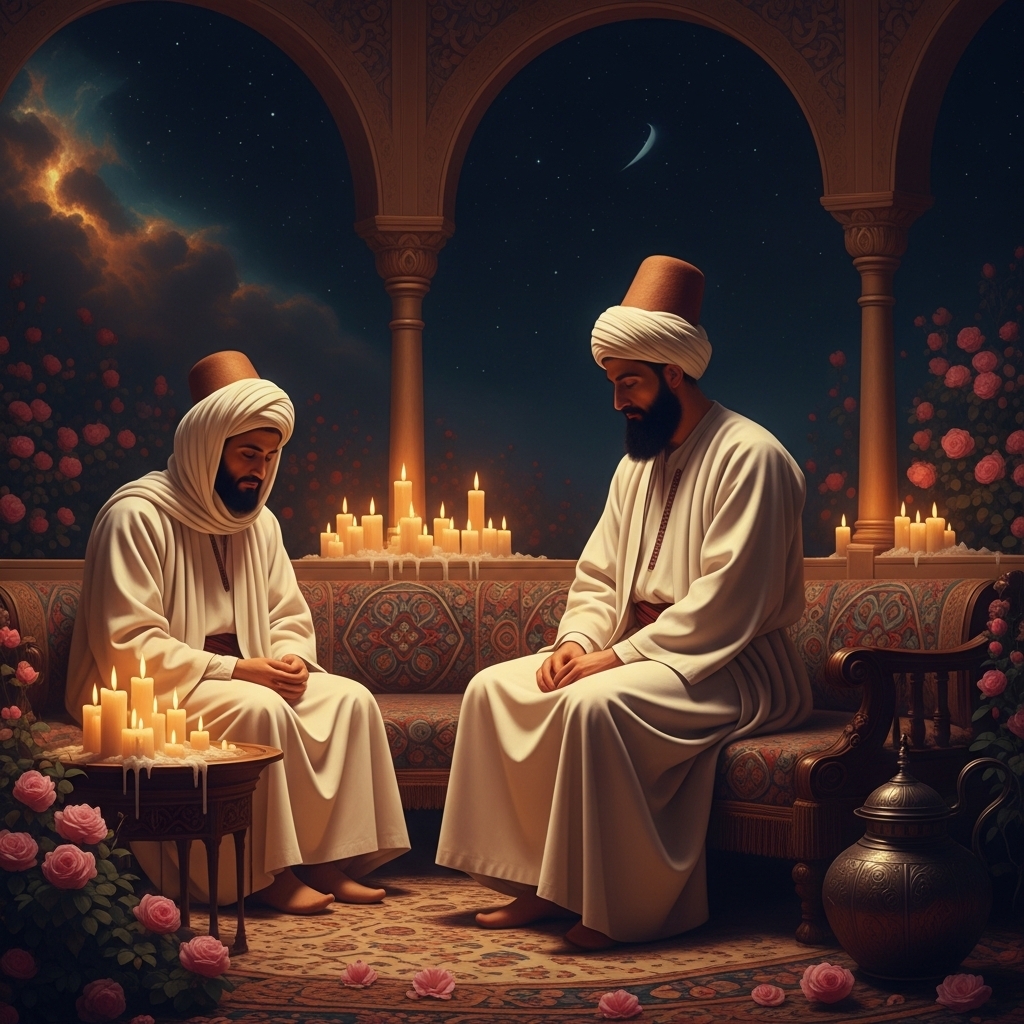
My heart has become capable of every form:
It is a pasture for gazelles, and a convent for Christian monks,
And a temple for idols, and the pilgrim’s Ka’ba,
And the tables of the Torah, and the book of the Koran.
I follow the religion of Love.
He wrote this poem after the vision.
He was writing about what he had seen.
Scenes
Echoes Across Traditions
Entities
- Ibn ʿArabī
- Moses (in vision)
- Jesus (in vision)
- Muhammad (in vision)
Sources
- Ibn ʿArabī, *Futuhat al-Makkiyya*, autobiographical sections
- Ibn ʿArabī, *Ruh al-Quds* (The Spirit of Holiness), autobiographical memoir of his Andalusian masters
- Claude Addas, *Quest for the Red Sulphur: The Life of Ibn Arabi* (Cambridge, 1993)
- William Chittick, *Ibn Arabi: Heir to the Prophets* (Oneworld, 2005)