Momotarō Born from a Peach
Edo period — earliest written records c. 1650 CE; oral tradition much older · A river, a village, and Onigashima — the Island of Demons, located in various tellings on the Seto Inland Sea
Contents
An old woman washing clothes in a river finds a giant peach floating downstream — and from the peach emerges a boy who will gather a dog, a pheasant, and a monkey and sail to the island of demons to free the people they have stolen.
- When
- Edo period — earliest written records c. 1650 CE; oral tradition much older
- Where
- A river, a village, and Onigashima — the Island of Demons, located in various tellings on the Seto Inland Sea
The peach comes down the river.
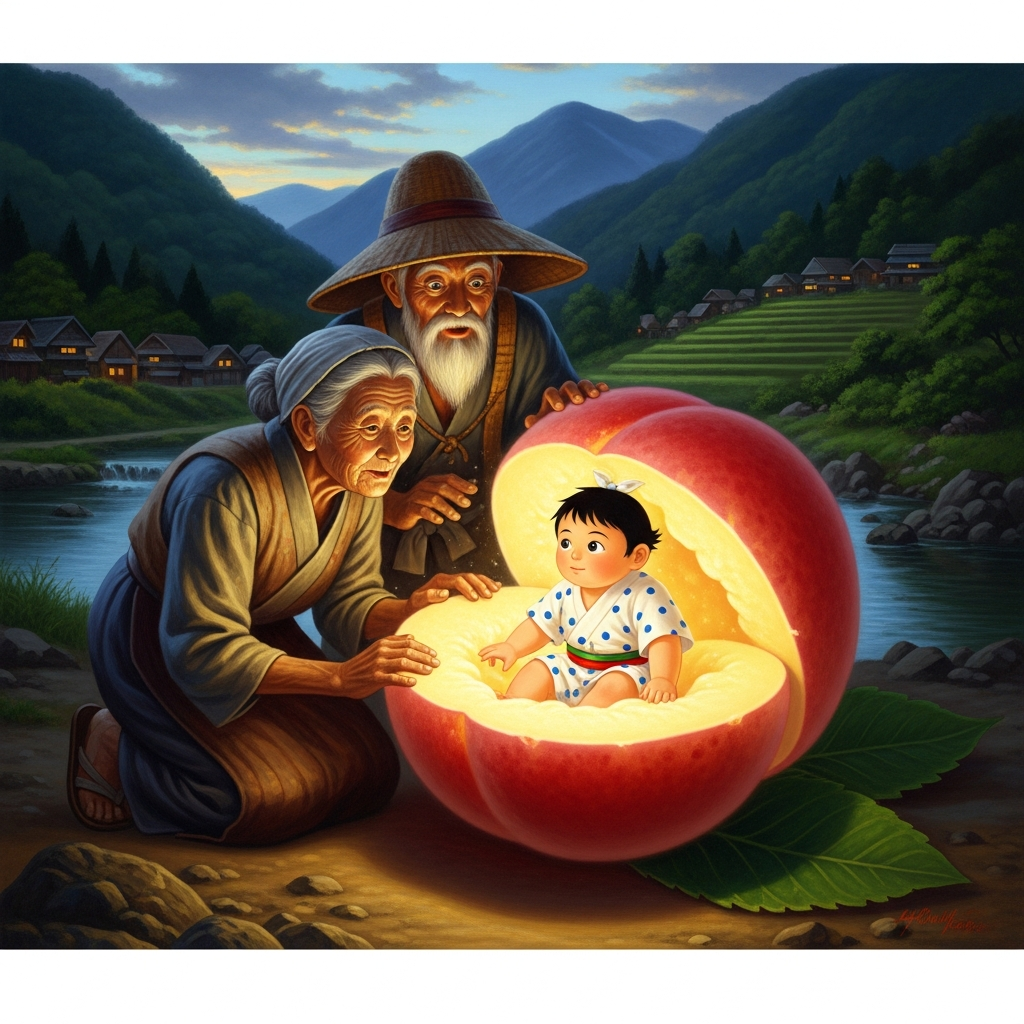
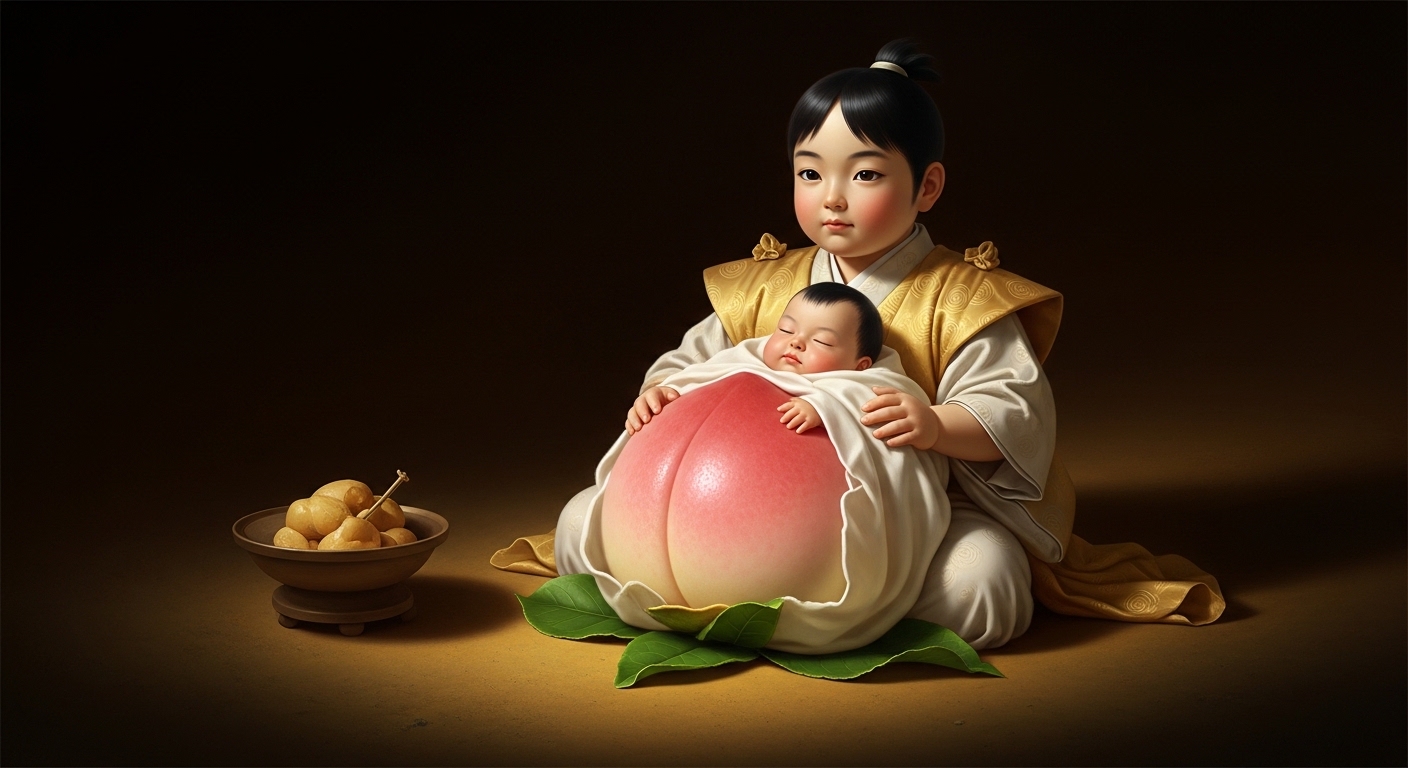
It is enormous — too large for a peach, clearly a special peach, one of those objects in Japanese folk tales that announces itself immediately as not-ordinary. The old woman doing her laundry at the river sees it coming from upstream and understands at once that this is not the kind of peach you find in a market. She wades in and pulls it to shore.
She and her husband cut it open for dinner.
A boy is inside.
He is not a baby in the ordinary sense — he is a boy, already formed, already spirited, already with the quality that the tale calls kihin, a kind of latent excellence. The old couple, who are childless and have wanted children for their whole married life, take him in and raise him. They name him Momotarō — Peach Boy.
He grows faster than ordinary children. By the time he is old enough to hold a sword, he is already extraordinary. By the time he announces his mission, he is taller than his grandfather.
His mission is Onigashima — the Island of Demons.
The oni have been raiding the mainland villages. They have taken treasure, taken people, taken what the hard-working communities earned. They are on their island, complacent in their power, secure behind their gates. No one has been able to stop them.
Momotarō will go.
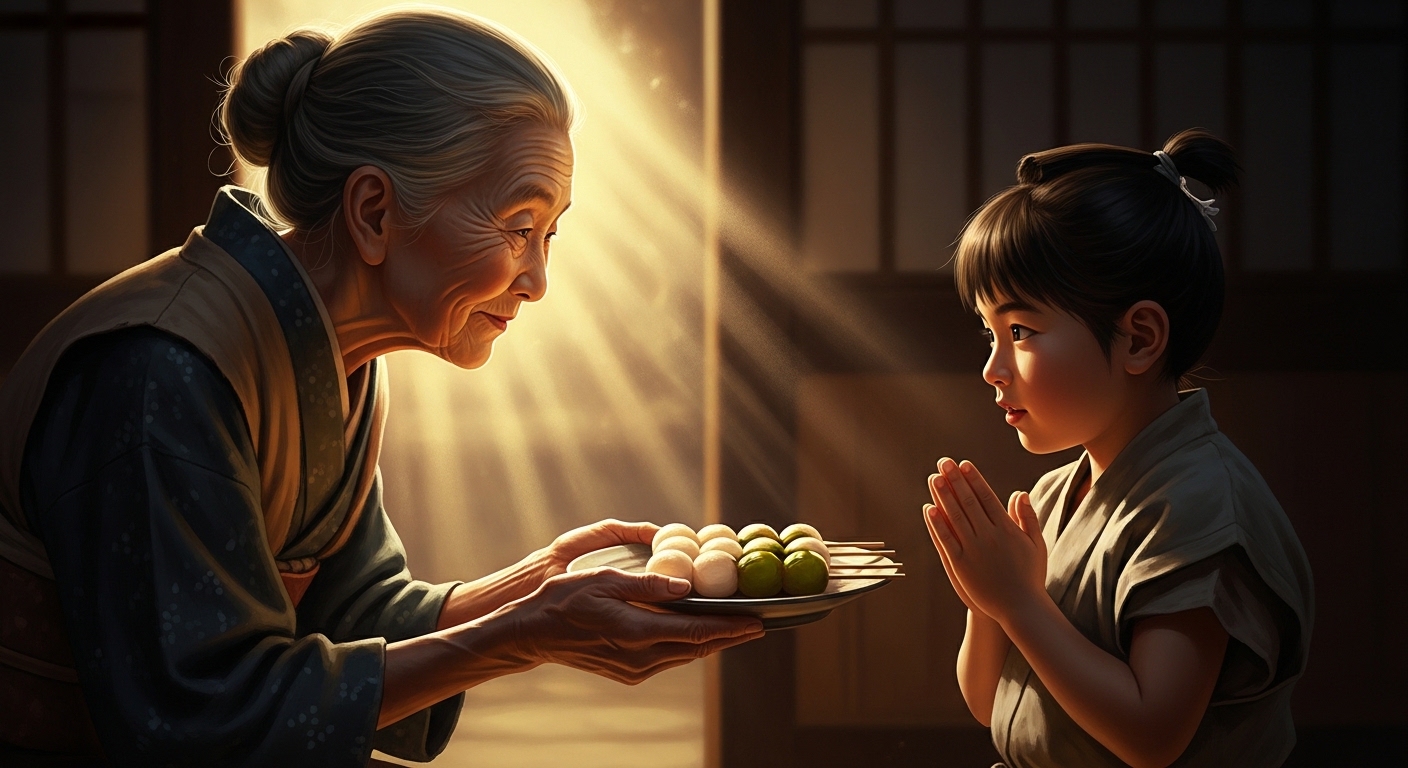
His grandmother makes him millet dumplings — kibi-dango, the best in Japan, because she makes them. He sets out along the road.
He meets a spotted dog. The dog says: Give me one of those dumplings and I will serve you. He gives the dog a dumpling. The dog follows.
He meets a pheasant. The pheasant says the same. He gives the pheasant a dumpling. The pheasant follows.
He meets a monkey. The monkey says the same. He gives the monkey a dumpling. The monkey follows.
He arrives at the sea. He finds a boat. He sails with his three companions to the island of the demons.
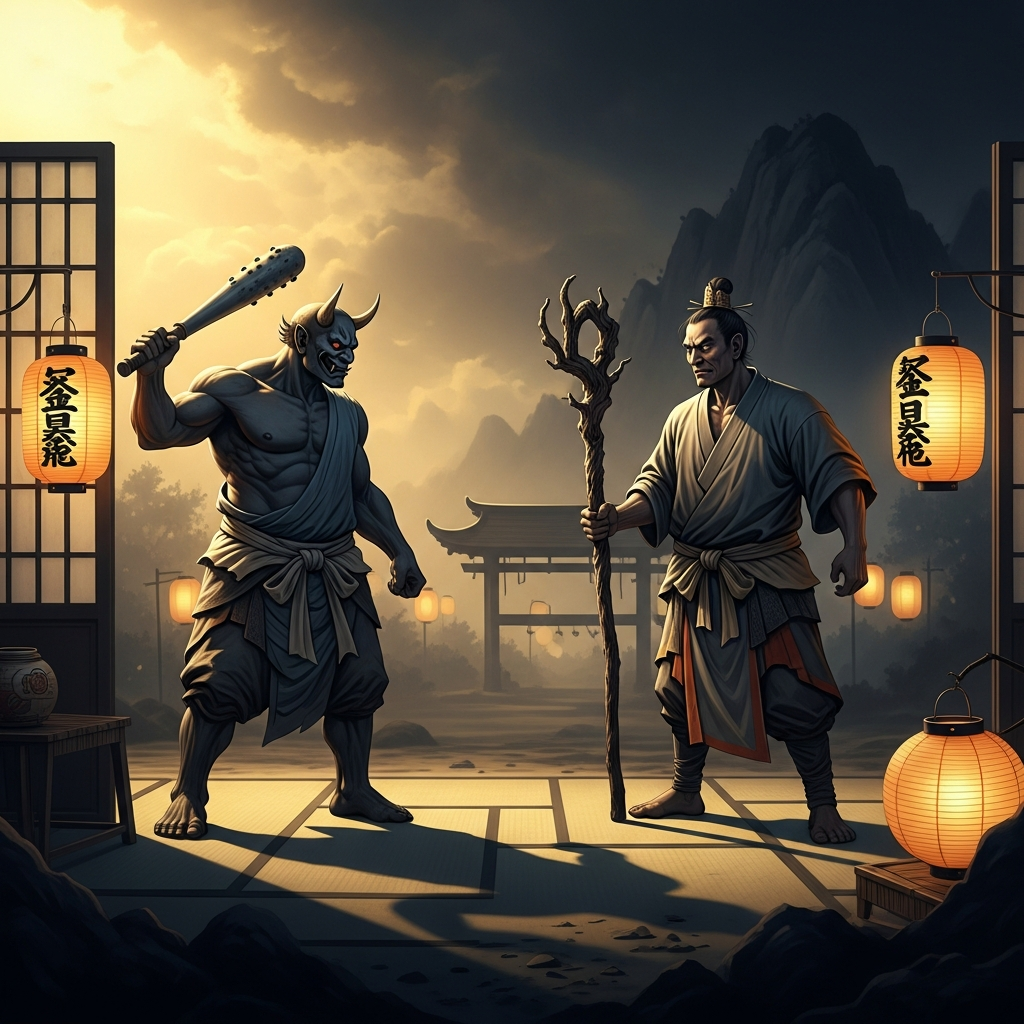
The battle is told differently in different versions — more brutal in some, more theatrical in others. What stays constant is the outcome: the demons are defeated. Their chief, who has been lounging among stolen wealth, falls. The wealth is returned. The stolen people come home.
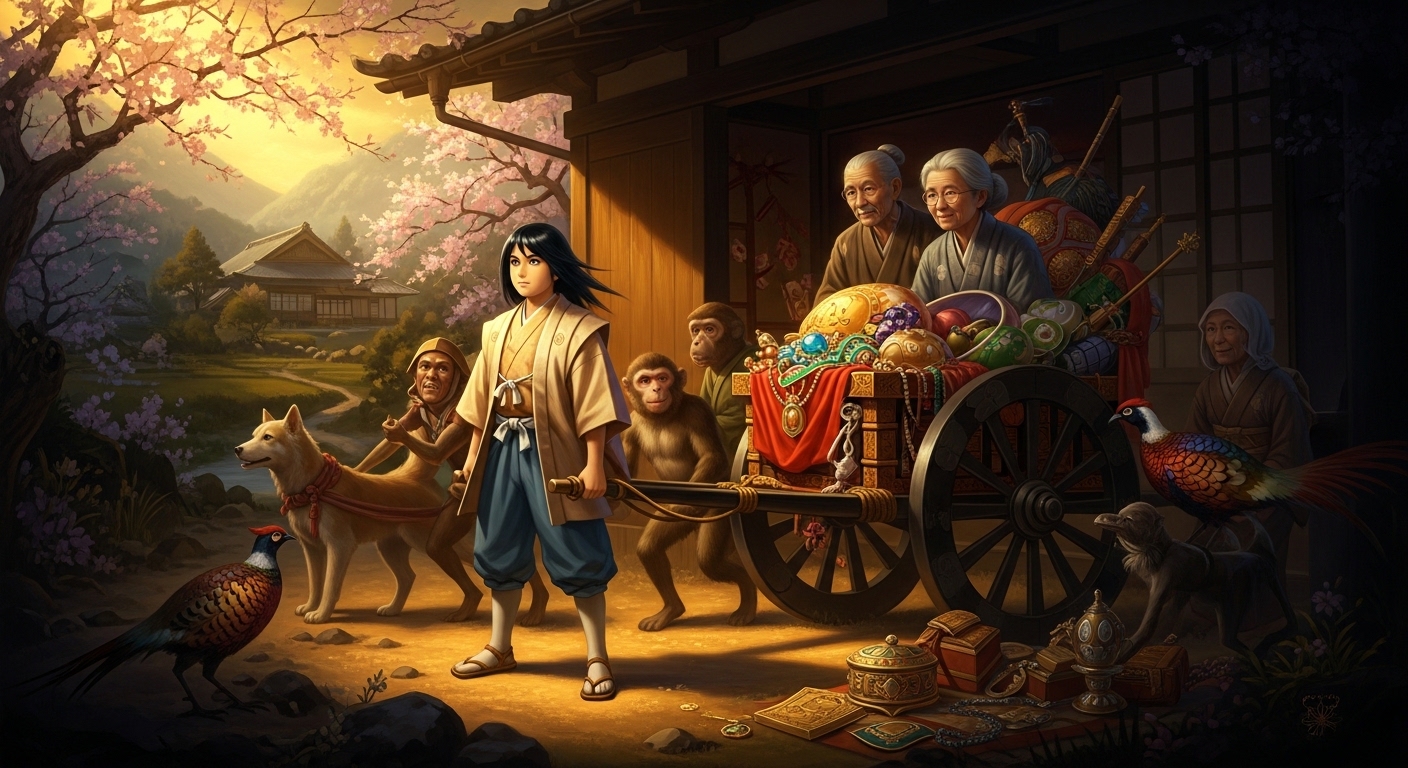
Momotarō returns to his old grandparents with the demon chief’s treasure cart.
The story ends in domestic contentment — the extraordinary boy returning to the ordinary house with the extraordinary resources that allow the ordinary family to live well. The millet dumplings made by an old woman are the instruments of the whole enterprise: the dog and the pheasant and the monkey did not follow Momotarō because of his power. They followed the food she made.
The grandmother’s kitchen is the center of the story.
In the wartime version, this reading was suppressed in favor of the martial one. In the folk version, which survived, the truth is quieter: Japan’s greatest folk hero is the product of an old woman’s love for a peach she found in a river, and his weapons are the dumplings she packed for his lunch.
Scenes
Echoes Across Traditions
Entities
- Momotarō
- the old woman (Grandmother)
- the old man (Grandfather)
- the dog, the pheasant, the monkey
- the Oni of Onigashima
Sources
- Seki Keigo, ed., *Folktales of Japan* (University of Chicago Press, 1963)
- Royall Tyler, *Japanese Tales* (Pantheon, 1987)
- Noriko Reider, *Japanese Demon Lore* (Utah State University Press, 2010)
- Haruki Murakami, *Kafka on the Shore* (2002) — Momotarō as cultural touchstone