Ogou: The Spirit Who Lives in Iron
Haitian Vodou tradition c. 17th–19th century CE, drawing on Yoruba/Fon Ogun worship from West Africa · Haiti; West Africa (Yorubaland, Dahomey); the spirit world
Contents
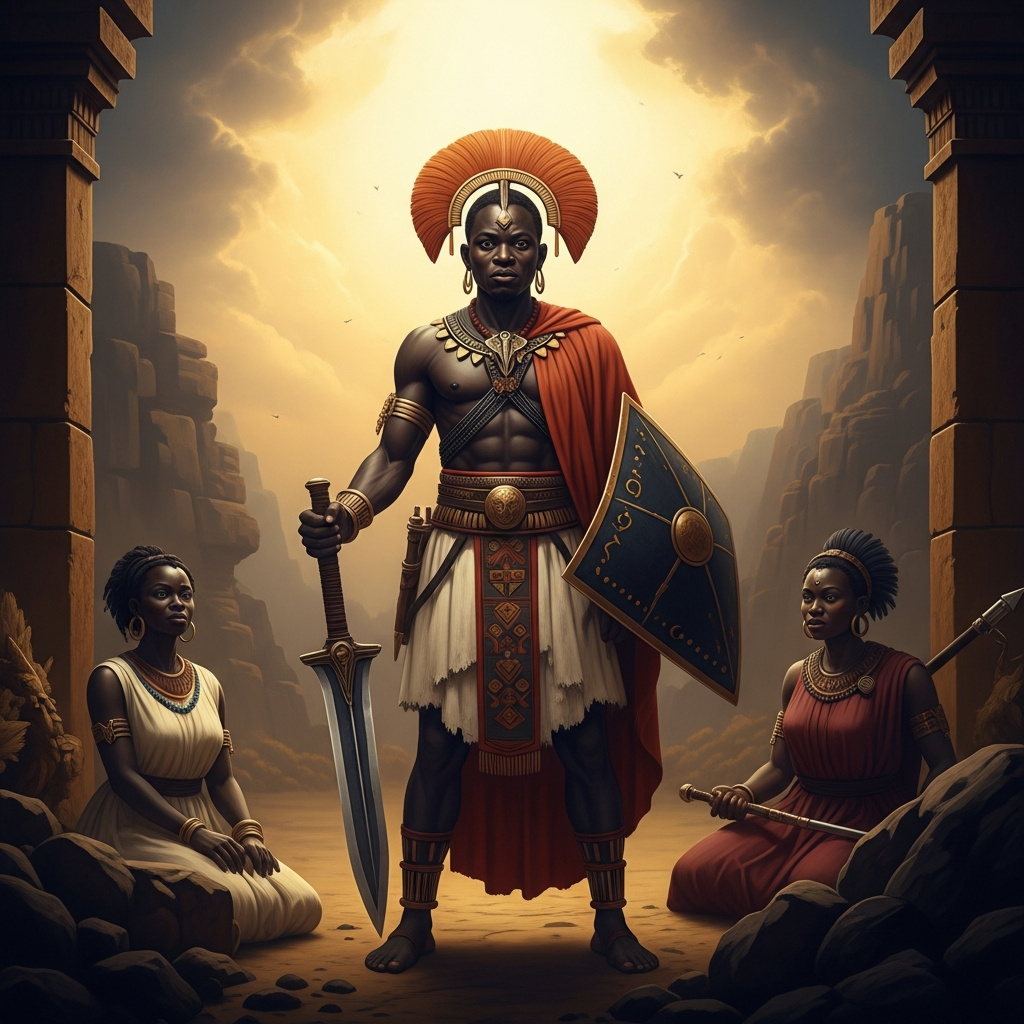
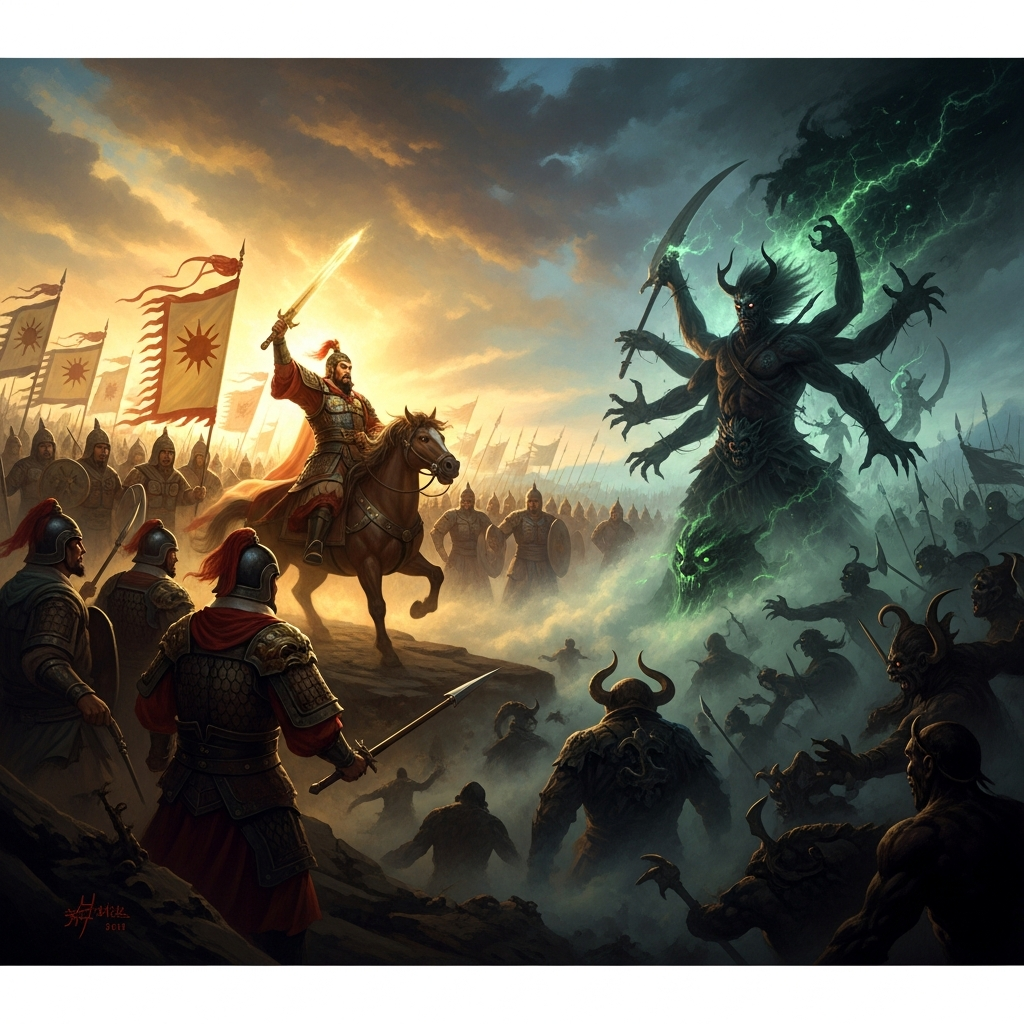
Ogou is the Vodou Lwa of iron, war, and the sword — a spirit who arrived in Haiti with enslaved Africans, changed, and became something new. He is the general who cannot stop fighting, the revolutionary who led the Haitian Revolution through the bodies of Boukman and Dessalines. He is the fire in iron that cannot be quenched. When Ogou mounts a believer, the possessed person picks up swords they could not normally lift.
- When
- Haitian Vodou tradition c. 17th–19th century CE, drawing on Yoruba/Fon Ogun worship from West Africa
- Where
- Haiti; West Africa (Yorubaland, Dahomey); the spirit world
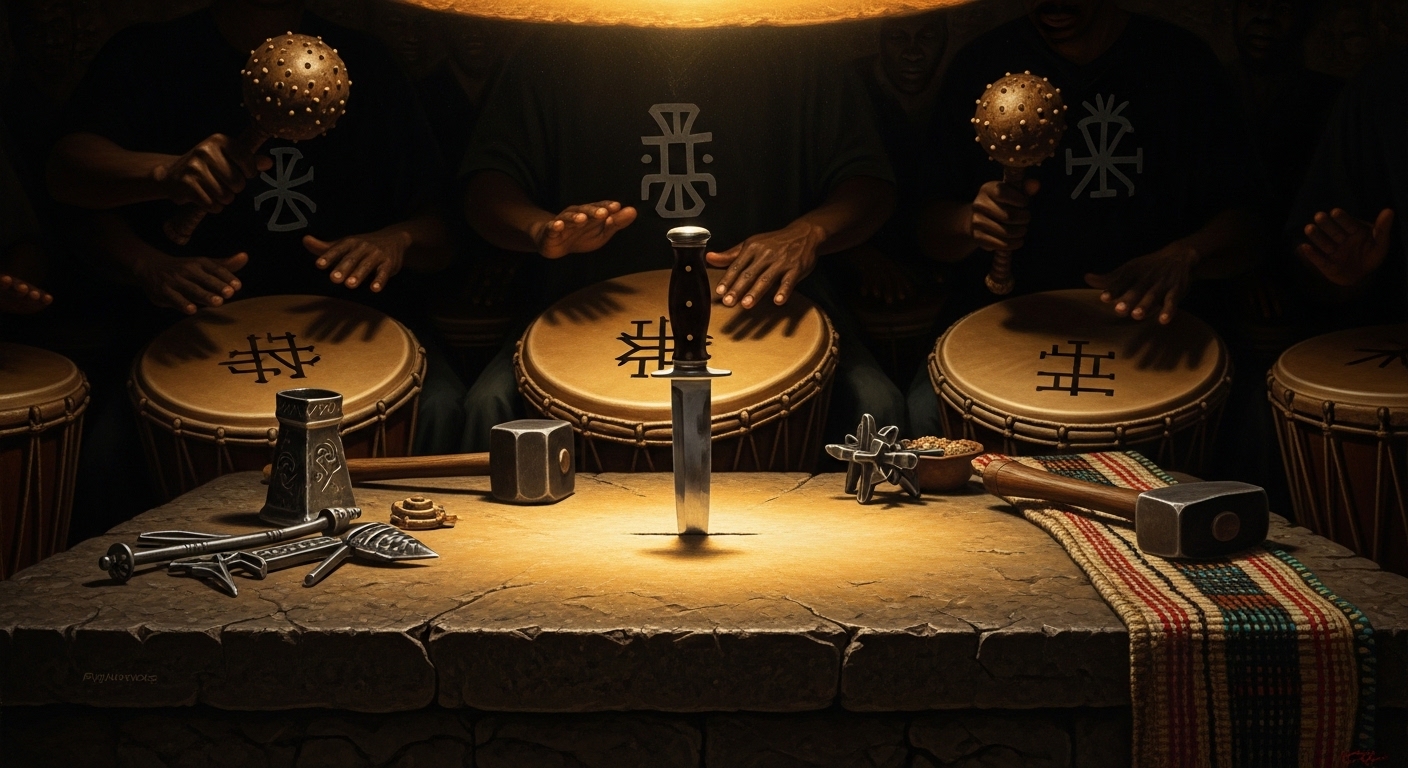
The knife is already in the altar by the time the drums begin.
It is a machete, specifically — the tool of sugar-cane cutting, the tool of rebellion, the blade that cleared the fields of Saint-Domingue and later cleared the fields of soldiers. It stands upright in the red cloth at the center of the peristyle, the ceremonial space, surrounded by cigars and rum and the color red, because Ogou’s color is red and his drink is rum and his pleasure is tobacco smoke drifting through iron-smelling air.
The ceremony has been going for an hour before he arrives.
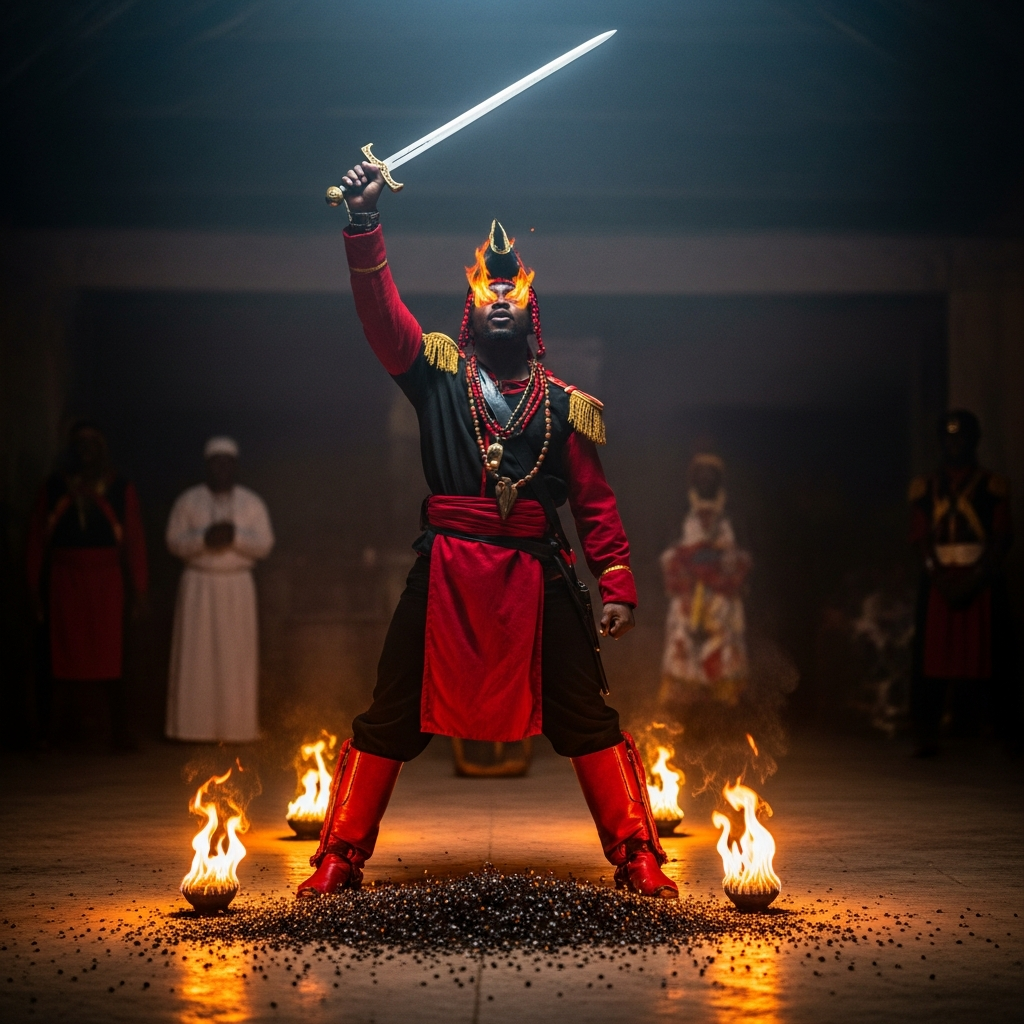
He does not knock. He does not warn. One moment a dancer is moving through the crowd with the ordinary expression of a person in trance, and then the body changes — the posture shifts, the shoulders square, the chin lifts — and the Lwa is here. The person is gone and Ogou is in the body.
He takes the machete from the altar. He holds it above his head. He shouts in a voice that the person whose body he is using does not own.
Fè! Iron. Fè Ogou! The iron of Ogou.
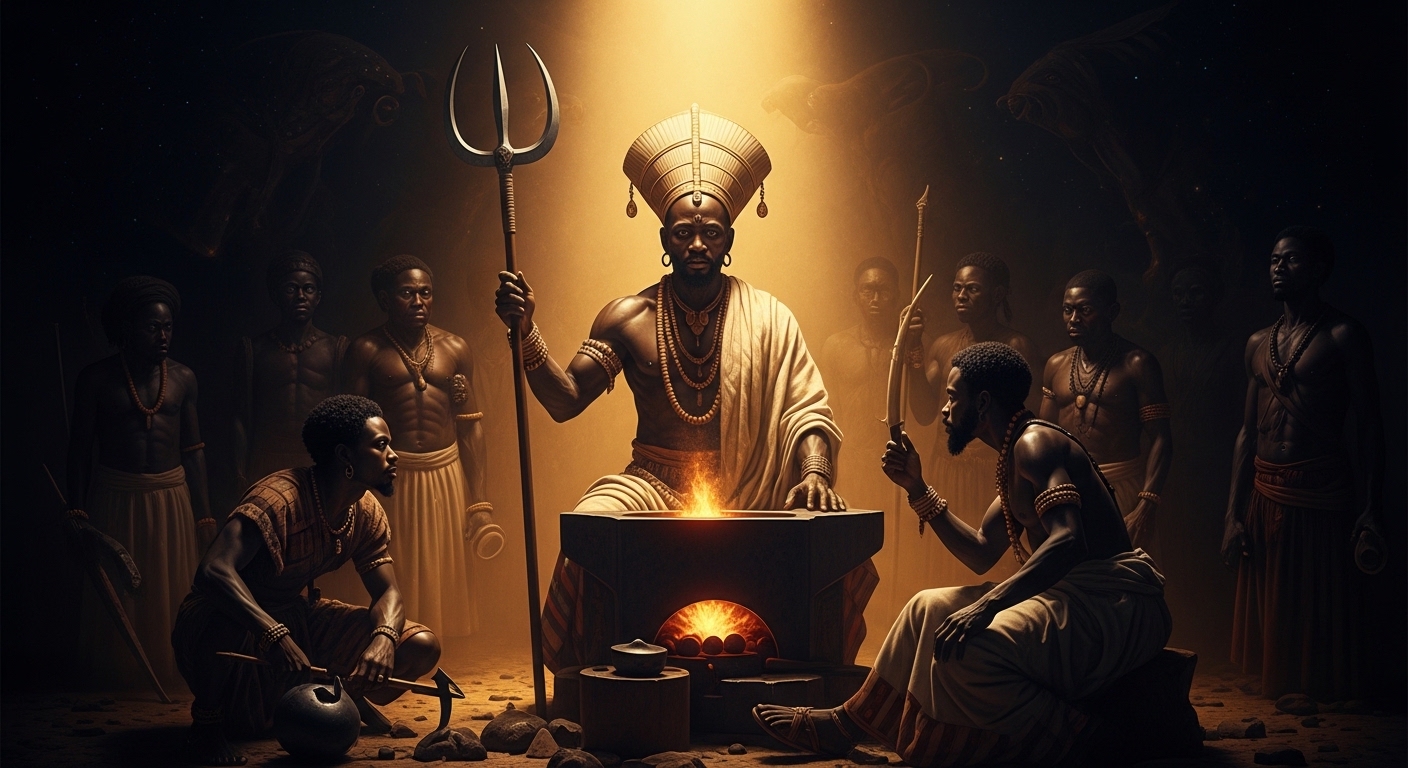
He came from Yorubaland and from Dahomey — from the coastal kingdoms of West Africa where the god of iron was also the god of the forge, of hunting, and of the metal itself. In those traditions, Ogun lived on the margins: in the bush, in the forge’s heat, in the liminal space between the settled village and the wild world outside it. Blacksmiths carried his power; hunters swore on iron blades because Ogun would know the truth in the metal even when men lied.
The Middle Passage changed him.
When the ships brought enslaved Africans to Saint-Domingue, they brought Ogun too — not as cargo but as presence, as the spirit that travels in the minds and hearts of people whose traditions could not be packed in a trunk. And in Haiti, where iron was not a forge-tool but a chain, where blades did not serve hunters but overseers, Ogun became something new. He became Ogou: the general, the revolutionary, the god of necessary violence against an unjust order.
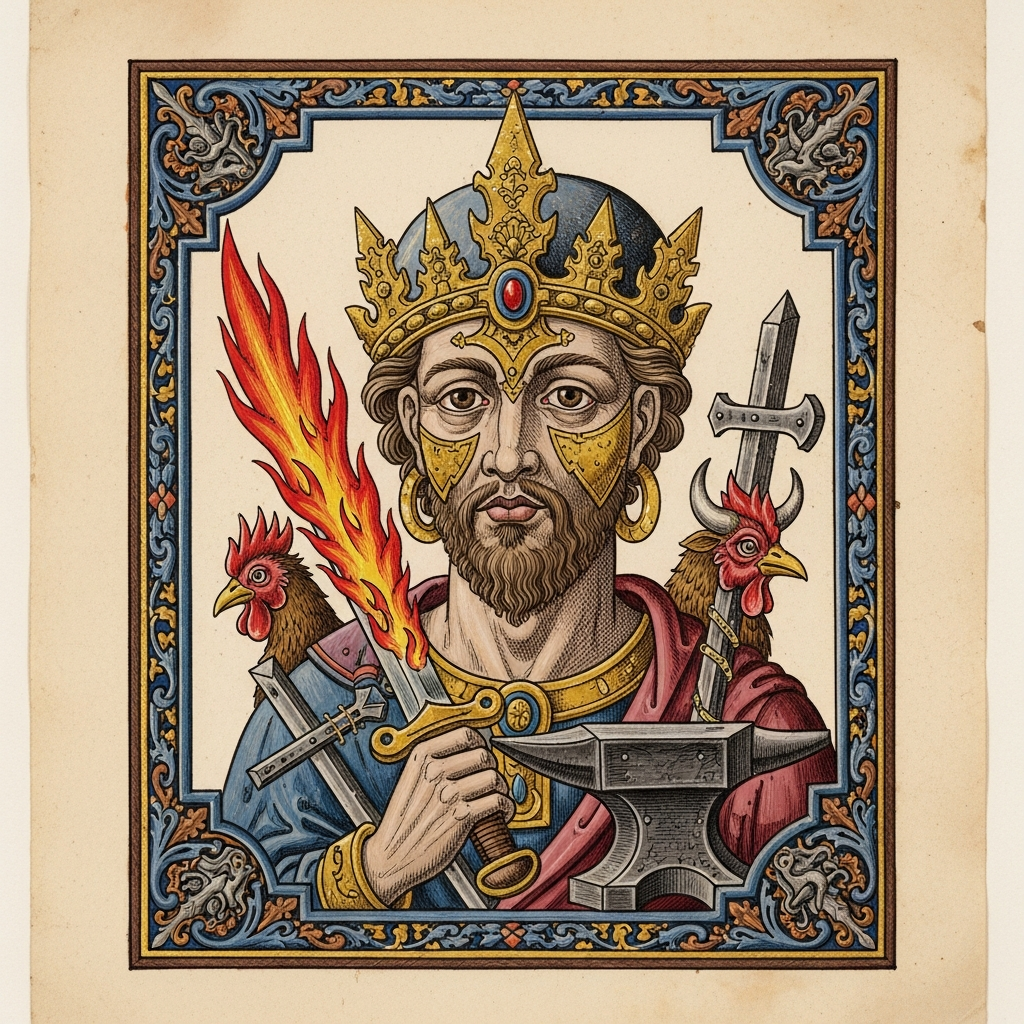
The Haitian theologians gave him a military title. Ogou Feray — the iron Ogou — is the purest warrior aspect, the one who descends into battle with no hesitation and no mercy for those who kept the chains. Ogou Badagris is older, darker — the Ogou who has been bloodied so many times that he carries the weight of grief as well as victory. There are other nations of Ogou, each reflecting a different facet of what iron means to people who have been held by it and broken free.
The ceremony at Bois Caïman was held in August 1791.
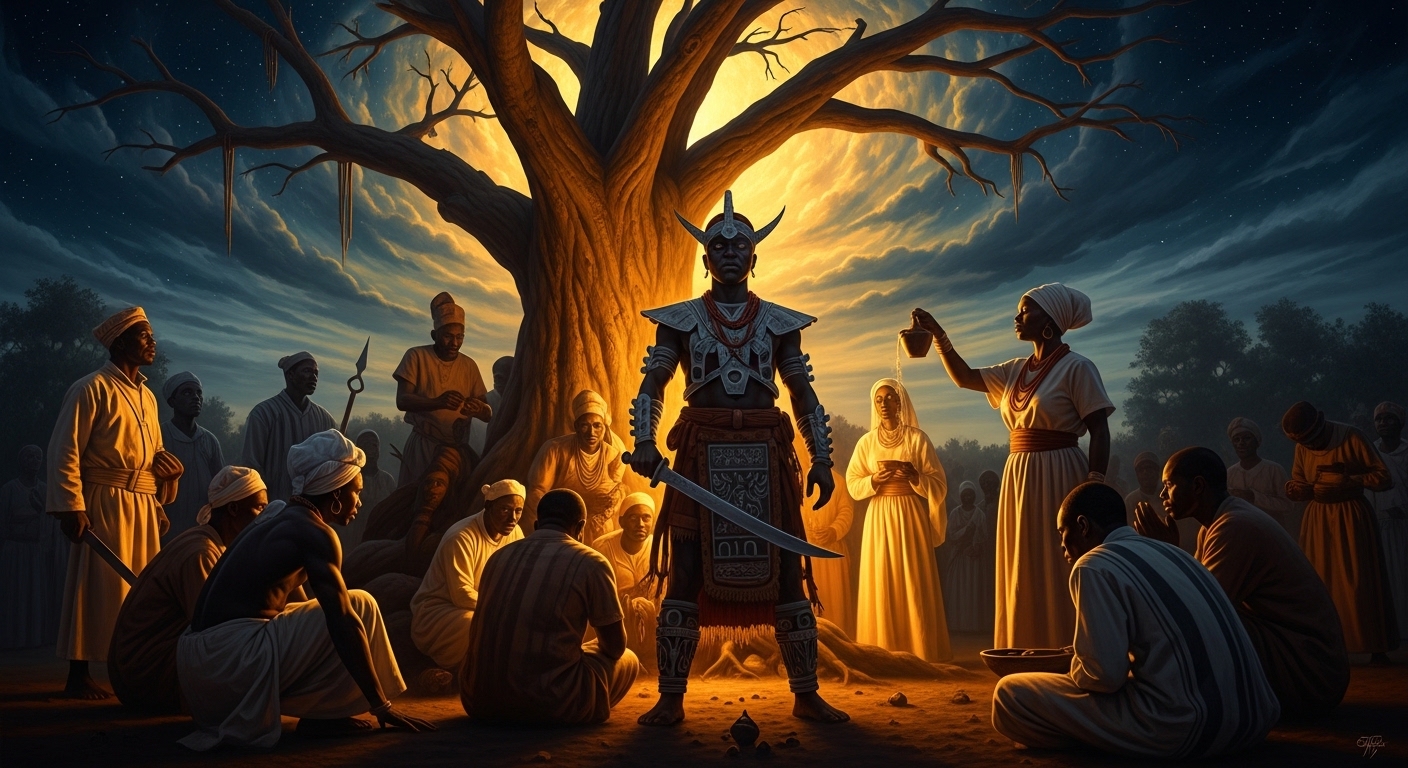
The records are fragmentary, the accounts contested, but the core of what happened is consistent across multiple sources: a Vodou ceremony in the forest, led by the houngan Boukman Dutty, during which the spirits were called and the uprising was planned. Rum was drunk. Blood was drunk. The Lwa arrived. And within weeks, the northern plains of Saint-Domingue were on fire.
Boukman did not survive the revolt he started. He was captured and killed in November 1791, his head displayed on a spike by French colonial authorities who hoped to terrorize the rebellion into collapse. The rebellion was not terrorized into collapse. It continued for thirteen years — through Toussaint L’Ouverture’s campaigns, through Napoleon’s attempt to reimpose slavery, through the battles of Jean-Jacques Dessalines — until January 1, 1804, when Haiti became the first Black republic in the hemisphere.
The generals of the Haitian Revolution understood what they were doing in Vodou terms as well as military ones. Dessalines, who was brutal and brilliant, who killed without hesitation and organized with precision, saw himself as an instrument. The spirit in the body at the ceremony was not a metaphor for courage. The Lwa were present. Ogou was present. The iron of the revolution ran through those bodies the way current runs through a wire.
This is the part that Western historians tend to edit out, replace with secular explanations about economics and tactics. The Haitians themselves did not edit it out. The founding documents of Haiti are full of what happened at Bois Caïman.
When Ogou comes to a ceremony today, he drinks rum straight — a bottle at a time, which the human body he is riding does not feel as it would normally feel. He smokes cigars. He speaks to the crowd in military metaphors, asks about enemies, asks about those who have acted against justice. If a person in the crowd has been wronged, Ogou may turn to face that direction with the machete and speak to whatever force has done the harm.
He is not subtle. He is not interested in subtlety. He is the spirit of the direct action, the uncompromised move, the cut that ends the problem rather than managing it.
But there is something else about Ogou that his reputation for violence does not capture: he weeps.
Not often. But when the injustice is very old and very deep — when someone brings to the ceremony a wound that has been carried across generations, the wound of displacement or loss or the long slow violence of poverty — Ogou sometimes stops his shouting and is quiet. He holds the machete loosely. His face changes. He weeps the way soldiers weep when the war is over and they look at what the war cost them.
He has been fighting for three hundred years. He knows the cost.
He picks up the machete again. He is not done.
Fè Ogou. The iron endures. The iron does not rust. The iron waits in the altar for the next ceremony, the next mounting, the next call — and Ogou, who cannot stop fighting, who is the engine beneath every revolution that has ever broken a chain, will be there when the drums begin again.
Scenes
Echoes Across Traditions
Entities
- Ogou Feray
- Ogou Badagris
- Boukman
- Jean-Jacques Dessalines
- the Lwa
Sources
- Alfred Métraux, *Voodoo in Haiti* (Oxford University Press, 1959)
- Leslie G. Desmangles, *The Faces of the Gods: Vodou and Roman Catholicism in Haiti* (University of North Carolina Press, 1992)
- Karen McCarthy Brown, *Mama Lola: A Vodou Priestess in Brooklyn* (University of California Press, 1991)
- Donald Cosentino (ed.), *Sacred Arts of Haitian Vodou* (UCLA Fowler Museum, 1995)
- C.L.R. James, *The Black Jacobins: Toussaint L'Ouverture and the San Domingo Revolution* (1938)
- Robert Farris Thompson, *Flash of the Spirit: African and Afro-American Art and Philosophy* (Pantheon, 1983)