Combat Profile
Iron's Fury
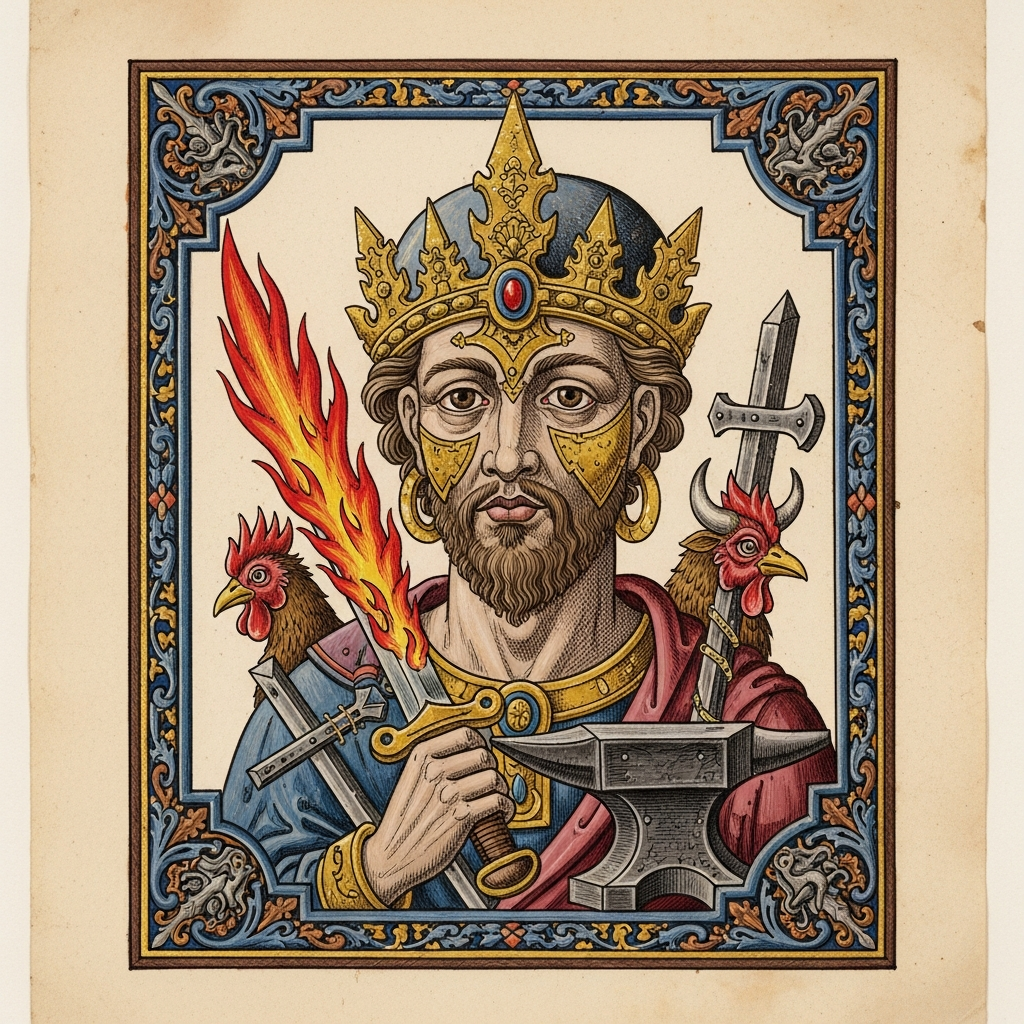
Ogou channels molten divine force through metal and flame, granting warriors unstoppable momentum in battle and transforming tools into instruments of liberation.
Forge of Nations
Ogou's presence consecrates weaponry and emboldens military strategy, blessing those who call upon him with courage, tactical clarity, and the strength of tempered iron.
Rum and rage. Ogou Feray is a drinker and a fighter -- when he mounts a devotee, the person often demands rum, brandishes a machete, and becomes aggressive. His fury, like Ogun's, can turn indiscriminate. The fire that liberates can also consume
“Ogou drinks rum, takes up his machete, and walks into the fire. He does not walk around it. He walks through it.” — Vodou tradition
Lore: Ogou Feray (Ogun Ferraille — “Iron Ogun”) is the Haitian transformation of the Yoruba Ogun, but he has evolved significantly in the diaspora. Where Ogun in Yoruba tradition is the Orisha of iron, technology, and path-clearing (see Yoruba.md), Ogou Feray in Haiti became specifically the Lwa of armed revolution. This evolution is not a distortion but a theological response to circumstance: when your entire existence is defined by slavery, the god of iron becomes the god of the weapon that frees you. The machete — Ogun’s tool — was the instrument enslaved Haitians used to cut sugar cane under the whip. When the revolution came, the same machete was turned against the slaveholders. The tool of oppression became the weapon of liberation. This is Ogou’s theology in a single image.
In Vodou ceremony, Ogou Feray arrives like a storm. When he mounts a devotee, the person’s demeanor transforms instantly: they stand rigid, demand rum (which they may pour over their head or spit in a spray of fire over a torch), seize a machete or sword, and become a warrior. Their voice changes to a commanding bark. They may march around the peristyle (temple) as if inspecting troops. Ogou is the general reviewing his army, and every person present is his soldier. He is associated with the color red (blood, fire), with iron and steel, with rum (which feeds the fire), and with St. James the Greater (Santiago Matamoros — “St. James the Moor-Slayer”), the warrior saint of the Spanish Catholic tradition, depicted on horseback with a sword.
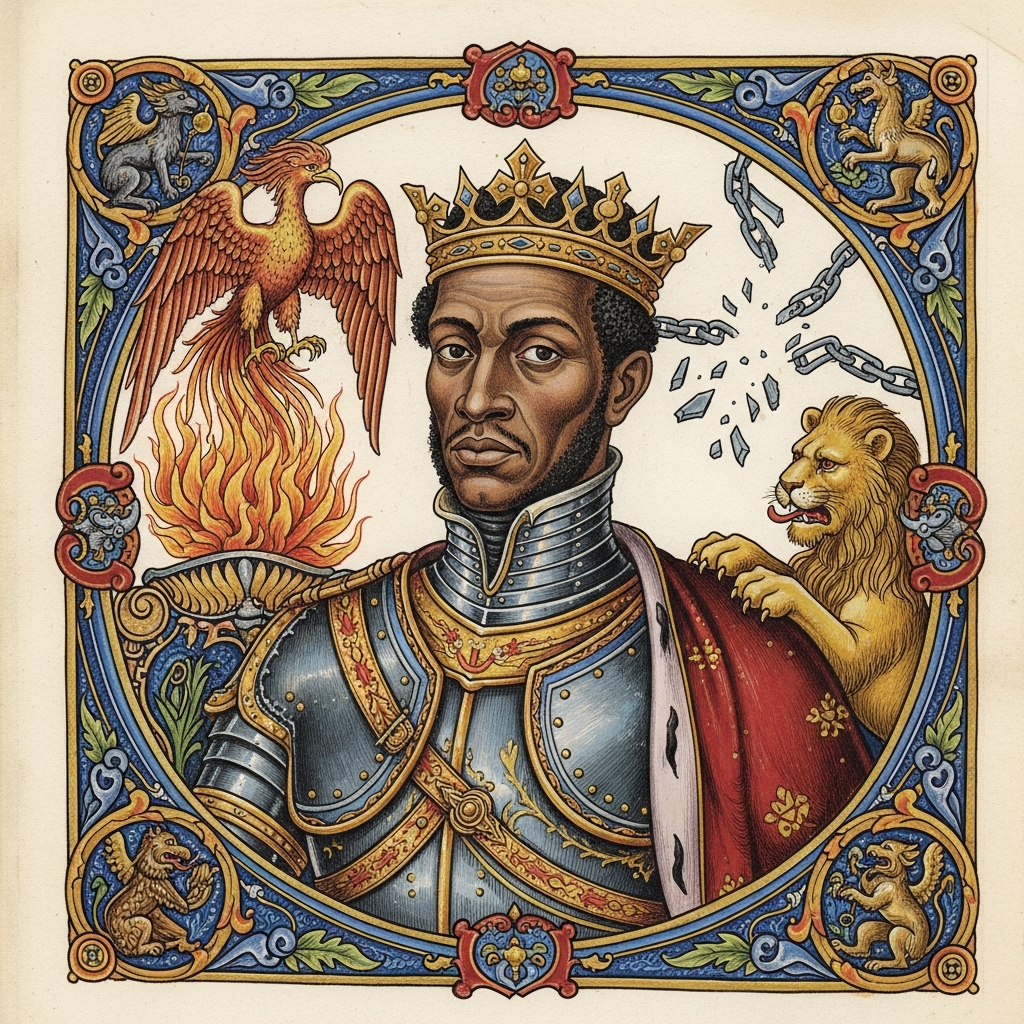
The historical connection is direct: Toussaint Louverture, Dessalines, and the other generals of the revolution were understood to be ridden by Ogou. When Dessalines led the final charge against Leclerc’s forces, Vodou tradition holds that it was not merely Dessalines fighting but Ogou Feray himself, using Dessalines’ body as his horse. The entire revolution was, in Vodou theology, a war fought on two planes simultaneously — the physical plane where armies clashed, and the spiritual plane where Lwa battled the spiritual forces behind the colonial system.
Parallel: Michael the Archangel leading the heavenly armies against Satan (Revelation 12:7) — the divine warrior whose sword serves divine justice. Ares/Mars in his aspect as the god of necessary warfare (not senseless violence but strategic military action). Ogun himself (see Yoruba.md) — Ogou Feray IS Ogun, transformed by the diaspora into a specifically revolutionary figure. Indra, the Vedic warrior-king of the gods who wields the thunderbolt against demons. And Gideon, who took three hundred men and defeated the entire Midianite army through divine strategy and fearless action (Judges 7). The Haitian revolutionaries, like Gideon’s band, were outnumbered, outgunned, and fighting a professional army — and they won, because their general was not merely human.
2 min read
Ezili Freda (Ogou's great love -- the gentle, weeping, beauty-loving Lwa who represents everything war destroys. Ogou fights; Freda reminds him what he's fighting for). Also countered by exhaustion -- Ogou never stops fighting, which is both his strength and his limitation
Maya Deren, *Divine Horsemen: The Living Gods of Haiti* (1953); Karen McCarthy Brown, *Mama Lola: A Vodou Priestess in Brooklyn* (1991); Alfred Metraux, *Voodoo in Haiti* (1959)