The Story
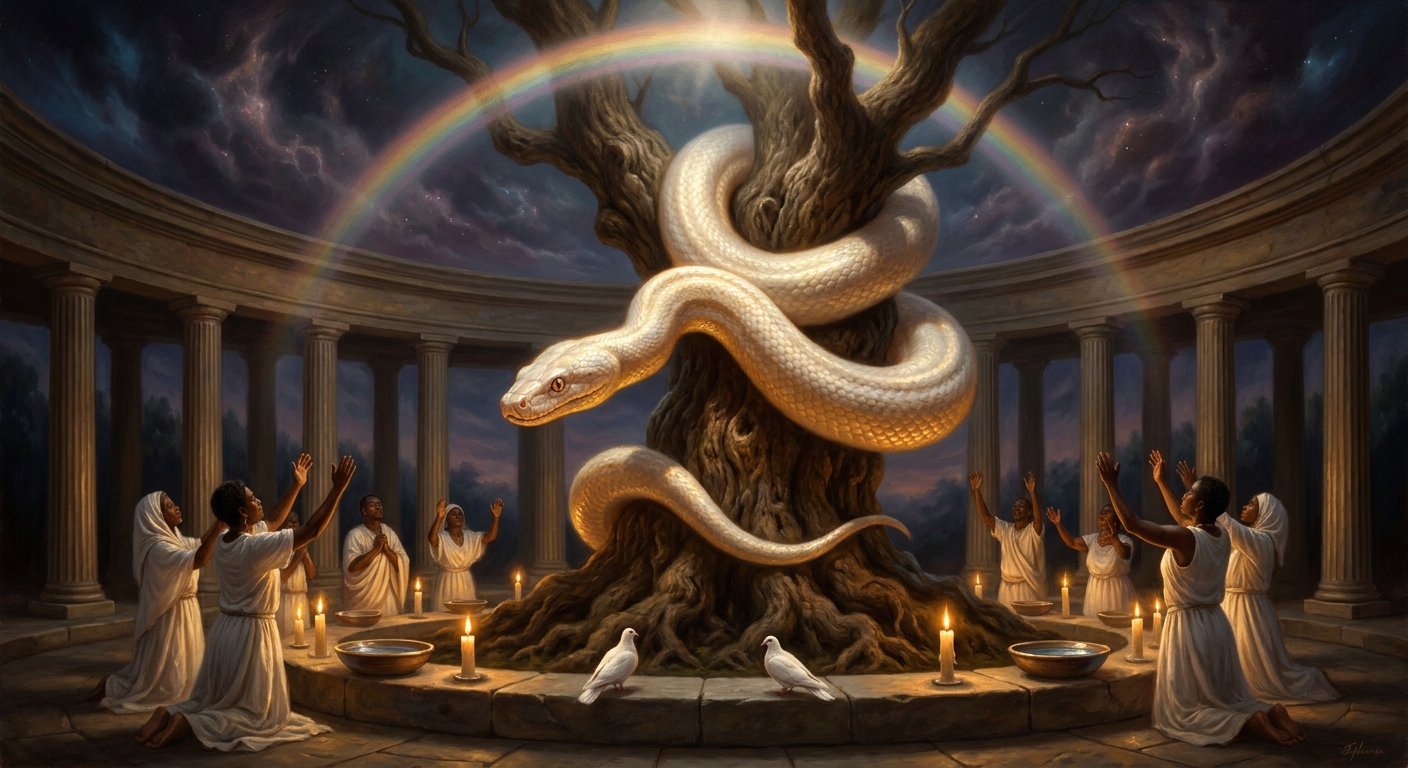
Haitian Vodou is the religion that overthrew an empire. To understand it, you have to follow it across an ocean and through three centuries of catastrophe.
West African Origins (pre-1500): Vodou’s DNA comes from three West and Central African traditions. The Fon of Dahomey (modern Benin) give the word vodun — “spirit” — and the architecture: one distant god (Mawu), many intermediaries (Deren, Divine Horsemen, 1953). The Yoruba of Nigeria bring the Orishas (Ogun, Eshu, Yemoja, Shango) who become Haitian Lwa (Ogou Feray, Papa Legba, La Sirene, Sogbo). The Bakongo of Central Africa contribute nkisi (sacred bundles, charged objects), the four-moment cosmogram, and ancestral communion (Métraux, Voodoo in Haiti, 1959). Below decks on slave ships, these streams merged.
The Saint-Domingue Crucible (1697-1791): France claims the western third of Hispaniola (Treaty of Ryswick, 1697) and weaponizes it. Sugar, coffee, indigo. Life expectancy: three to five years (Dubois, Avengers of the New World, 2004). The French imported roughly 800,000 enslaved Africans across the century — a deliberate ethnic scramble meant to prevent solidarity (James, The Black Jacobins, 1938). It backfired. Vodou became the pan-African language the enslaved forged together. Night-time ounfo (temples) hidden in hills carried the drums, the ceremony, the incubation of rebellion.
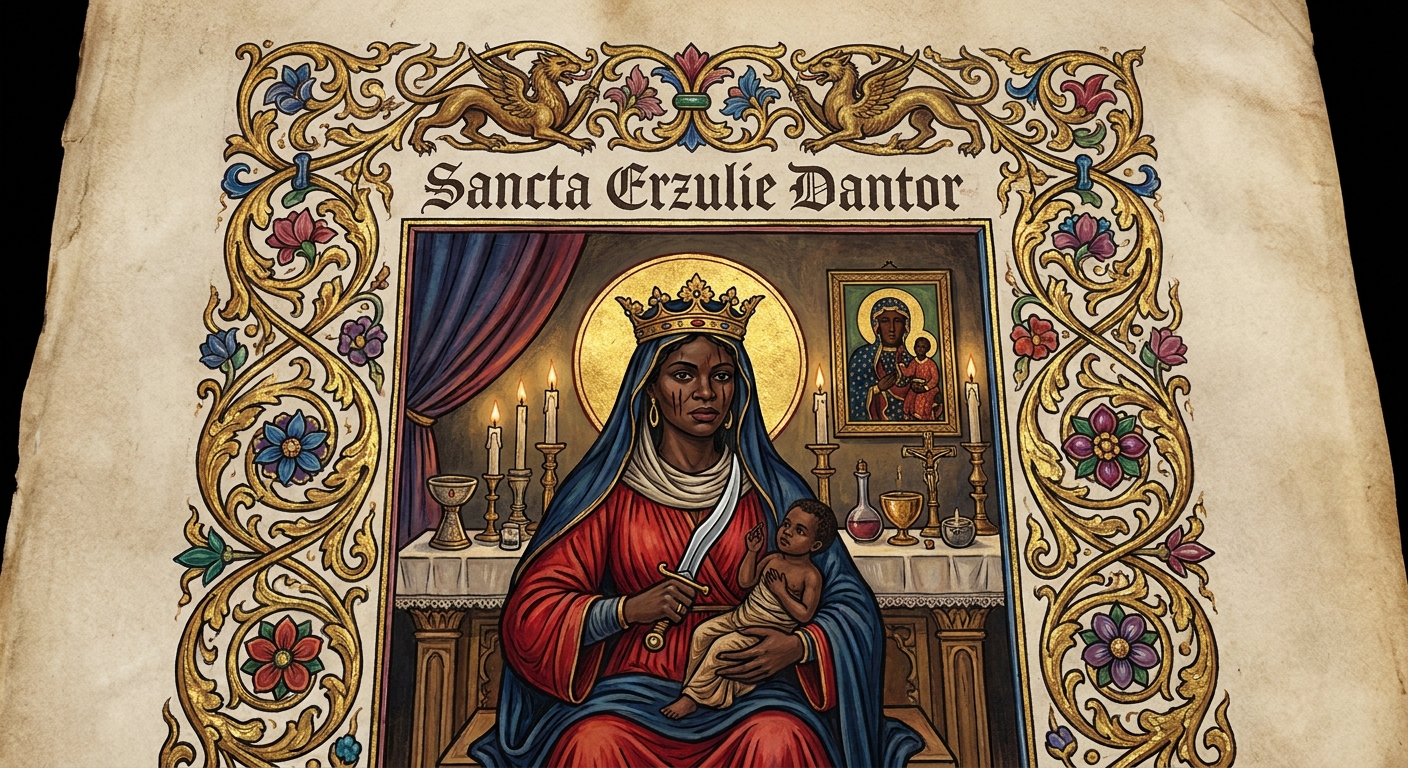
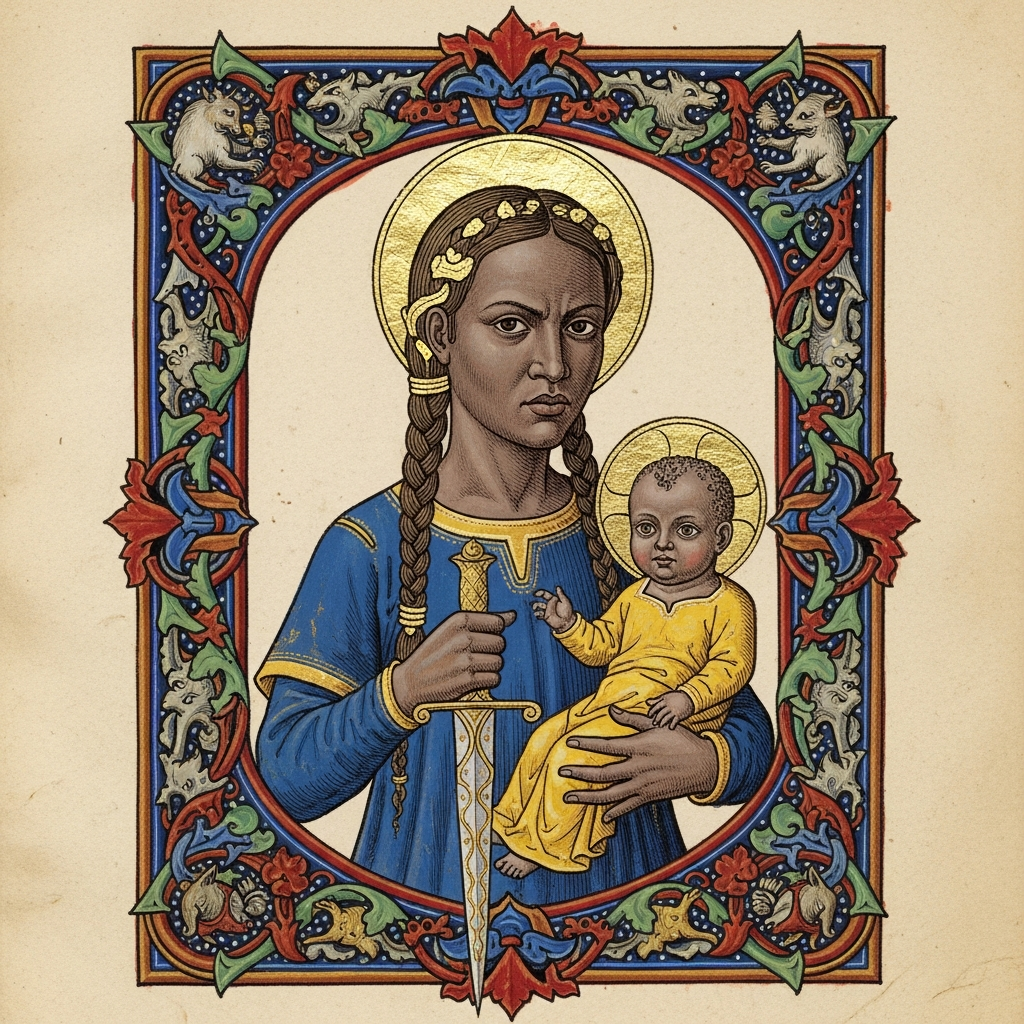
Catholic Syncretism + Taino Survivals: Missionaries forced baptism. The enslaved complied — and instantly cloaked their Lwa in saints. Damballa Wedo, the cosmic serpent, hid behind Saint Patrick (snake-slayer — visual genius). Ezili Danto wore the Black Madonna of Czestochowa. Ogou Feray became Saint James. Vodou survived in plain sight. Taino indigenous fragments also persisted: cassava, herbal lore, zemis (spirit-objects) — memory in the earth and plants.
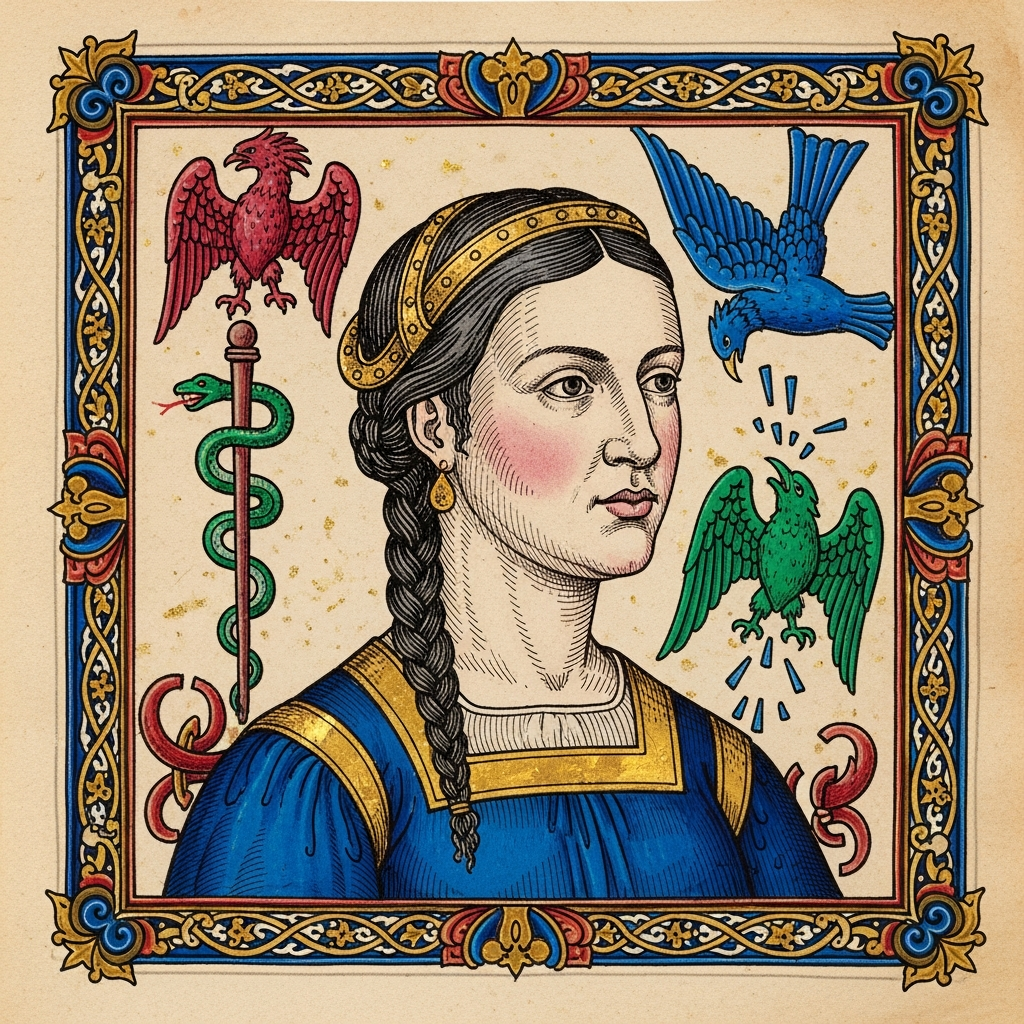
Bois Caiman, August 14, 1791: A forest clearing above Cap-Francais. Mambo Cecile Fatiman and houngan Dutty Boukman gathered hundreds under a thunderstorm (Bois Caïman, Aug 14 1791). Black pig. Gunpowder mixed in blood. The oath was sworn. The Lwa answered. History pivoted on a ceremony. (See Yoruba.md for the African-diaspora reading; this is where it erupted.)
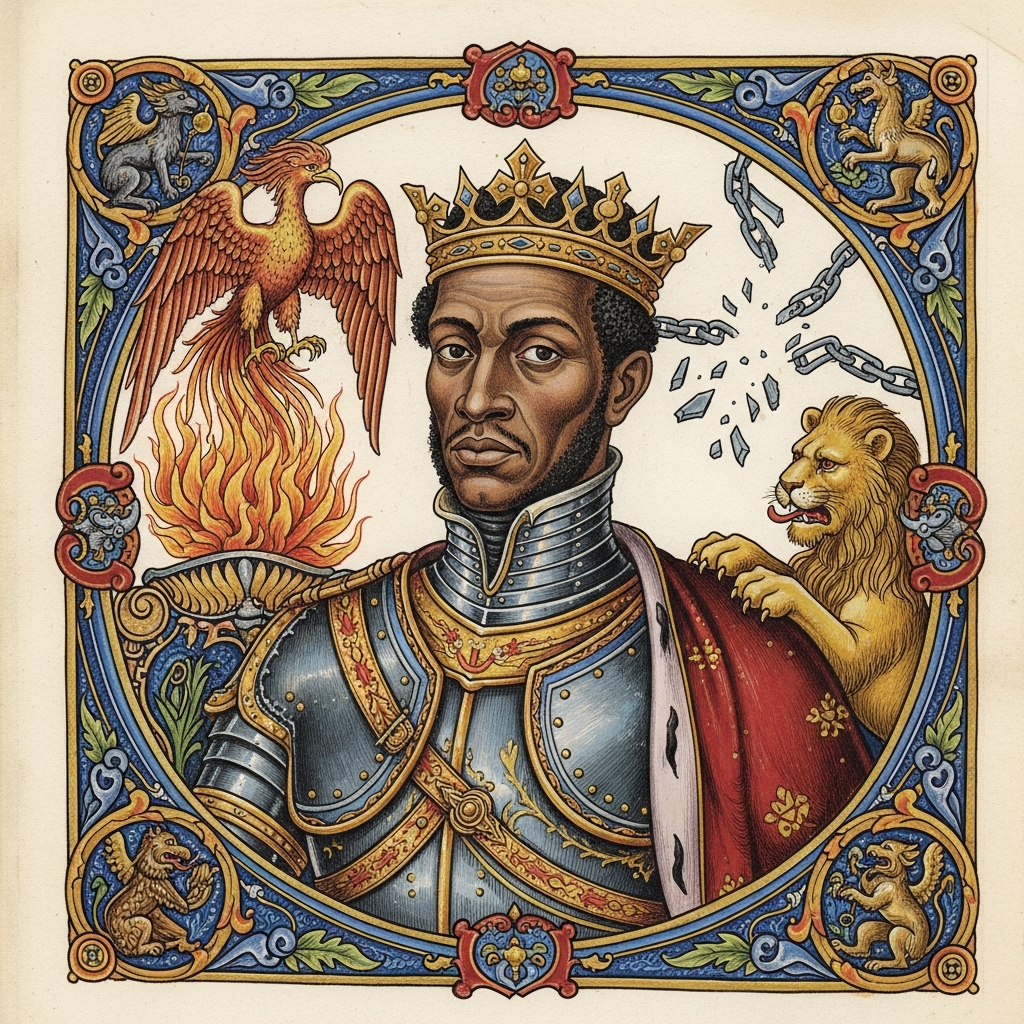
The Haitian Revolution (1791-1804): A week: 1,000 plantations burning. Thirteen years: independence. On January 1, 1804, Dessalines declared Haiti free — the first Black republic, the second in the Americas, the only successful large-scale slave rebellion ever (Dessalines’ Declaration of Independence, 1804). France, Spain, Britain sent armies. All lost. Napoleon’s brother-in-law died there. The price was horrific — roughly half the Haitian population — but the chains broke.
A Century of Demonization (1804-1915): The slaveholding world isolated Haiti, extracted indemnity (France forced the victims to pay the colonizers until 1947), and saturated it with slander. Vodou was repackaged: not liberation theology but devil-worship, cannibalism, black magic. Zombi — from Kongo nzambi (spirit) — became a horror caricature. The religion that broke chains got narrated as darkness.
US Occupation (1915-1934) and Hollywood: Nineteen years of Marine occupation. Soldiers returned with pulp memoirs (“The Magic Island,” 1929) that invented the “voodoo doll” — which Vodou never made. White Zombie (1932) cemented the lie in Western minds for decades.
Recognition (1987-2003): The 1987 Constitution guaranteed religious freedom (Haitian Constitution, 1987). April 4, 2003: President Aristide formally recognized Vodou as official Haitian religion — houngan and mambo now authorized to marry, baptize, bury (Vodou Konvansyon, 2003). An estimated 50-80% of Haitians practice Vodou today, usually fused with Catholicism. The Diaspora (New Orleans, Miami, New York, Montreal, Paris) keeps it alive.
This is the religion that made Haiti free. Treat it with the reverence it earned.
Pivotal Events
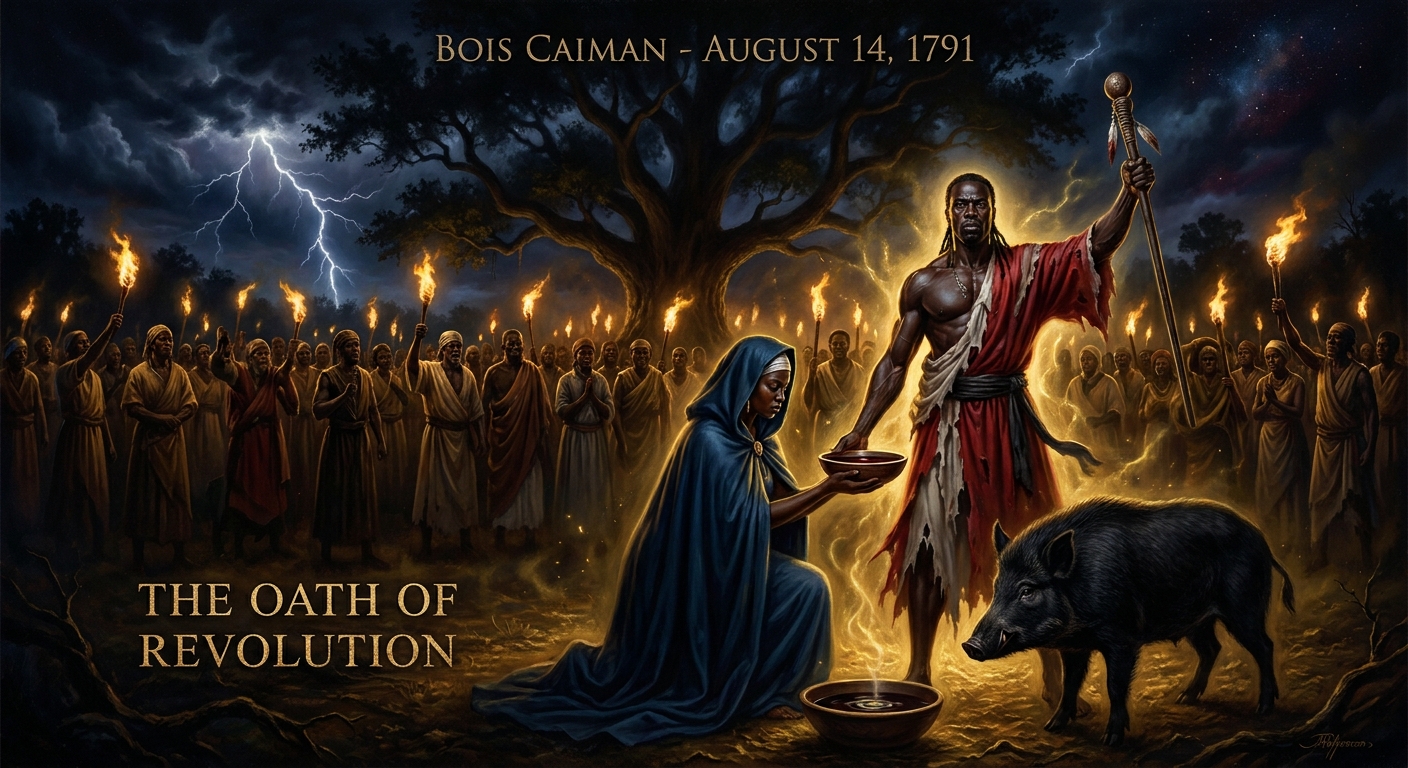
Forest clearing above Cap-Francais, August 14, 1791, thunderstorm. Hundreds of enslaved Africans gathered. Mambo Cecile Fatiman (green-eyed, Corsican-African, mounted by Ezili Danto) channeled the spirits. Houngan Dutty Boukman preached: “The God who created the sun… sees all that the white man does… inspires him with crime. But our God calls upon us to do good works.” Black pig sacrificed. Blood mixed with gunpowder, drunk in oath: freedom or death. Eight days later, 1,000 plantations burned. Thirteen years later, Haiti existed. No other modern revolution started as a ceremony — Vodou as politics made flesh.
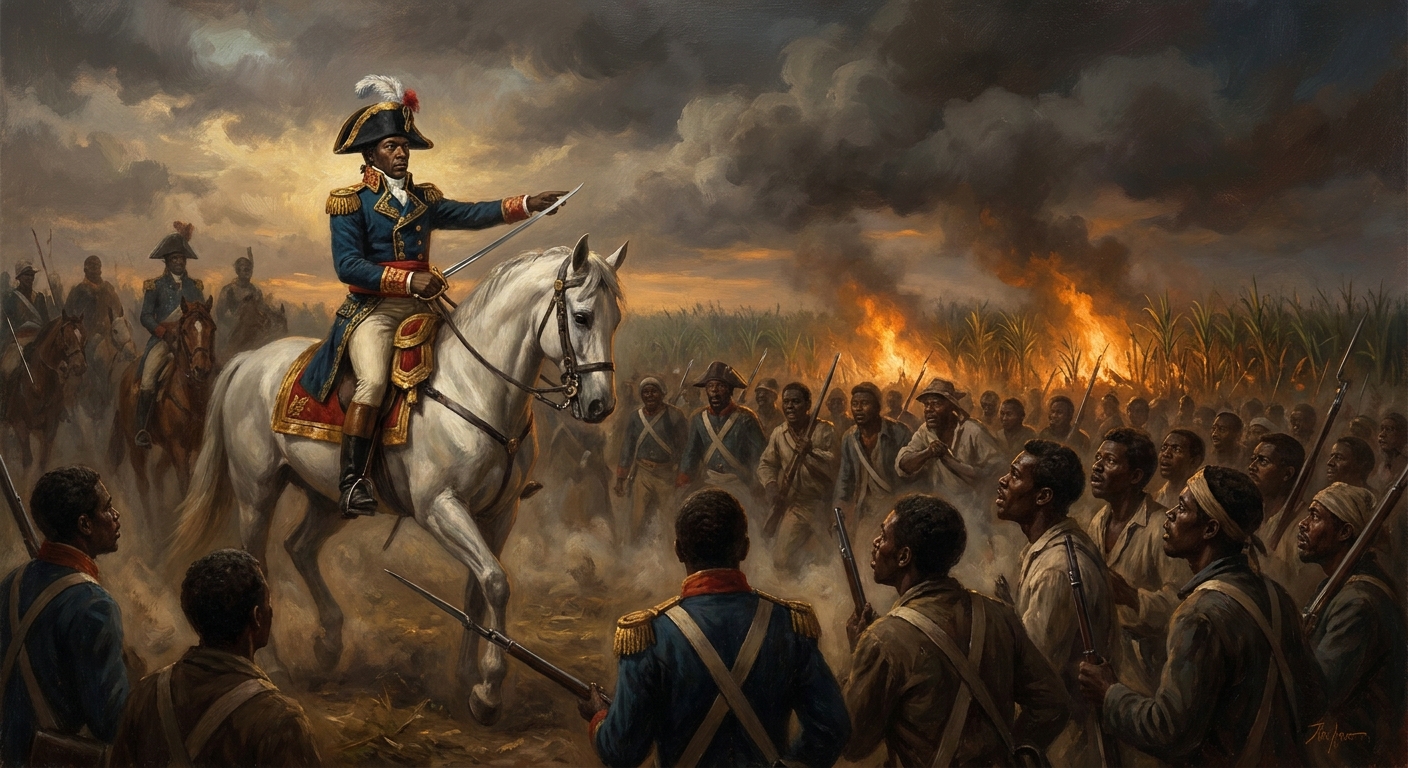
Self-educated coachman, devout Catholic, tactical genius. Toussaint Louverture rose from the August 1791 chaos to command the revolution. Within a decade: French royalists, Spanish, and British armies defeated. Slavery abolished. He governed Saint-Domingue. Wordsworth praised him. Napoleon feared him (“that gilded African”). In 1802, Napoleon sent his brother-in-law Leclerc with 20,000 troops to restore slavery. Toussaint was tricked into parley, kidnapped, shipped to Fort de Joux in the frozen Jura. He died April 1803: “In overthrowing me, you have cut down only the trunk. The roots are numerous and deep.” Within a year, Dessalines finished it. Toussaint was right.
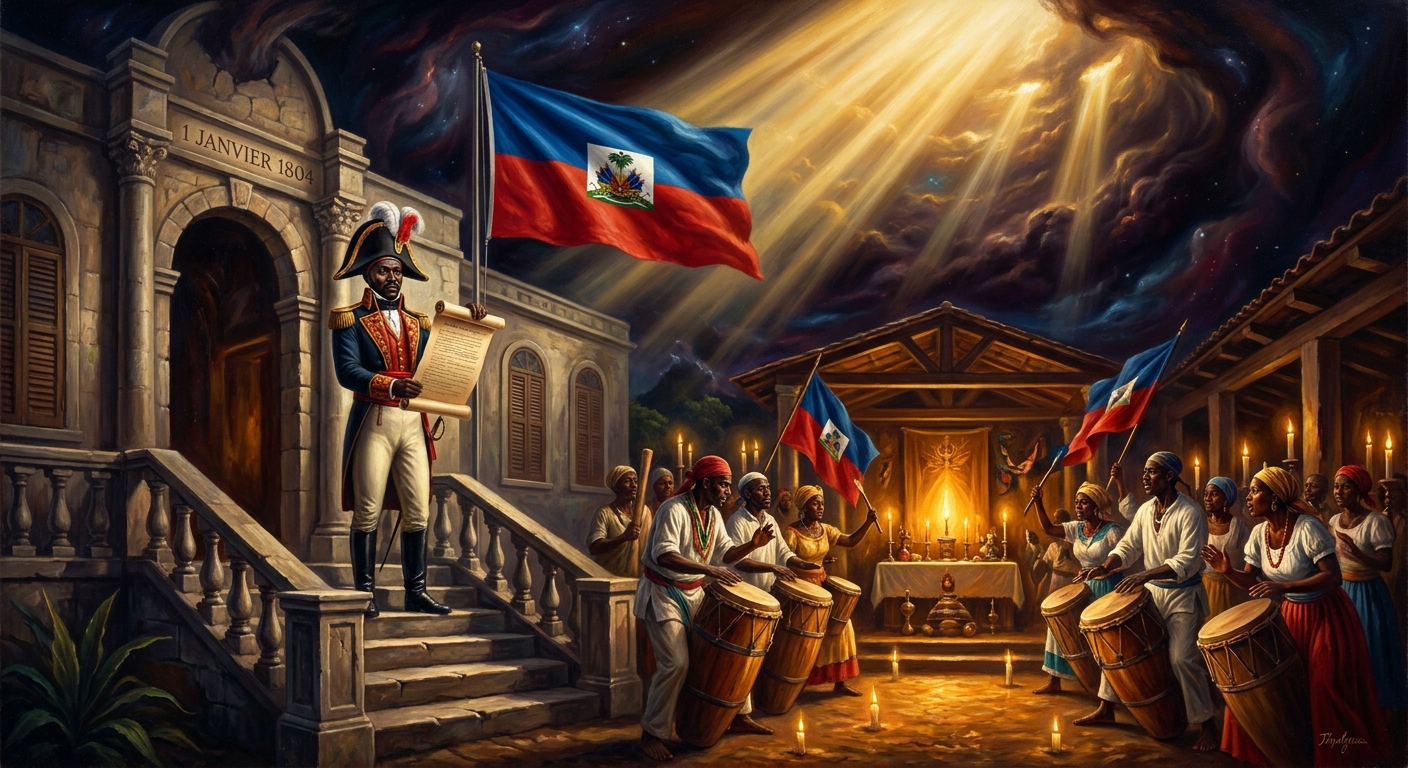
January 1, 1804, Gonaives. Dessalines declared Saint-Domingue dead, Haiti born — the Taino word for “land of mountains.” He ripped the white stripe from the French flag and ordered the new banner sewn from blue and red alone. Vodou ceremony again — the Lwa thanked. He crowned himself Emperor Jacques I: “Never again shall colonist or European set foot on this soil as master or proprietor.” Haiti became the first nation to permanently abolish slavery, first independent Black republic, second republic in the hemisphere. The slaveholding world responded with silence, isolation, and a predatory indemnity (France, 1825) that drained Haiti for a century. But Haiti stayed free.
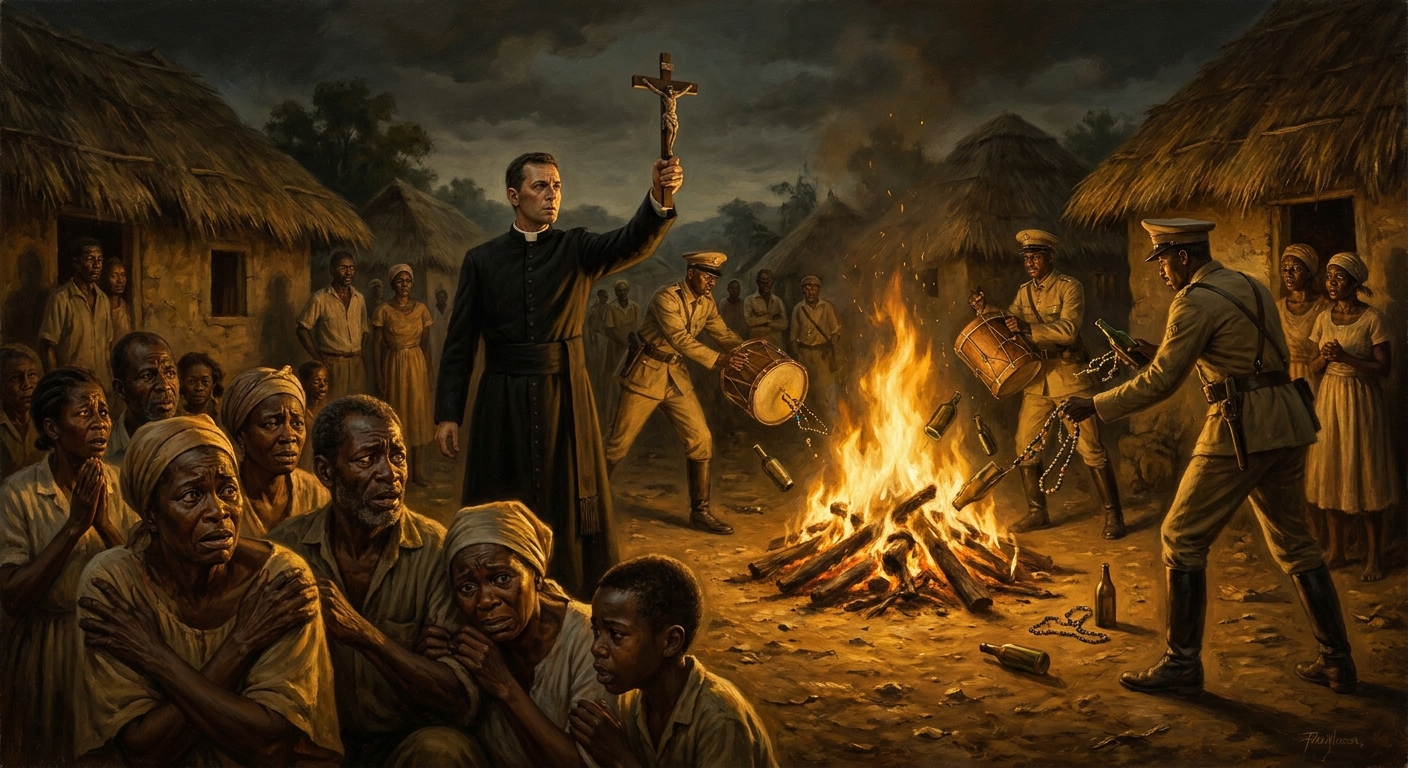
The Church crushed Vodou twice. First (1896): Archbishop Guilloux sent priests to burn ounfo, smash drums, destroy altars, excommunicate the faithful. Second (1941-1942), the Rejete: President Lescot and Archbishop Le Gouaze modeled it on European witch-hunts — sacred objects destroyed, sacred trees cut, practitioners beaten and jailed. Peasants forced to renounce the Lwa. The campaigns failed. Vodou went underground, tightened its Catholic camouflage, and outlasted both archbishops. The trauma lingered — a century of Western slander that painted Haiti’s liberating faith as “primitive superstition.”
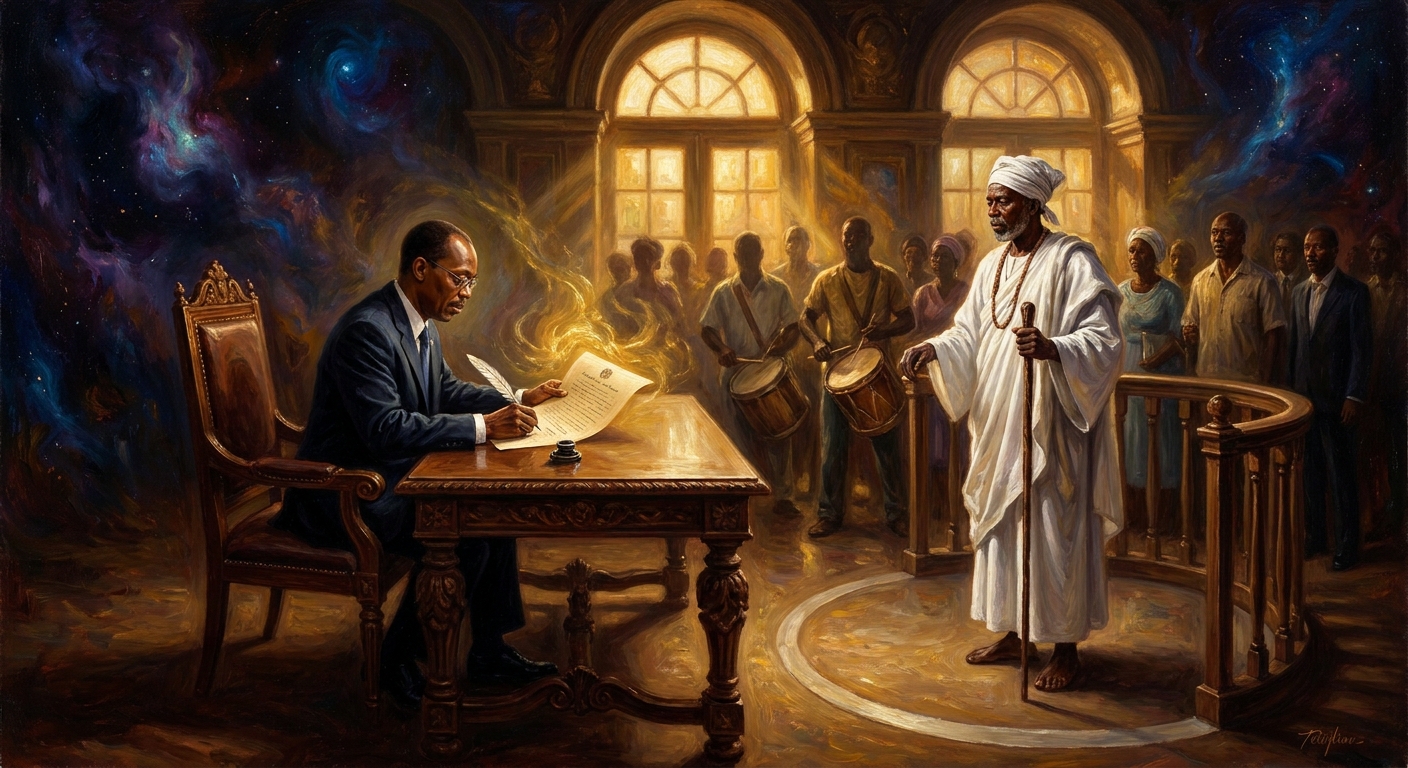
April 4, 2003: President Aristide (ex-priest, Vodou sympathizer) signed formal recognition. Houngan and mambo could register, marry, baptize, bury, operate openly. After 212 years — Bois Caiman to daylight — the founding religion finally stood legal. The 2010 earthquake tested it (American evangelicals blamed “the devil’s pact”) but recognition held. Today: Vodou in Haitian universities, 50-80% of the population, diaspora study it as foundational Black-Atlantic liberation theology.
Timeline
| Era | Date | Event | Source |
|---|
| African Origins | pre-1500 | Fon (Dahomey), Yoruba (Nigeria), Kongo (Central Africa) traditions develop | oral tradition; ethnography |
| Spanish Conquest | 1492 | Columbus lands on Hispaniola; Taino population begins collapse | Columbus’s journals |
| Taino Extinction | ~1550 | Indigenous Taino wiped out by disease and forced labor | Las Casas |
| French Colony | 1697 | Treaty of Ryswick cedes western Hispaniola (Saint-Domingue) to France | treaty text |
| Code Noir | 1685/1724 | French slave code applied to Saint-Domingue; mandates Catholic baptism | Code Noir |
| Mass Importation | 1700s | ~800,000 enslaved Africans imported across the century | colonial records |
| Makandal Conspiracy | 1757-1758 | Maroon Francois Makandal leads poison-based resistance; burned alive | trial records |
| Bois Caiman Ceremony | August 14, 1791 | Fatiman and Boukman lead the founding ceremony | oral history |
| Northern Uprising | August 22, 1791 | 1,000+ plantations burning | French dispatches |
| Toussaint Rises | 1791-1801 | Toussaint becomes governor | memoirs; James |
| Slavery Abolished | 1793-1794 | French Convention abolishes slavery in colony | legislative record |
| Toussaint Captured | 1802 | Tricked into parley, kidnapped by Leclerc | accounts |
| Toussaint Dies | April 7, 1803 | Dies in Fort de Joux, Jura Mountains | prison records |
| Battle of Vertieres | November 18, 1803 | Dessalines defeats French forces | military history |
| Haitian Independence | January 1, 1804 | Dessalines declares independence in Gonaives | Declaration |
| Dessalines Massacre | 1804 | Dessalines executes remaining French colonists | decrees |
| French Indemnity | 1825 | France demands 150 million francs in reparations from Haiti for “lost property” | French royal ordinance |
| First Anti-Superstition Campaign | 1896 | Archbishop Guilloux launches Catholic crackdown | archives |
| US Occupation | 1915-1934 | US Marines occupy Haiti; Vodou demonized | State Dept records |
| The Magic Island | 1929 | William Seabrook’s pulp memoir launches “voodoo” caricature in America | Seabrook |
| White Zombie | 1932 | First Hollywood zombie film cements horror-Vodou trope | Halperin Productions |
| Second Anti-Superstition Campaign | 1941-1942 | Rejete under President Lescot destroys ounfo, trees | records |
| Duvalier Era | 1957-1986 | ”Papa Doc” weaponizes Vodou imagery for terror | Diederich + Burt |
| 1987 Constitution | 1987 | Religious freedom; Vodou protected | Constitution |
| Aristide Decree | April 4, 2003 | Vodou officially recognized | decree |
| 2010 Earthquake | January 12, 2010 | 250,000 dead; evangelicals blame “devil’s pact” | news |
| French Repayment | 1825-1947 | Haiti finishes paying the indemnity | records |
| Present | 2026 | 50-80% of Haitians practice Vodou; vibrant Diaspora | studies |
The Only Revolution in History Launched by a Religious Ceremony
No other revolution in recorded history was explicitly initiated by a spiritual act. The American Revolution had Enlightenment philosophy. The French Revolution had secular reason. The Russian Revolution had dialectical materialism. The Haitian Revolution had Vodou.
On the night of August 14, 1791, in a forest clearing called Bois Caïman in the mountains above Cap-Français (now Cap-Haïtien), hundreds of enslaved Africans gathered in secret (Bois Caïman, Aug 14 1791). A mambo (Vodou priestess) named Cécile Fatiman channeled the Lwa. A priest named Dutty Boukman preached a sermon that fused African spirituality with revolutionary fire. A black pig was sacrificed. Its blood was mixed with gunpowder and drunk by the assembled. They swore an oath to the spirits: freedom or death. The Lwa answered. Within days, the northern plain of Saint-Domingue was in flames. Within thirteen years, Haiti was free — the first Black republic in the world, the only successful large-scale slave revolt in human history (Dubois, Avengers of the New World, 2004).
Saint-Domingue (Haiti) was the most profitable colony in the Western hemisphere and the most brutal. The average life expectancy of an enslaved person after arrival was three to five years (James, The Black Jacobins, 1938). The French worked them to death and imported replacements. The colony produced 40% of the world’s sugar and 60% of its coffee, all on the bones of the enslaved. It was in this crucible — the worst conditions in the New World — that Vodou became not just a religion but a revolutionary infrastructure. The drums carried messages. The ceremonies built solidarity across different African ethnic groups (Yoruba, Fon, Kongo, others) who had been deliberately separated by slaveholders (Fick, The Making of Haiti, 1990). The Lwa gave courage that no secular philosophy could provide: the assurance that the spirits themselves fought alongside the enslaved.
This section covers the spiritual dimension of the Haitian Revolution: the ceremony that launched it, the leaders who embodied the fusion of faith and warfare, and the Lwa who were invoked as revolutionary allies. It connects directly to the Yoruba Orishas & the African Spiritual Diaspora section — the three Haitian Loa cataloged there (Baron Samedi, Maman Brigitte, Papa Legba) represent the diaspora transformation of Yoruba theology, but here we add the revolutionary figures and warrior spirits who turned theology into liberation.
flowchart TB
    BD["<b>BONDYE</b><br/>(Bon Dieu -- The Good God)<br/>Supreme Creator<br/>Too vast to approach directly<br/>Inherited from Olodumare + Catholic God"]

    subgraph CEREMONY["The Bois Caïman Pact -- August 14, 1791"]
        BC["<b>THE CEREMONY</b><br/>Blood oath, Vodou rite, revolutionary pact<br/>The Lwa were called. The Lwa answered."]
    end

    subgraph LWA["The Lwa Invoked for Revolution"]
        EZ["<b>EZILI DANTO</b><br/>Fierce Mother, Warrior Protector<br/>Scarred face, fights for the oppressed"]
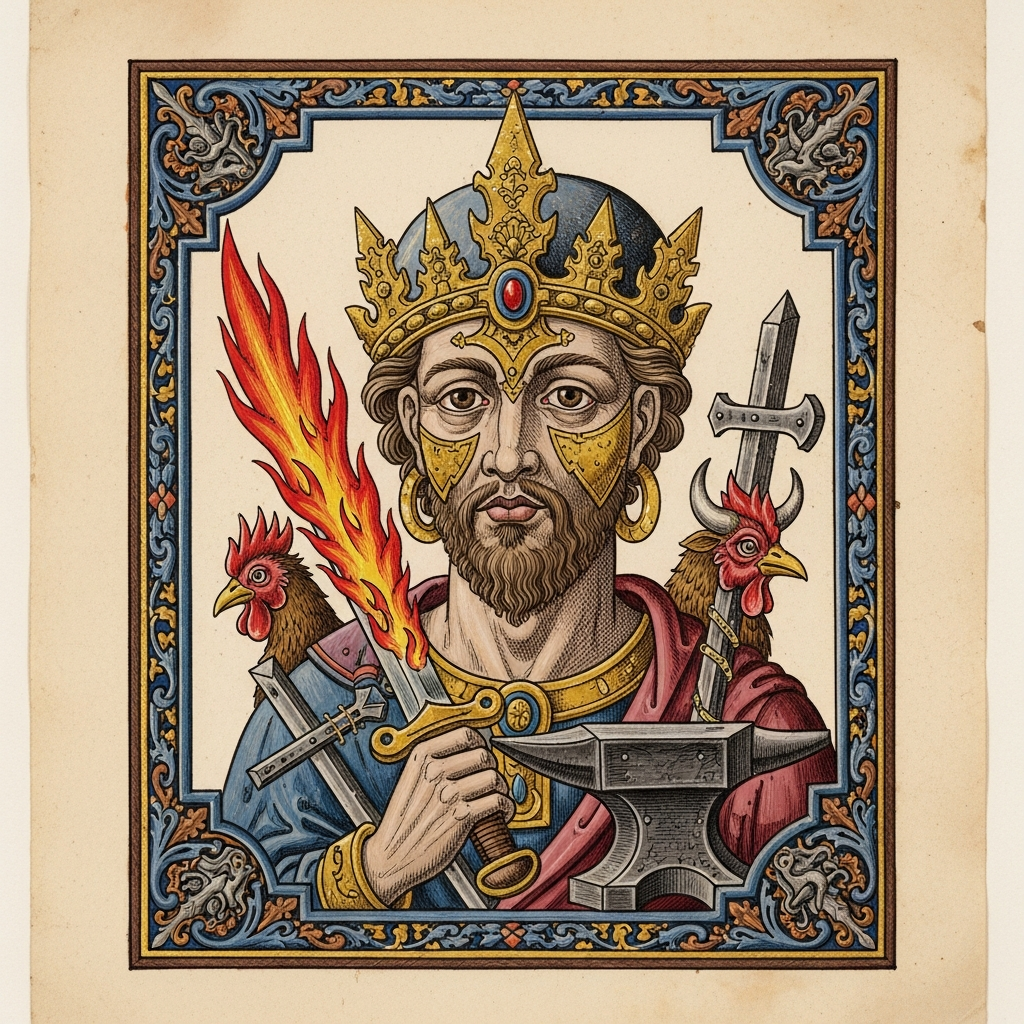
        OG["<b>OGOU FERAY</b><br/>Warrior Spirit, Iron & Fire<br/>Derived from Ogun<br/>Machetes, rum, battle"]
        LG["<b>PAPA LEGBA</b><br/>Crossroads, Gate-Opener<br/>Opened the gate for the revolution<br/>(See Yoruba.md)"]
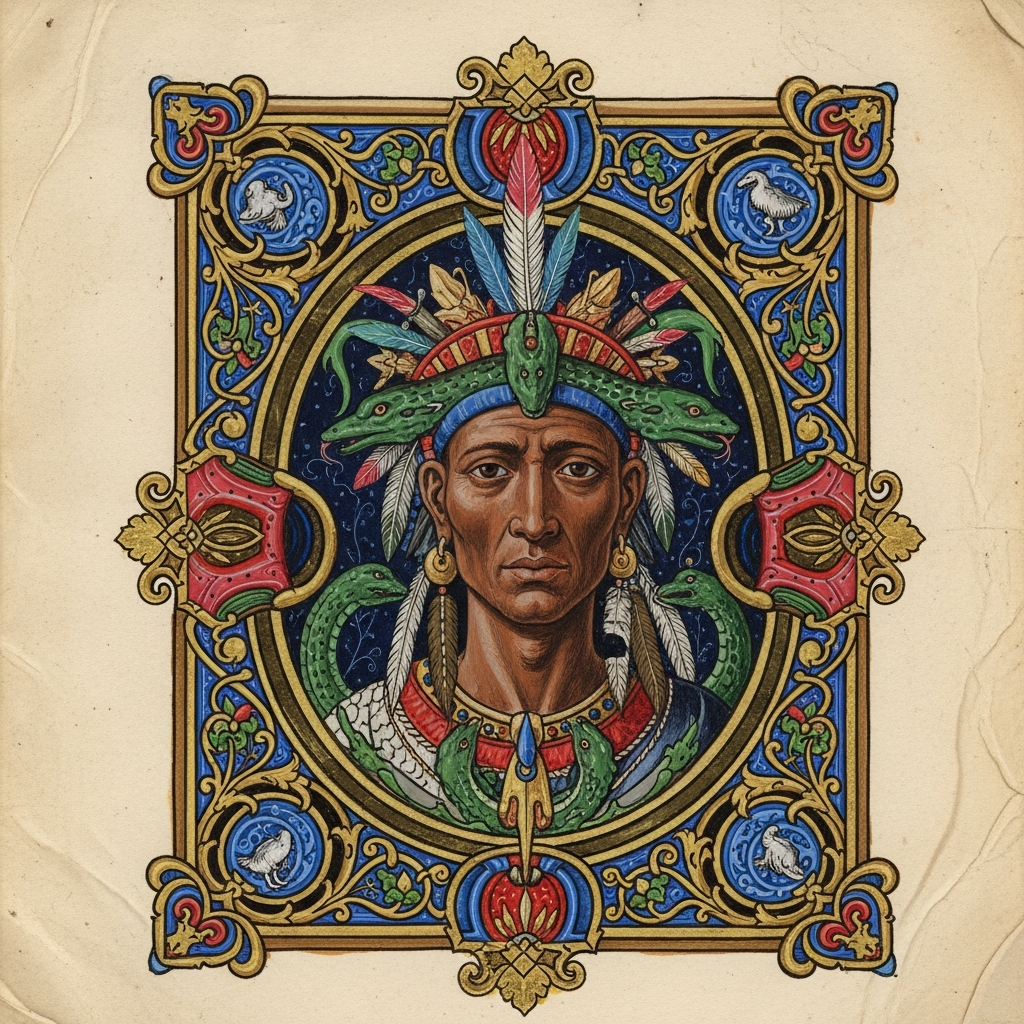
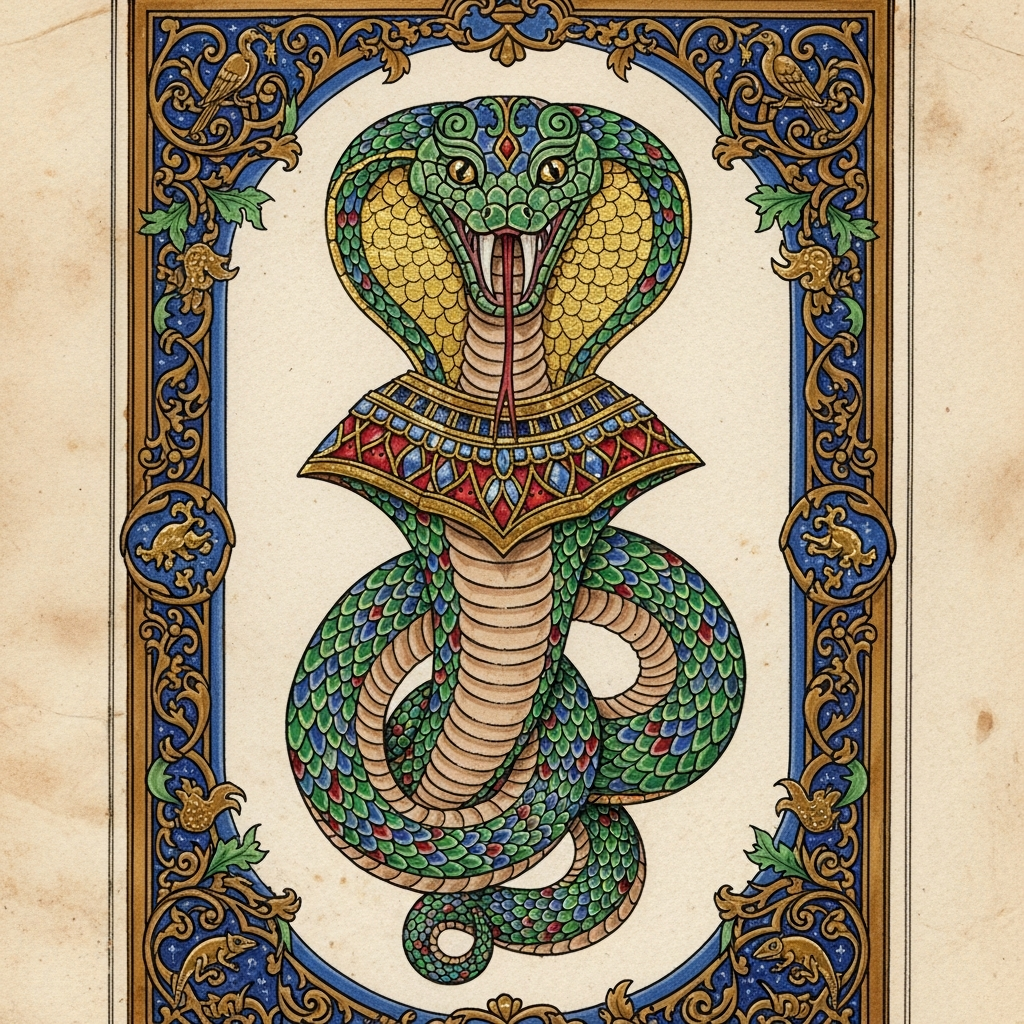
        DA["<b>DAMBALLA WEDO</b><br/>The Great Serpent<br/>Primordial creator, wisdom<br/>Oldest of the Lwa"]
    end

    subgraph LEADERS["Human Vessels of the Lwa"]
        BK["<b>DUTTY BOUKMAN</b><br/>Priest, Preacher, Revolutionary<br/>Led the ceremony, launched the revolt<br/>Killed by the French"]
        CF["<b>CÉCILE FATIMAN</b><br/>Mambo (Priestess)<br/>Channeled the Lwa at Bois Caïman<br/>Lived to 112"]
        TL["<b>TOUSSAINT LOUVERTURE</b><br/>General, Catholic, Vodou practitioner<br/>Defeated Napoleon's armies<br/>Died in French prison"]
    end

    BD -->|"Works through"| LWA
    LWA -->|"Mounted / possessed"| LEADERS
    LEADERS -->|"Invoked at"| CEREMONY
    CEREMONY -->|"Pact sworn to"| LWA
    LWA -->|"Fought alongside"| LEADERS
The Centerpiece: The Veve — Sacred Symbols of the Lwa
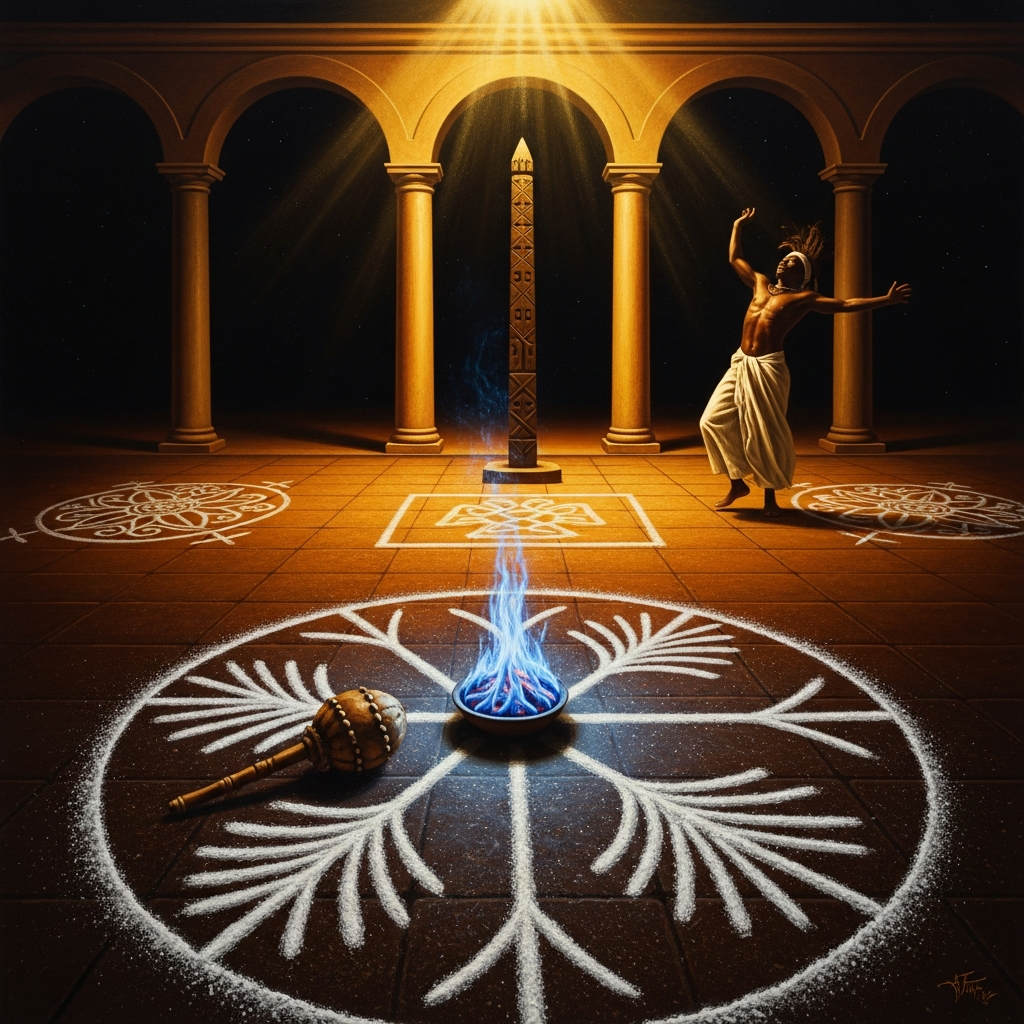
The most visually distinctive element of Haitian Vodou ceremony is the Veve (also Vèvè, plural Vevè) — the sacred geometric symbols drawn on the ground at the beginning of ceremonies to invoke and honor the Lwa. Each Lwa has a specific Veve, a unique pattern of lines, loops, curves, and symbols that is their spiritual signature. The Veve is not merely decorative — it is a contract, a formal request for the Lwa to come down and participate in the ceremony.
Example Veve structures (conceptual):

PAPA LEGBA (The Crossroads)        DAMBALLA WEDO (The Serpent)         ERZULIE FREDA (Love & Beauty)
┌─────────┐                        ╭─────────╮                         ╔═════════╗
│  †      │                        │ S S S S │                         ║  ♡ ♡ ♡ ║
│  │      │                        │ S     S │                         ║ ♡     ♡ ║
└─────────┘                        │ S     S │                         ║ ♡     ♡ ║
Vertical cross,                    │ S S S S │                         ║  ♡ ♡ ♡ ║
old man figure                     Undulating serpent coils            Heart patterns, crowns
In Vodou cosmology, drawing a Veve is a form of speech. It says: “I know your name. I know your pattern. I understand your presence. I call you now.” The Veve is written on the ground (traditionally with flour, cornmeal, ash, or chalk) at the beginning of a ceremony, and it remains present throughout the event. When a Lwa is properly invoked and descends to mount a devotee, they are often said to “arrive at their Veve” — the spirit recognizes its own symbol and enters through it.
Each Veve contains multiple elements:
- Crossroads and pathways — representing the boundaries and transitions the Lwa governs
- Sacred numbers — the specific numbers associated with each Lwa (Papa Legba = 3, Shango = 6, Erzulie Freda = 5, etc.)
- Tools and weapons — symbolic representations of the Lwa’s domain (Ogou’s machete, Damballa’s serpent coils, Erzulie’s mirror)
- Personal signatures — unique marks that make each Veve unmistakably recognizable to the Lwa themselves
| Lwa | Veve Symbol | Meaning | Colors |
|---|
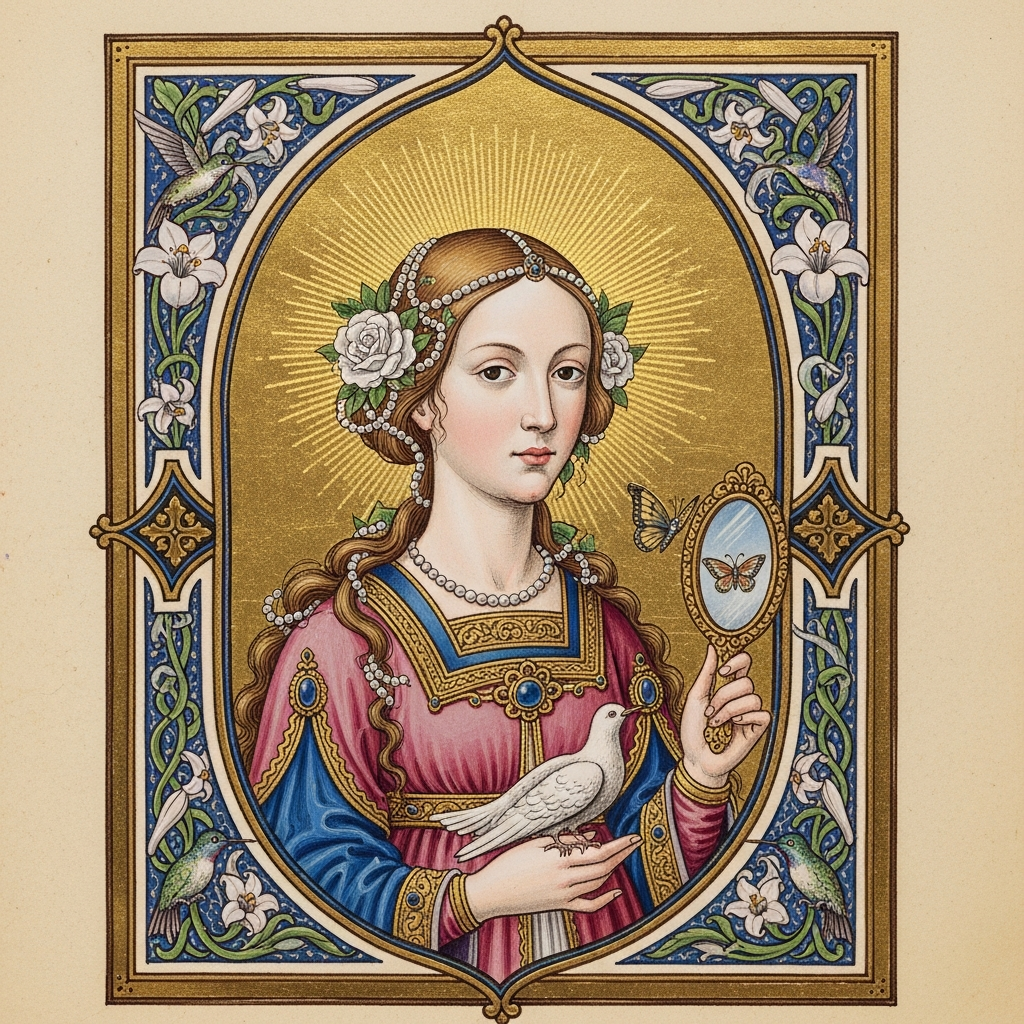
| Erzulie Freda | Heart pattern with crowns and mirrors | Love, beauty, feminine grace, the beloved | Pink, white, gold, blue |
| Erzulie Dantor | Scarred heart with crossed machetes and flame | Fierce motherhood, protection, rage, revolution | Red, black, white |
| Ogou Feray | Crossed machetes with serpent coils and flame | War, iron, fire, masculine power, the revolutionary blade | Red, black, white, gold |
| Damballa Wedo | Serpent coiling upward in spirals and loops | Creation, cosmic order, primordial wisdom, the eternal cycle | White, silver, gold |
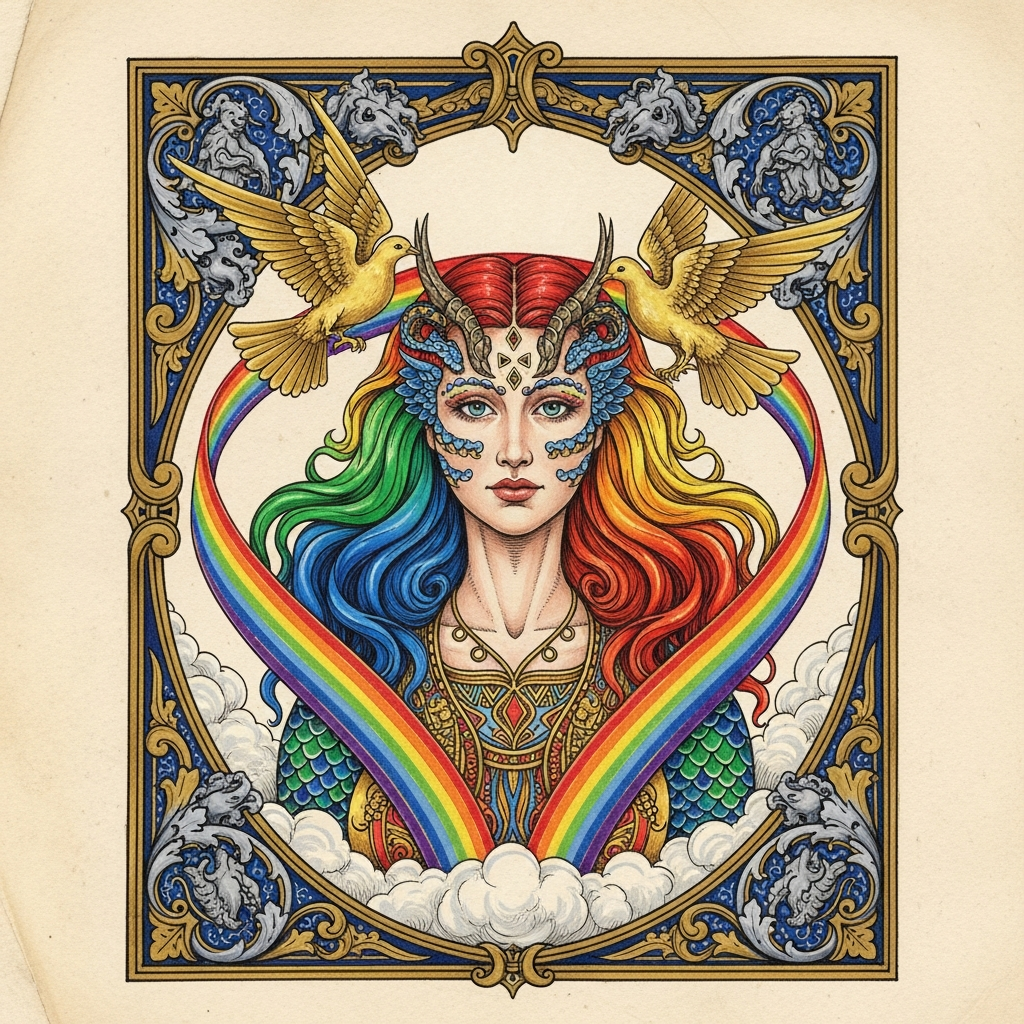
| Ayida Wedo | Serpent forming a rainbow arc with all colors | Feminine balance, grace, the beauty that completes strength | All colors of the spectrum, white |
| Simbi | Spring or fountain shape with mystical symbols | Freshwater, hidden knowledge, the threshold between worlds | Blue, white, green |
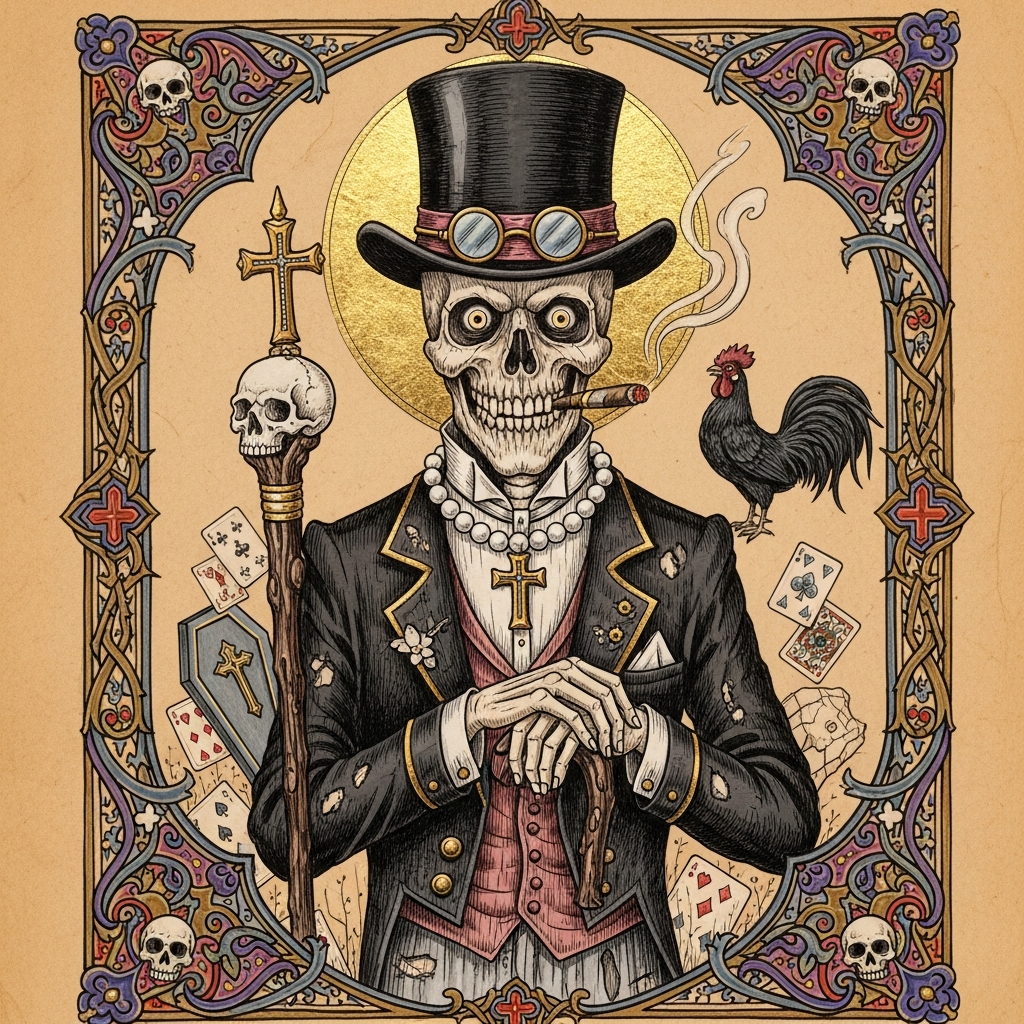
| Guede Nibo | Vertical cross with death symbols and pathways | The boundary between life and death, guidance of souls | Black, white, purple |
| Marassa Jumeaux | Twin spirals coiling together in perfect balance | Duality, wholeness, the power of two becoming one | All colors in pairs |
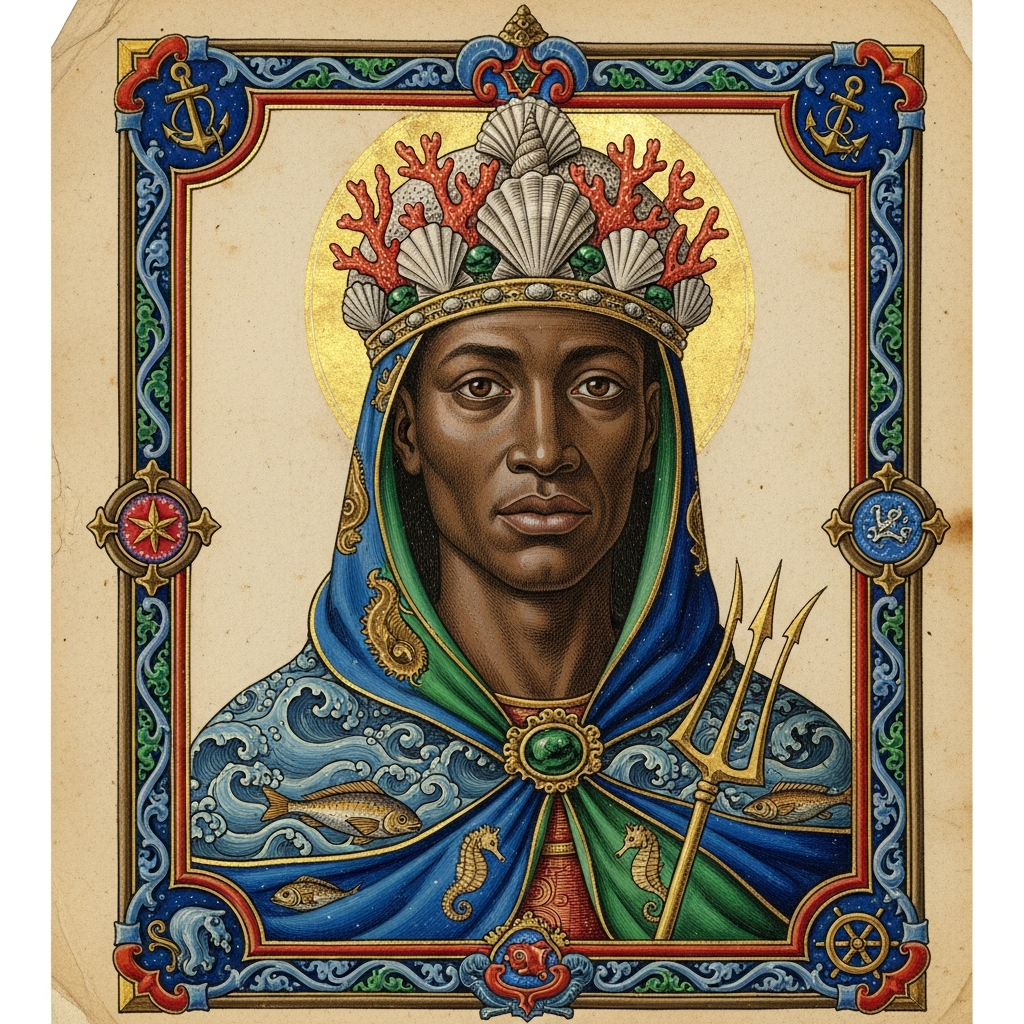
| Agwe | Ship or boat shape with water symbols and waves | The sea, safe passage, the boundary between shores | Blue, white, green, gold |
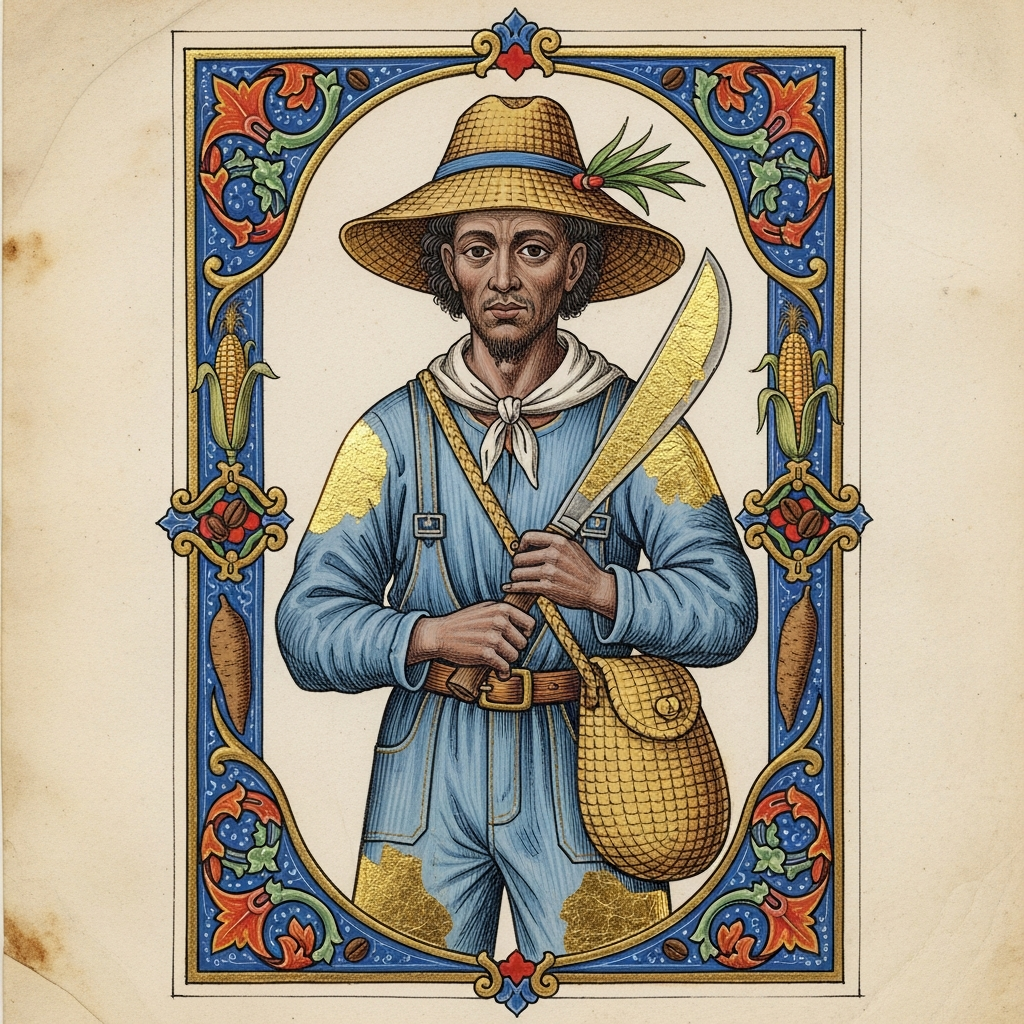
| Kouzen Zaka | Hoe, harvest symbols, crossroads of earth | Agriculture, the harvest, rural sustenance, the earth | Brown, green, red, gold |
At the opening of a Vodou ceremony (called a Fete or celebration), the Manbo or Houngan (Vodou priestess or priest) begins by drawing the Veve of Papa Legba — because Papa Legba must open the gate between worlds. Without his Veve, no other Lwa can be invoked. As the ceremony progresses, additional Veves are drawn, inviting specific spirits to come down and dance, speak, heal, and bless the community.
The Veve serves multiple functions:
- A calling card — it announces: “We are speaking your language. We understand your presence.”
- A protection — the Veve marks the sacred space where the Lwa will manifest; it creates a boundary between the ordinary and the divine
- A communication — the geometry itself carries meaning; it is a form of written speech in the language of the spirits
- A contract — to draw the Veve is to formally invite the Lwa; once drawn, the Lwa may choose to respond
The exact origins of the Veve system are debated among scholars, but they likely derive from multiple African traditions that merged in Haiti. Some scholars note similarities to:
- Fon cosmological symbols (Benin/Togo) — geometric patterns used in divination
- Kongo cosmograms (Central Africa) — cross patterns representing the cardinal directions and cosmic order
- Islamic geometric patterns — brought to West Africa through trade and visible in some Veve designs
- Catholic ecclesiastical symbols — crosses, hearts, crowns adopted through syncretism
By the 19th century, elaborate Veve systems were documented in Haiti, and by the early 20th century (recorded by Maya Deren and others), they had reached their full complexity. They are now understood as distinctly Haitian contributions to world spiritual practice — unique theological statements in geometric form.
Sources: Maya Deren, Divine Horsemen: The Living Gods of Haiti (1953); Karen McCarthy Brown, Mama Lola: A Vodou Priestess in Brooklyn (1991); Wade Davis, The Serpent and the Rainbow (1985)
The Centerpiece: Why This Matters
The Haitian Revolution is not simply a historical event to be filed alongside the American and French Revolutions. It is a theological event. It is the moment when the African spiritual traditions that had survived the Middle Passage, survived the destruction of families and languages and cultures, survived the systematic attempt to kill every trace of African religion in the New World — these traditions rose up and changed the world.
Consider what Bois Caïman represents:
The enslaved did not fight for abstract principles. The American Revolution was fought for “life, liberty, and the pursuit of happiness” — Enlightenment ideals articulated by slaveholders who excluded the enslaved from their own philosophy. The French Revolution was fought for “liberté, égalité, fraternité” — and Napoleon sent 40,000 troops to re-enslave the Haitians four years later. The Haitian Revolution was fought because the spirits commanded it. The enslaved called on their gods, and their gods answered. This is not a lesser motivation than Enlightenment philosophy. It is a more honest one.
The ceremony united people whom slavery had divided. Slaveholders deliberately mixed ethnic groups to prevent solidarity — Yoruba with Fon, Kongo with Igbo, Mandinka with Akan. They separated families, forbade shared languages, punished communal gathering. Vodou defeated this strategy. The drums, the ceremonies, the shared spiritual vocabulary of the Lwa created a community across ethnic lines. Bois Caïman was the moment that community became a nation.
The revolution’s success was understood as spiritual proof. Haiti defeated France, Spain, and Britain — the three most powerful empires in the world. Formerly enslaved people, most of whom had never held a weapon, defeated professional European armies numbering in the tens of thousands. In the Vodou understanding, this was not merely brilliant military strategy (though it was that). It was evidence that the Lwa were real, that the pact at Bois Caïman was genuine, that the spirits had kept their end of the bargain. The revolution proved the theology.
| Lwa | Catholic Saint Mask | Why This Saint Was Chosen | Significance |
|---|
| Ezili Danto | Black Madonna of Częstochowa (Mater Salvatoris) | Scarred face, dark-skinned, fierce maternal protector. The scars on the icon match the scars of Danto’s mythology | Revolutionary patron; the mother who fights |
| Ogou Feray | St. James the Greater (Santiago) | Warrior saint depicted on horseback with a sword, associated with military conquest | The divine general; spirit of armed resistance |
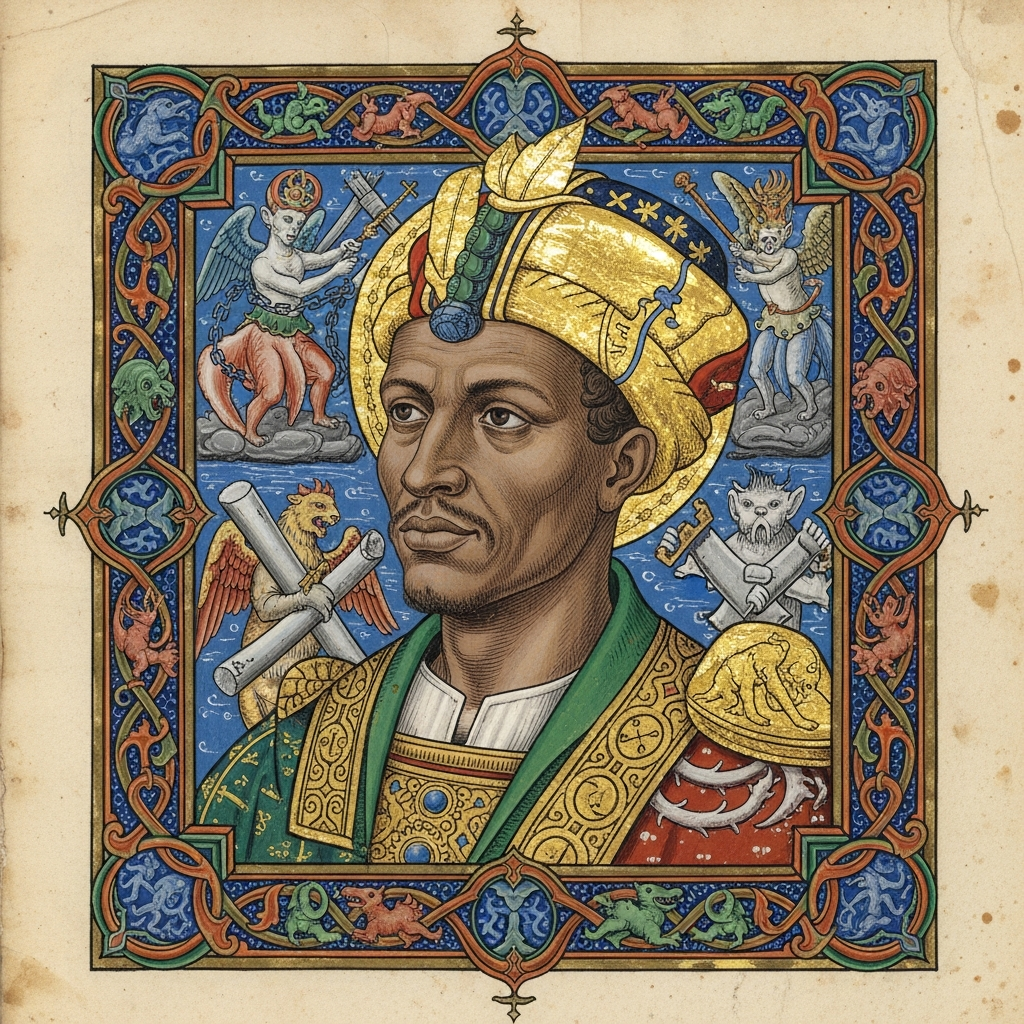
| Damballa Wedo | St. Patrick / Moses | St. Patrick is depicted with serpents; Moses lifted the bronze serpent in the wilderness (Numbers 21:8-9) | The primordial creator; cosmic wisdom |
| Papa Legba | St. Lazarus / St. Peter | Old man with a cane (Lazarus); holder of the keys to the gate (Peter) | Crossroads guardian; see Yoruba.md |
| Baron Samedi | St. Gerard | Associated with death and the boundary between life and death | Lord of the dead; see Yoruba.md |
| Maman Brigitte | St. Brigid of Ireland | Direct derivation: Brigid → Brigitte; fire, healing, the dead | Cemetery protector; see Yoruba.md |
| Ezili Freda | Our Lady of Sorrows (Mater Dolorosa) | Weeping, beautiful, associated with love and heartbreak | The gentle counterpart to Danto; love and grief |
| Agwe | St. Ulrich | Associated with fish and the sea | Lwa of the ocean; protector of those who cross water |
| Simbi | St. Charles / Moses | Associated with water, wisdom, and magic | Lwa of freshwater and mystical knowledge |
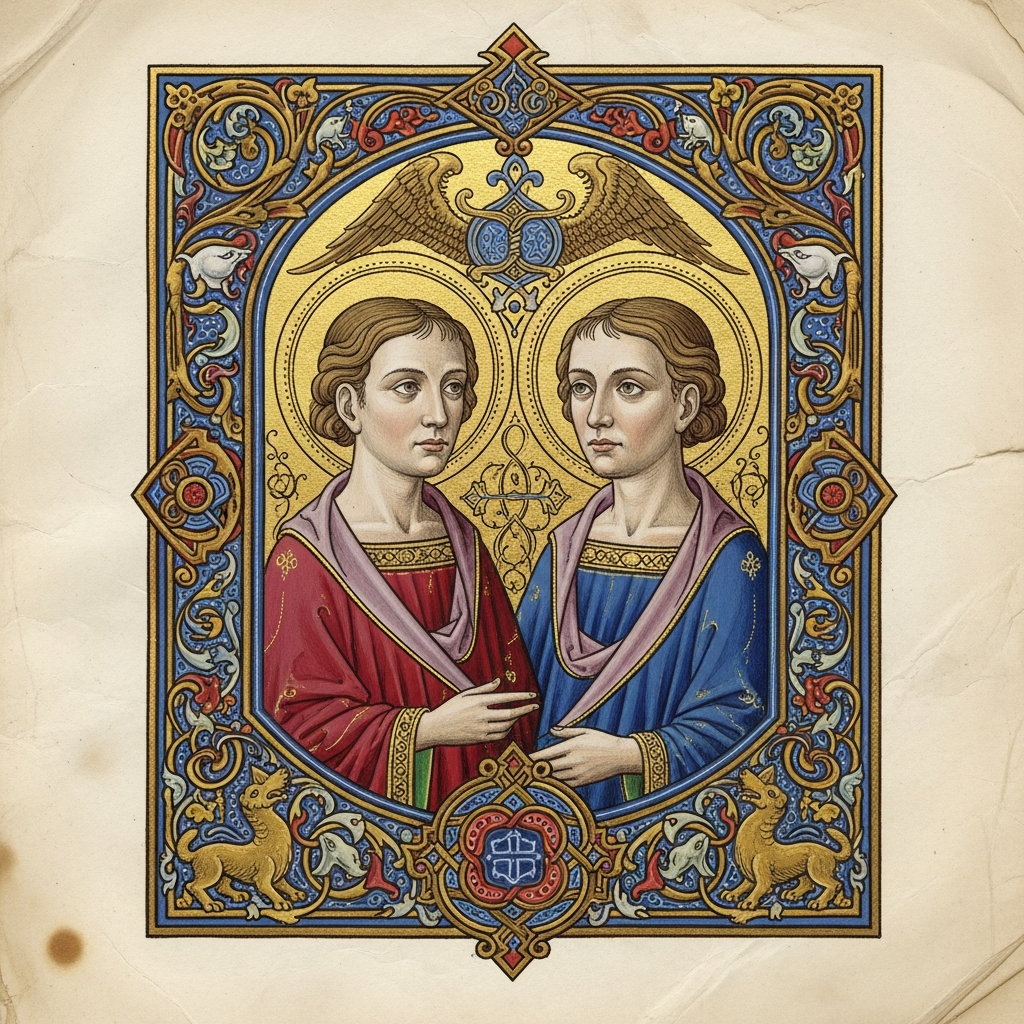
| Marasa | Sts. Cosmas and Damian | Twin saints; associated with healing and miracles | The divine twins; older than all other Lwa |
This section completes a circuit that has been running through the entire Bestiary. The Black Church lens — the understanding that the God of the oppressed liberates, that Scripture speaks with particular power to those in chains, that worship is embodied, rhythmic, ecstatic, alive — has appeared throughout this compendium. But this is where it converges with its deepest root.
The Yoruba section shows where it began: the theology of Orishas, the understanding that the divine works through intermediaries, the sacredness of rhythm and possession and community. The Haitian Vodou section shows what happened when that theology was forged in the worst possible fire and came out as revolution. And the revolution itself — the most successful slave revolt in human history, launched by a religious ceremony, sustained by spiritual power, understood by its participants as a divine act — is the ultimate proof of the compendium’s central argument: that the spiritual traditions of the oppressed are not superstition, not folk belief, not primitive religion. They are power. Real power. Power that changed the world.
The Haitian Revolution should be studied alongside the Exodus. The Bois Caïman ceremony should be studied alongside Pentecost. Toussaint Louverture should be studied alongside Moses. Cécile Fatiman should be studied alongside Deborah. And the Lwa who fought alongside the enslaved should be studied alongside Michael and his heavenly armies.
This is not metaphor. The enslaved people of Saint-Domingue understood it literally: the spirits fought beside them. And they won.
- C.L.R. James, The Black Jacobins: Toussaint L’Ouverture and the San Domingo Revolution (1938) — the foundational text on the Haitian Revolution
- Laurent Dubois, Avengers of the New World: The Story of the Haitian Revolution (2004) — the definitive modern history
- Maya Deren, Divine Horsemen: The Living Gods of Haiti (1953) — the essential text on Vodou theology and practice
- Karen McCarthy Brown, Mama Lola: A Vodou Priestess in Brooklyn (1991) — ethnography of living Vodou practice
- Alfred Métraux, Voodoo in Haiti (1959) — comprehensive scholarly treatment
- Leslie G. Desmangles, The Faces of the Gods: Vodou and Roman Catholicism in Haiti (1992) — the theological fusion of Vodou and Catholicism
- Carolyn Fick, The Making of Haiti: The Saint Domingue Revolution from Below (1990) — the revolution from the perspective of the enslaved
- Joan Dayan, Haiti, History, and the Gods (1995) — the intersection of Vodou theology and Haitian history
- David Geggus, Haitian Revolutionary Studies (2002) — critical historical analysis
- Elizabeth McAlister, Rara!: Vodou, Power, and Performance in Haiti and Its Diaspora (2002) — Vodou as living political-spiritual practice
- Milo Rigaud, Secrets of Voodoo (1969) — Vodou cosmology and ritual
- Madison Smartt Bell, Toussaint Louverture: A Biography (2007) — comprehensive biography
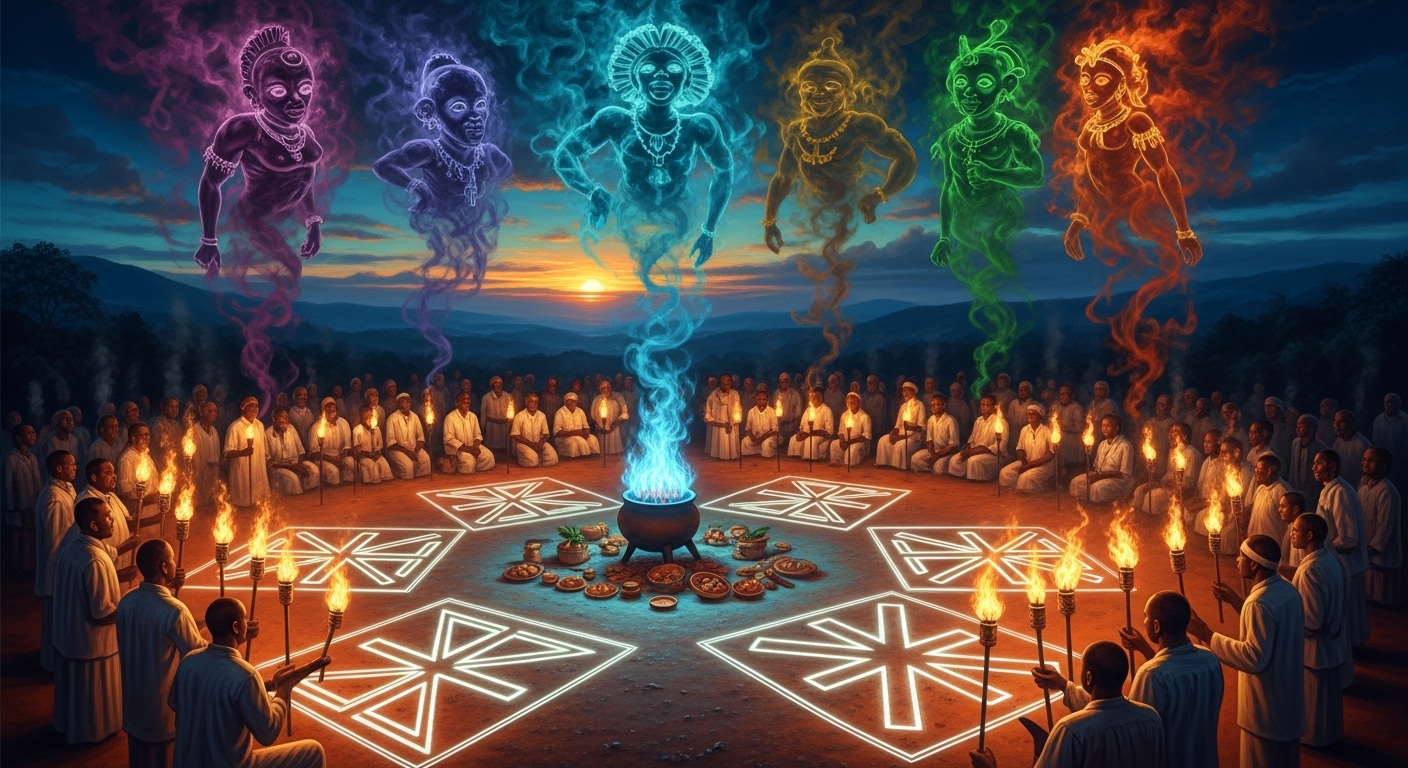
 LEGENDARY
  LEGENDARY
  MYTHIC
  LEGENDARY
  MYTHIC
  LEGENDARY
  LEGENDARY
  LEGENDARY
  MYTHIC
  LEGENDARY
  RARE
RARE 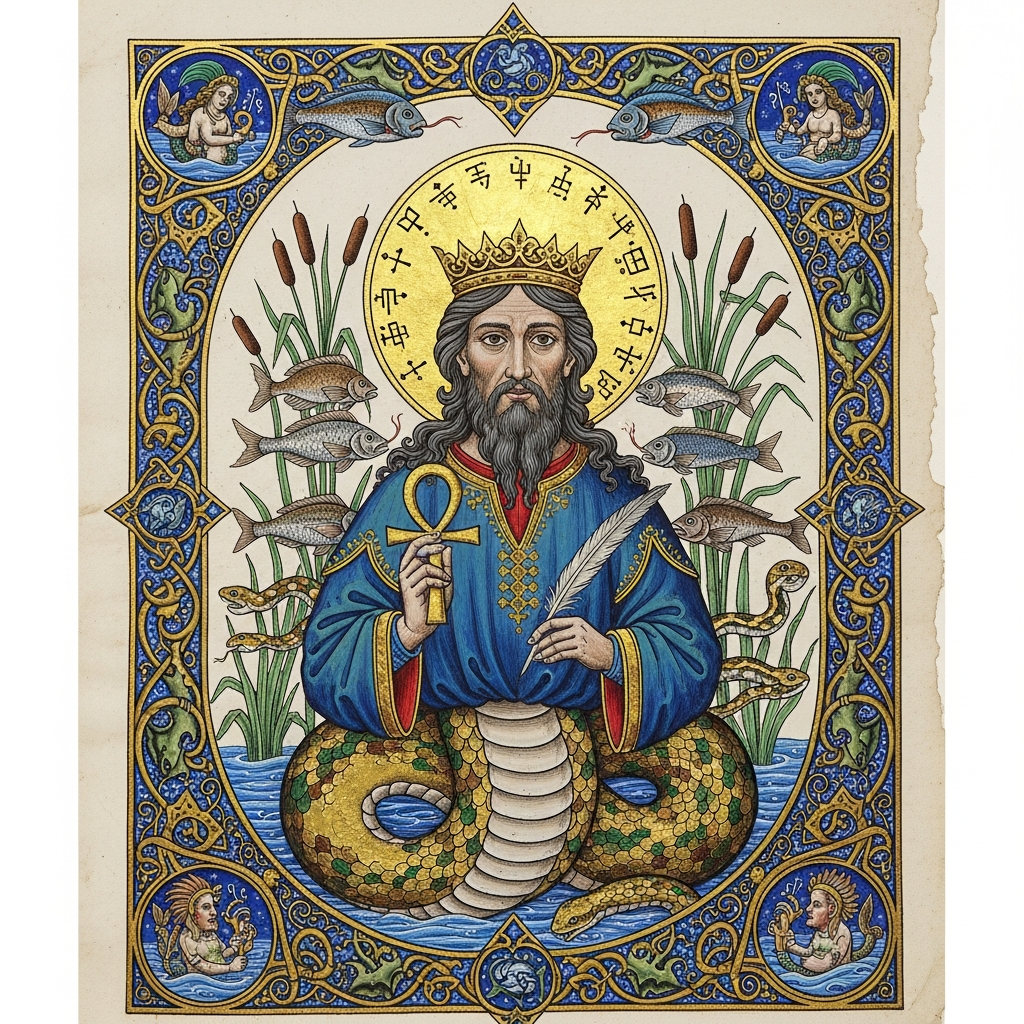 LEGENDARY