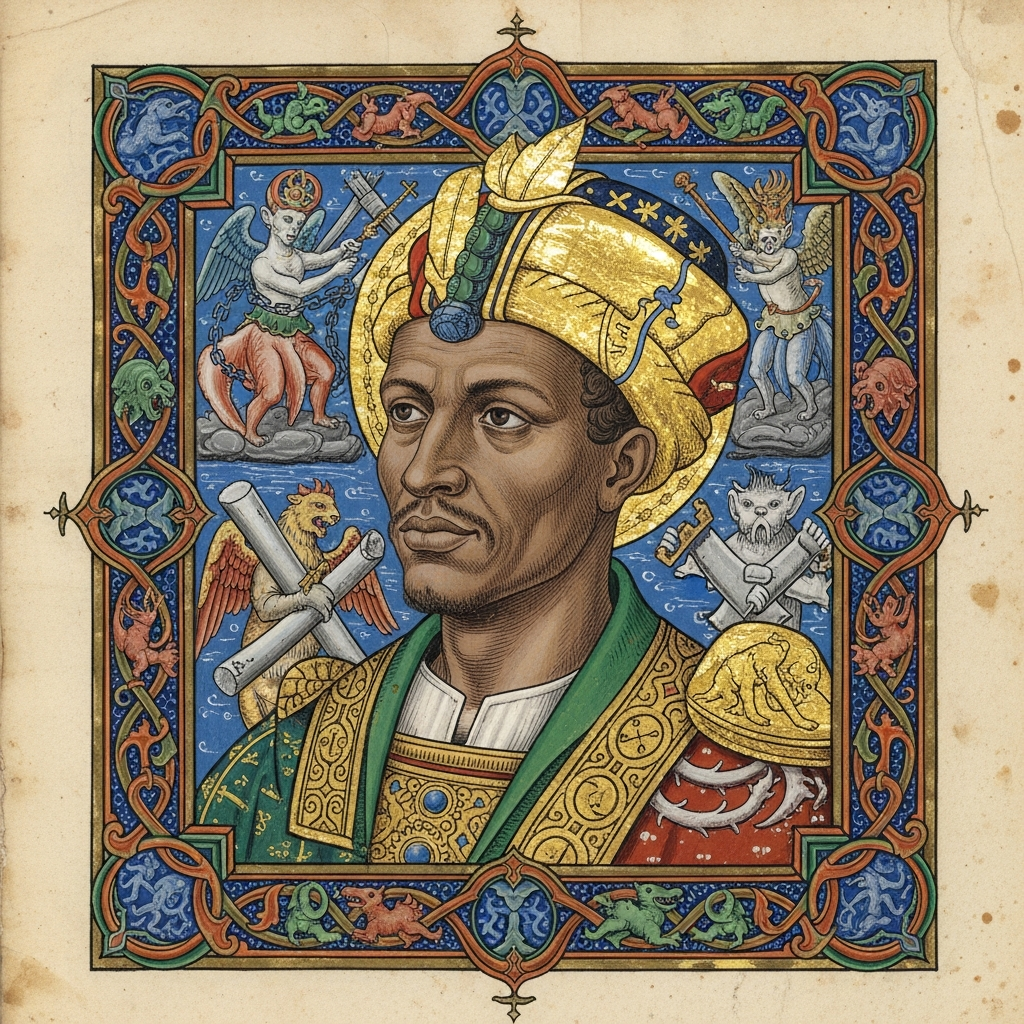
Combat Profile
Bois Caïman Covenant
Channel the collective spiritual power of enslaved peoples to inspire mass liberation and invoke ancestral intervention against oppressive forces.
Prophetic Authority
Commands absolute spiritual legitimacy among the oppressed; all followers gain enhanced resistance to domination and clarity of divine purpose.
Mortality. Boukman was killed in November 1791, just three months after the ceremony. The French decapitated him and displayed his head on a pole in Cap-Français, believing this would break the revolt's spirit. It did the opposite -- his martyrdom made him a Lwa in the Vodou tradition
“Listen to the voice for liberty that sings in all our hearts.” — Boukman’s prayer at Bois Caïman
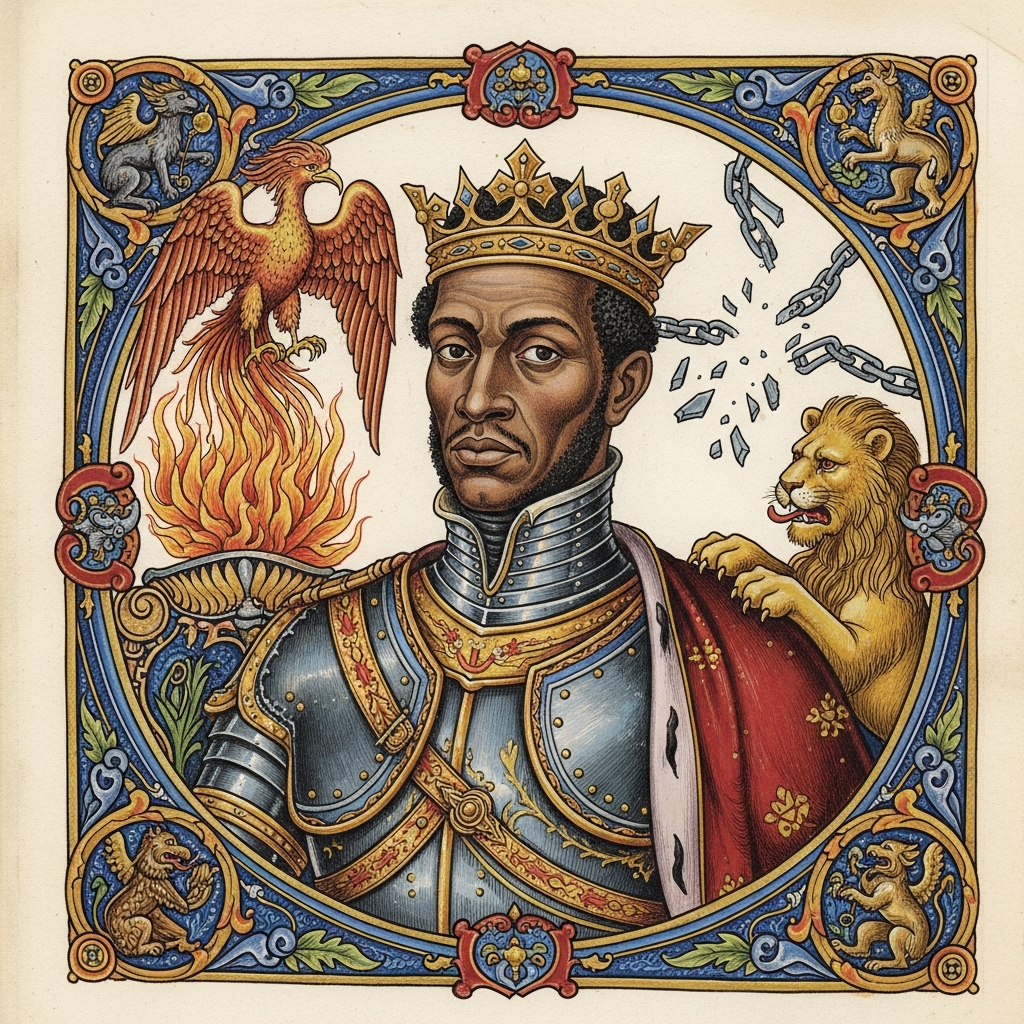
Lore: Dutty Boukman (also Bookman, Boukmann) was an enslaved man, likely of Jamaican origin (some historians believe “Boukman” derives from “Book Man,” suggesting literacy, possibly in Arabic — he may have been Muslim before his enslavement). He was a coachman on the Turpin plantation and a Vodou priest (houngan) who had earned enormous respect among the enslaved population of the northern plain. His role at Bois Caïman was that of the preacher — the voice of prophetic authority who transformed a religious ceremony into a revolutionary covenant (oral tradition; Bois Caïman, Aug 14 1791). His prayer, delivered during the storm-lashed ceremony, is remarkable for its theological sophistication. It does not reject God — it rejects the slaveholders’ claim to God. It draws a sharp distinction between the god who sanctions slavery (“the white man’s god”) and the God who demands justice (“the God within us”). This is liberation theology a full century and a half before Gustavo Gutierrez, James Cone, or any academic gave it a name. Boukman was killed in battle in November 1791, three months after the ceremony (James, The Black Jacobins, 1938). The French colonial authorities cut off his head and displayed it on a pike in the central square of Cap-Français with a sign reading: “This is the head of Boukman, chief of the rebels.” They believed that destroying the leader would destroy the movement. They were wrong. The revolution had already passed beyond any single leader. But in Vodou tradition, Boukman did not die — he became a Lwa, a spirit who continues to fight for liberation. His head, separated from his body, became a symbol: the colonizers could not kill what he represented even by killing him.
Parallel: Moses. The comparison is inescapable and precise. Both were leaders of enslaved people. Both received divine mandate to demand freedom. Both launched a liberation movement that would transform the world. Both called on God in the hearing of the people and received an answer. Moses said to Pharaoh, “Let my people go” (Exodus 5:1); Boukman said to the enslaved, “Our God orders us to revenge our wrongs.” Moses did not live to enter the Promised Land; Boukman did not live to see Haitian independence. But both lit fires that could not be extinguished. Boukman also parallels John the Baptist — the prophet who prepared the way for the one who came after (Toussaint Louverture), the voice crying in the wilderness, the head displayed on a platter (Matthew 14:8-11). And he parallels Spartacus — the enslaved man who led a revolt against the most powerful empire of his age. But Spartacus failed. Boukman’s revolution succeeded.
2 min read
French military force could kill his body but not what he had unleashed. His prayer outlived every slaveholder who heard it
C.L.R. James, *The Black Jacobins* (1938); Laurent Dubois, *Avengers of the New World* (2004); David Geggus, *Haitian Revolutionary Studies* (2002)