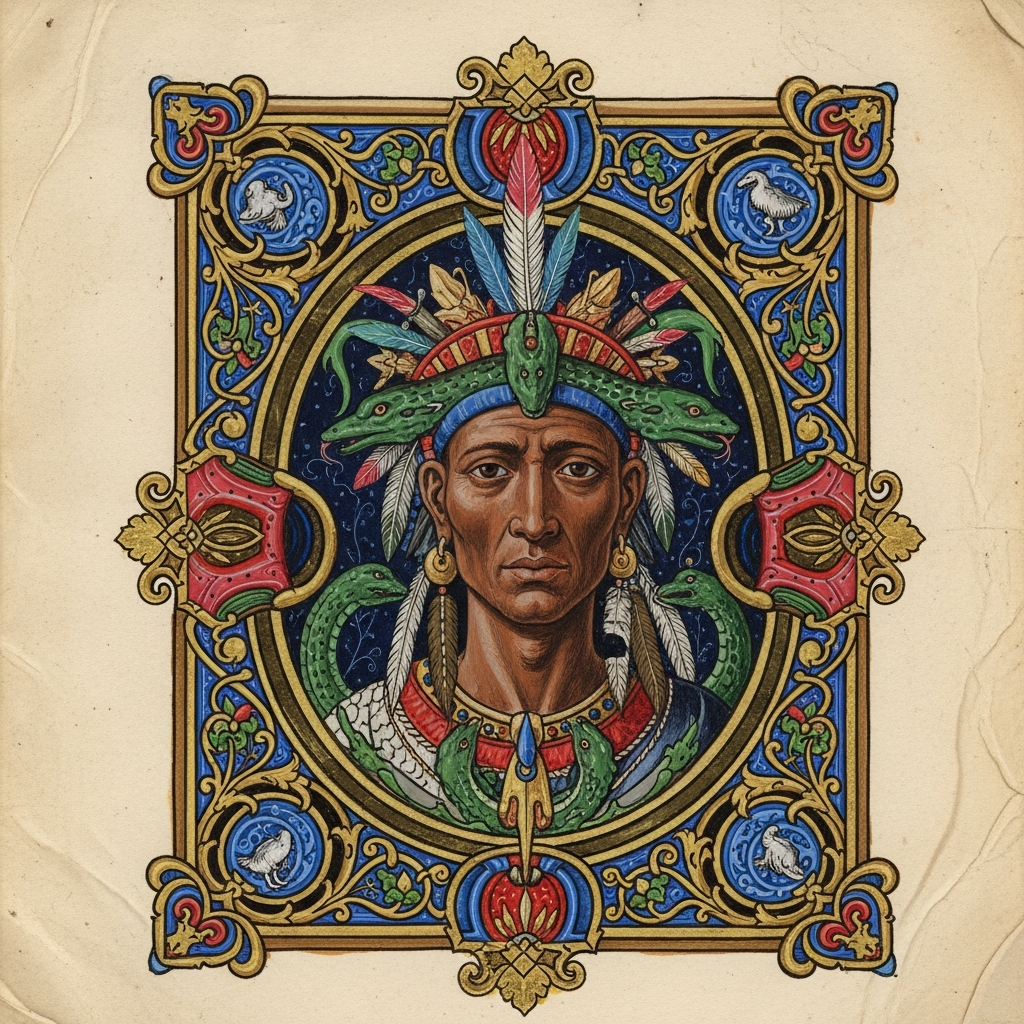
Combat Profile
Covenant of Bois Caïman
All oppressed souls bound in collective oath gain divine mandate and spiritual fortitude to break chains of bondage
Revolutionary Mandate
Presence amplifies collective will to resistance and sanctifies the liberation struggle with ancestral authority
None. This is not an entity but a moment -- the hinge of history. Its "weakness" is that it was nearly erased: French colonial historians dismissed it as superstition, and Haitian elites later downplayed it to appear "respectable" to the West
“The God who created the earth; who created the sun that gives us light. The God who holds up the ocean; who makes the thunder roar. Our God who has ears to hear. You who are hidden in the clouds; who watch us from where you are. You see all that the white has made us suffer. The white man’s god asks him to commit crimes. But the God within us wants to do good. Our God, who is so good, so just, He orders us to revenge our wrongs. It is He who will direct our arms and bring us the victory. It is He who will assist us. We all should throw away the image of the white men’s god who is so pitiless. Listen to the voice for liberty that sings in all our hearts.” — Boukman’s prayer at Bois Caïman (oral tradition, multiple recorded versions)
Lore: Bois Caïman (the “Alligator Woods”) is the single most important event in the history of Haitian Vodou and one of the most important events in modern history, period. On the night of August 14, 1791, during a tropical storm — thunder, lightning, rain tearing through the canopy — hundreds of enslaved Africans from the sugar and coffee plantations of the northern plain gathered in a forest clearing above the plantation of Lenormand de Mézy. They came from dozens of different ethnic groups — Yoruba, Fon, Kongo, Igbo, Mandinka — people who had been deliberately mixed by slaveholders to prevent solidarity. But Vodou had given them a common spiritual language. The drums had carried messages between plantations. The ceremony was the culmination of months of planning.
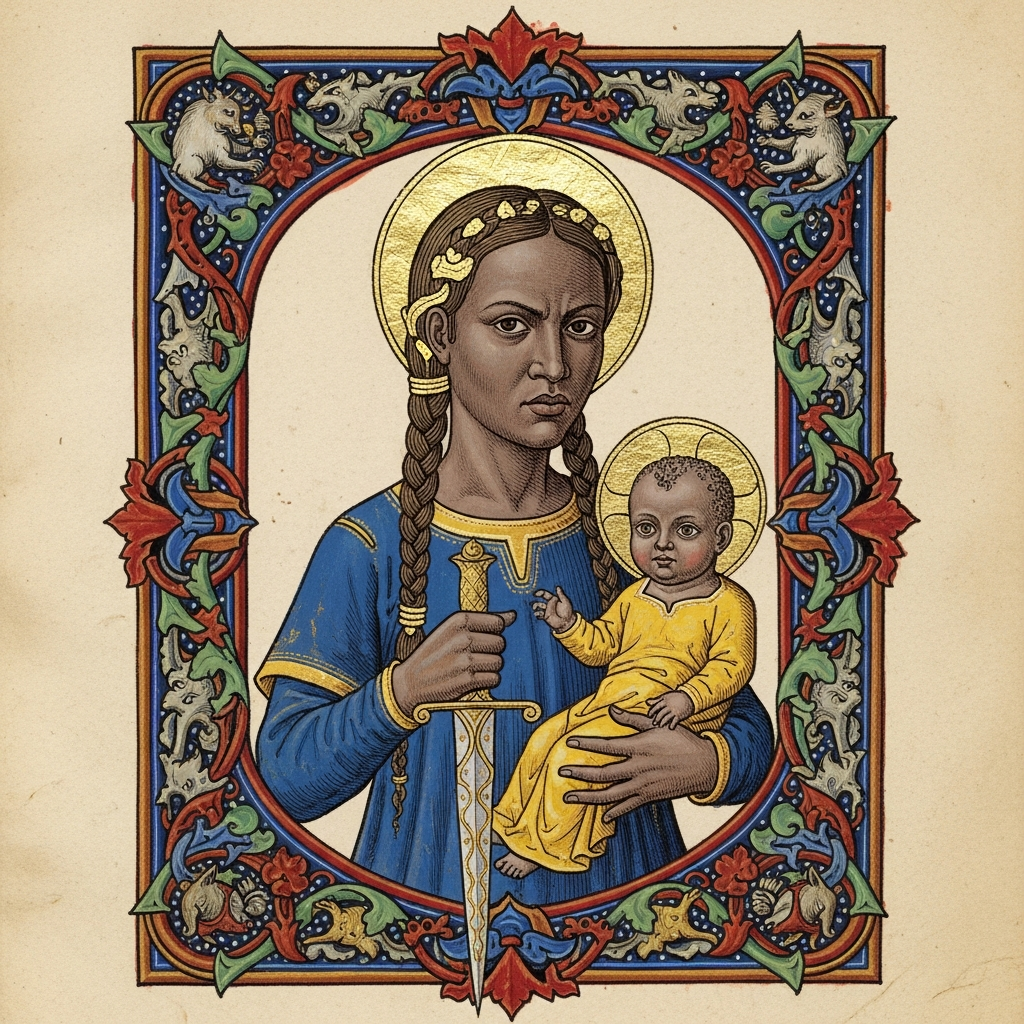
Cécile Fatiman, a young mambo of mixed heritage (her mother was African, her father a Corsican plantation owner), was mounted by a Lwa — tradition identifies the spirit as Ezili Danto, the fierce mother, the scarred warrior who fights for the defenseless (oral tradition; Bois Caïman, Aug 14 1791). Fatiman danced, channeled, spoke with the voice of the spirit. Then Boukman preached. His prayer — preserved in oral tradition, with variations across tellings — is one of the most powerful theological documents of the 18th century. It rejects the slaveholders’ God (“the white man’s god asks him to commit crimes”) while affirming a God of justice who demands liberation. It is simultaneously African and biblical, Vodou and prophetic Christianity, a prayer and a declaration of war.
A black pig was sacrificed — the pig being sacred in Vodou as an offering to the Petwo Lwa, the fierce, hot spirits associated with fire, war, and liberation (as opposed to the cooler, gentler Rada Lwa). Its blood was mixed with gunpowder and rum. Each person present drank from the mixture and swore an oath: to fight, to die if necessary, to accept no compromise short of freedom. This was not symbolic. This was a blood covenant with the spirits.
On August 22, 1791 — eight days later — the revolution began (Dubois, Avengers of the New World, 2004). The enslaved workers of the northern plain rose simultaneously. Over 1,000 plantations were burned in the first weeks. The French lost control of the countryside immediately. What followed was thirteen years of the most extraordinary warfare in modern history: formerly enslaved people defeating, in succession, the local French colonial forces, a Spanish invasion, a British expeditionary force of 20,000, and finally Napoleon’s army of 40,000 — the largest military force ever sent to the Western hemisphere at that time (James, The Black Jacobins, 1938). On January 1, 1804, Haiti declared independence.
Parallel: There is no exact parallel because no other revolution began this way. But the structural parallels are unmistakable. The Exodus: an enslaved people calling on their God, receiving divine mandate, and marching to freedom through impossible odds (Exodus 14). The covenant at Sinai: a community making a binding pact with the divine that transforms them from a scattered group into a nation (Exodus 19-24). Gideon’s torch-and-trumpet assault: a small, outmatched force defeating a vast army through divine strategy and spiritual courage (Judges 7). The Day of Pentecost: the Spirit falling on a gathered community, giving them a shared language and a shared mission that changes the world (Acts 2). Bois Caïman is all of these simultaneously — Exodus, Sinai, Pentecost, and Armageddon compressed into a single night in a forest clearing during a thunderstorm.
3 min read
Nothing countered this ceremony. Every force of the most powerful empire in the Caribbean was brought against what it unleashed, and every force failed
Laurent Dubois, *Avengers of the New World: The Story of the Haitian Revolution* (2004); C.L.R. James, *The Black Jacobins* (1938); Carolyn Fick, *The Making of Haiti: The Saint Domingue Revolution from Below* (1990)