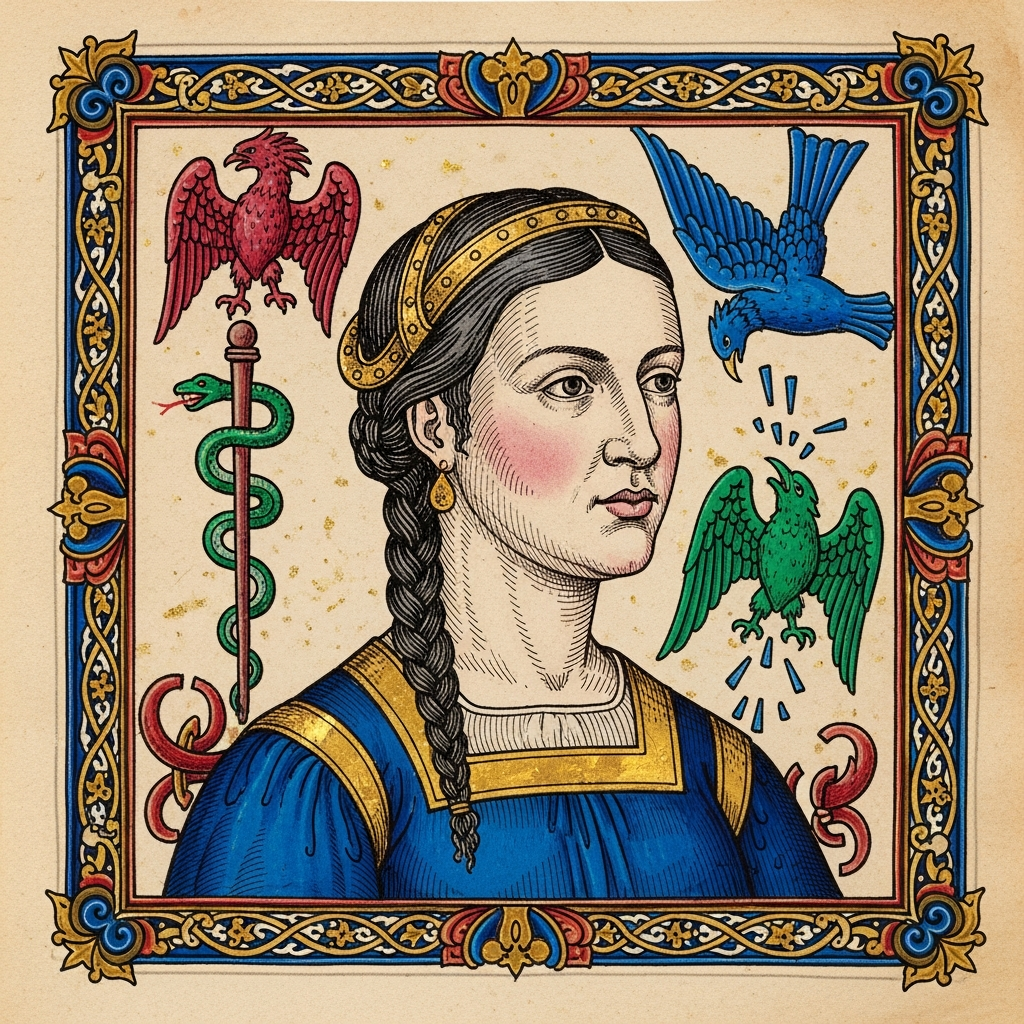
Combat Profile
Spiritual Conduit
channels lwa (divine spirits) to manifest their will directly, overwhelming opposition with ancestral power and divine guidance.
Prophecy's Anchor
all divinations and spirit communications gain clarity and certainty; allies within her spiritual circle gain resistance to manipulation and false visions.
History nearly erased her. Male historians -- both French colonial and Haitian nationalist -- frequently minimized her role or left her out entirely. She survived the revolution but was written out of much of its official history. She persisted anyway
“She danced. The spirit came down. And the spirit spoke through her mouth the words that set us free.” — Haitian oral tradition
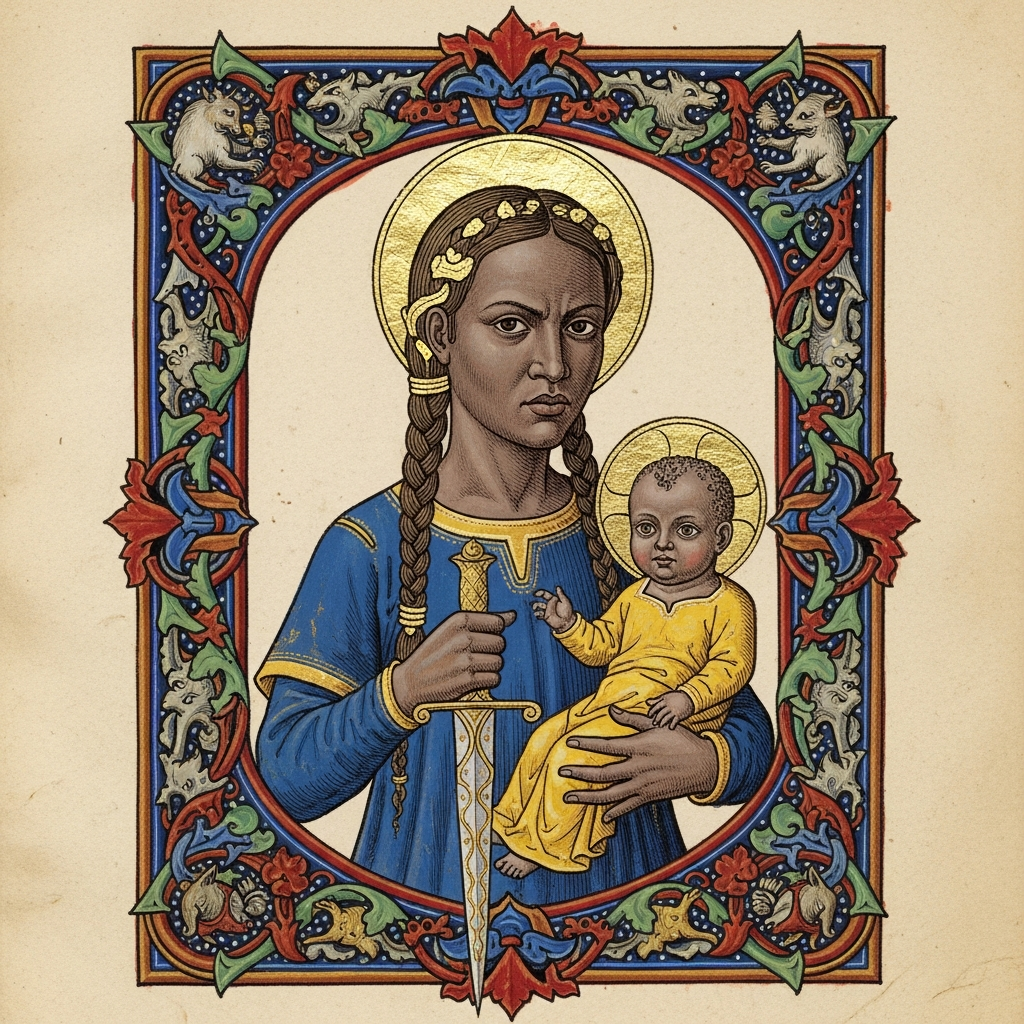
Lore: Cécile Fatiman is one of the most remarkable and most overlooked figures in revolutionary history. She was a young woman of mixed heritage — her mother was an enslaved African, her father a Corsican plantation owner — and she was a mambo, an initiated Vodou priestess. At the Bois Caïman ceremony, Fatiman was the spiritual officiant: she performed the rites, sacrificed the pig, and most critically, she was mounted by a Lwa — possessed by a spirit who spoke and acted through her body. In Vodou theology, spirit possession is not madness or performance. It is the Lwa literally entering the human body, displacing the individual consciousness, and speaking directly to the community. The tradition holds that the Lwa who mounted Fatiman was Ezili Danto — the fierce mother, the scarred warrior, the protector of the oppressed. If this identification is accurate, then it was not Fatiman who launched the revolution but the spirit itself, using Fatiman as its instrument.
This is a critical theological point. In the Vodou understanding of Bois Caïman, the revolution was not merely planned by humans — it was commanded by the divine. The Lwa themselves decided that the time had come. Fatiman was the vessel through which that divine decision entered the human world. Her role was not passive — it takes years of training, discipline, and spiritual development to safely receive a Lwa of Ezili Danto’s power — but it was fundamentally different from Boukman’s. He was the prophet who spoke God’s word. She was the body through which God spoke directly.
Fatiman survived the revolution — a remarkable fact given that most of the early leaders were killed. She married Jean-Louis Michel Pierrot, a general in the revolutionary army who later became President of Haiti (1845-1846). She lived to approximately 112 years of age, dying around 1883, nearly a century after the ceremony she had anchored. Her extraordinary longevity was understood in Vodou tradition as evidence of the Lwa’s protection: the spirits do not allow their chosen vessels to be taken easily.
Parallel: Deborah, the judge-prophetess who launched a military campaign against Sisera’s armies (Judges 4-5). Like Fatiman, Deborah was the woman whose spiritual authority catalyzed military action by men. Deborah told Barak to attack; Fatiman channeled the Lwa who told the enslaved to revolt. Both women were the indispensable spiritual catalyst without whom the military campaign would not have begun. Fatiman also parallels Miriam, Moses’ sister — the prophetess who led the women in song and dance after the crossing of the Red Sea (Exodus 15:20-21), the one who channeled the community’s joy and spiritual power at the moment of liberation. And she parallels the Oracle at Delphi — the Pythia who channeled Apollo and whose pronouncements launched wars, founded colonies, and changed the course of Greek history. The pattern is consistent: at the most critical moments, the divine chooses to speak through women.
2 min read
No spiritual force countered her. Her channeling of the Lwa at Bois Caïman was so powerful that tradition holds the spirit itself launched the revolution through her body
Laurent Dubois, *Avengers of the New World* (2004); Joan Dayan, *Haiti, History, and the Gods* (1995); Milo Rigaud, *Secrets of Voodoo* (1969)