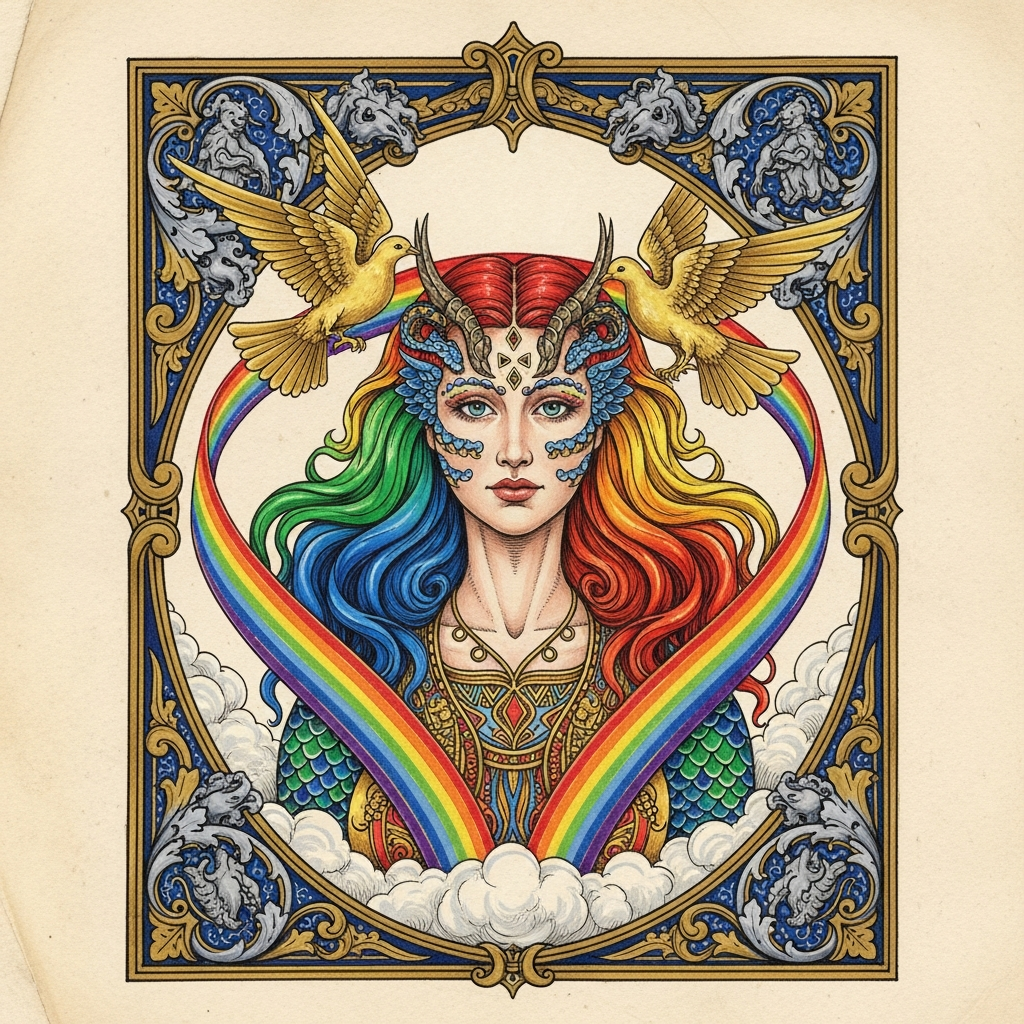
Combat Profile
Rainbow Bridge
Ayida Wedo creates harmonious passages between realms, granting her followers safe passage through spiritual and material boundaries.
Divine Grace
her presence radiates beauty and balance, naturally inspiring flexibility of mind and body in all who encounter her essence.
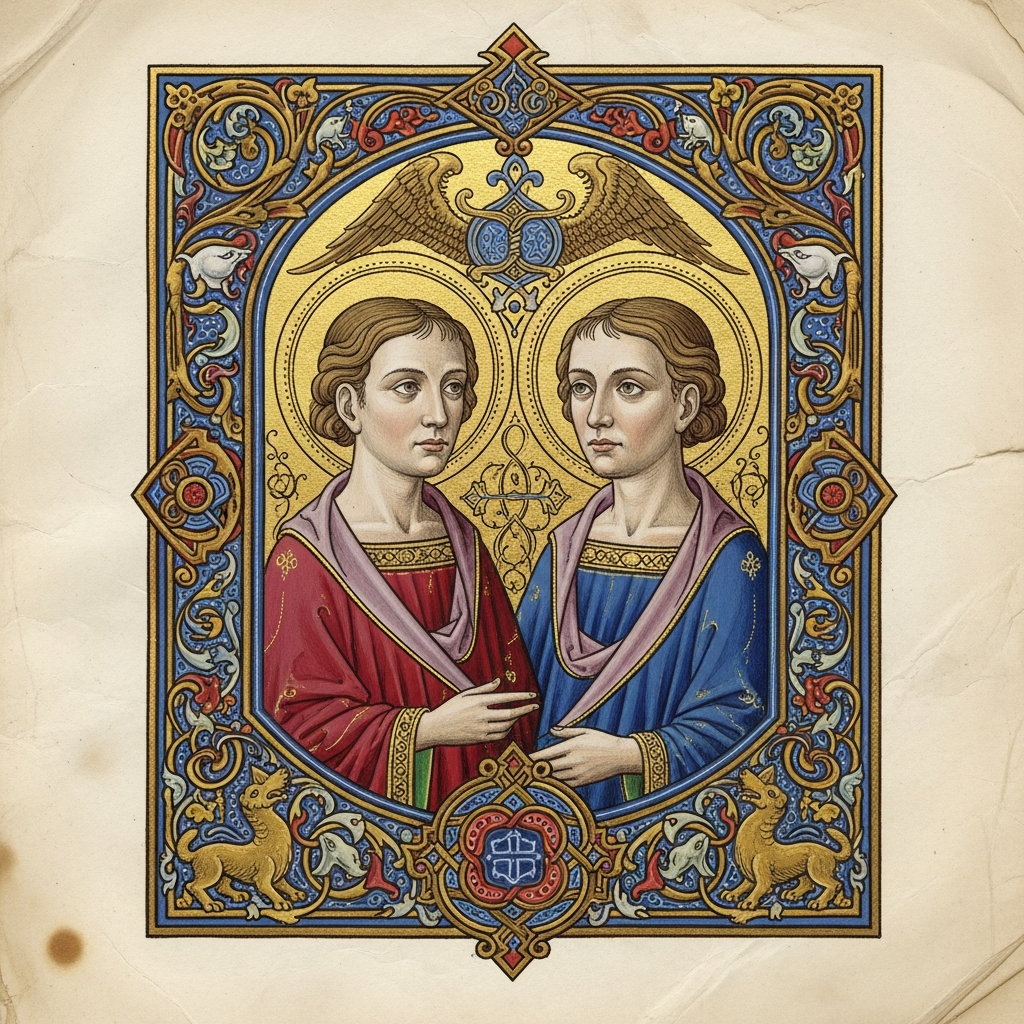
She is inseparable from Damballa. Where he goes, she follows. Where she is, he is near. To invoke one is to invoke both. Her beauty can be fragile -- the rainbow only appears in specific conditions
“Damballa moves, and the earth trembles. Ayida smiles, and the rainbow appears. Without his strength, she has no arch. Without her beauty, his power is merely destruction.” — Vodou tradition
Lore: Ayida Wedo (also Aida Wedo, Aidha) is the divine wife of Damballa, the rainbow to his serpent, the grace to his power, the feminine principle that balances masculine creation. Where Damballa is primordial and wordless, Ayida brings order and beauty. Where he moves through the void, she creates visible form. She is depicted as a white serpent with a golden head, adorned with gold jewelry and associated with the color white and all colors simultaneously.
When Damballa and Ayida are both present in a ceremony (which happens rarely, because they are ancient beyond measure and choose carefully where to appear), the experience is described as witnessing the foundations of reality itself. Damballa undulates on the ground as a serpent; Ayida dances and spirals, and together they coil around each other in a pattern that devotees say mirrors the DNA helix, the cosmic spiral, the shape of galaxies and hurricanes and flowing water — the fundamental template of all life.
Parallel: Shiva and Shakti in Hindu philosophy — masculine and feminine as inseparable complements, neither complete without the other. Yin and Yang in Taoism — the dark and light serpents coiling around each other in eternal balance. The Kabbalah’s Chokmah (masculine wisdom) and Binah (feminine understanding) — the first differentiation of the infinite into the dialectic of creation. In Christian mysticism, the Song of Songs — the beloved and the lover seeking each other eternally. The cosmic dance of Nataraja.
1 min read
Nothing opposes her. She is the complement, the balance, the necessary feminine grace. She teaches that strength without flexibility breaks, and flexibility without strength scatters
Maya Deren, *Divine Horsemen: The Living Gods of Haiti* (1953); Karen McCarthy Brown, *Mama Lola: A Vodou Priestess in Brooklyn* (1991); Wade Davis, *The Serpent and the Rainbow* (1985)