The Story
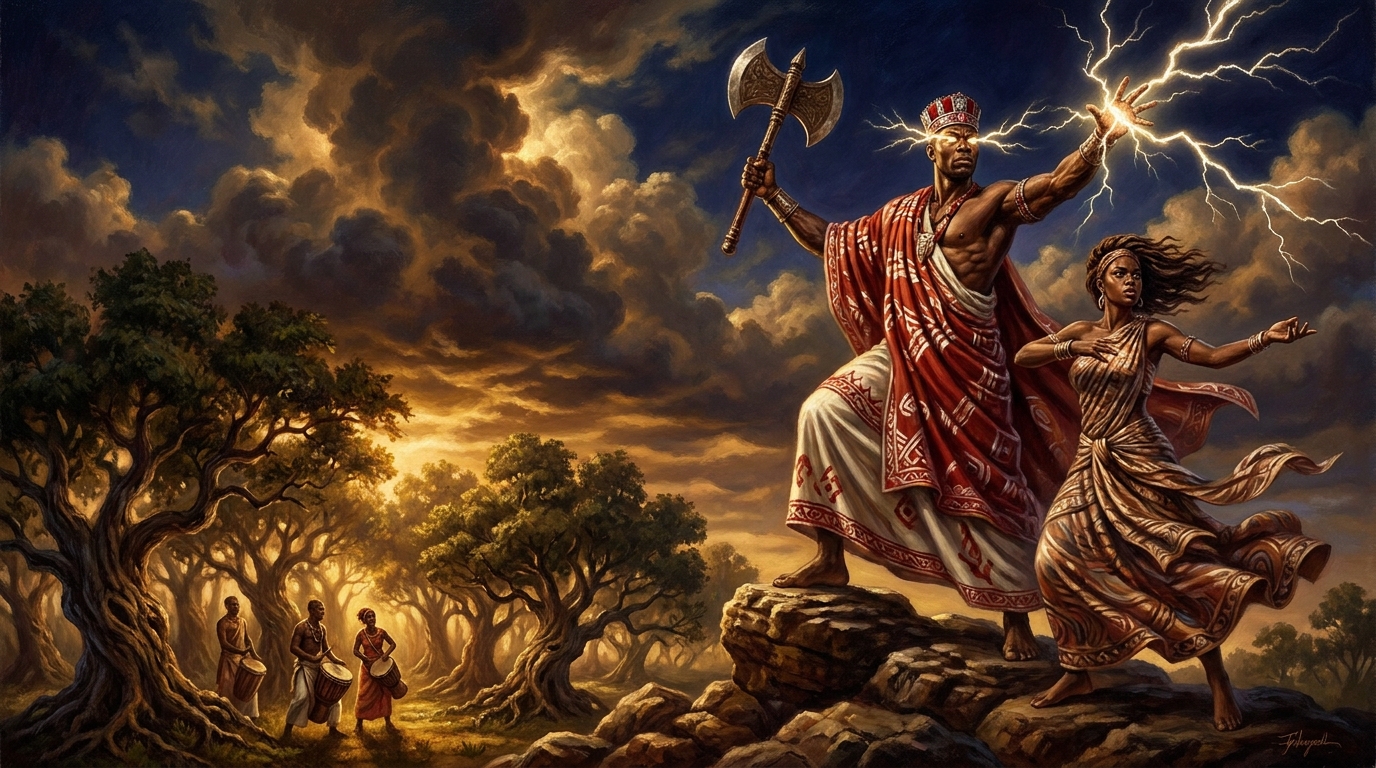
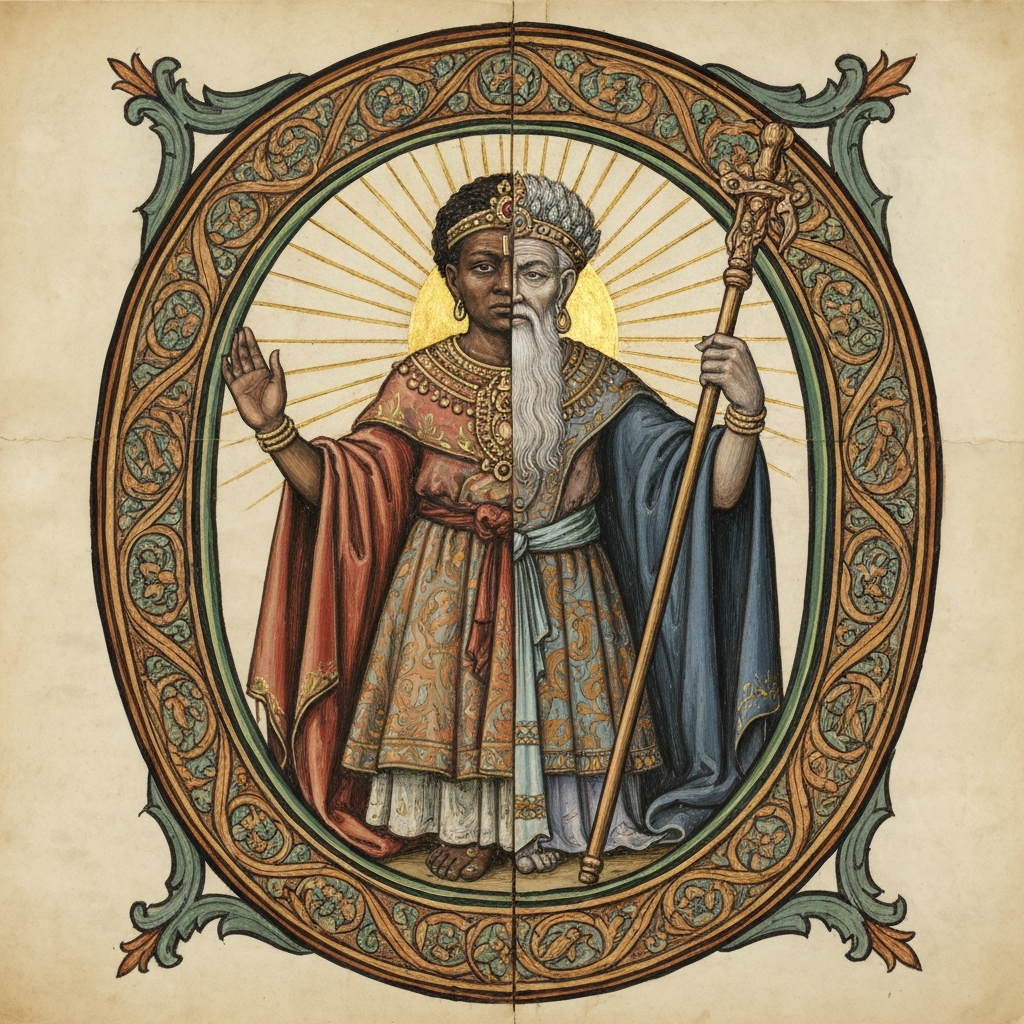
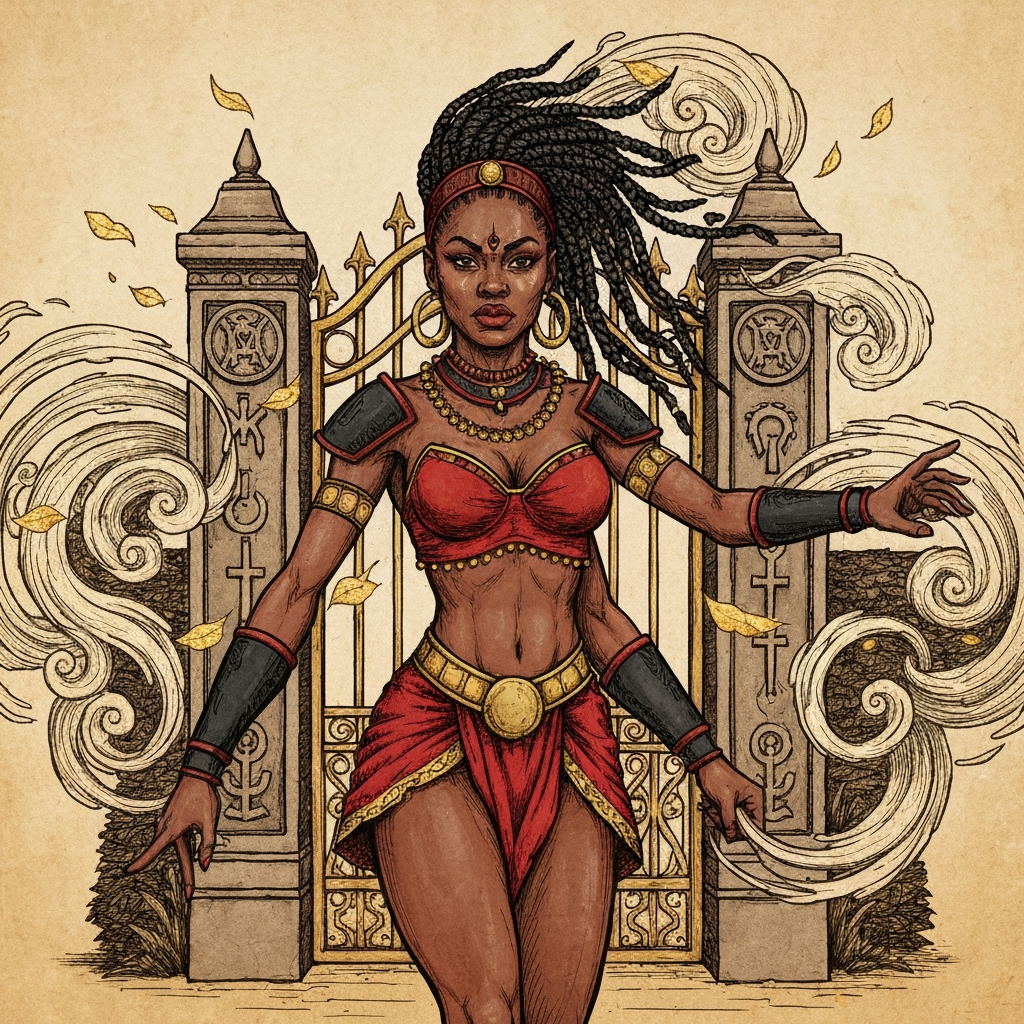
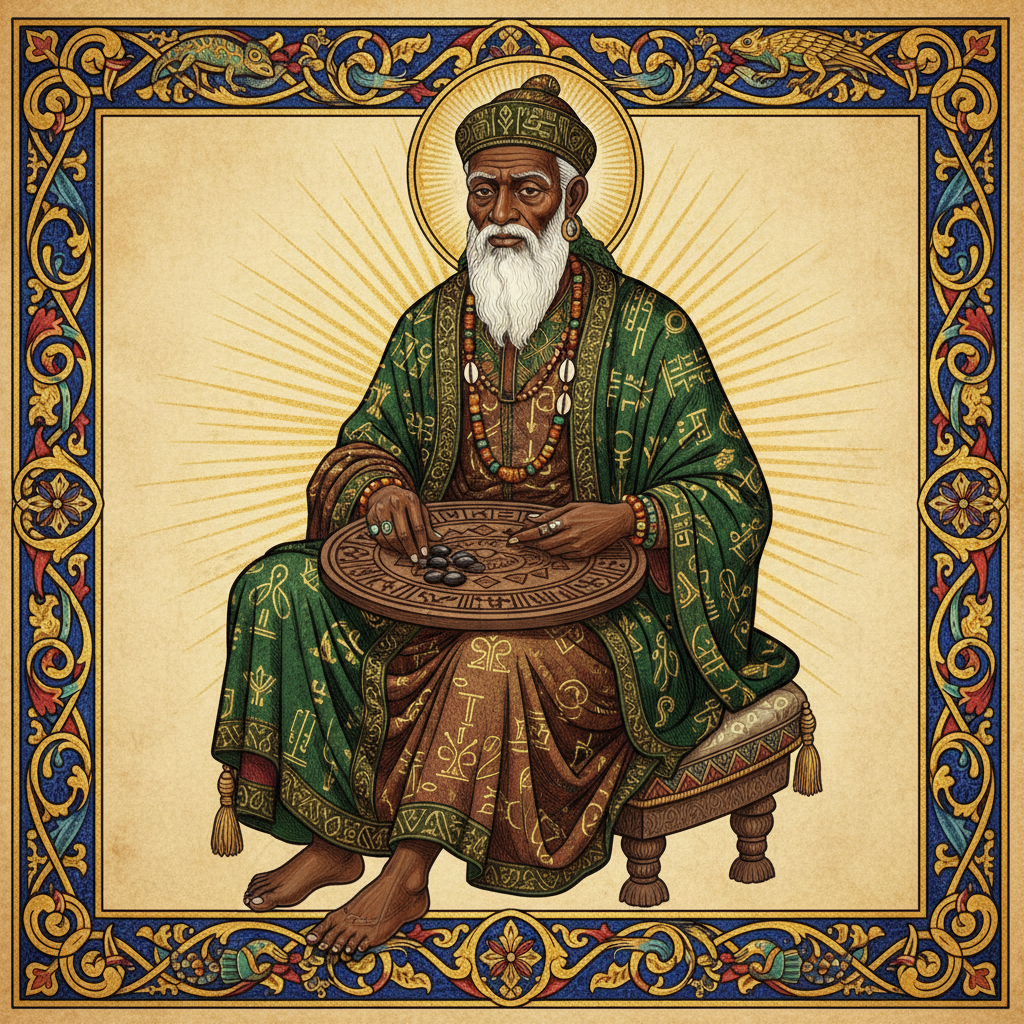
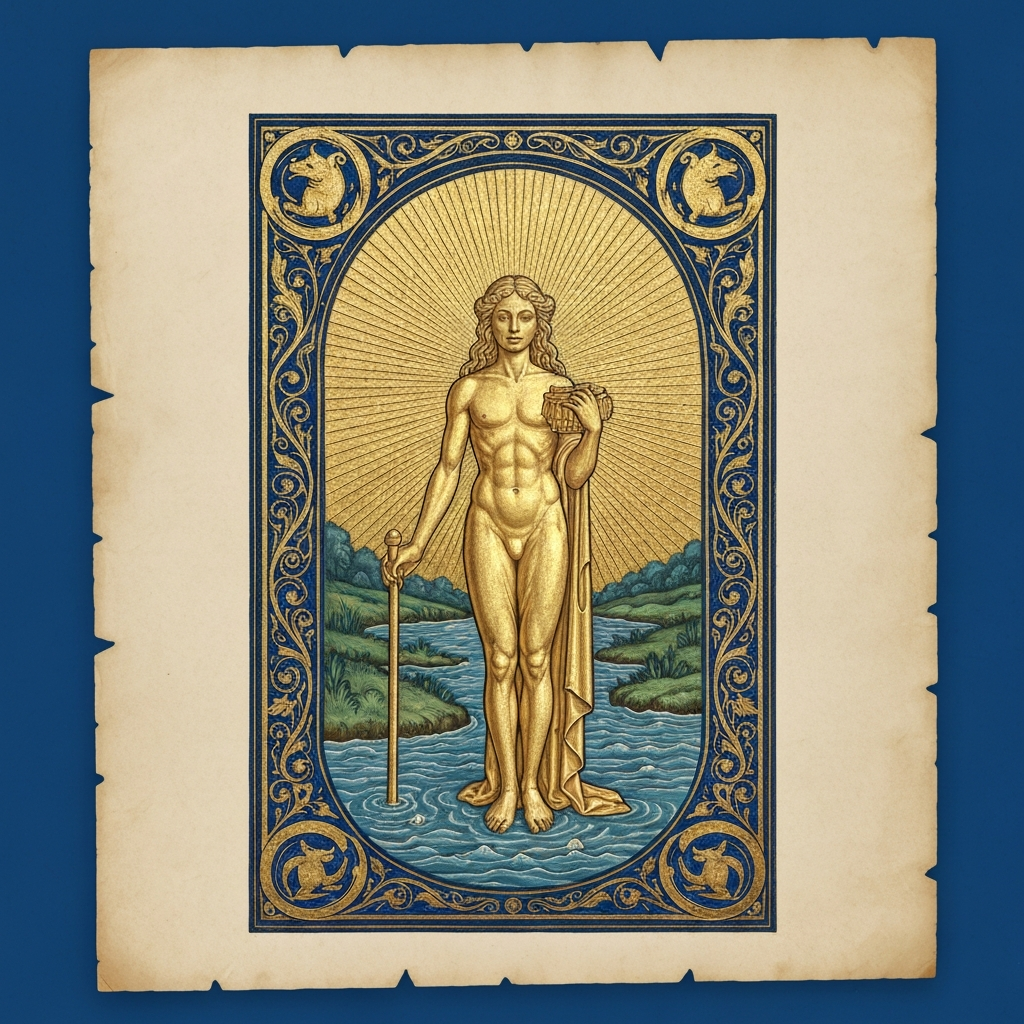
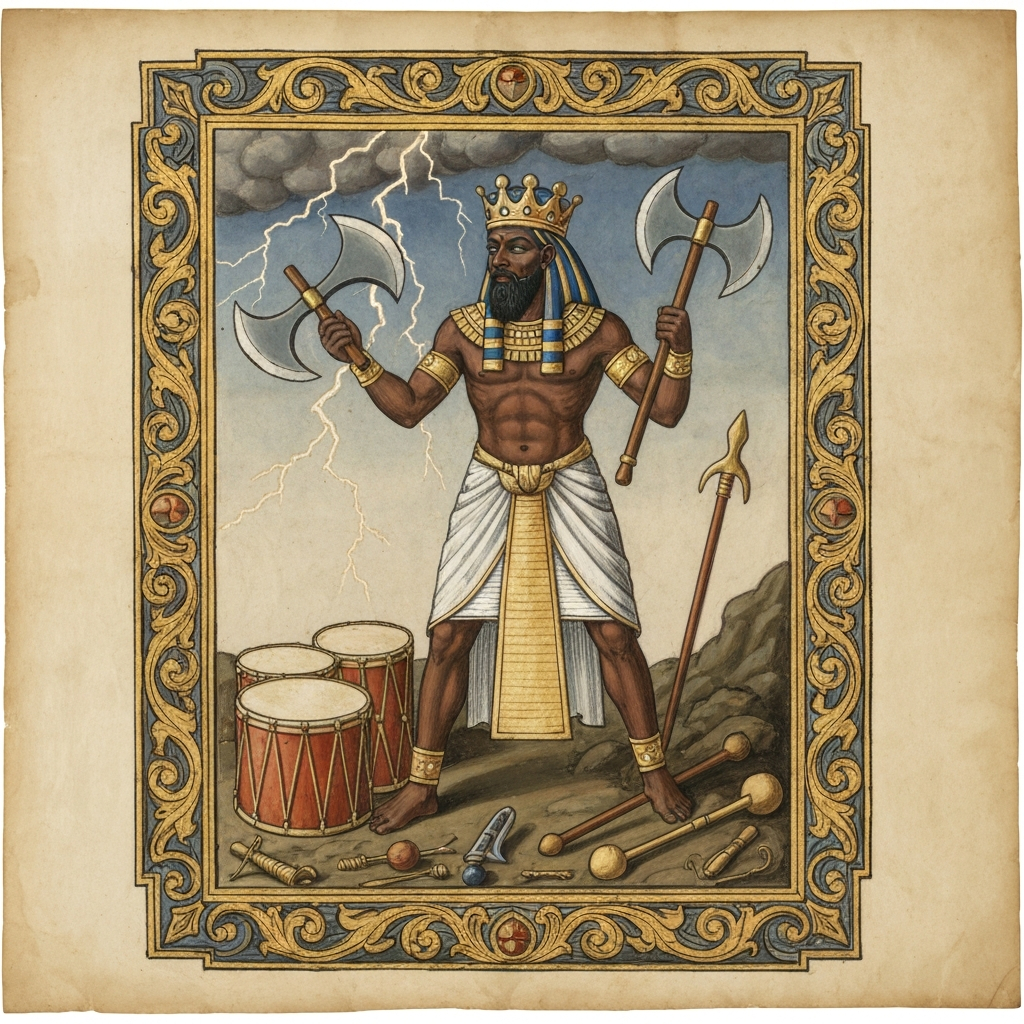
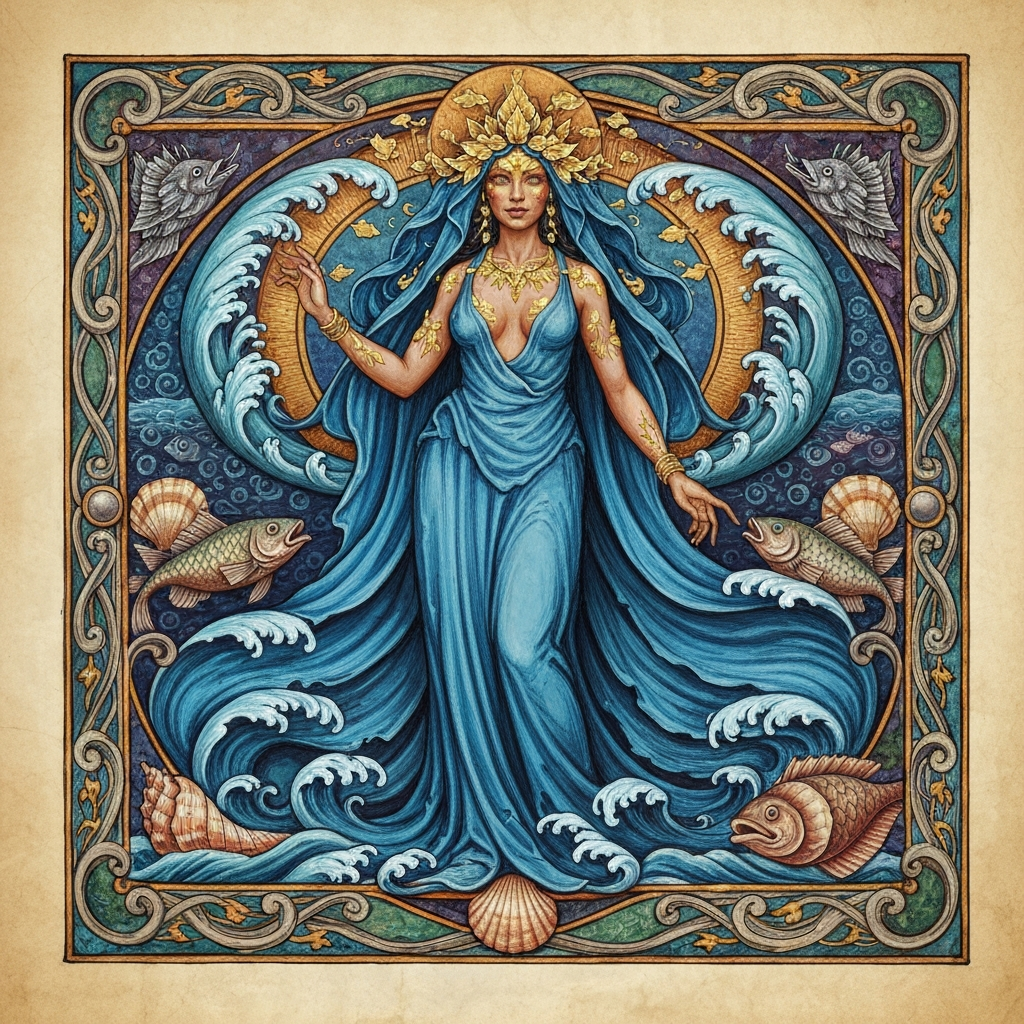
The Yoruba tradition is one of the great spiritual systems — and one of the great survival stories. It begins, as Ile-Ife priests say, before time: Olodumare (also called Olorun, “owner of the sky”), the supreme God, too vast to approach directly. From Olodumare flows Ashe: the divine force animating everything. To reach the world, Olodumare delegated. Down came the Orishas — hundreds in the full count, a working pantheon of two dozen majors — each carrying a portion of Ashe and a domain of life. Eshu at the crossroads. Ogun in iron and road. Shango in thunder. Yemoja in the ocean. Oshun in rivers. Obatala shaping humans from clay. Oya at the cemetery gate. Orunmila with the divination chain. A theology of intermediaries: not a distant God, but a stratified one, reachable through the right Orisha for the right need.
The cradle is Ile-Ife in southwestern Nigeria. Yoruba oral tradition places Oduduwa descending on a chain from the sky, scattering earth on primordial waters, releasing a five-toed chicken to spread soil, founding the first city. Archaeology dates the urban core to roughly 700-1000 CE, with continuous settlement since. From Ile-Ife, Yoruba spread into the city-states and kingdoms that shaped West Africa for a thousand years — Ijebu, Ketu, Egba, and most powerfully the Oyo Empire (~1300-1836 CE), whose cavalry-backed Alaafin dominated forest-to-savanna trade (Johnson, History of the Yorubas).
Then came the rupture. From the early 1500s through the 1860s, the Atlantic slave trade tore an estimated 12.5 million Africans from the continent, a substantial fraction of them Yoruba shipped through Lagos, Ouidah, and Bonny (Transatlantic Slave Trade Database). The fall of Oyo in 1836 funneled enormous numbers of Yoruba captives into the late trade’s final surge. This is why Yoruba religion dominates the Americas: the last great wave was Yoruba. They carried the Orishas across the Middle Passage. Slaveholders banned African religion under penalty of torture and death. The traditions went underground, adapted, and survived.
Each diaspora port grew its own branch of the same root. In Cuba, Lukumí / Santería. In Brazil, Candomblé and Umbanda. In Haiti, Vodou — Yoruba-Fon-Kongo-Catholic forged in the hemisphere’s most brutal slave colony. In New Orleans, Voodoo. In Trinidad, Orisha (Shango Baptist). In Jamaica, Kumina and Revival Zion. In Puerto Rico, Espiritismo and saints. In the U.S. South, Hoodoo — practical magic where organized religion could not survive.
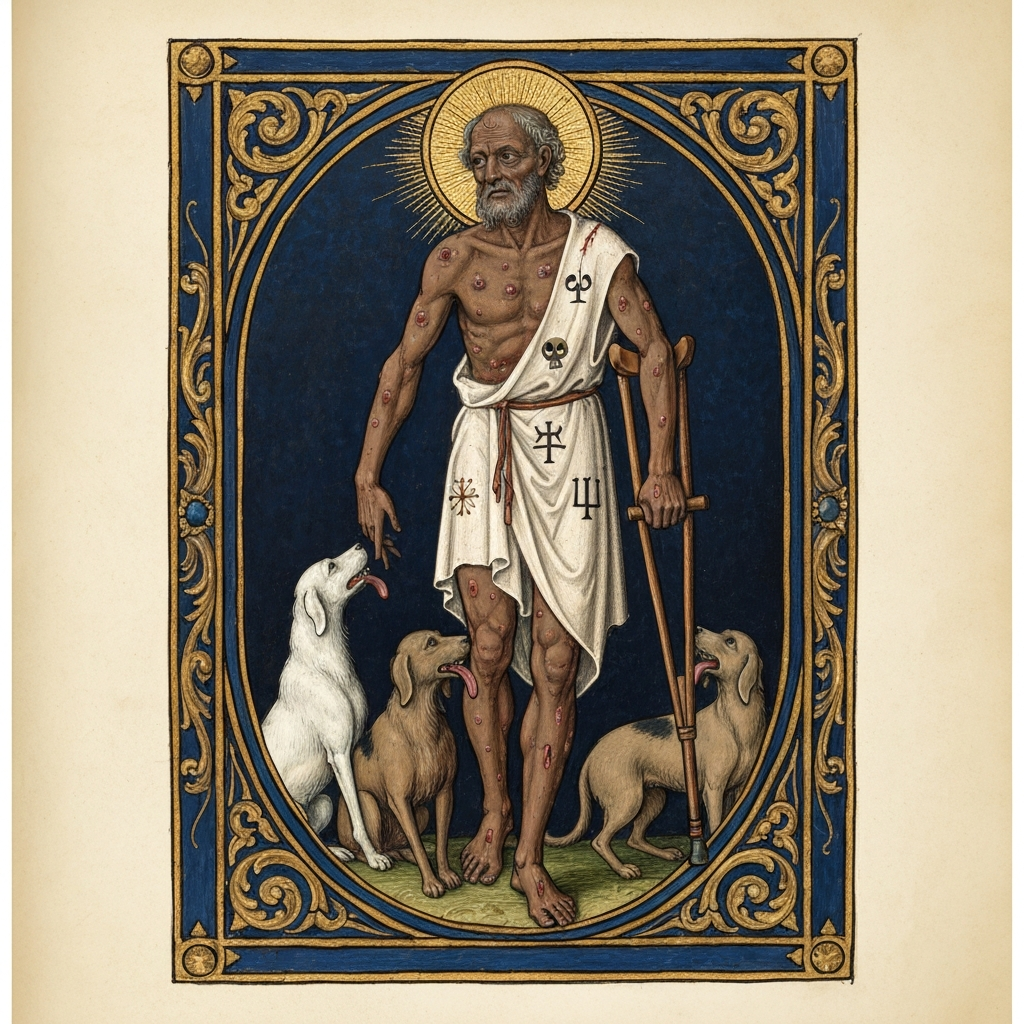
The survival strategy was elegant and audacious. Forced to convert, the enslaved hid Orishas behind Catholic saints of matching iconography. Shango behind Saint Barbara (lightning). Ogun behind Saint Peter (keys, iron). Yemoja behind Our Lady of Regla (sea). Oshun behind Our Lady of Charity. Babalu-Aye behind Saint Lazarus. To the priest, they sang about saints. To themselves, about Orishas. The Catholic veneer protected the African core for three hundred years — documented in the Survival Table below.
In 1791, in the Haitian forest of Bois Caïman, Vodou priest Dutty Boukman and priestess Cécile Fatiman conducted a ceremony that ignited the only successful slave revolution in human history. Religion was not decorative — it was the trigger (Peel, Religious Encounter and the Making of the Yoruba).
The 20th and 21st centuries brought recognition. Cuban Lukumí emigrated en masse after 1959. Brazilian Candomblé came out of legal repression. Brazil declared November 20 (2003) the National Day of Black Consciousness. Practitioners in Nigeria reclaimed the deep tradition; Olokun, the deepest-ocean deity, re-emerged in international devotion. The Yoruba religious complex — all diaspora forms together — is now practiced by an estimated 100 million people worldwide (contemporary demographic studies), making it one of the largest living religious traditions on earth.
This file treats the tradition as living. The Orishas are still answered. The drums still call them down.
Pivotal Events
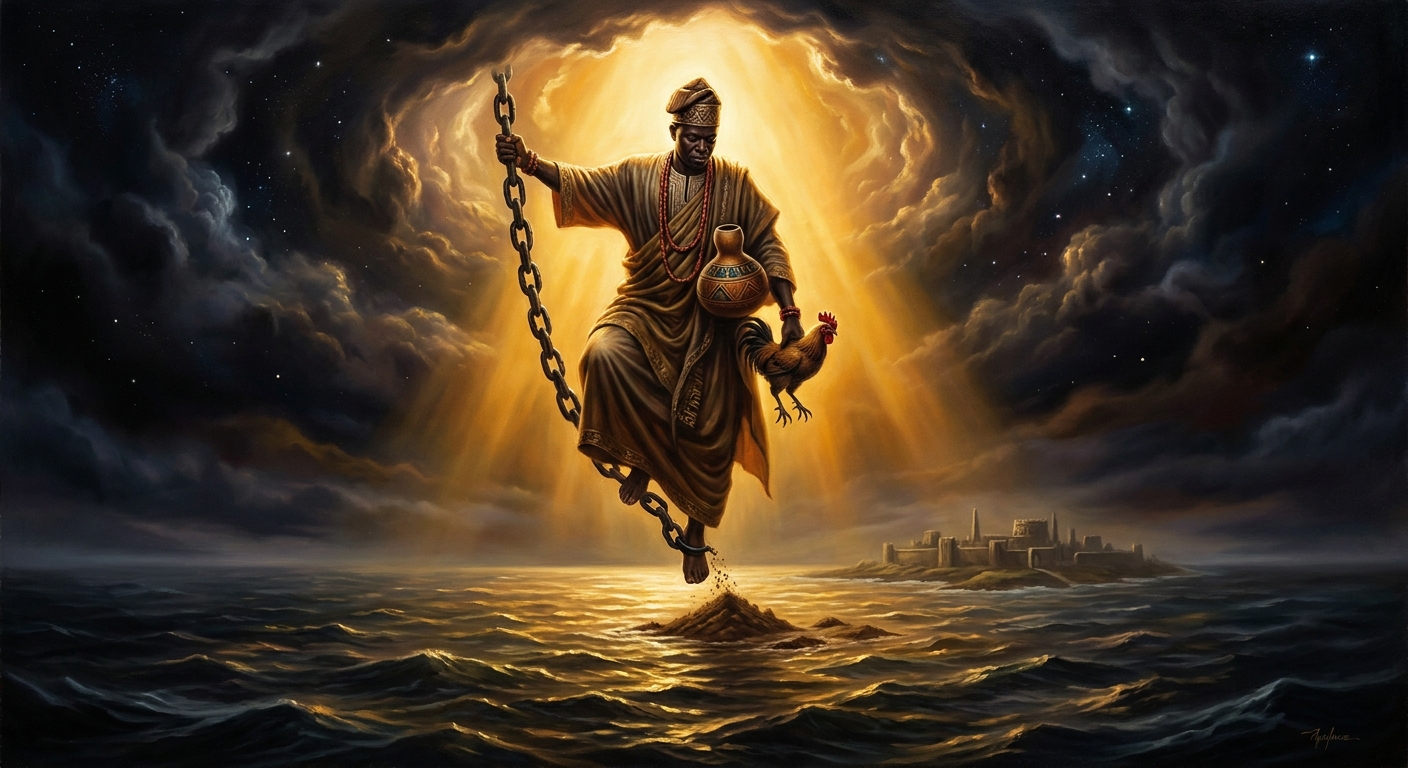
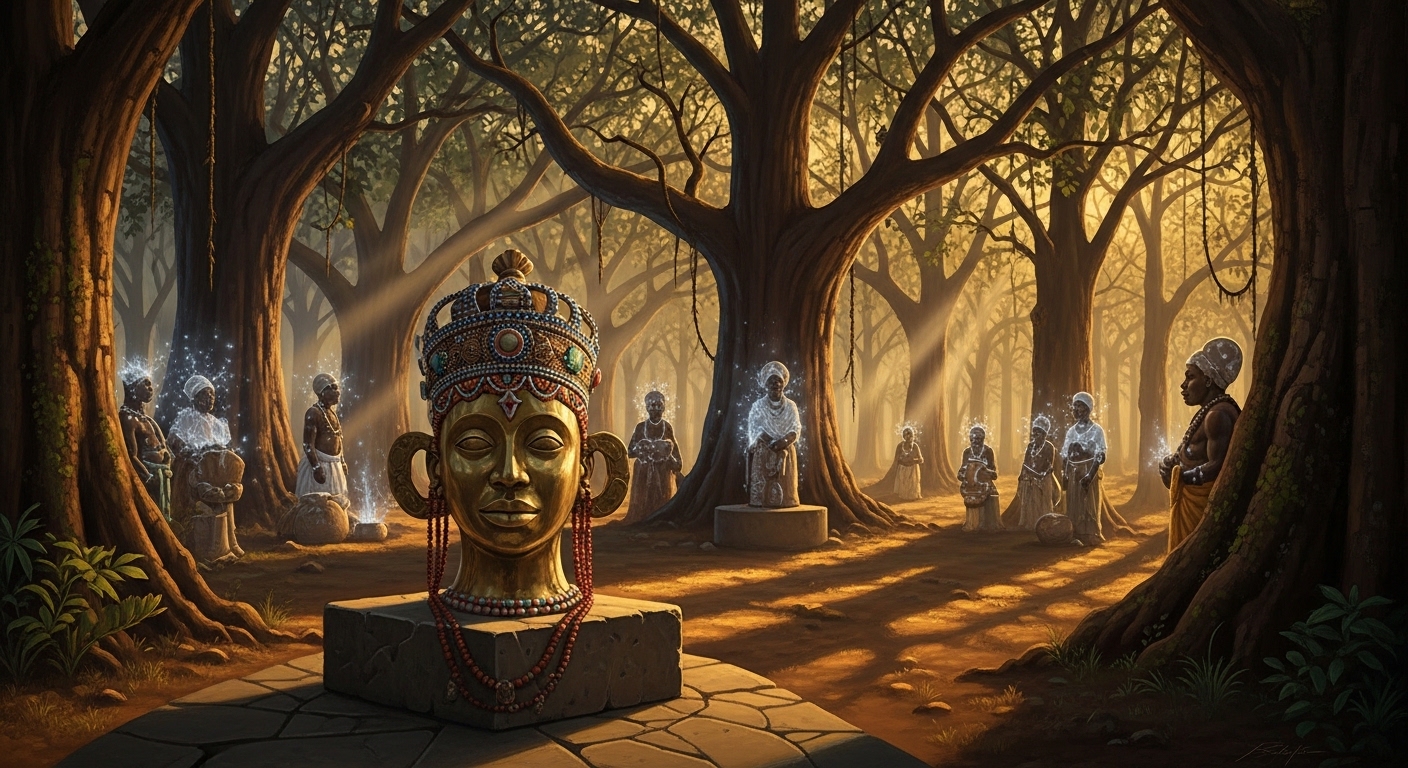
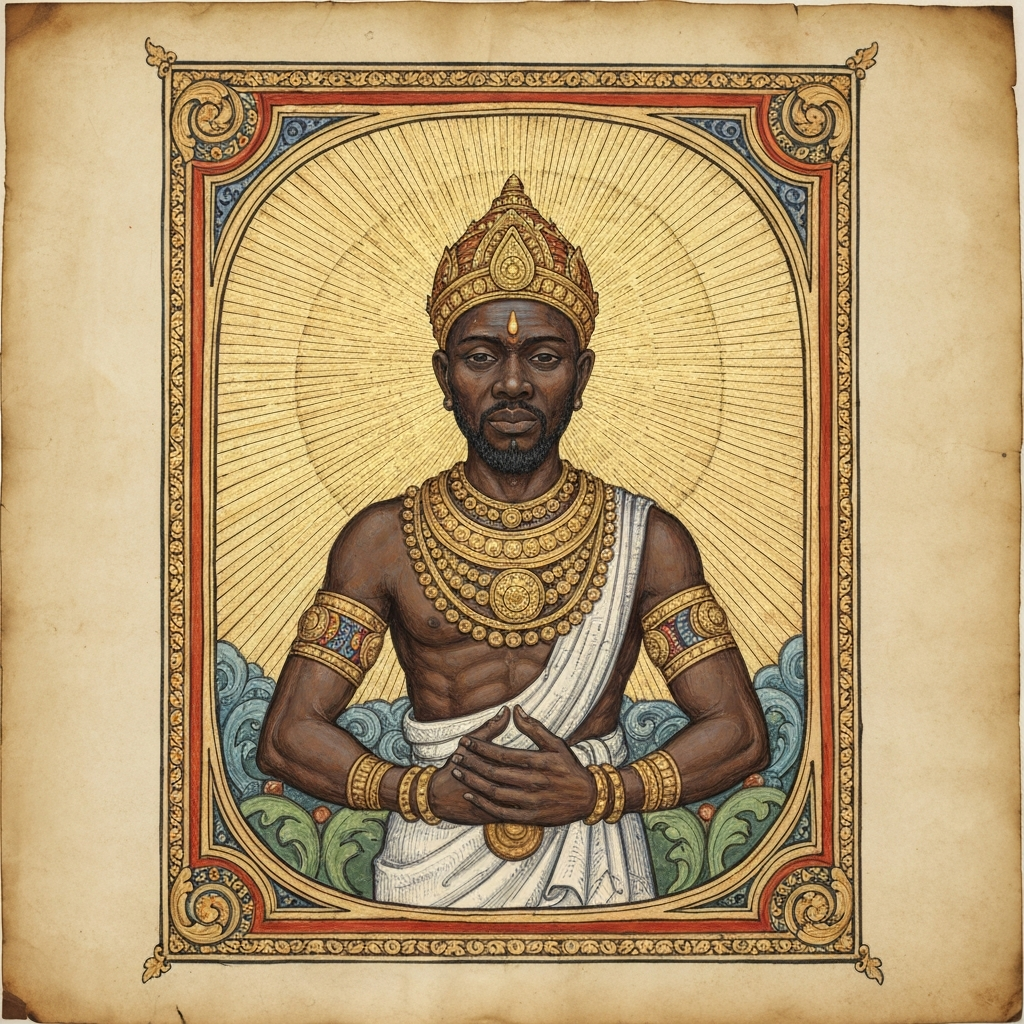
Yoruba sacred history begins not with a covenant but a descent. According to Ife cosmology, the world was once only water. Olodumare sent Oduduwa down a chain from heaven with a calabash of earth, a five-toed chicken, and a palm nut. Oduduwa scattered earth on the waters, released the chicken to spread soil by scratching, and planted the palm. Where his foot touched ground became Ile-Ife — “the land that spreads,” the navel of the world. Archaeologically, Ile-Ife ranks among West Africa’s oldest continuously inhabited cities, with urban civilization by 700-1000 CE and famous bronze and terracotta heads dated to roughly 1100-1400 CE (Willett, Ife archaeology). Every Yoruba dynasty claims legitimacy from Oduduwa. The Ooni of Ife remains the spiritual head of all Yoruba peoples.

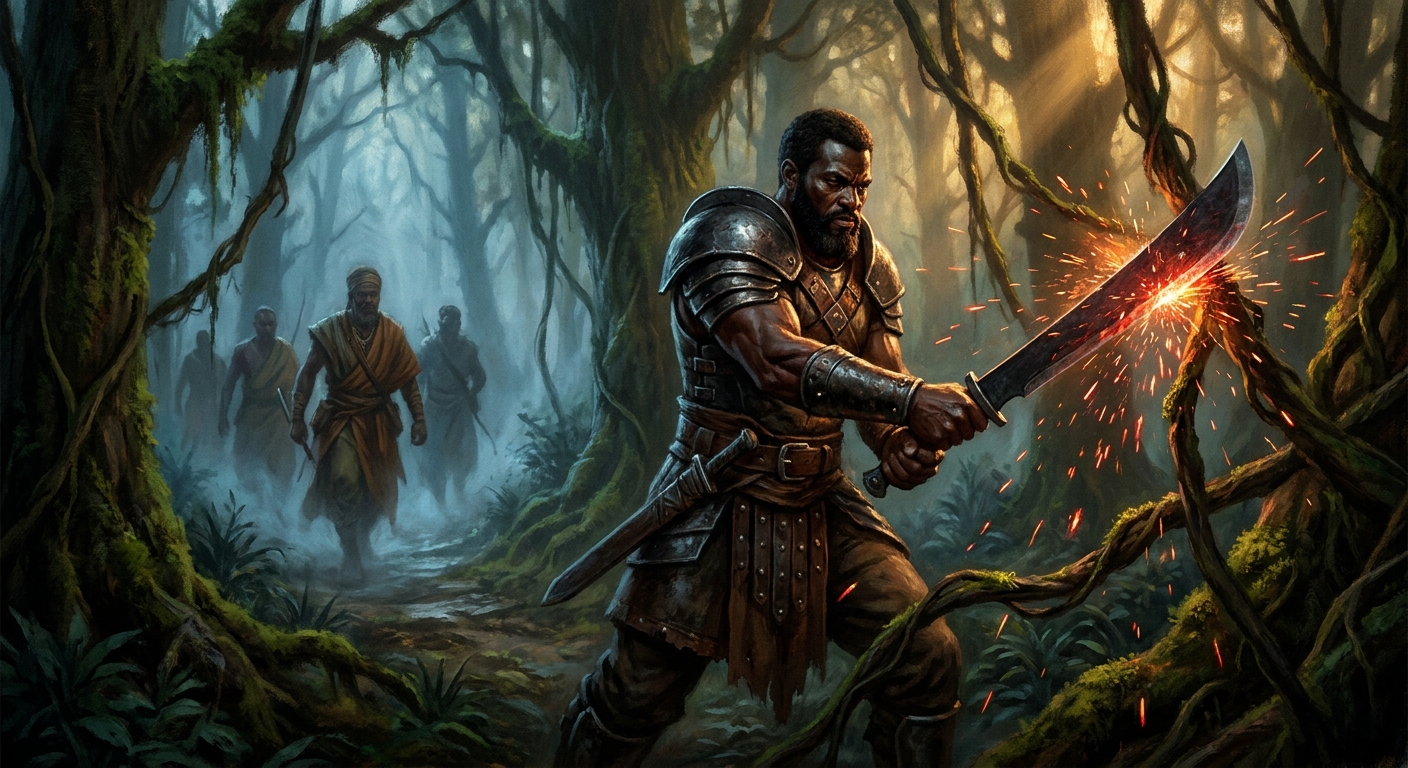
Between 1500 and 1866, an estimated 12.5 million Africans were forced onto slave ships to the Americas (Transatlantic Slave Trade Database). About 1.7 million died in the Middle Passage. Enormous numbers were Yoruba, especially in the final decades: Oyo’s collapse (1836) and Yoruba civil wars dumped populations onto the Lagos and Ouidah routes. Slaveholders stripped them of name, language, family, freedom, and religion. Catholic and Protestant missions baptized them on the docks. Their drums were banned. Gatherings outlawed. Practicing African religion meant, in many colonies, death. The trade is the founding wound of the African diaspora. The impossible miracle: the Orishas crossed the ocean too.
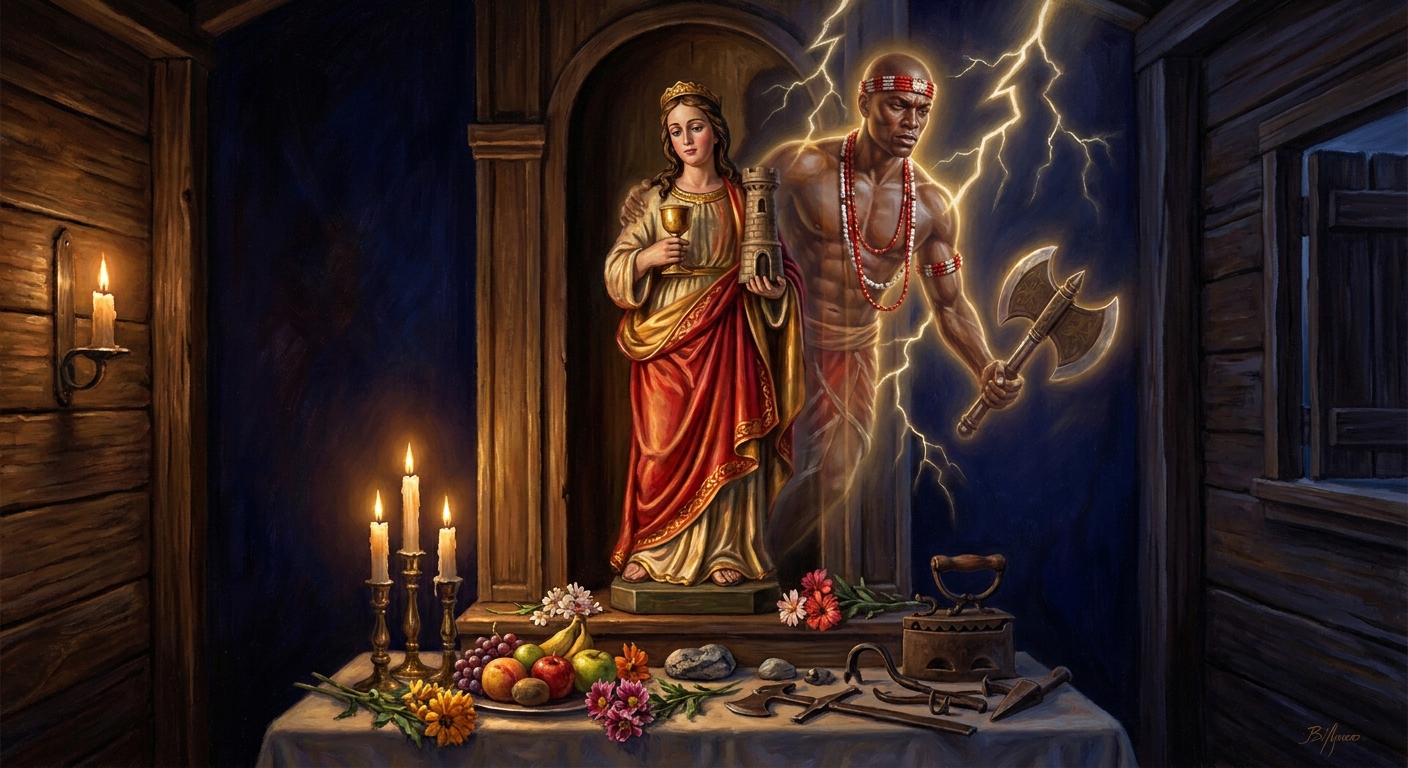
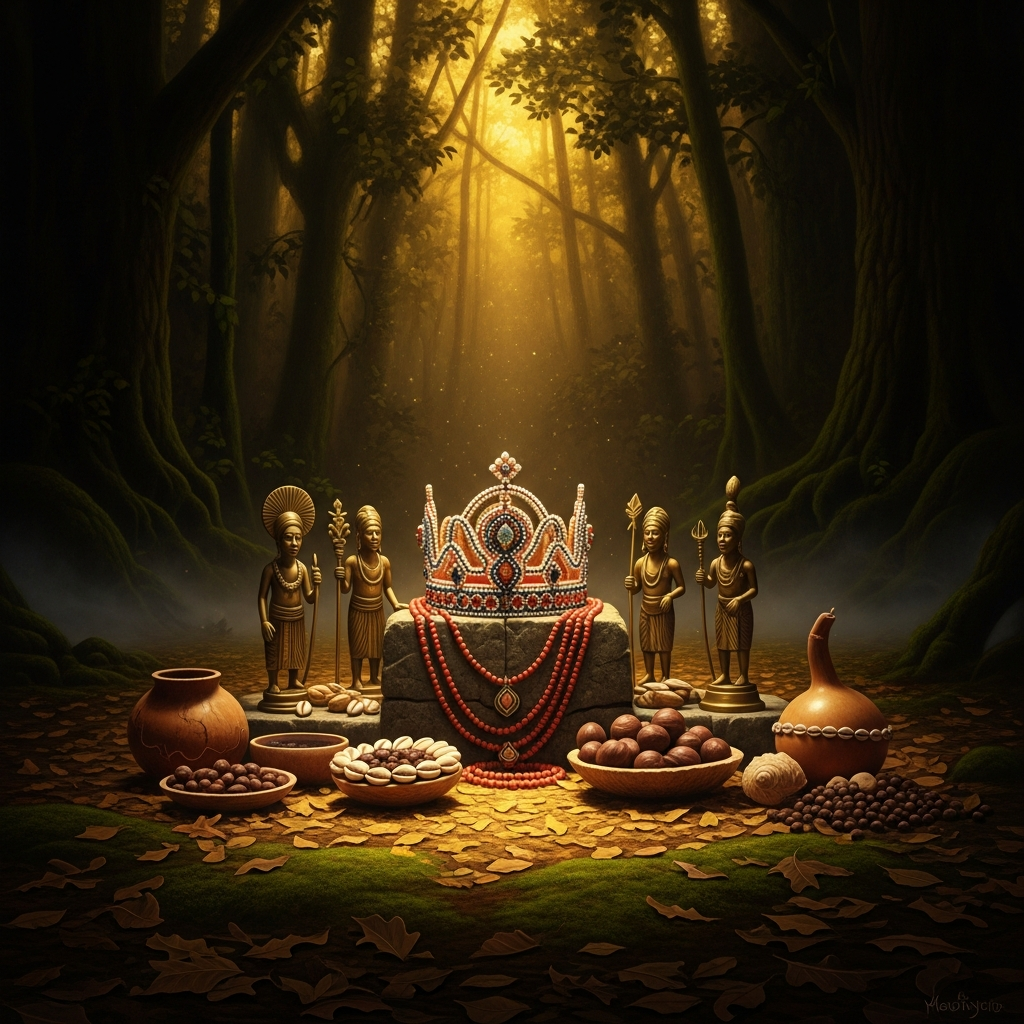
In Cuba’s cabildos, Bahia’s terreiros, Saint-Domingue’s lakous, the enslaved Yoruba did something theologically extraordinary. Forbidden to worship Orishas, they mapped each Orisha onto a Catholic saint with matching iconography (Cabrera, El Monte and Yemaya y Oshun; Bastide, The African Religions of Brazil). Shango, lord of thunder and double-headed axe, became Saint Barbara (patroness of artillery). Ogun, the iron warrior, became Saint Peter (keys) or Saint James. Yemoja became Our Lady of Regla (blue-robed sea mother). Oshun became Our Lady of Charity (gold, beloved). Babalu-Aye became Saint Lazarus (the wounded healer). To colonial priests, the slaves had become good Catholics. To themselves, saints were masks — behind each mask, an Orisha being fed. The strategy worked. For three hundred years it kept the Orishas alive. The Survival Table maps the full correspondence.
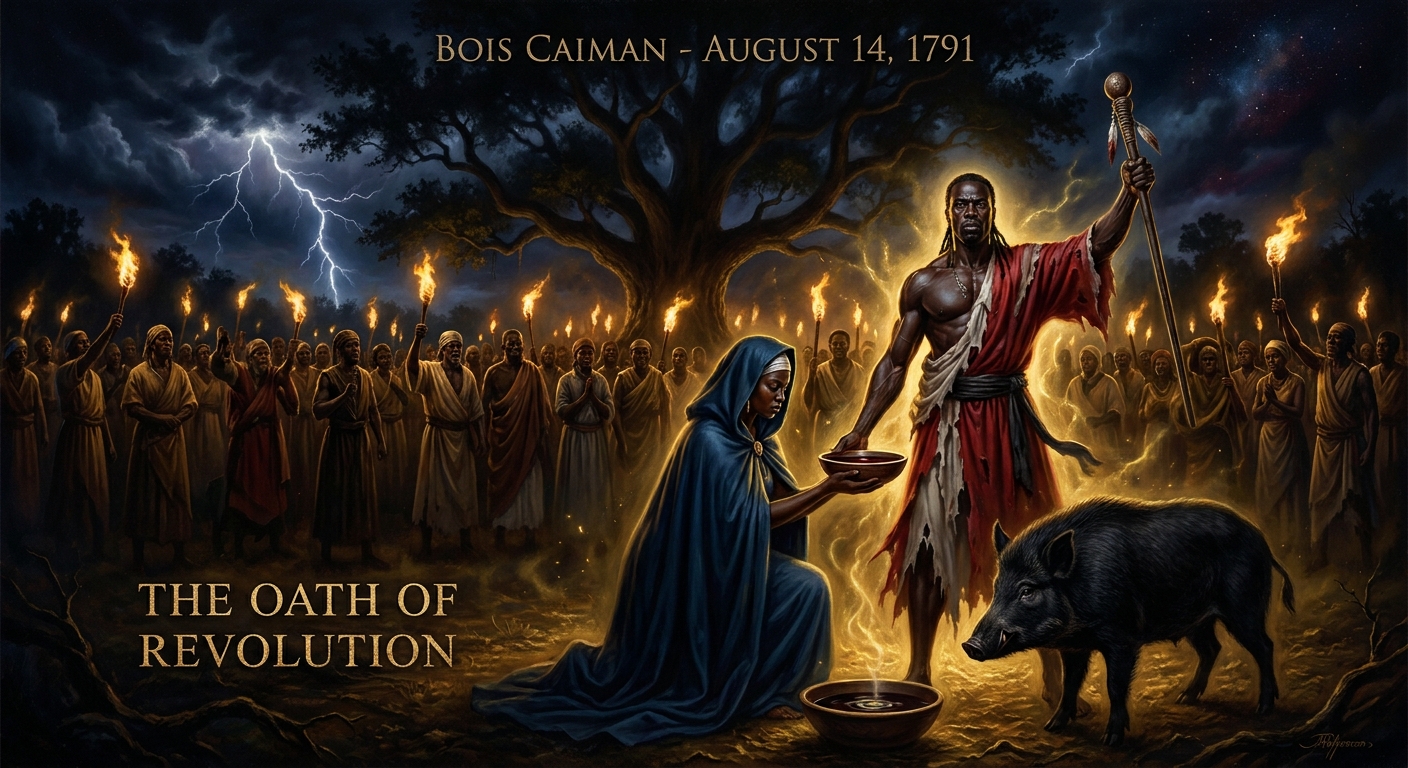
On August 14, 1791, in the forested clearing of Bois Caïman (Alligator Wood) in northern Saint-Domingue, Vodou priest Dutty Boukman and priestess Cécile Fatiman called down the Orisha-Lwa Ezili Dantor. A black pig was sacrificed. Blood was shared. An oath: liberty or death. One week later, the largest slave uprising in the New World erupted. Twelve years of war followed. By 1804, Saint-Domingue had become Haiti — the first independent Black republic and the only successful slave revolution in history (Peel, Religious Encounter and the Making of the Yoruba, 2000). France, Spain, Britain, and the United States all sent armies; all were defeated. Leaders Toussaint Louverture, Jean-Jacques Dessalines, and Henri Christophe credited the spirits. Bois Caïman is the moment Orishas fought back through their people.
For most of the 20th century, diaspora traditions were legally precarious and socially stigmatized as “primitive” and “witchcraft.” The shift began with the Cuban diaspora after 1959, which carried Lukumí to Miami, New York, New Jersey, and beyond, building botanicas in every Latin neighborhood. Brazilian Candomblé survived police repression and is now legally protected (1976 onward). Olokun, the deep-ocean Orisha long obscured behind Yemoja, re-emerged in international devotion in the late 20th century as a global Yoruba revival point. Brazil established November 20 (2003) as the National Day of Black Consciousness, formally recognizing African religious heritage. UNESCO inscribed Ifá divination on the Intangible Cultural Heritage list (2008) (UNESCO Intangible Cultural Heritage). Today the global Yoruba complex — Lukumí, Candomblé, Vodou, Trinidad Orisha, Hoodoo, continental Yoruba — numbers an estimated 100 million practitioners. The tradition meant to die on the slave ships became one of the fastest-growing spiritual movements in the Americas.
Timeline
| Era | Date | Event | Source |
|---|
| Mythic | Before time | Olodumare creates the universe; sends down the Orishas | Ifa corpus |
| Founding | Mythic | Oduduwa descends from heaven on a chain; founds Ile-Ife | Yoruba oral tradition |
| Early Urban | ~700-900 CE | Ile-Ife becomes a major urban center | archaeology |
| Classic Ife | ~1100-1400 CE | Bronze and terracotta heads of Ife produced | Frank Willett, Ife archaeology |
| Oyo Founded | ~1300 CE | Oyo Empire established; expansion begins | Samuel Johnson, History of the Yorubas |
| Benin & Ife | ~1400-1500 CE | Yoruba ritual influence spreads to Benin Kingdom | art-historical record |
| Early Slave Trade | 1510s | First enslaved Africans shipped to Hispaniola | Spanish colonial records |
| Trade Expansion | 1600s | Yoruba-region captives shipped via Ouidah, Lagos, Bonny | TASTD database |
| Oyo Apex | ~1700-1750 | Oyo Empire dominates West African interior trade | Robin Law |
| Cuba Lukumí Forms | ~1700s | Yoruba religion takes shape in Cuban cabildos | Lydia Cabrera |
| Saint Mapping | ~1700s-1800s | Orishas hidden behind Catholic saints | Cabrera, Bastide |
| Haiti Vodou | 1700s | Yoruba + Fon + Kongo synthesis in Saint-Domingue | Haitian colonial sources |
| Bois Caiman | August 14, 1791 | Vodou ceremony ignites Haitian Revolution | Dalmas, Madiou |
| Haitian Independence | January 1, 1804 | First Black republic; Dessalines proclaims Haiti | Declaration of Independence |
| Oyo Falls | 1836 | Oyo Empire collapses; Yoruba civil wars | Johnson |
| Late Trade Surge | 1820-1860 | Massive Yoruba presence in Cuba and Brazil due to late trade | TASTD |
| Brazil Candomblé | ~1830 | Casa Branca terreiro founded in Salvador | Bahian records |
| Slave Trade Banned | 1807 / 1888 | Britain (1807); Brazil last to abolish (1888) | colonial law |
| Colonial Yorubaland | 1861-1960 | Lagos colony; British rule; missionary pressure | British colonial archives |
| Hoodoo Documented | 1930s | Zora Neale Hurston, Mules and Men | Hurston |
| Cuban Diaspora | 1959 - | Lukumí spreads to Miami, NYC, beyond | post-revolution emigration |
| Candomblé Decriminalized | 1976 | Brazil legalizes African religious practice | Brazilian law |
| Nigerian Independence | 1960 | Yoruba culture reclaims continental space | Nigerian history |
| Ifa UNESCO | 2008 | Ifa divination inscribed on Intangible Heritage list | UNESCO |
| Day of Black Consciousness | November 20, 2003 | Brazil formally recognizes African heritage | Brazilian Federal Law |
| Olokun Revival | late 20th c. - present | Olokun emerges in international devotion | contemporary practice |
| Present | 2026 | ~100M practitioners worldwide; growing | demographic studies |
 LEGENDARY
  MYTHIC
 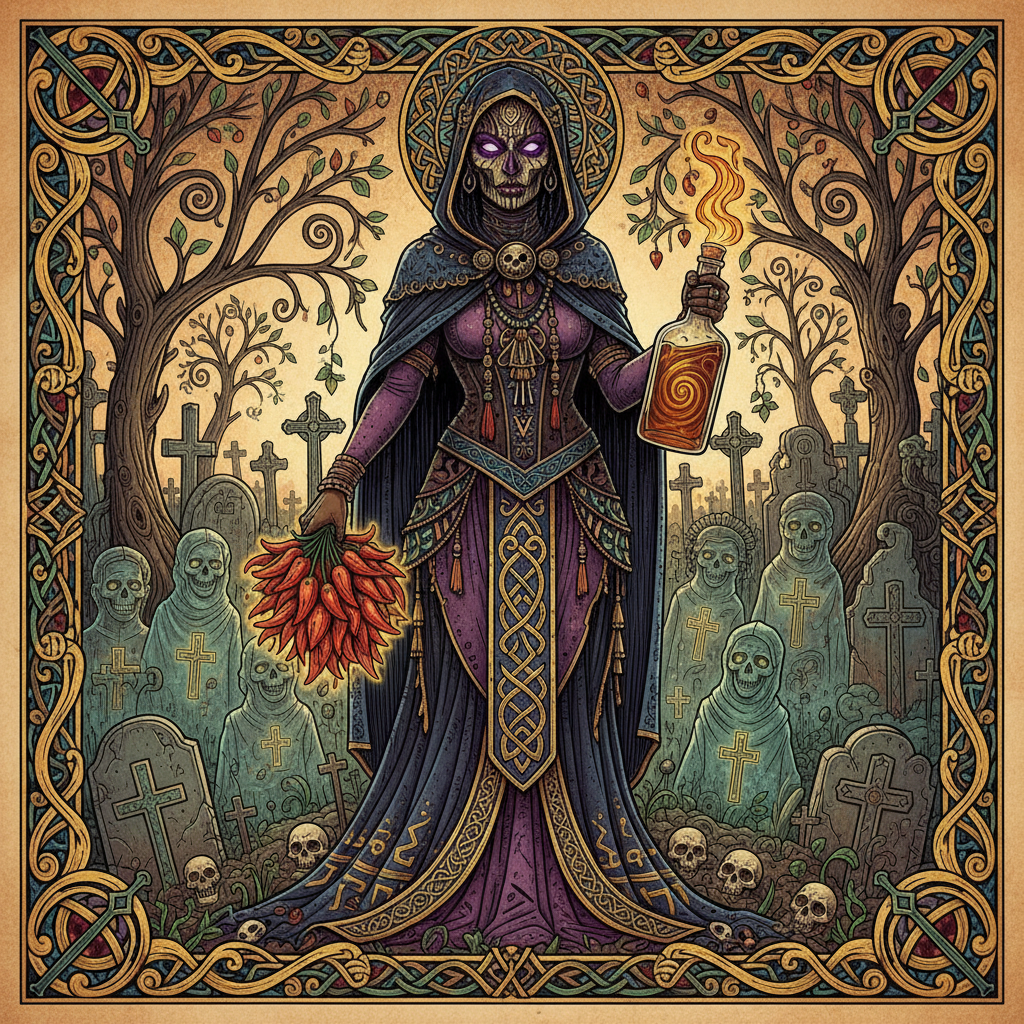 MYTHIC
 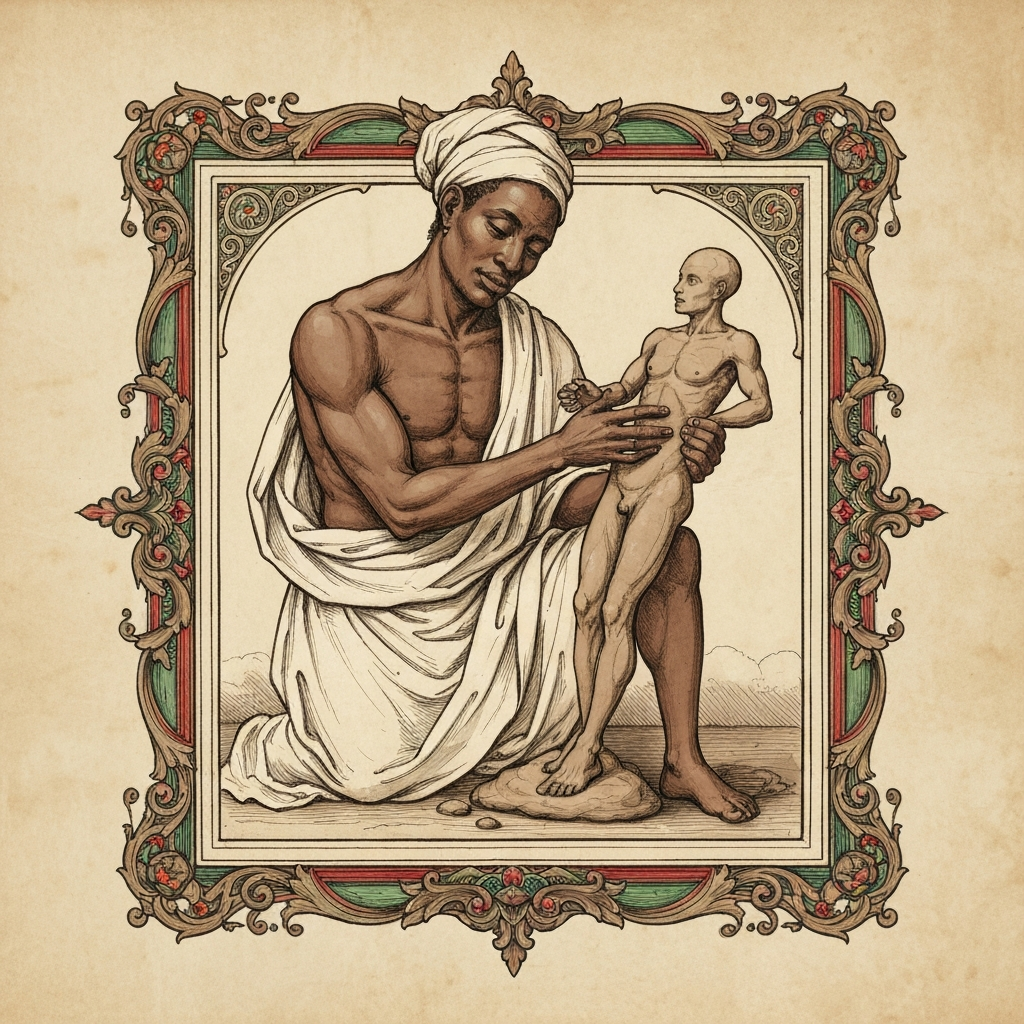 LEGENDARY
 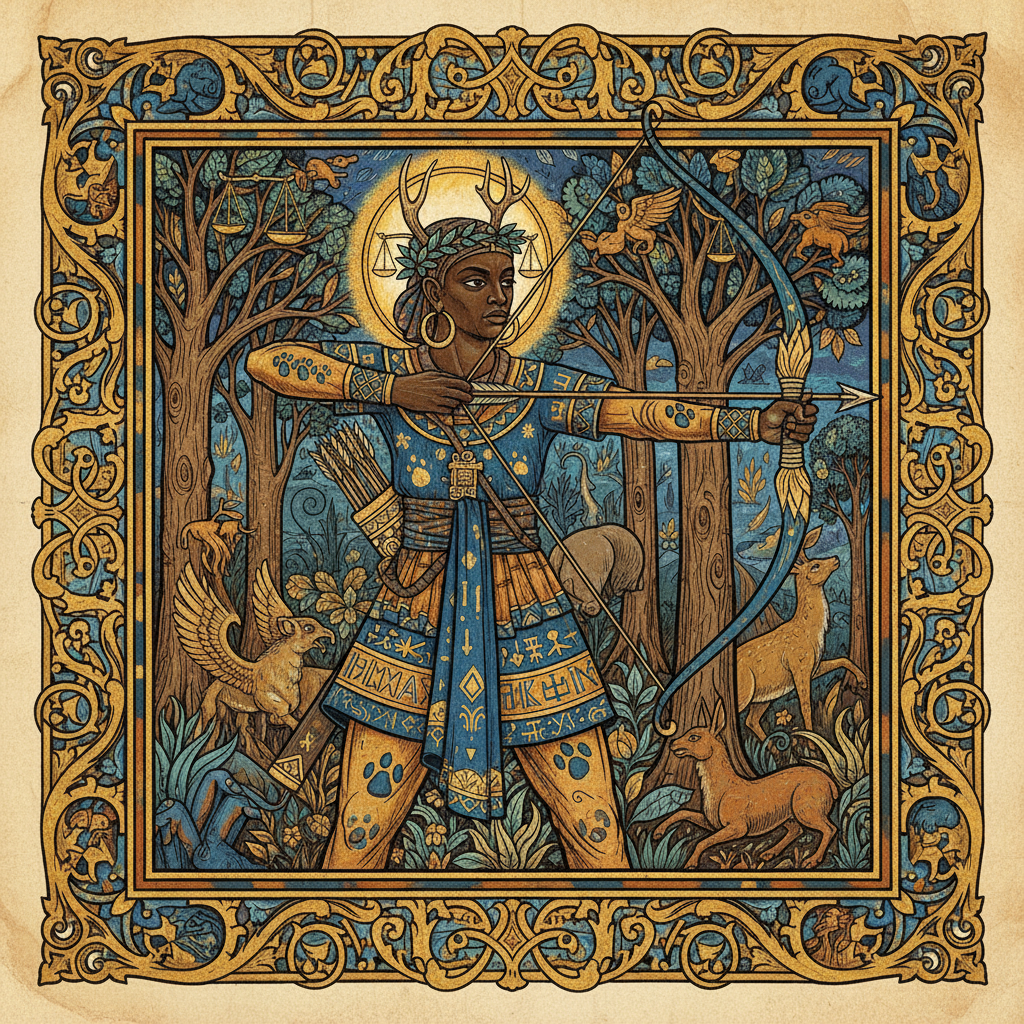 LEGENDARY
 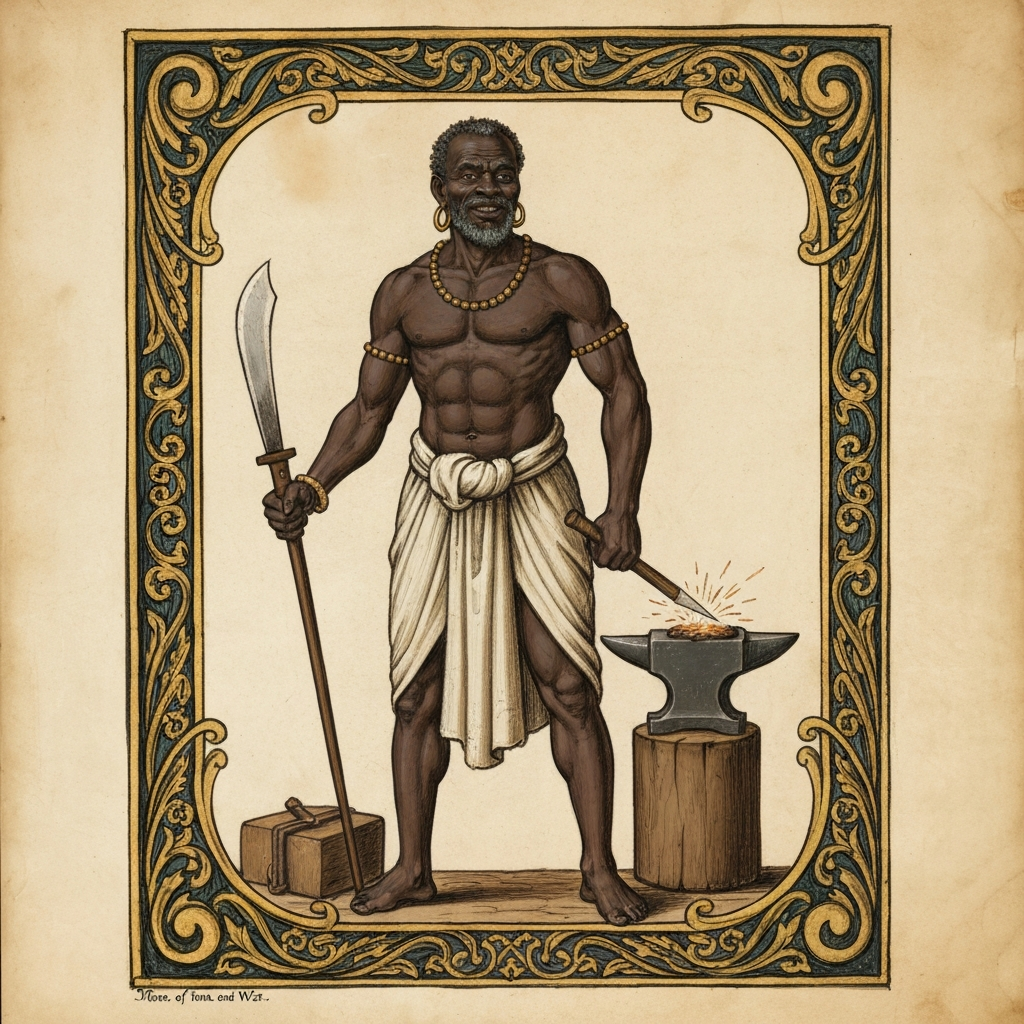 MYTHIC
  LEGENDARY
  MYTHIC
  LEGENDARY
  MYTHIC
  MYTHIC