Combat Profile
Gate Between Worlds
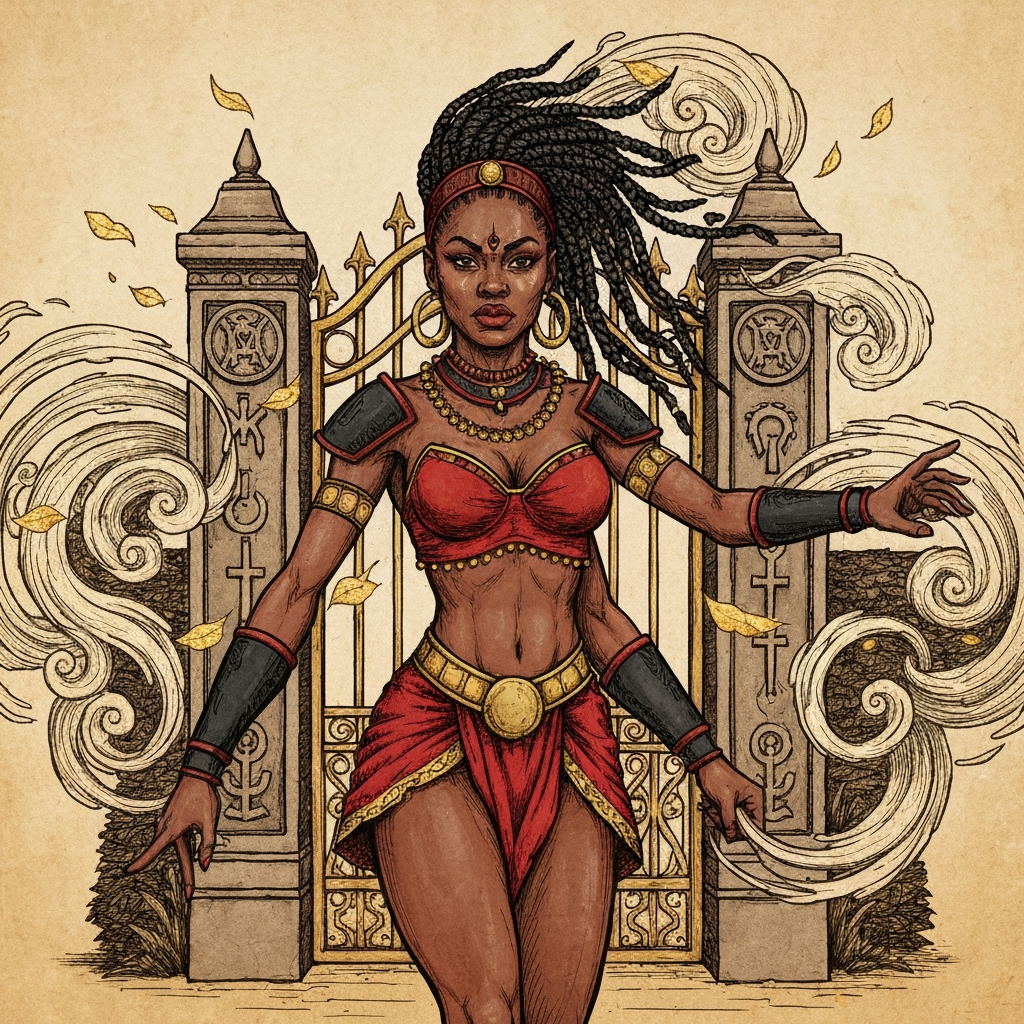
Papa Legba opens or seals passages between the physical and spirit realms, allowing communion with ancestors and granting passage to those he deems worthy.
Keeper of Keys
All communication, bargains, and crossings require Papa Legba's permission; he perceives all language and understands all tongues spoken in negotiation.
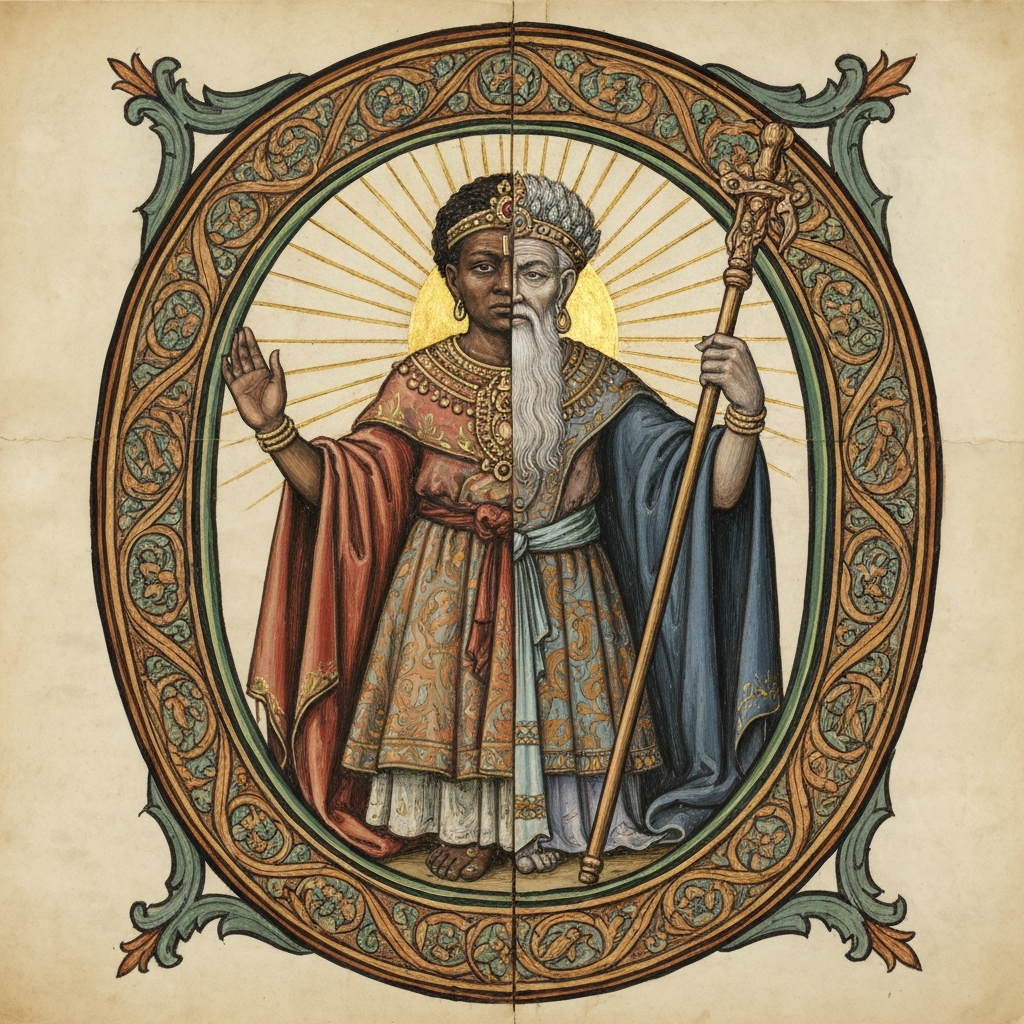
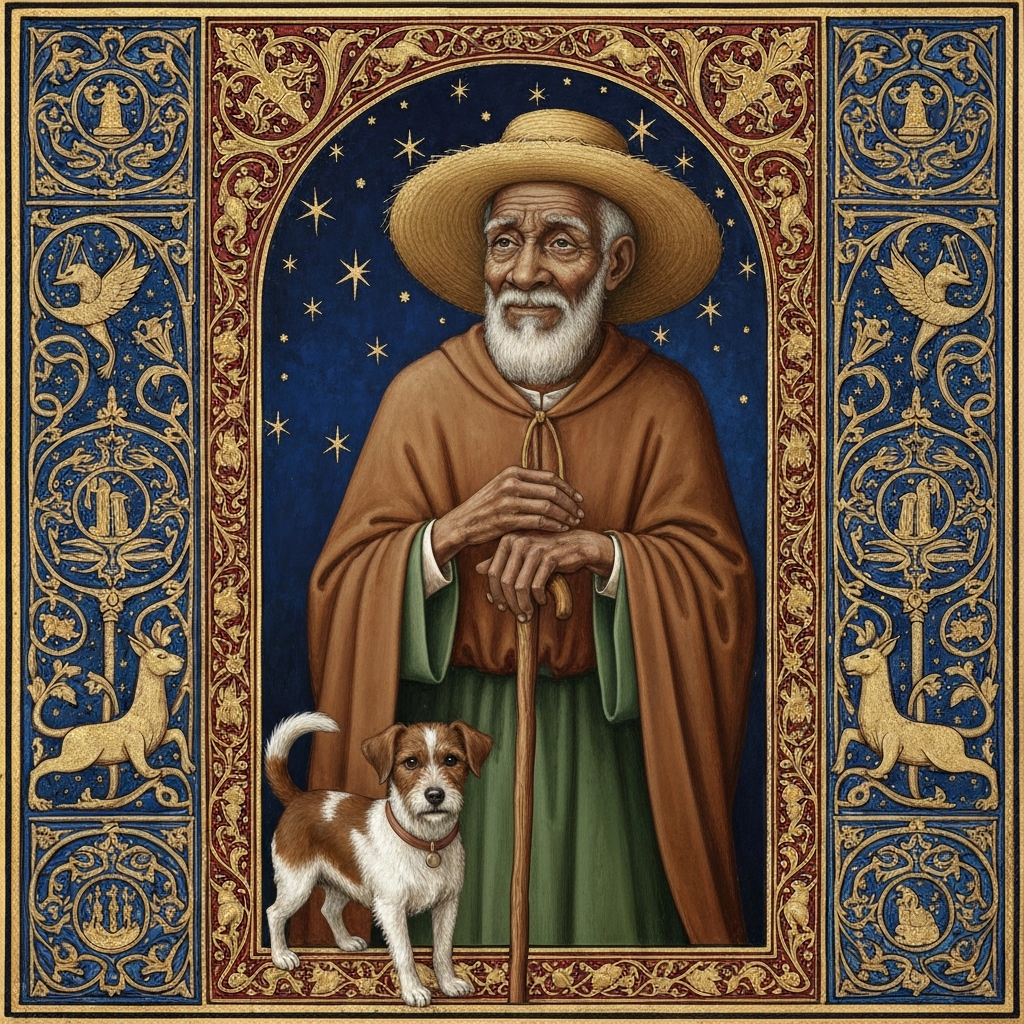
Old age. Unlike Eshu (who can appear as any age), Papa Legba in Haitian Vodou is consistently depicted as an old, limping man with a cane and a straw hat. His frailty is his disguise -- the gate between worlds is guarded by someone who looks like he could barely stand
“Papa Legba, open the gate for me. Open the gate so I may pass through.” — Opening prayer of every Vodou ceremony
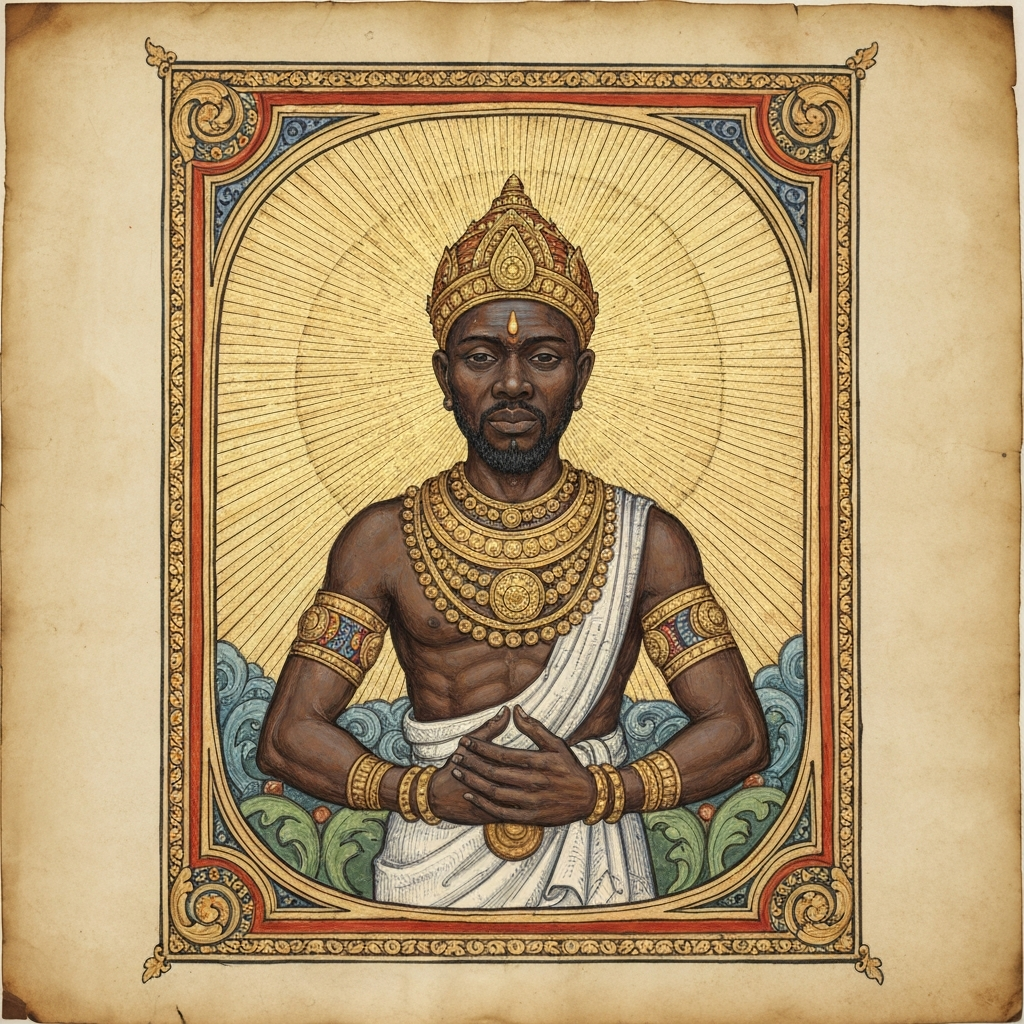
Lore: Papa Legba is the Haitian Vodou transformation of the Yoruba Eshu/Elegba — but where Eshu can be young, old, or ageless, Papa Legba has settled into the form of an old man: sun-darkened, limping, wearing a broad straw hat, leaning on a cane, sometimes accompanied by dogs. He stands at the crossroads — the physical place where two roads meet and the spiritual place where the human world and the spirit world intersect. Every Vodou ceremony begins with the invocation of Papa Legba: “Papa Legba, open the gate for me.” Until he opens the gate, the spirits cannot come through. Until he grants permission, no communication between worlds is possible. He is the gatekeeper, the translator, the intermediary — the old man who looks frail but holds the key to everything. His transformation from the vibrant, youthful trickster Eshu to the aged gatekeeper Legba reflects the diaspora’s experience: the tradition aged, endured, was battered and transformed, but it still holds the gate open.
Parallel: Papa Legba is St. Peter at the gates of heaven (Matthew 16:19: “I will give you the keys of the kingdom of heaven”) — the figure who holds the keys, who decides who passes through. He is Janus (the Roman god of doorways, gates, and beginnings, who looks both forward and backward simultaneously). He is the doorkeeper of Psalm 84:10 (“I would rather be a doorkeeper in the house of my God than dwell in the tents of the wicked”). In Cuban Santeria, Eshu/Elegba was syncretized with St. Anthony of Padua and the Holy Child of Atocha — but in Haiti, as Papa Legba, the syncretism mapped him onto St. Lazarus (the old, limping man with dogs) and St. Peter (the holder of the keys).
1 min read
None. Like Eshu (from whom he derives), Papa Legba must be honored first or nothing works. He IS the gate. You do not counter the gate -- you pass through it or you do not
Maya Deren, *Divine Horsemen: The Living Gods of Haiti* (1953); Karen McCarthy Brown, *Mama Lola: A Vodou Priestess in Brooklyn* (1991); Alfred Metraux, *Voodoo in Haiti* (1959)