Combat Profile
Graveyard Sentinel
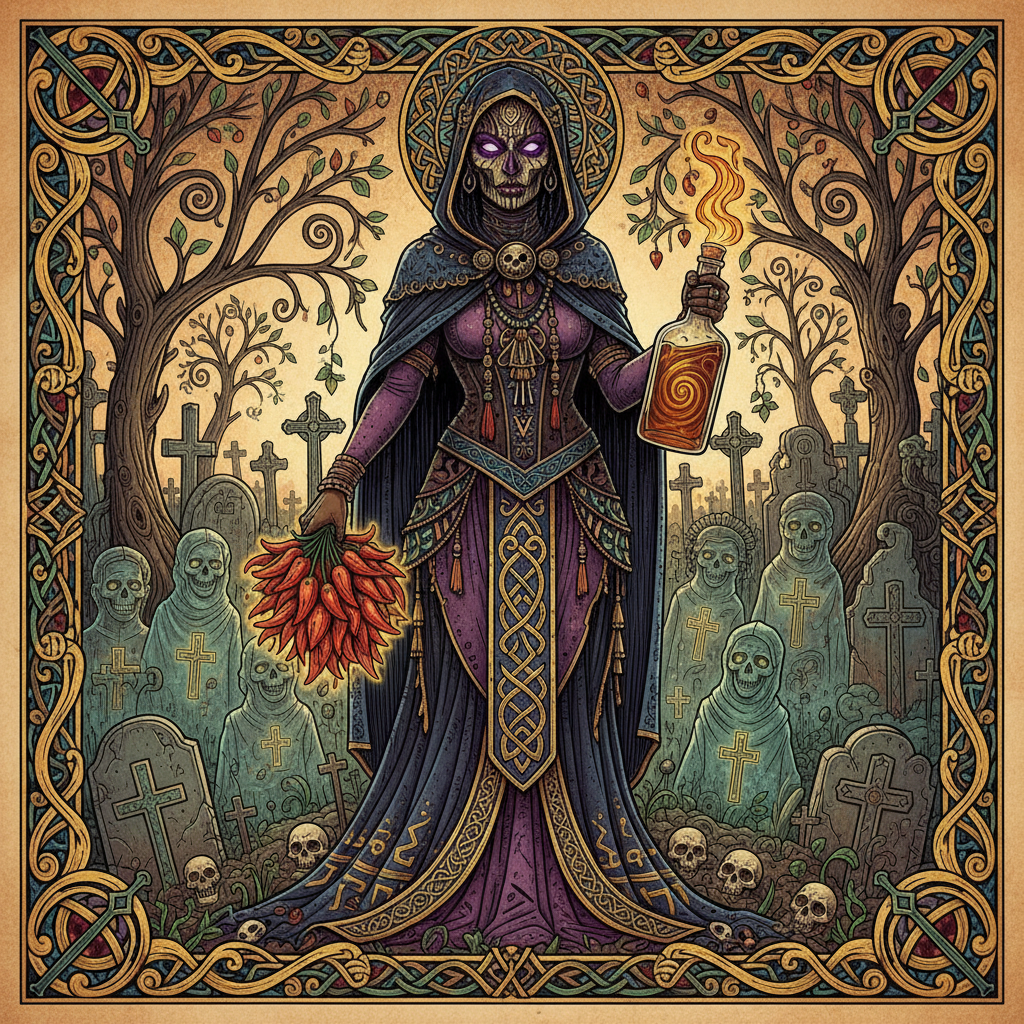
Maman Brigitte consecrates burial grounds with protective wards, preventing desecration and granting safe passage to restless spirits seeking justice.
Iron Matriarch
Her presence commands respect for the dead and empowers women's pleas for vengeance, burning like hot peppers through falsehoods to reveal hidden injustices.
Her origin is foreign -- she is one of the few Loa who is not of African descent. This makes her position in the pantheon unusual, and some traditions treat her with a degree of ambivalence
“Maman Brigitte guards the bones. Cross her, and she’ll put you in the ground beside them.” — Vodou tradition
Lore: Maman Brigitte is one of the most fascinating figures in diaspora theology because she represents a fusion that goes beyond the African-Catholic synthesis. She is widely believed to derive from St. Brigid of Ireland (Brigid -> Brigitte), the Celtic goddess-turned-Catholic-saint associated with fire, healing, poetry, and sacred wells. Irish indentured servants and transported convicts worked alongside enslaved Africans in the Caribbean, and their spiritual traditions mingled. The result is Maman Brigitte: an African-Celtic-Catholic death goddess who guards the first grave in every cemetery, drinks pepper-infused rum, curses with an Irish sailor’s vocabulary, and protects women with the combined ferocity of three continents’ traditions. She is proof that syncretism is not merely African-Catholic — it is a multi-directional process that incorporated whatever spiritual power was available to the oppressed.
Parallel: Maman Brigitte’s Celtic origin connects her to Brigid (Celtic goddess of fire and healing, later St. Brigid of Kildare), making her a living bridge between the Celtic and Yoruba sections of this compendium. She parallels Ereshkigal (Mesopotamian queen of the dead), Hel (Norse ruler of the dead — also a woman), and Persephone (Greek queen of the underworld who is both death’s bride and spring’s herald). Her role as protector of women in death parallels Yemoja’s protection of women in life.
1 min read
None specific. Like her husband, she answers only to Bondye (God). She can be petitioned but not compelled
Karen McCarthy Brown, *Mama Lola: A Vodou Priestess in Brooklyn* (1991); Maya Deren, *Divine Horsemen: The Living Gods of Haiti* (1953)