Combat Profile
Crossroads Arbitration
Opens pathways between realms and determines which outcome manifests, allowing Eshu to reshape probability at pivotal moments.
Divine Intermediary
All communication between mortals and the spirit world passes through Eshu; he may listen, redirect, or demand tribute for passage.
None in the traditional sense -- Eshu is beyond moral categories of good and evil. He tests, disrupts, and teaches, but he cannot be bribed, only propitiated. His "weakness" is that he MUST be honored first; neglecting him does not weaken him, it blocks everything else
“Eshu threw a stone today and killed a bird yesterday.” — Yoruba proverb (describing Eshu’s power over time and causality)
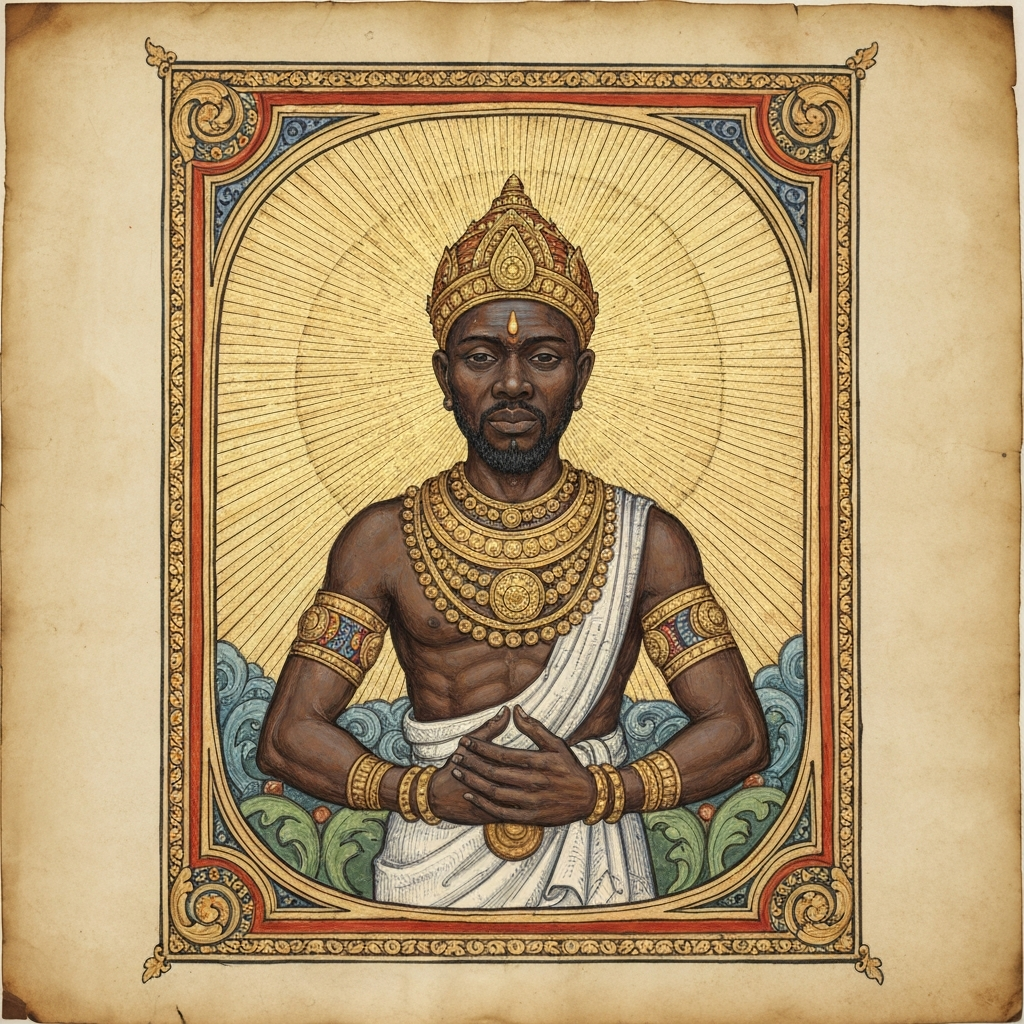
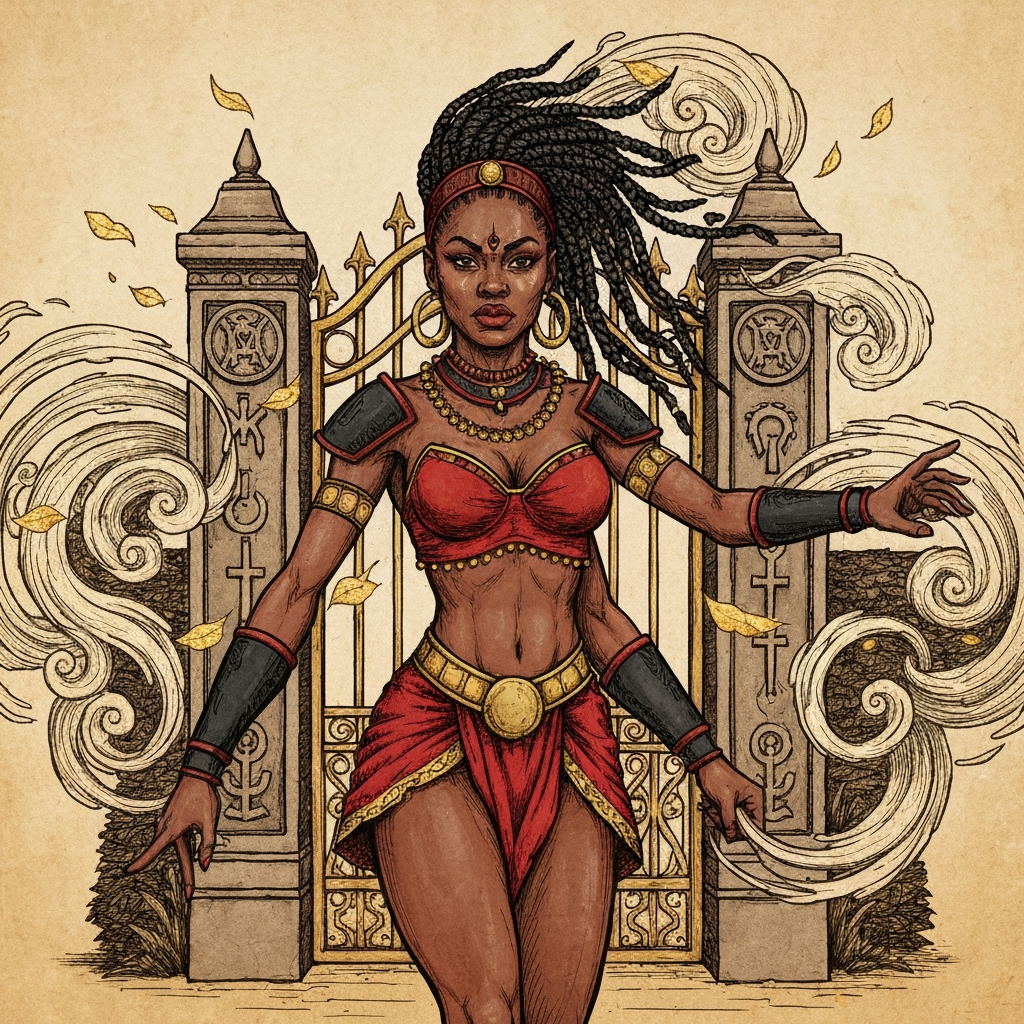
Lore: Eshu (known as Elegba, Elegua, Elegbara, Legba, Exu depending on tradition and region) is arguably the most important Orisha in practical worship — not because he is the most powerful, but because nothing works without him. He is the divine messenger, the guardian of the crossroads, the opener and closer of doors. Every ceremony begins with offerings to Eshu. Every divination session acknowledges him first. If Eshu is not honored, the roads between the human world and the divine are closed, and no prayer, no sacrifice, no ritual reaches its destination. He is the cosmic switchboard operator, and he can choose not to connect the call. Eshu is often described as a trickster, and this is accurate but incomplete. He is not a prankster — he is the principle of necessary chaos, the force that prevents the universe from becoming rigid. He tests humans not out of malice but to reveal character. He disrupts not to destroy but to create space for growth. He sits at every crossroads because every decision point in life is his domain.
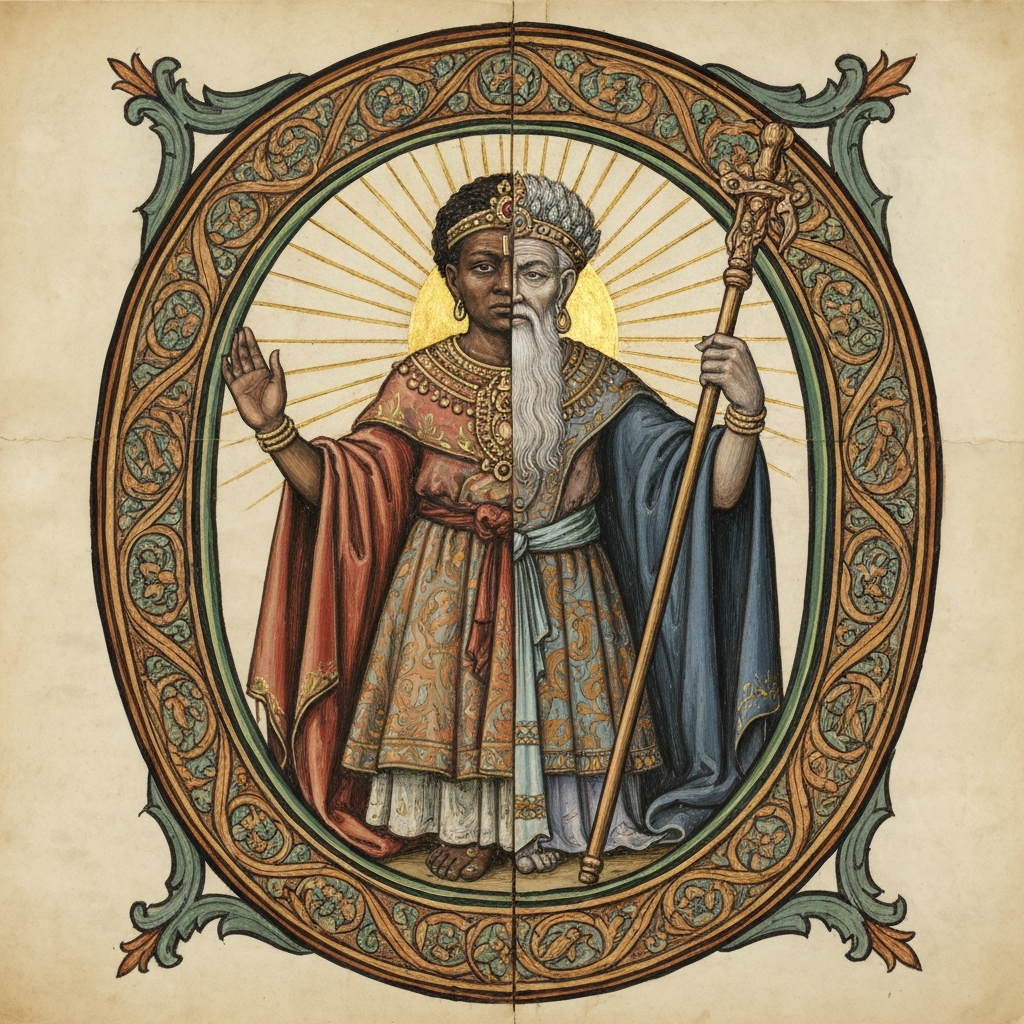
Parallel: Eshu maps onto Hermes/Mercury (divine messenger, psychopomp, trickster, guardian of crossroads) with remarkable precision — both carry messages between the divine and human realms, both guard transitions and boundaries, both are associated with roads and travelers. The comparison to the Holy Spirit as intermediary is structurally valid: both serve as the channel through which divine communication reaches humans. The comparison to Loki is common but misleading — Loki is ultimately destructive and self-serving, while Eshu is a necessary cosmic function. Eshu is closer to the Zen concept of the koan: the disruption that breaks through rigid thinking to reveal deeper truth. In Haitian Vodou, Eshu becomes Papa Legba, the old man at the crossroads who opens the gate between worlds.
1 min read
Nothing counters Eshu. He IS the counter -- the divine disruptor who prevents the universe from becoming stagnant. Without chaos, order becomes tyranny. Eshu prevents that
Odu Ifa (Ifa divination verses); Robert Farris Thompson, *Flash of the Spirit* (1983); Joseph Murphy, *Santeria: African Spirits in America* (1988)