Combat Profile
Plague's Mercy
Inflicts or cures epidemic afflictions across populations, wielding disease as both scourge and salvation.
Compassion Through Suffering
All damage dealt to Babalú-Ayé converts a portion into healing energy for the afflicted and outcast.
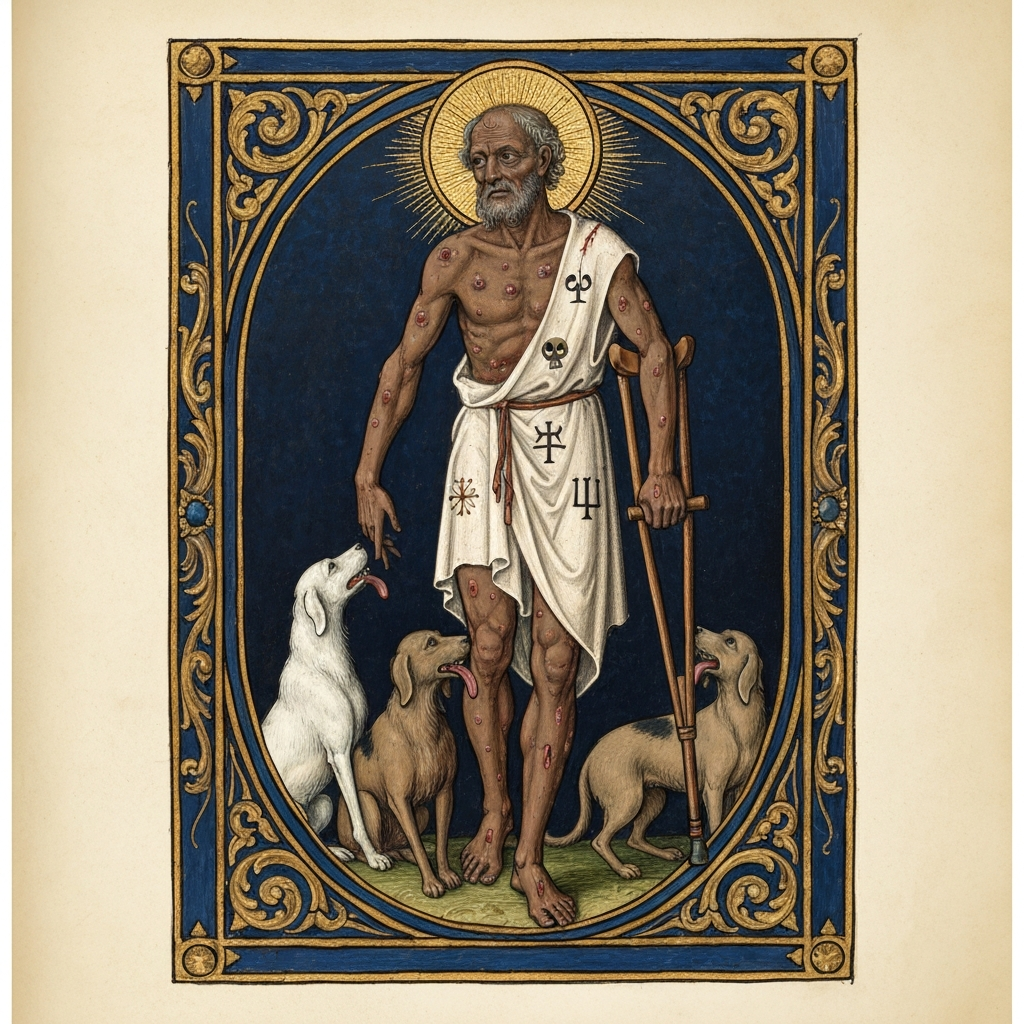
He is his own weakness. Babalu-Aye limps, covered in sores, leaning on a crutch. His power over disease was won through his own suffering. He cannot be separated from the pain he heals
“Babalu-Aye: the earth trembles where he walks. The sick call his name because he knows their suffering from the inside.” — Oriki (praise poem)
Lore: Babalu-Aye (Omolu/Obaluaye in Brazil, Babalu-Aye/San Lazaro in Cuba) is one of the most feared and most loved Orishas — the lord of epidemic disease who is himself covered in sores, who limps on a crutch wrapped in burlap, who is accompanied by dogs that lick his wounds. His mythology is a story of exile and return: he was cast out (the reasons vary by lineage — disobedience, sexual transgression, or simply because the other Orishas could not bear his diseased presence) and wandered alone until the Fon people (in present-day Benin) accepted him. His cult is enormously powerful in Cuba, where his syncretization with St. Lazarus (the beggar covered in sores whose dogs licked his wounds, Luke 16:19-31) is one of the most deeply felt identifications in all of Santeria. The annual pilgrimage to the church of San Lazaro in El Rincon, Cuba (December 17) draws hundreds of thousands of devotees, many crawling on their knees for miles. During the AIDS epidemic, Babalu-Aye became newly relevant as the Orisha who understands plague from the inside.
Parallel: The parallel with the biblical Lazarus (Luke 16:19-31) is so precise that the syncretism feels inevitable: both are covered in sores, both are accompanied by dogs who lick their wounds, both are outcasts who are ultimately vindicated by God. But the deeper parallel is with Job — the righteous sufferer whose torment becomes the source of his authority to speak about God’s ways (Job 42:5: “My ears had heard of you but now my eyes have seen you”). Babalu-Aye also parallels Raphael the healing archangel, whose name means “God heals,” and Asclepius, the Greek god of medicine who was himself wounded. The archetype of the wounded healer — the one who can cure because he has suffered — is universal.
1 min read
Disobedience of his taboos (sesame is sacred to him and must not be eaten by his devotees; violating this brings illness). He is also countered by arrogance -- those who mock the sick or believe themselves immune to suffering attract his attention
Odu Ifa; Robert Farris Thompson, *Flash of the Spirit* (1983); Migene Gonzalez-Wippler, *Santeria: The Religion* (1989)