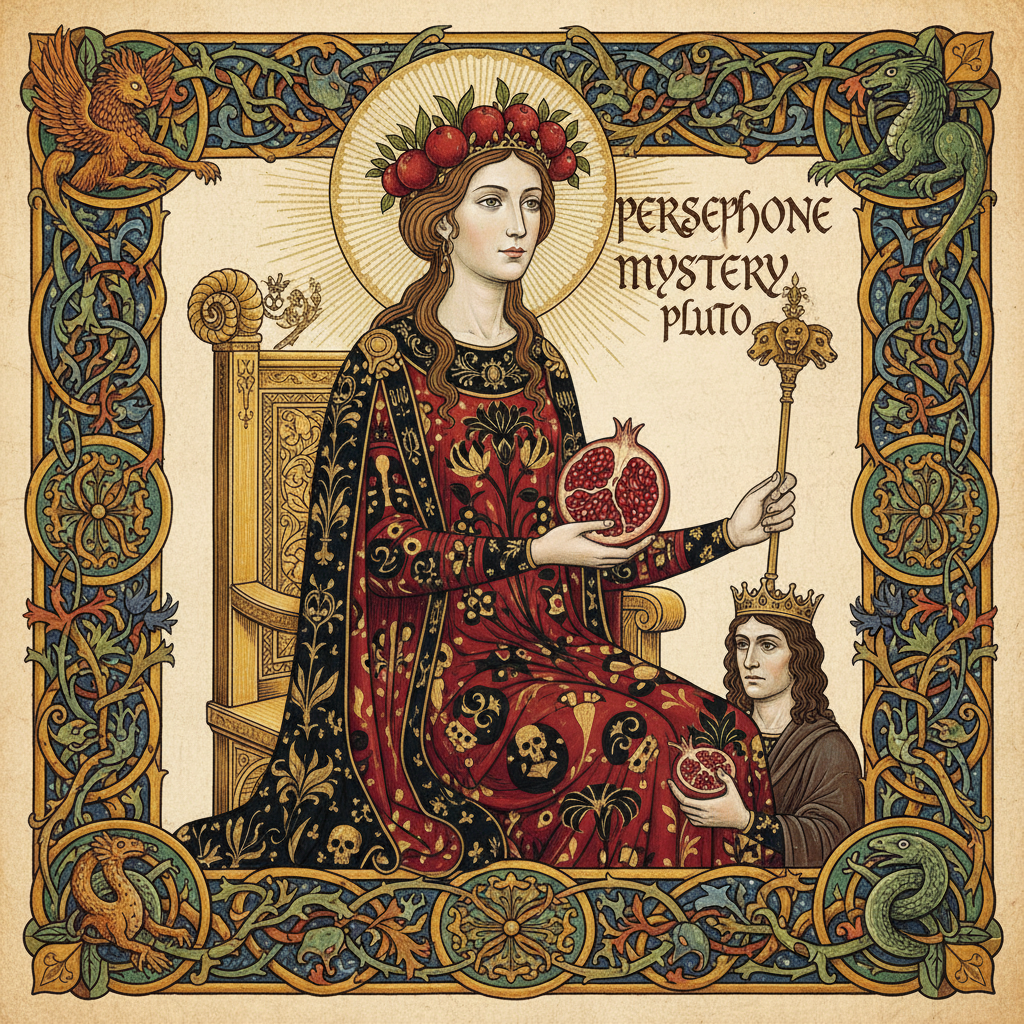
Combat Profile
Cycle of Return
Persephone resurrects a fallen ally and grants them temporary immunity to death for one cycle.
Dual Sovereignty
Persephone exists between realms, gaining power from both life and death; she cannot be permanently harmed while her cycle remains incomplete.
Bound to the underworld for half the year (the pomegranate seeds)
“Blessed is he who has seen these things before departing beneath the earth; for he understands the end of mortal life, and the beginning given by Zeus.” — Pindar, on the Eleusinian Mysteries
The Eleusinian Mysteries were the most famous, most prestigious, and longest-running mystery cult in the ancient world — roughly 2,000 years, from approximately 1500 BC to their suppression in 392 AD by the Christian emperor Theodosius. Every major figure in Greek and Roman culture was initiated: Plato, Cicero, Hadrian, Marcus Aurelius. The penalty for revealing the secret rites was death. And the secret was never revealed. Two millennia, tens of thousands of initiates, and we still do not know exactly what happened in the Telesterion (the initiation hall at Eleusis). This is one of the most remarkable facts in all of religious history.
What we do know: the mysteries centered on the myth of Persephone’s abduction by Hades, her mother Demeter’s grief (which caused the earth to become barren — winter), and Persephone’s annual return (spring). The initiation involved a preparatory fast, a procession from Athens to Eleusis, a sacred drink (kykeon, made of barley, water, and pennyroyal — possibly psychoactive), and a climactic revelation in the Telesterion involving “things said, things done, and things shown.” Whatever the initiates experienced, it permanently removed their fear of death. Cicero called it “the greatest gift Athens gave to humanity.”
Compare: The death/resurrection pattern across all mystery cults; the Tibetan Bardo Thodol (navigating between death and rebirth); the Christian hope of resurrection; Inanna’s descent and return.
1 min read
Hades (her abductor/husband); winter itself (her absence is the death of nature)
Homeric Hymn to Demeter; Pindar, *Dirges*; Isocrates, *Panegyricus* IV.28; Walter Burkert, *Ancient Mystery Cults*