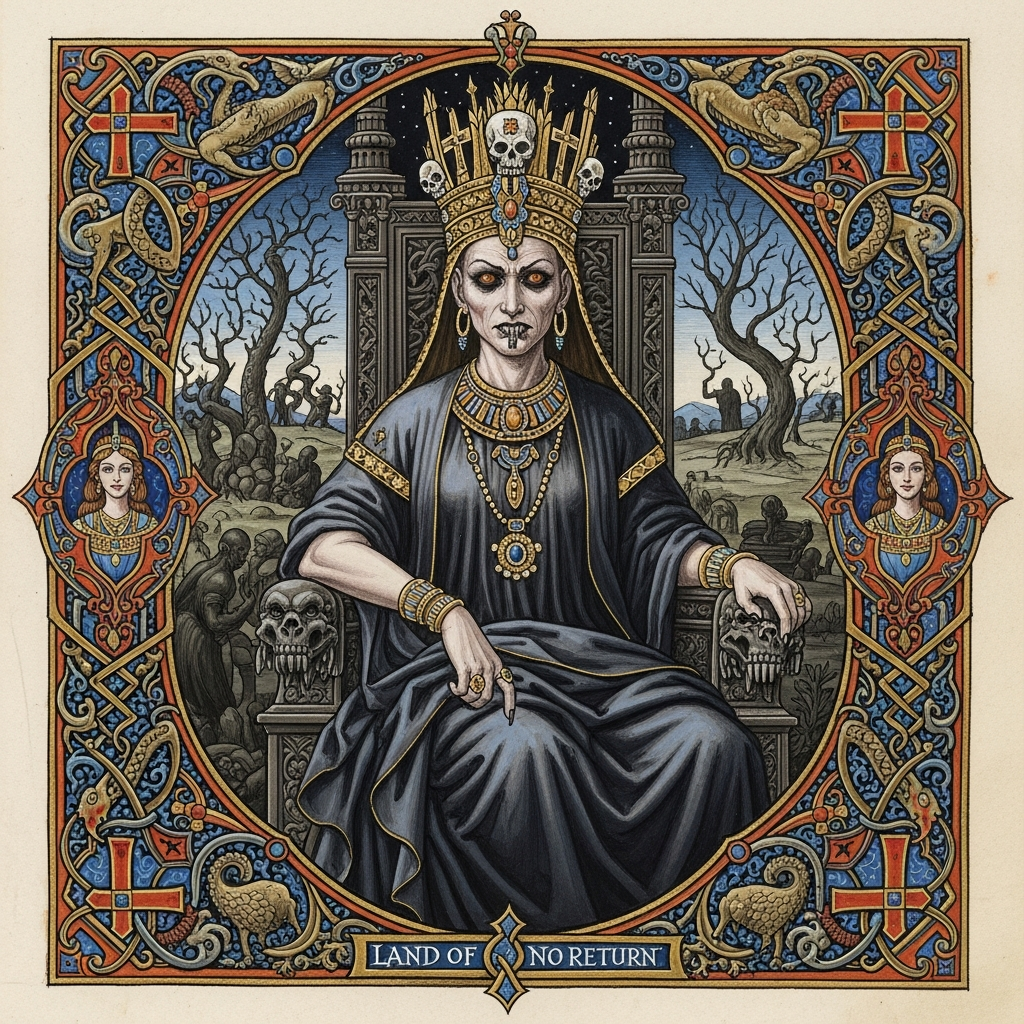
Combat Profile
Decree of the Dead
All enemies are marked for inevitable judgment; those who die while marked cannot be resurrected or restored.
Inescapable Sovereignty
Ereshkigal's rulings are absolute law; she cannot be banished, dispelled, or removed from the underworld, and all death-related effects under her domain bypass conventional defenses.
“No one who enters the underworld ever ascends from the underworld. Whoever descends to the underworld — if she should wish to come back up — she must provide a substitute.”
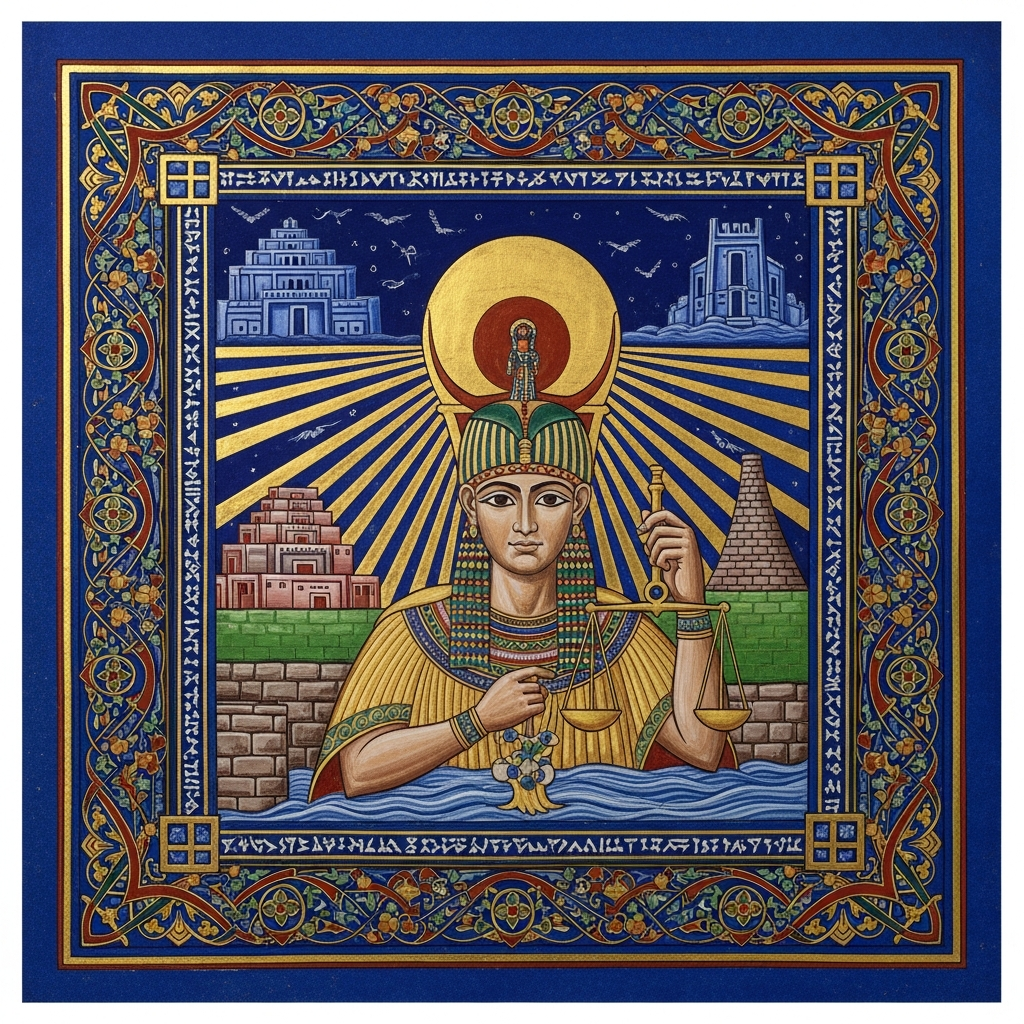
Ereshkigal is not evil — she is law. She rules the underworld not because she chose to but because the cosmic order requires it. She is Ishtar’s older sister and her dark mirror: where Ishtar embodies desire and vitality, Ereshkigal embodies finality and decay. When Ishtar arrives demanding entry, Ereshkigal strips her of all power and kills her — not from malice but because that is what the underworld does. Her domain parallels Sheol in the Hebrew Bible: not a place of punishment (that concept comes later) but an inevitable, grey, silent destination for all the dead. Ecclesiastes 9:10 — “there is no work or thought or knowledge or wisdom in Sheol, to which you are going” — could be a description of Ereshkigal’s kingdom. She is also the prototype for every “Queen of Hell” figure in later demonology.
1 min read
Descent of Inanna; Nergal and Ereshkigal