Combat Profile
Celestial Reckoning
Sin reveals the hidden patterns of fate and time itself, granting allies the ability to anticipate future events and rewrite predetermined outcomes
Lunar Sovereignty
Sin's presence enforces the passage of time and cycles of destiny; all temporal magic is enhanced and divination attempts gain supernatural clarity
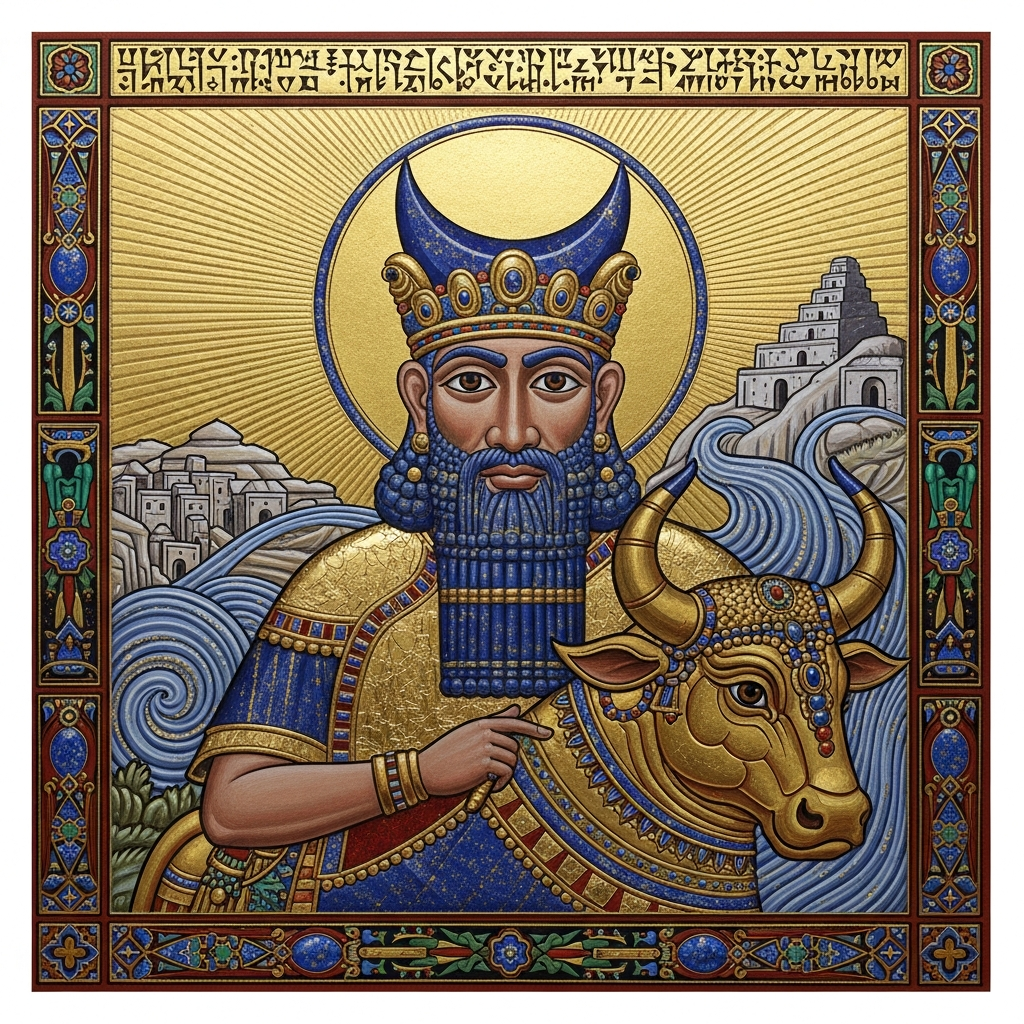
“Sin, lord of the gods, whose horns are bright in heaven.”
Sin (Akkadian; Nanna in Sumerian, Suen archaic) is the lunar deity whose two great cult cities are intimately connected to biblical narrative: Ur of the Chaldees, Abraham’s birthplace (Genesis 11:28-31), and Harran, where Abraham’s father Terah died (Genesis 11:32). Both were Sin’s chief temples, and the great ziggurat of Ur (built by Ur-Nammu, c. 2100 BCE) was dedicated to him. Some scholars have suggested Abraham’s call out of Ur and away from Harran represents a deliberate departure from Sin worship into devotion to YHWH. The last neo-Babylonian king, Nabonidus (r. 556-539 BCE), was a fanatical devotee of Sin who attempted to elevate him over Marduk — alienating the Babylonian priesthood and arguably hastening the Persian conquest under Cyrus.
Cross-tradition parallels: Chandra (Hindu moon god); Khonsu (Egyptian moon god); Yarikh (Canaanite lunar deity); the moon-god worship explicitly forbidden in Deuteronomy 4:19; Allah’s pre-Islamic background as a Hijazi lunar deity is debated but Sin-adjacent.
1 min read
The Hymn to Sin; the Nabonidus Cylinder; Ur III royal inscriptions; Genesis 11:31 (Abraham's family at Ur and Harran)