Combat Profile
Tiamat's Defeat
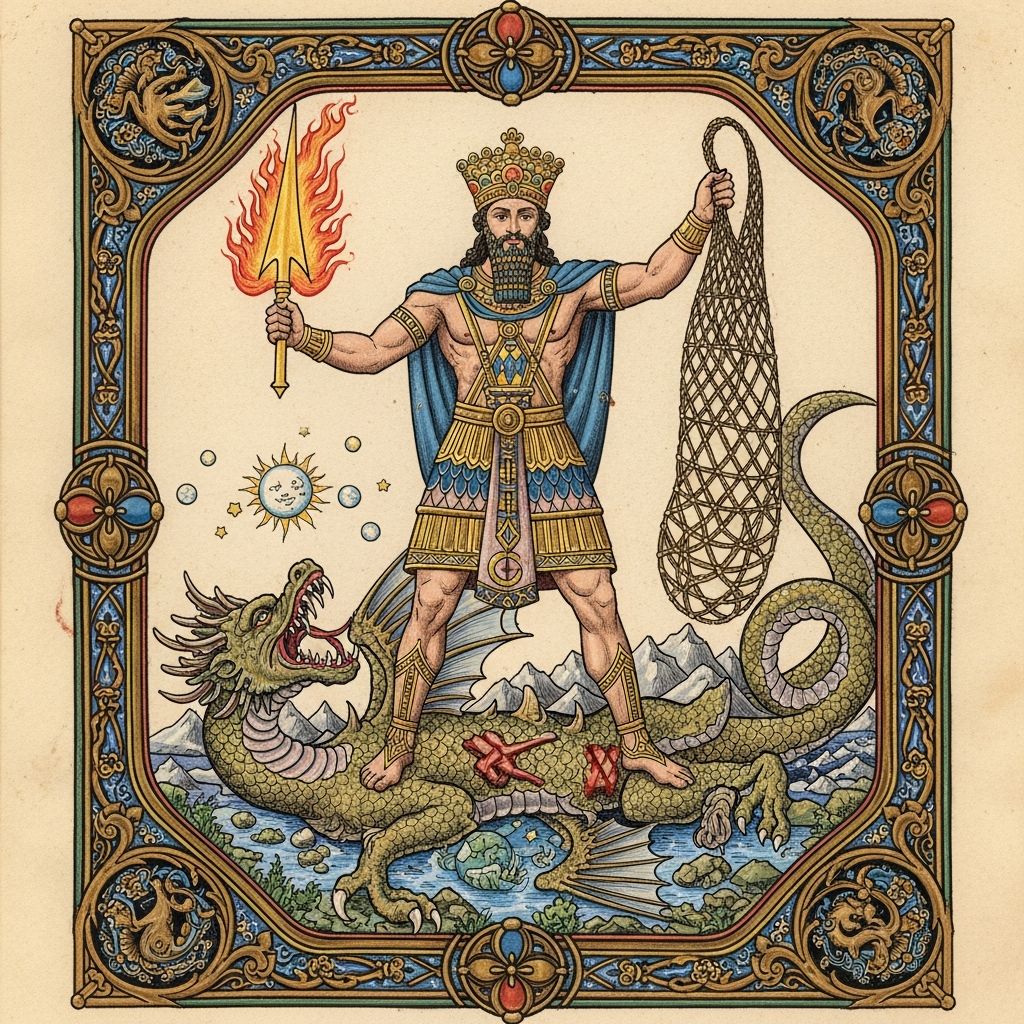
Marduk absorbs the corpse of chaos itself, gaining dominion over creation and the authority to reshape reality itself.
Divine Kingship
All allied entities gain increased power in Marduk's presence, and he cannot be challenged by those of lesser divine rank.
“He split her like a shellfish into two parts: half of her he set up as a covering for heaven, the other half he made as the earth beneath.” — Enuma Elish IV
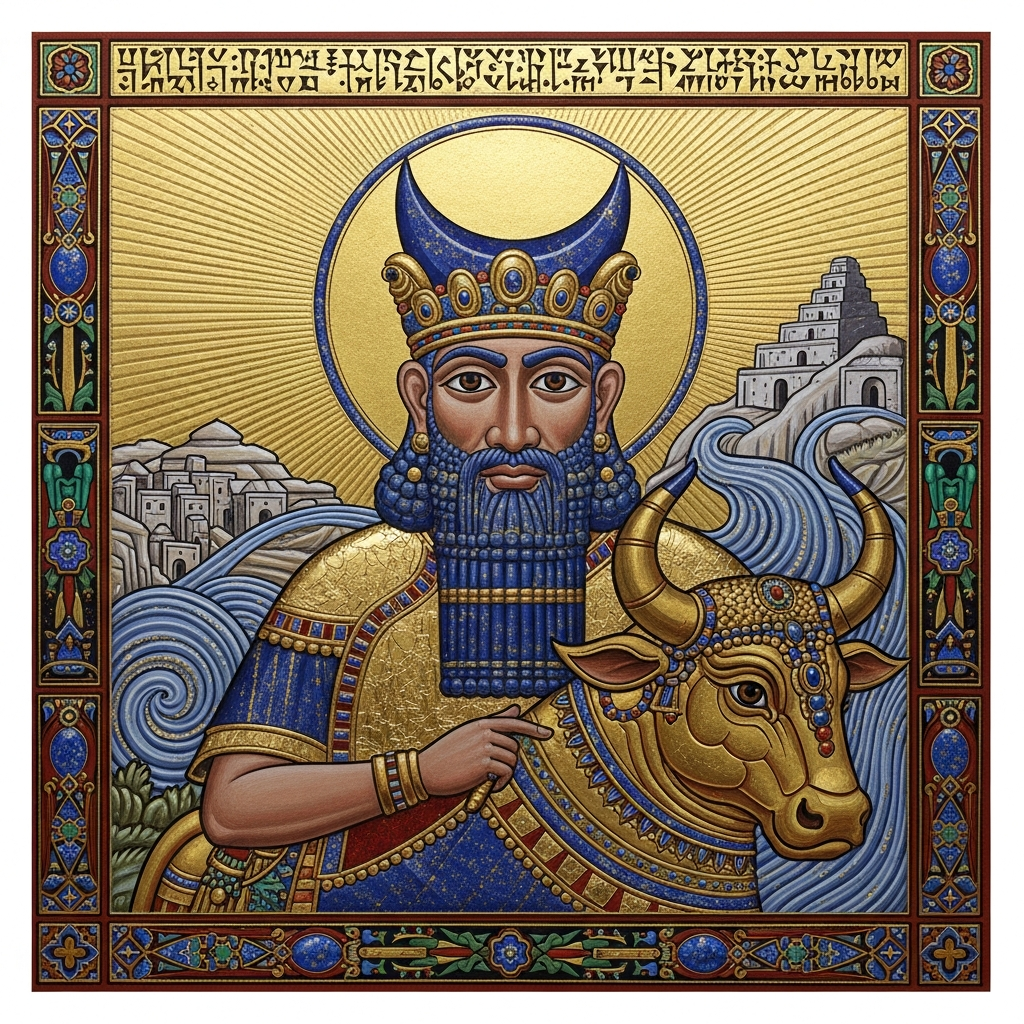
Marduk is the supreme creation myth condensed into a single deity. Young, bold, and willing to fight where Anu and Enlil would not, Marduk volunteers to battle Tiamat on the condition that he be granted supreme authority over all the gods (Enuma Elish IV). He traps her in a net of winds, shoots an arrow down her throat, and splits her corpse in two: one half becomes the sky, the other the earth (Enuma Elish IV). From the blood of her general Kingu, he fashions humanity to serve the gods (Enuma Elish VI). This is the Enuma Elish, Babylon’s creation epic, recited every New Year. Its parallels to Genesis 1 are extensive: the splitting of primordial waters to create sky and earth, the separation of chaos into order, the sequential creation culminating in humanity. But where Genesis abstracts the violence into divine speech (“Let there be…”), the Enuma Elish preserves the original dragon-slaying combat — a combat that echoes in Psalm 74:13-14 (“You broke the heads of the sea monsters”), Isaiah 51:9 (“Was it not you who cut Rahab in pieces?”), and Job 26:12-13 (Enuma Elish IV; Genesis 1:6-7).
1 min read
Enuma Elish (all seven tablets)