Combat Profile
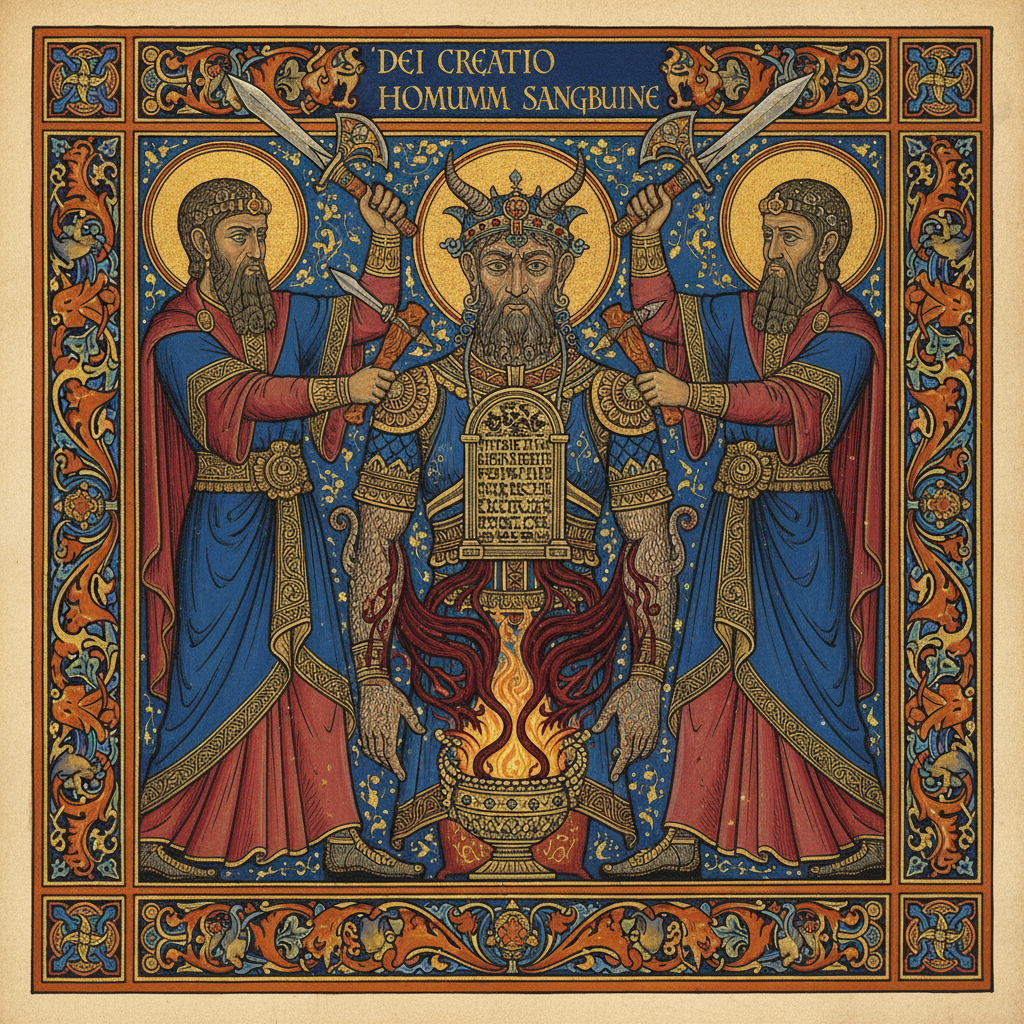
Tablet of Destinies
Kingu seizes control of fate itself, rewriting the outcome of any single divine conflict or mortal battle in his favor.
Primordial Defiance
As Tiamat's chosen consort and bearer of the Tablet, Kingu cannot be permanently defeated by lesser beings and regenerates from chaos magic.
“They bound him, holding him before Ea. They imposed on him his punishment and severed his blood vessels. Out of his blood they fashioned mankind.” — Enuma Elish VI
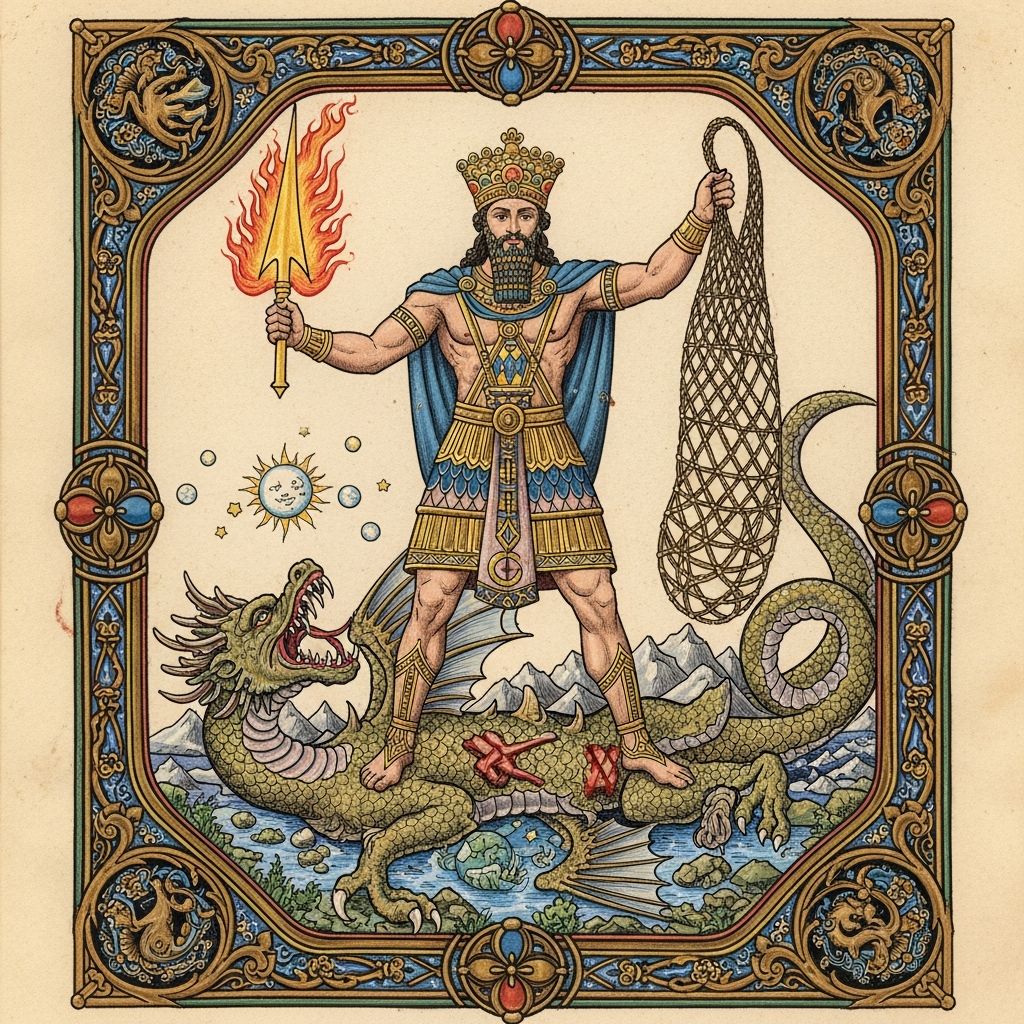
Kingu is a tragic figure: elevated to supreme command by Tiamat, handed the Tablet of Destinies (the cosmic artifact that governs fate itself), and then crushed by Marduk and butchered so that his blood could be mixed with clay to create humanity (Enuma Elish VI). The theological implication is staggering — in the Babylonian worldview, humans are literally made from the substance of a rebellious god. This maps onto the biblical concept of humanity created from divine substance (the breath of God in Gen 2:7, the image of God in Gen 1:27), but with a darker edge: the Mesopotamian version encodes rebellion and sacrifice into humanity’s very blood (Enuma Elish VI; Genesis 1:27). Kingu also parallels Satan in the Revelation narrative — a lieutenant of the great dragon who is bound and judged after the dragon’s defeat (Rev 20:1-3).
1 min read
Enuma Elish I, VI