Combat Profile
Cyclical Descent
Dumuzi dies and is reborn each year, granting temporary invulnerability followed by a period of weakness that mirrors the agricultural seasons.
Shepherd's Covenant
All fertility and growth-based effects within Dumuzi's presence are amplified, while barrenness and decay are slowed.
“Then he said to me, ‘Have you seen this, son of man? You will see still greater abominations than these.’ Then he brought me to the entrance of the north gate of the house of the Lord, and behold, there sat women weeping for Tammuz.” — Ezekiel 8:14
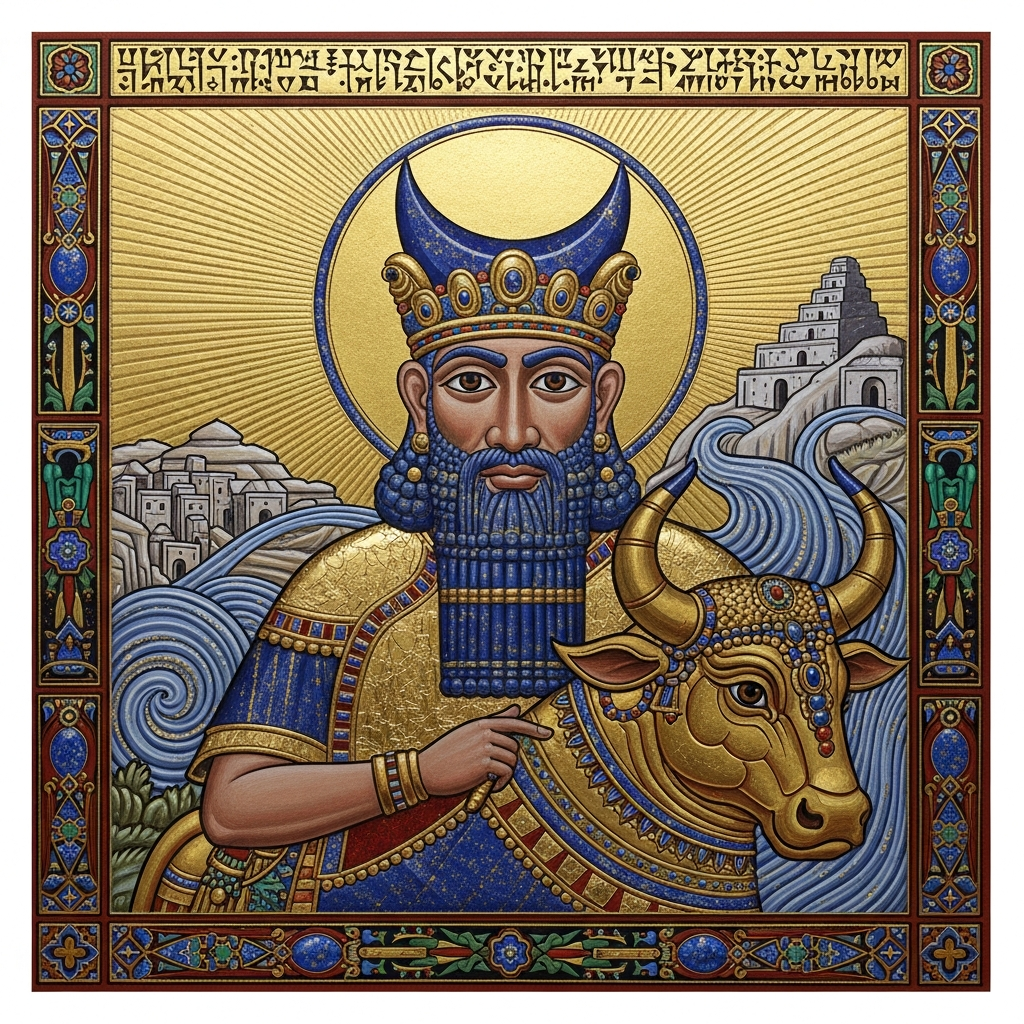
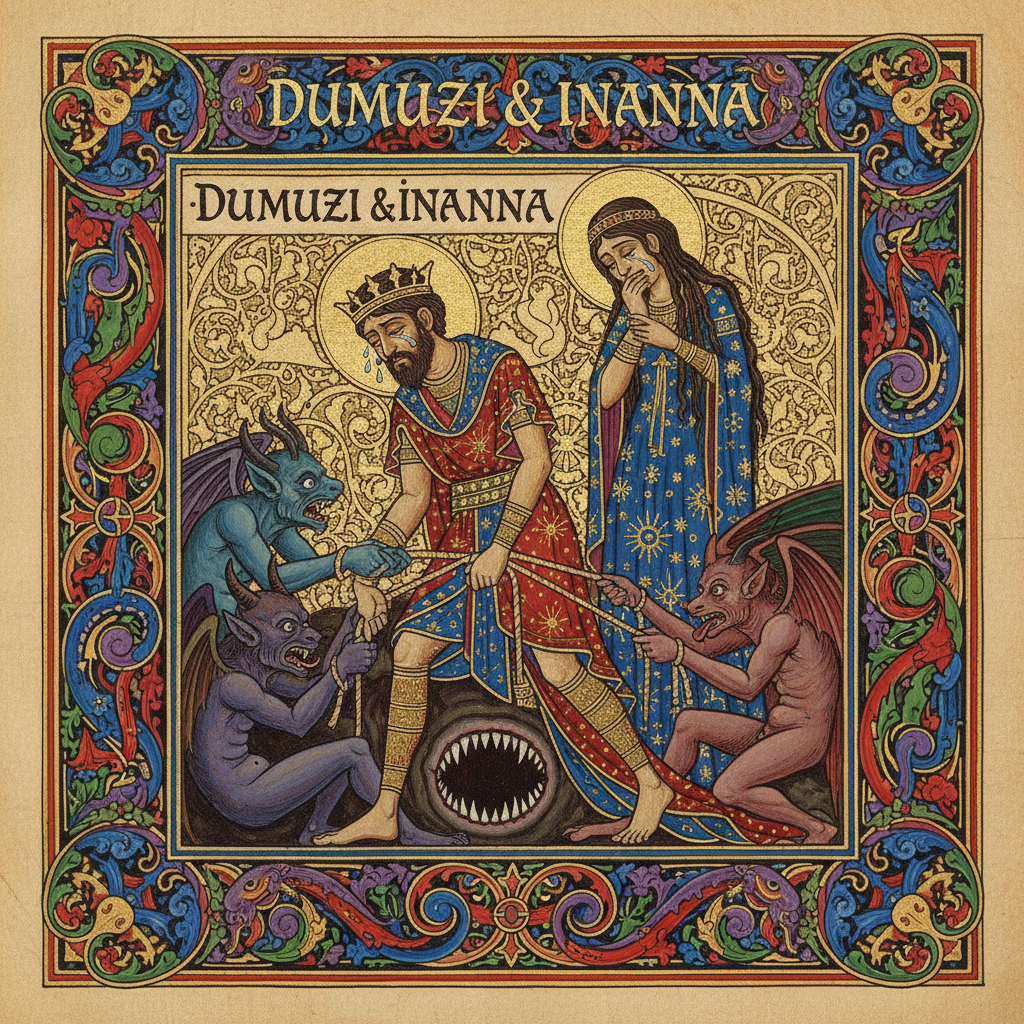
Dumuzi/Tammuz is the only Mesopotamian deity named in the Bible itself (Ezekiel 8:14). In Ezekiel’s vision, the prophet is shown the worst abominations being committed at the Temple in Jerusalem, and one of them is women weeping for Tammuz — performing the Mesopotamian mourning rites for the dying god at the very threshold of YHWH’s house (Descent of Inanna; Ezekiel 8:14). The mythology behind this cult is poignant: when Ishtar returns from the underworld, she must provide a substitute (Descent of Inanna). She finds Dumuzi sitting comfortably on her throne, ungrieving, and in a rage condemns him to take her place. The Galla demons drag him to the underworld (Descent of Inanna). His sister Geshtinanna volunteers to share his sentence, so Dumuzi spends half the year below (winter) and half above (spring) — the original dying-and-rising god whose death explains the seasons (Descent of Inanna). This cycle influenced the cults of Adonis, Attis, Osiris, and — scholars argue endlessly about this — the resurrection narrative itself.
1 min read
Descent of Inanna; Dumuzi's Dream; Ezekiel 8:14