Combat Profile
Eternal Rebirth
Attis resurrects after death, returning with restored vitality and renewed connection to the cycle of seasons.
Seasonal Renewal
Attis grants regeneration to allies during spring and growth phases, embodying the perpetual cycle of death and resurrection.
Madness -- driven to self-castration and death by Cybele's jealousy
“He slept beneath the pine, and woke in spring.” — Roman festival formula
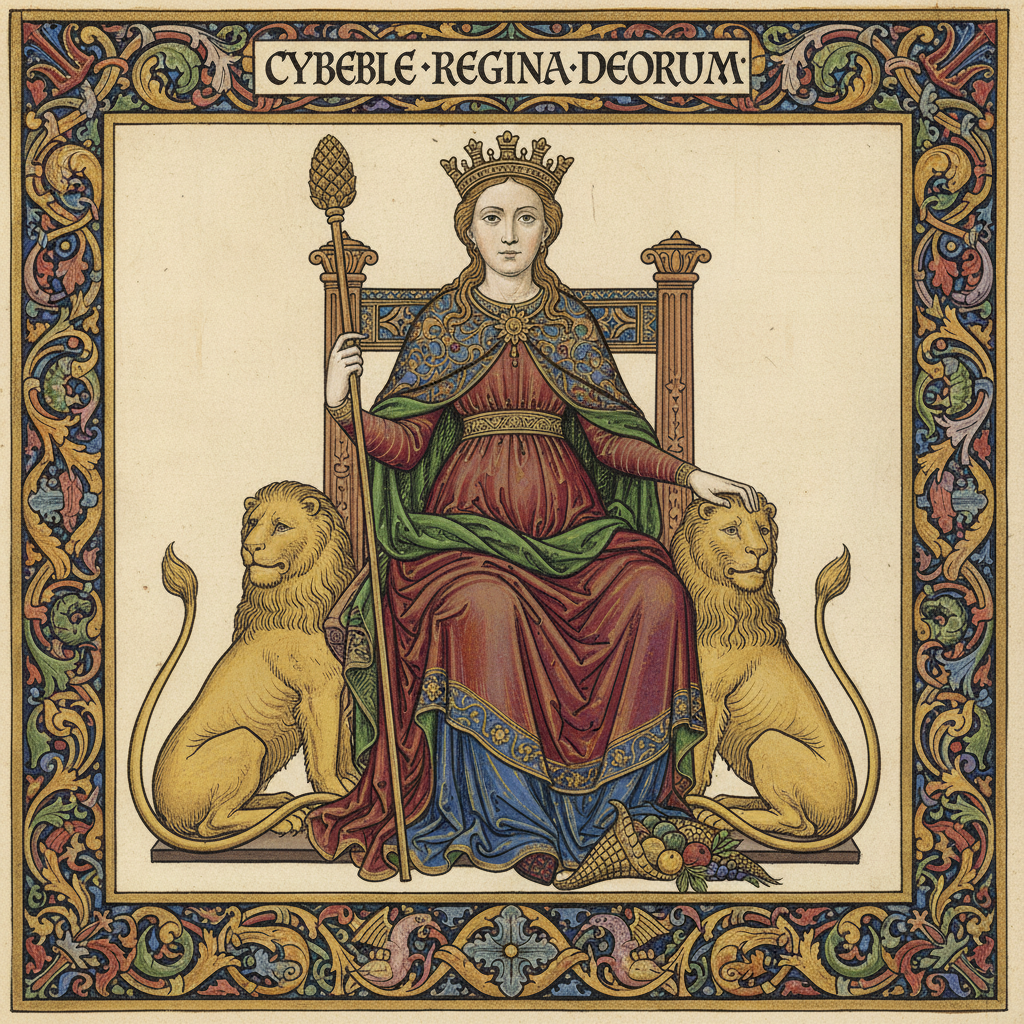
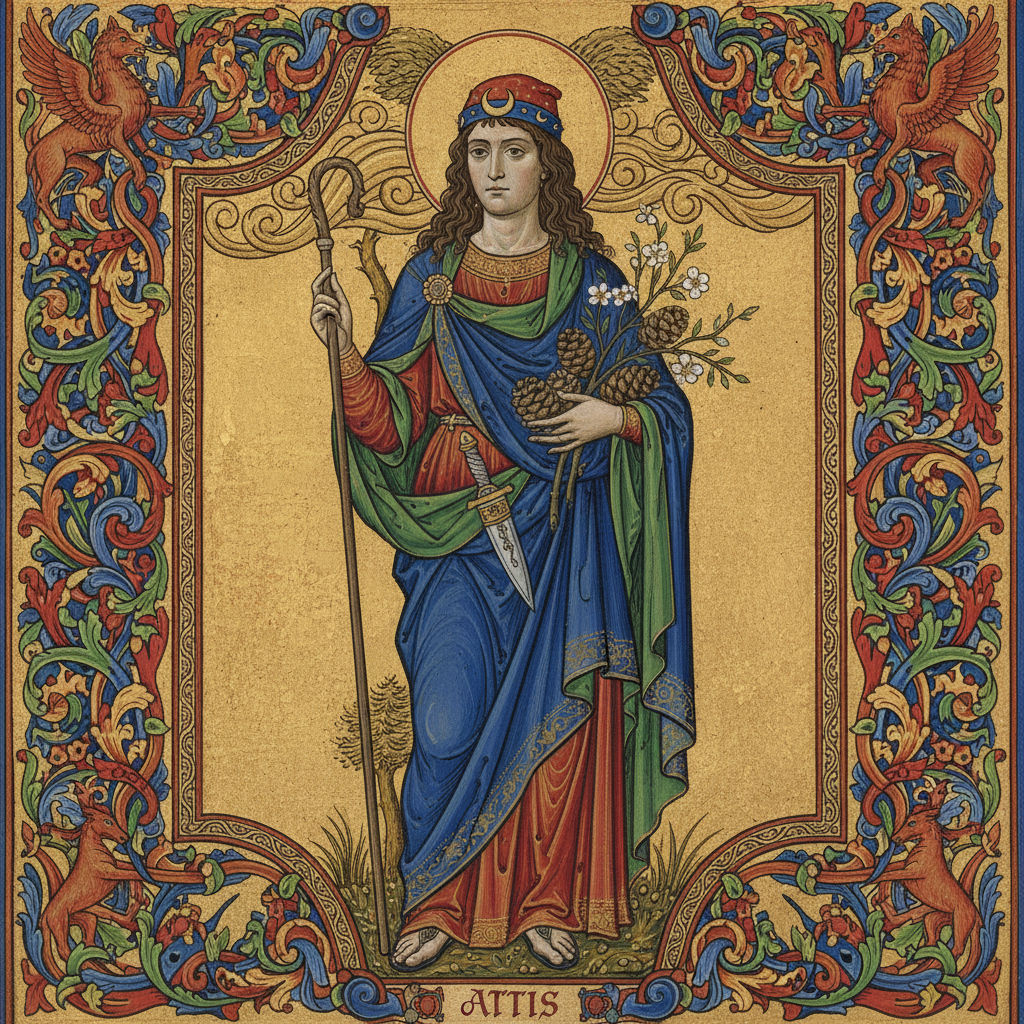
Attis was the young, beautiful shepherd-consort of Cybele. In the Phrygian version, he was born of a virgin (Nana) who conceived by placing an almond (or pomegranate) against her breast. Cybele loved him obsessively. When he attempted to marry a mortal princess, Cybele drove him mad. He castrated himself under a pine tree and bled to death. Violets sprang from his blood. Cybele’s grief was boundless. Zeus granted that Attis’s body would never decay, his hair would continue to grow, and his little finger would move. In later Roman interpretations, this became full resurrection.
The dates are the most provocative element: death on March 22, burial and mourning on March 23, the Day of Blood on March 24, and resurrection (Hilaria) on March 25. The proximity to Easter — and the identical narrative arc of death, mourning, and resurrection in spring — was noted and debated in antiquity. The taurobolium (baptism in bull’s blood) associated with the cult offered “rebirth for eternity” (in aeternum renatus), inscribed on altars. The structural parallel to Christian baptism was impossible to miss, and early Christians knew it.
Compare: Osiris (dismembered, mourned, risen); Baldur (beautiful god killed, mourned by all nature); Christ (death, mourning, resurrection in spring — the parallel that tortured the Church Fathers); Adonis (another dying vegetation god, beloved of Aphrodite).
1 min read
Cybele herself (his creator and destroyer)
Ovid, *Fasti* IV; Catullus 63; Pausanias VII.17; Firmicus Maternus, *De Errore*