Combat Profile
Divine Blueprint
Grants visions of perfect architectural harmony and reveals the will of the gods through sacred dreams, manifesting temples of unshakeable devotion.
Sacred Record
All acts of pious construction and temple dedication are eternally preserved and blessed, granting lasting divine favor to those who follow the inscribed wisdom.
“In the dream, a man whose stature was like that of heaven and whose stature was like that of earth — he was a god — commanded me to build his house. I did not know the heart of that dream. The sun rose for me on the horizon: a woman appeared, holding a pure stylus, and she set down the star tablet of the favorable heavens.”
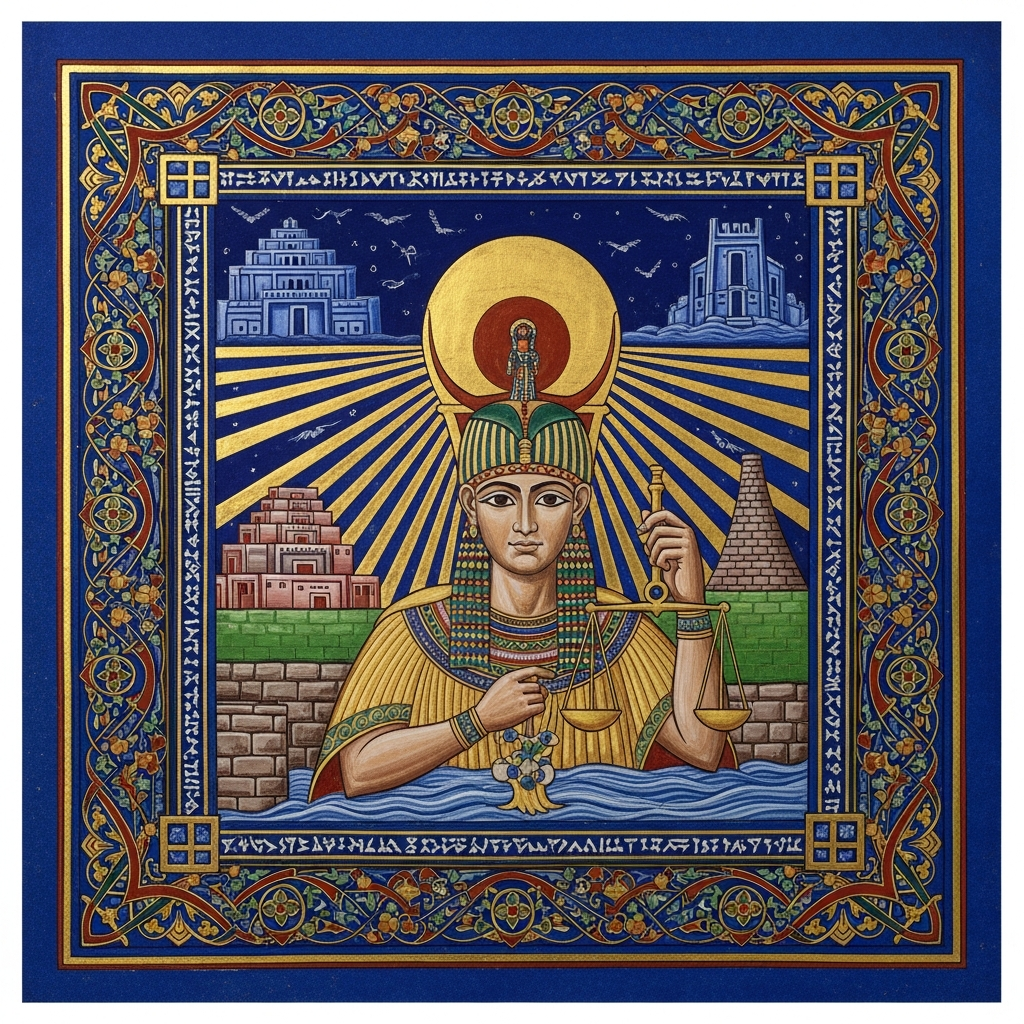
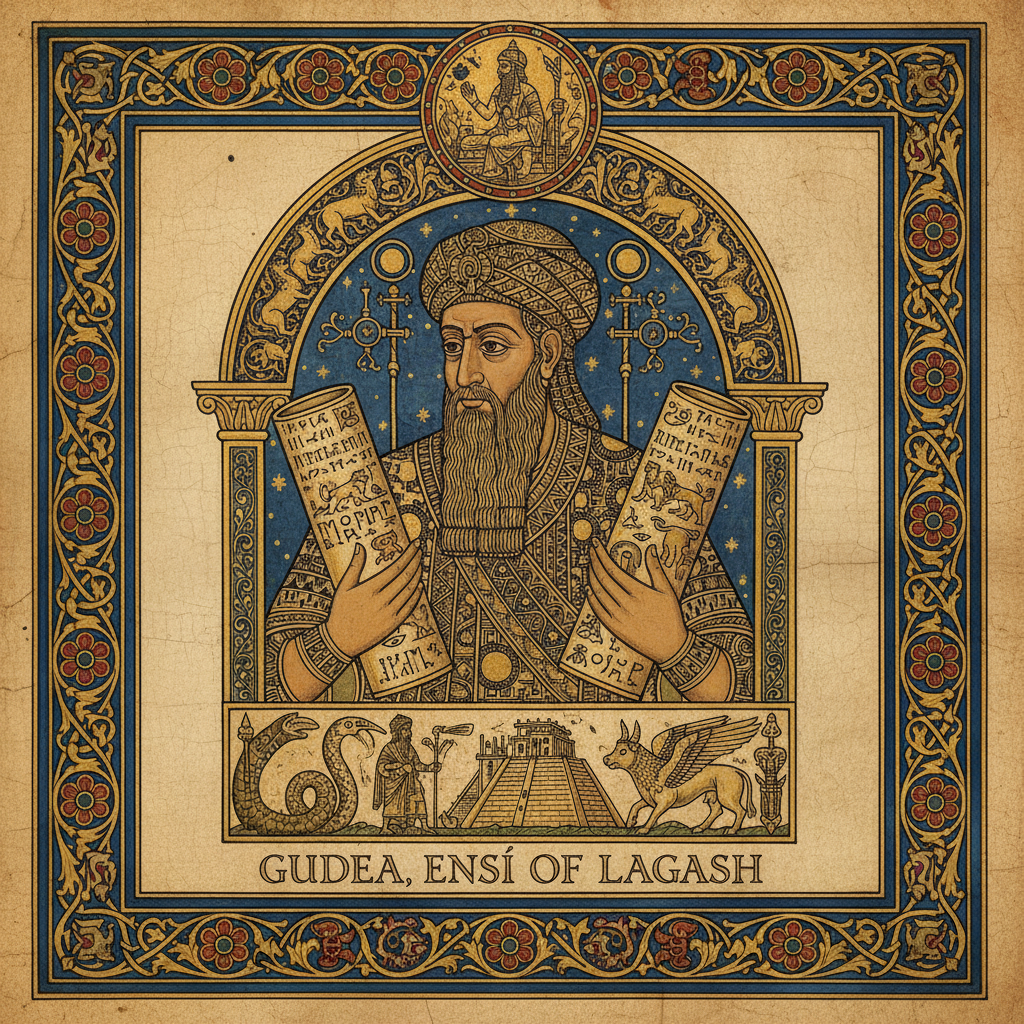
The Gudea Cylinders are not a person but the most beautiful Sumerian religious text (Gudea Cylinders A and B) — two large clay cylinders inscribed around 2144-2124 BCE recording King Gudea of Lagash’s divinely guided construction of the Eninnu temple for the warrior god Ningirsu (Gudea Cylinders). The narrative is extraordinary: Gudea receives a dream in which a god commands him to build (Gudea Cylinders), but he cannot understand the dream. He consults the dream-interpreter goddess Nanshe, who decodes it symbol by symbol (Gudea Cylinders). Then the goddess Nisaba appears holding the plans of the temple written in the stars (Gudea Cylinders). Every material, every measurement, every ritual is dictated by the gods (Gudea Cylinders). Gudea is not the architect — he is the instrument. The parallel to the biblical temple-building tradition is structural and profound: Solomon builds the Temple according to plans given by God (1 Chronicles 28:11-19 — “All this… the Lord made me understand in writing by his hand upon me”). Moses builds the Tabernacle according to a heavenly pattern shown on the mountain (Exodus 25:9). Nehemiah rebuilds the walls of Jerusalem under divine guidance (Gudea Cylinders; 1 Chronicles 28; Exodus 25). The Gudea Cylinders reveal that the concept of divinely dictated architecture — God as architect, king as builder — was already fully developed in Sumer a thousand years before Solomon (Gudea Cylinders). The temple is not a human project with divine approval; it is a divine project with a human contractor.
1 min read
Gudea Cylinders A and B (ETCSL 2.1.7); Dietz Otto Edzard, *Gudea and His Dynasty*