Combat Profile
Abzu's Blessing
Enki grants divine knowledge and magical prowess to mortals, teaching them arts of civilization while binding them to the freshwater abyss.
Master of Crafts
Enki's presence enhances all magical workings and grants insight into hidden schemes; he perceives deception with perfect clarity.
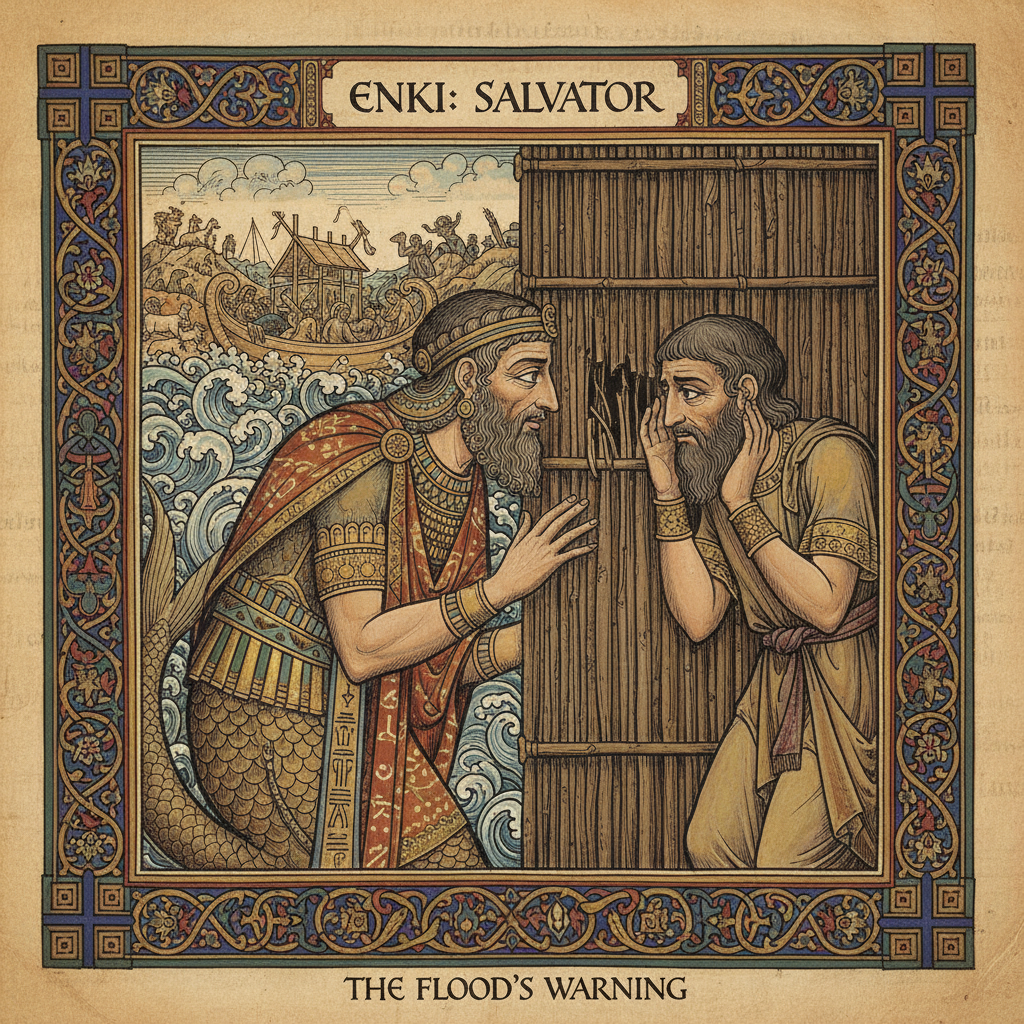
“Wall, wall! Reed wall, reed wall! Hear my words — tear down thy house, build a boat!” — Enki warning Utnapishtim through a reed wall (Gilgamesh XI)
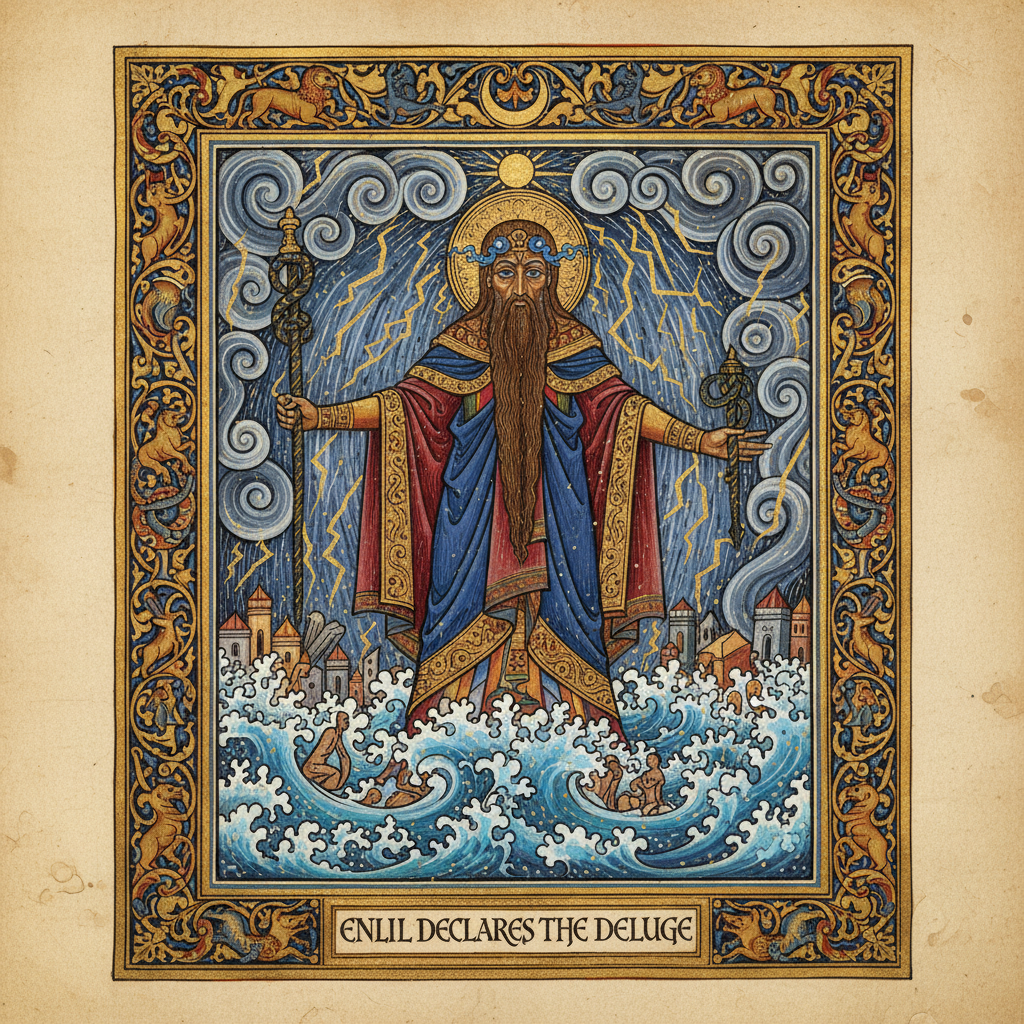
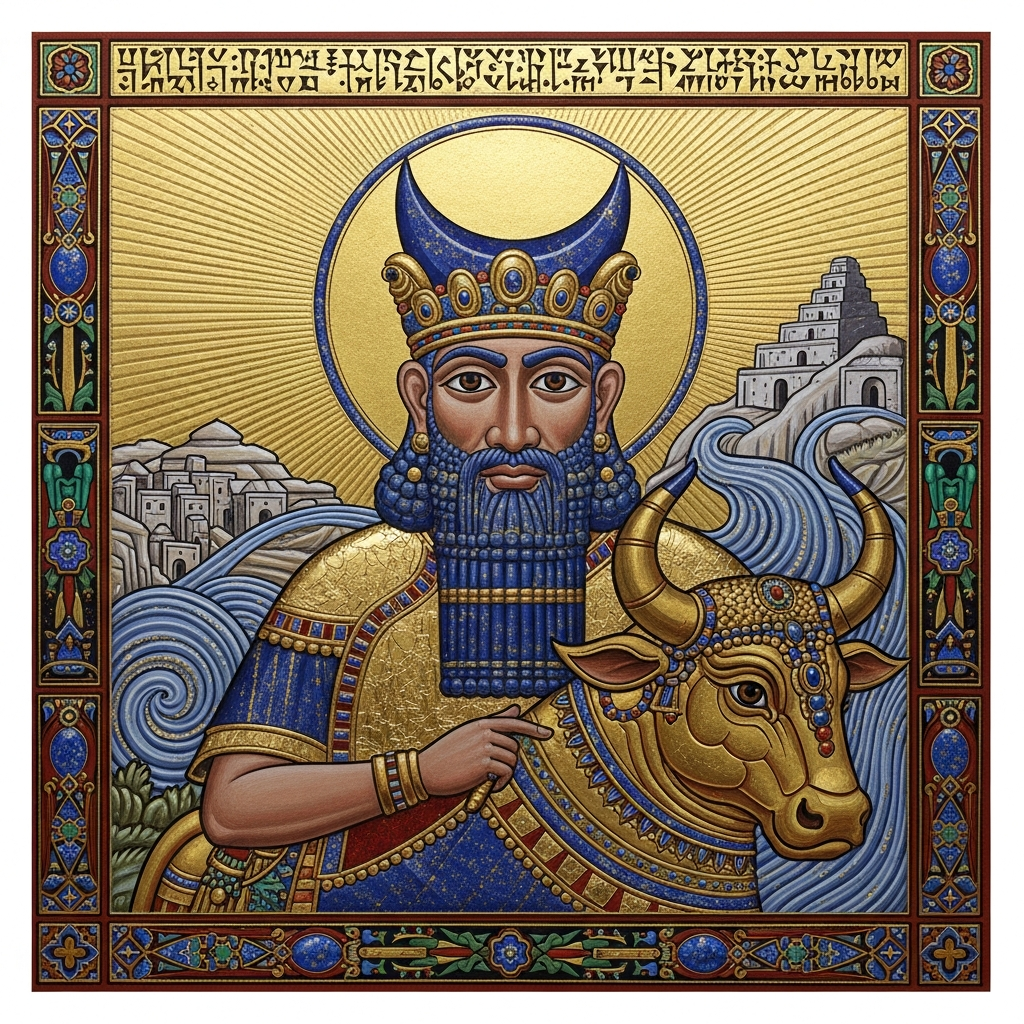
Enki is the most sympathetic god in the Mesopotamian pantheon: he is clever, compassionate, and perpetually subverting the harsh decrees of Enlil to save humanity. When Enlil sends the Flood, Enki finds a loophole — he was sworn not to tell any human, so he tells a wall while Utnapishtim happens to be listening (Epic of Gilgamesh XI; Atrahasis III). He creates the first humans from clay mixed with divine blood (Atrahasis I). He gives Adapa (the first sage) wisdom but is unable to prevent Anu from tricking Adapa out of immortality (Adapa myth). In biblical terms, Enki occupies a strange dual role: he is both the God who warns Noah (Gen 6:13-14) and the Promethean/serpentine figure who gives forbidden knowledge. His domain of freshwater (the Abzu) sits beneath the earth — a concept that surfaces in Genesis 7:11 as “the fountains of the great deep” (Epic of Gilgamesh XI; Genesis 7:11).
1 min read
Atrahasis; Enki and Ninhursag; Adapa myth; Enuma Elish