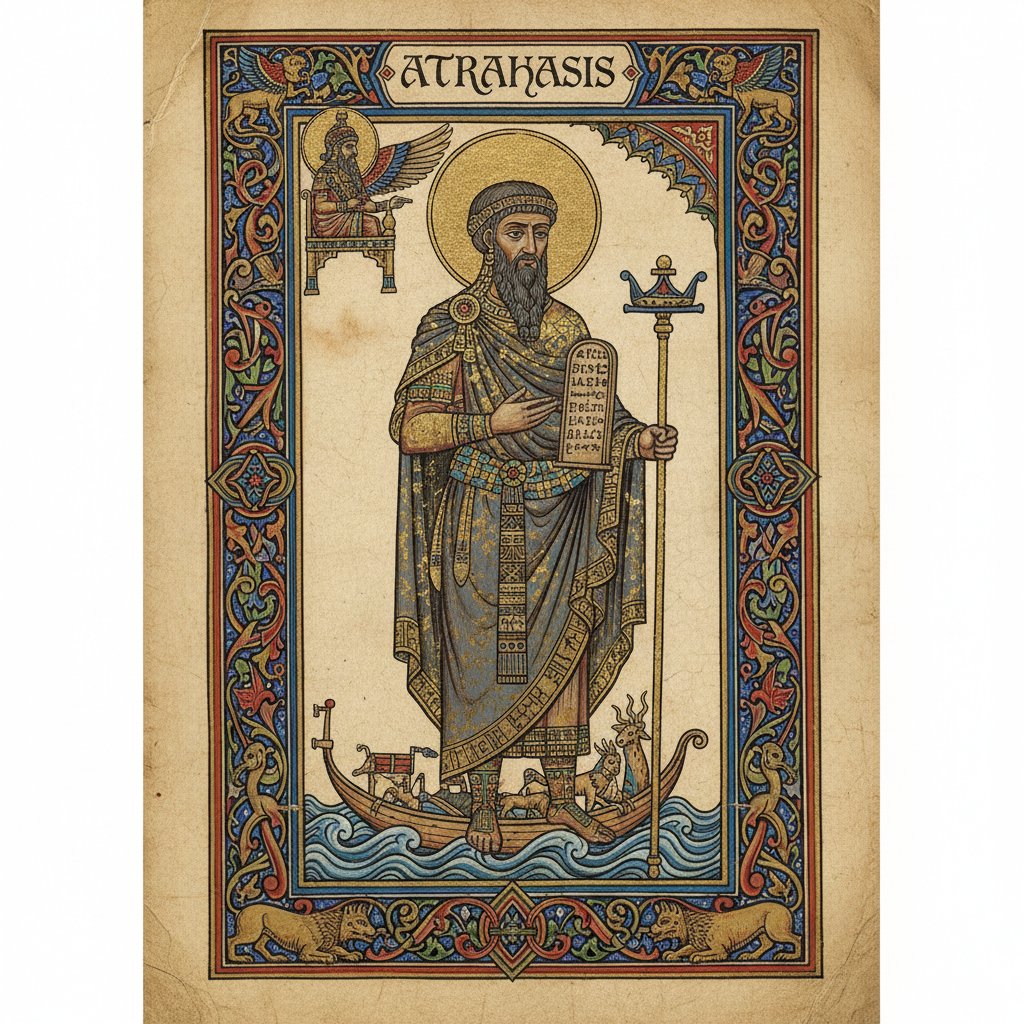
Combat Profile
Divine Warning
Atrahasis receives visions of catastrophic events and can warn allies of incoming disasters, granting them time to prepare or escape.
Survivor's Wisdom
All wisdom and survival checks gain advantage; Atrahasis cannot be caught unaware by flood or water-based calamities.
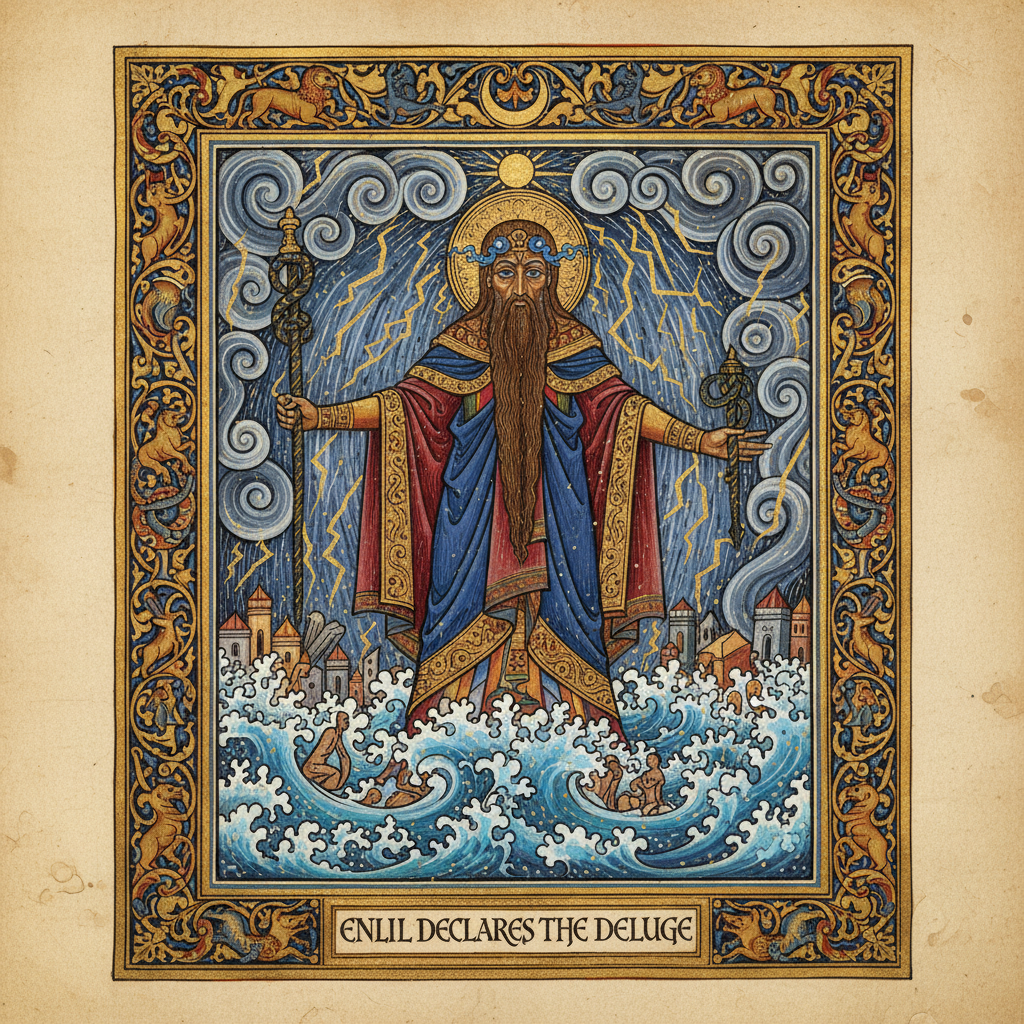
“The land became wide, the people became numerous. The land was bellowing like a bull. The god was disturbed by their uproar. Enlil heard their noise and said to the great gods: ‘The noise of mankind has become too much for me. With their noise I am deprived of sleep.’”
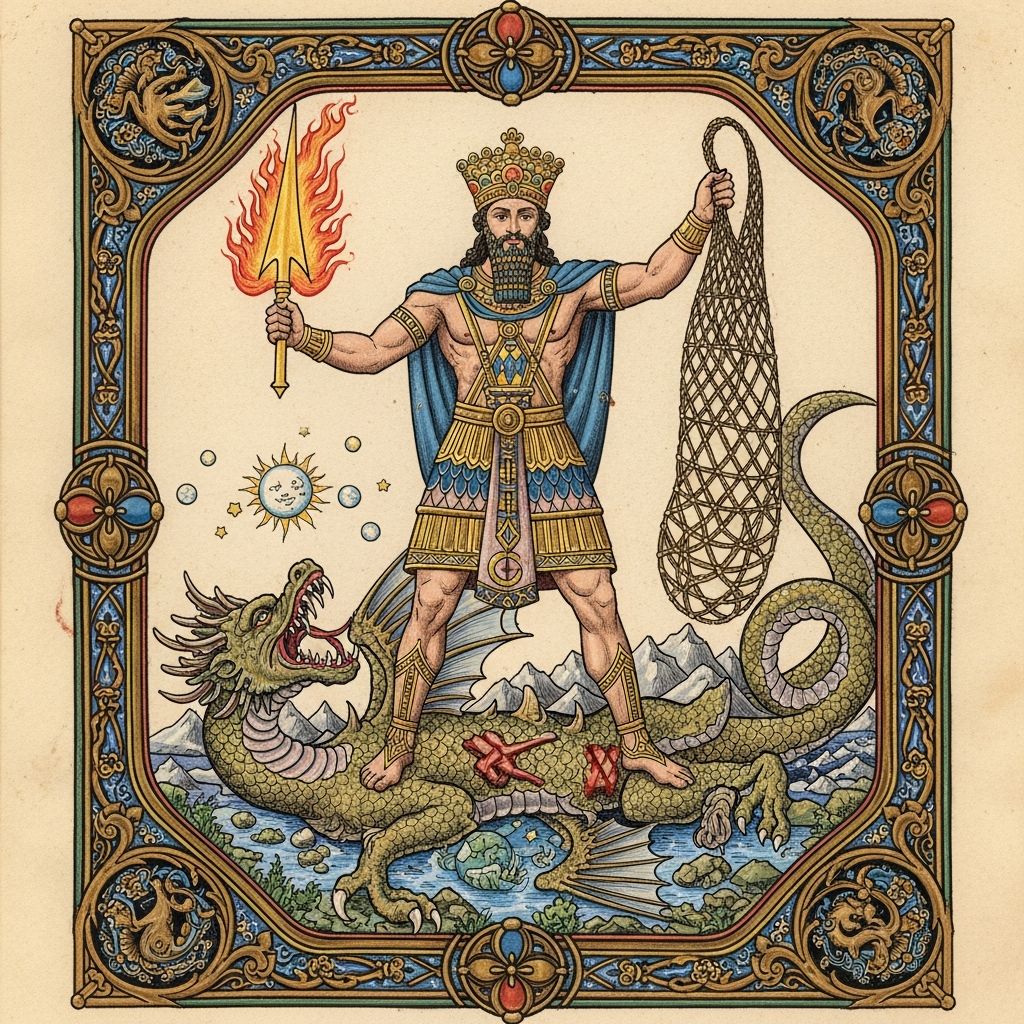
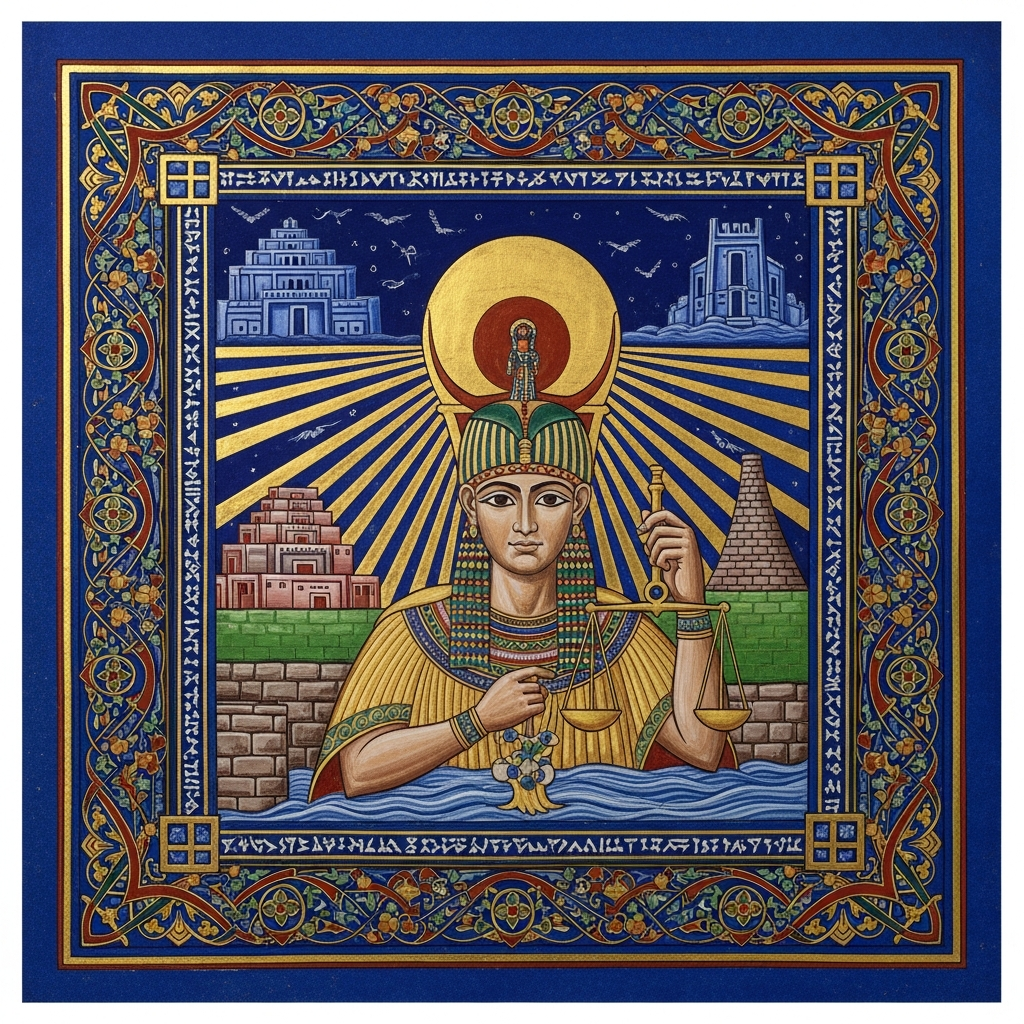
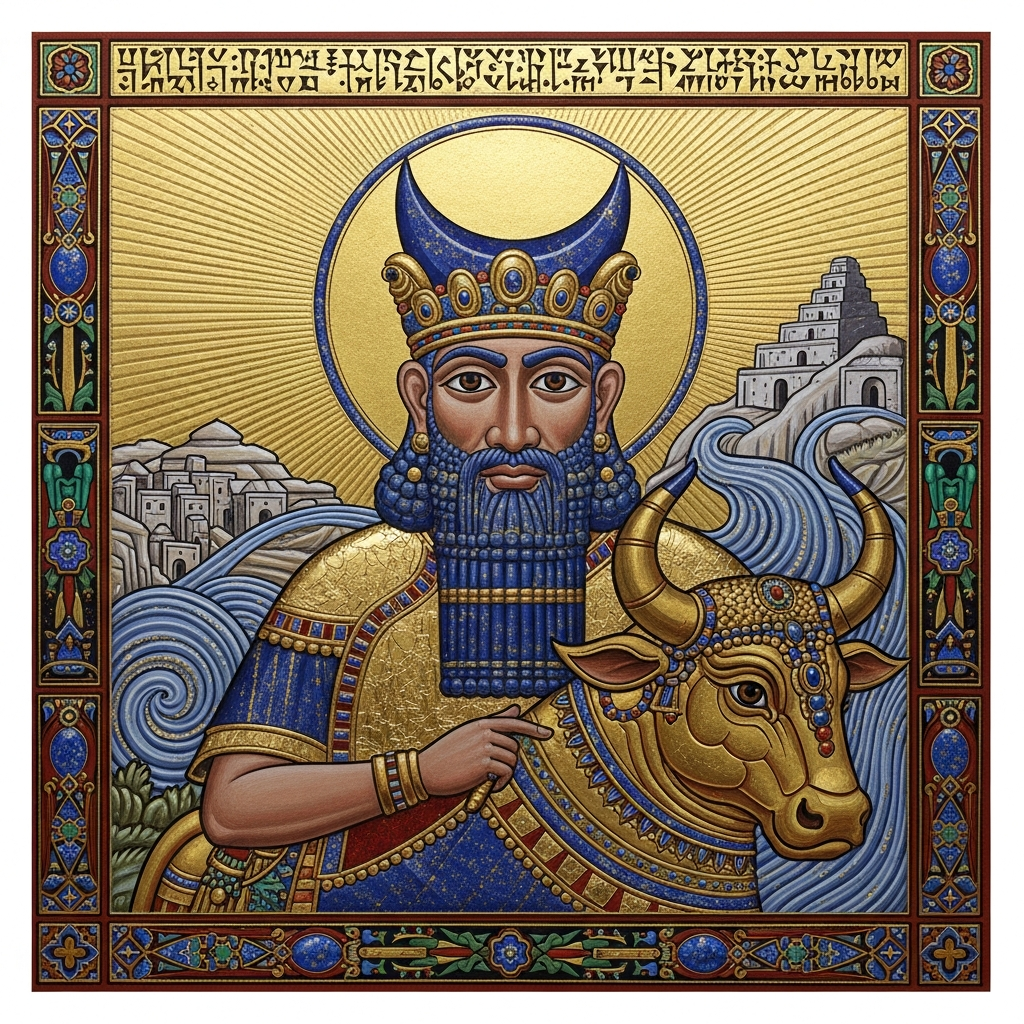
Atrahasis — whose name means “exceedingly wise” (Atrahasis I) — is the protagonist of the most theologically revealing version of the Mesopotamian flood story. Where other versions focus on the flood itself, the Atrahasis Epic spends extensive time explaining why the gods sent it (Atrahasis I): humanity was too noisy and Enlil could not sleep. This is not metaphor — the text means literal noise (Atrahasis I). The gods first try plague, then drought, then famine (Atrahasis I-II), and when none of these reduce the population enough, they resort to the Flood (Atrahasis III). The triviality of the divine motivation — genocide because of noise complaints — stands in devastating contrast to Genesis 6:5, where YHWH sends the Flood because of moral wickedness (Atrahasis III; Genesis 6:5). The Atrahasis version exposes what the Genesis authors deliberately changed: they replaced divine irritation with divine justice, transforming a story about capricious gods into a story about righteous judgment (Atrahasis; Genesis 6). The Atrahasis Epic also contains the fullest Mesopotamian account of human creation: the gods create humans from clay mixed with the blood of a slaughtered god (Geshtu-e) (Atrahasis I), so that humans can do the manual labor the lesser gods refuse to perform. Humanity was created to be a servant class — a concept Genesis directly contradicts by making humans the image-bearers of God, created to rule, not to serve (Atrahasis I; Genesis 1:27).
1 min read
Atrahasis Epic (Old Babylonian, ~1700 BCE); Stephanie Dalley, *Myths from Mesopotamia*; Benjamin Foster, *Before the Muses*