Combat Profile
Soul Seizure
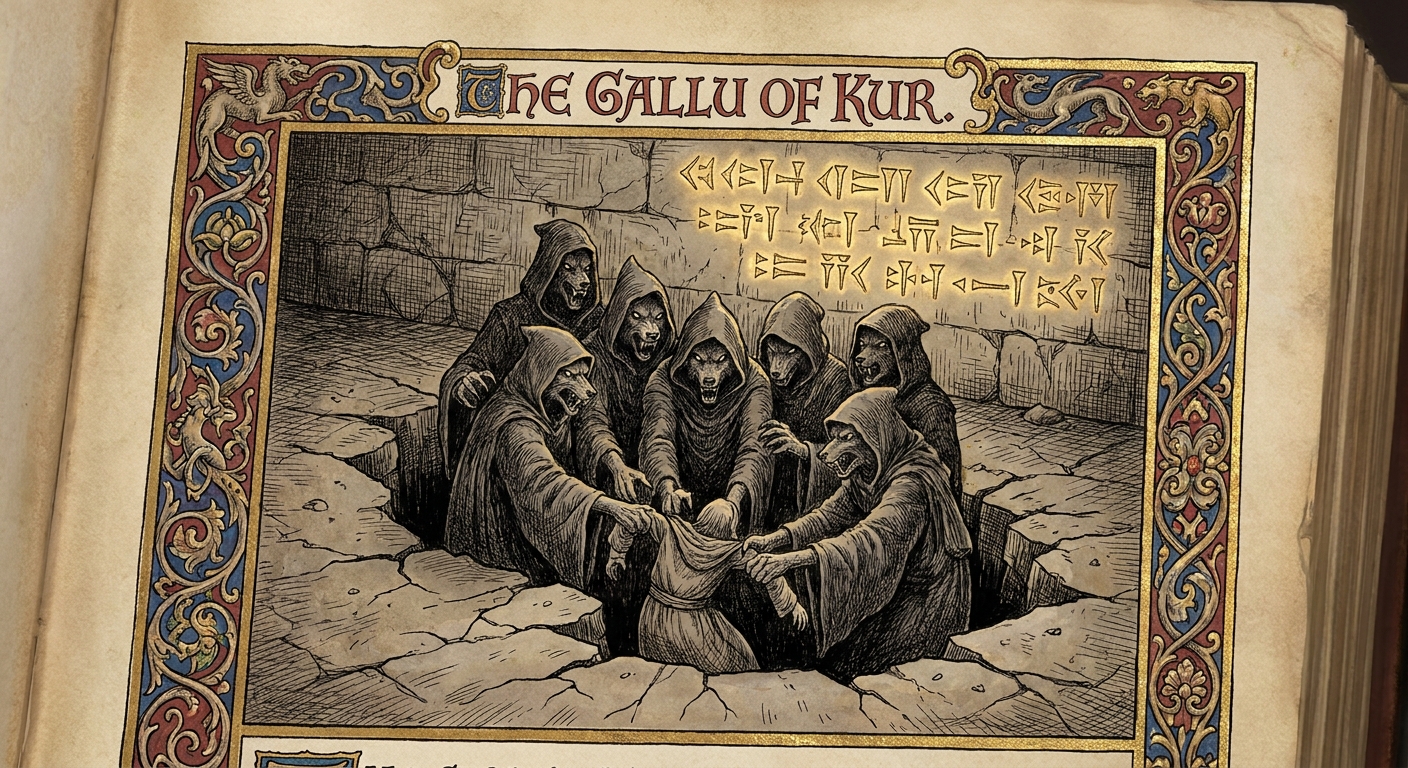
Gallu drags a target's spirit directly to the underworld, bypassing mortal defenses and enforcing Ereshkigal's law with inexorable force.
Underworld Enforcement
Gallu cannot be turned back once set upon a target; their pursuit is relentless and their claim on the condemned is absolute.
“The Galla were demons who know no food, who know no drink, who eat no offerings, who drink no libations, who accept no gifts. They enjoy no lovemaking. They have no sweet children to kiss. They tear the wife from the husband’s arms.”
The Galla are the IRS of the Mesopotamian underworld: emotionless, incorruptible, and absolutely relentless. When Ishtar returns from the dead, the Galla accompany her as escorts — and as debt collectors. Someone must go below in her place, and the Galla will not leave until they have a substitute. They drag Dumuzi to the underworld without pity or hesitation. They cannot be bribed with food, sex, or prayer — the three currencies that work on every other supernatural being in Mesopotamian religion. Their parallel in biblical tradition is the concept of the harrowing of hell and the inescapability of Sheol: Psalm 139:8 (“If I make my bed in Sheol, you are there”), Amos 9:2 (“Though they dig into Sheol, from there my hand shall take them”). The Galla embody the principle that death’s agents do not negotiate.
1 min read
Descent of Inanna; various incantation texts