Combat Profile
Divine Decree
Enlil pronounces an unalterable fate upon mortals or nations, reshaping destiny itself with his authoritative word.
Lord of the Great Wind
Enlil's presence manifests constant supernatural storms and atmospheric disturbances that empower his allies and obscure his enemies.
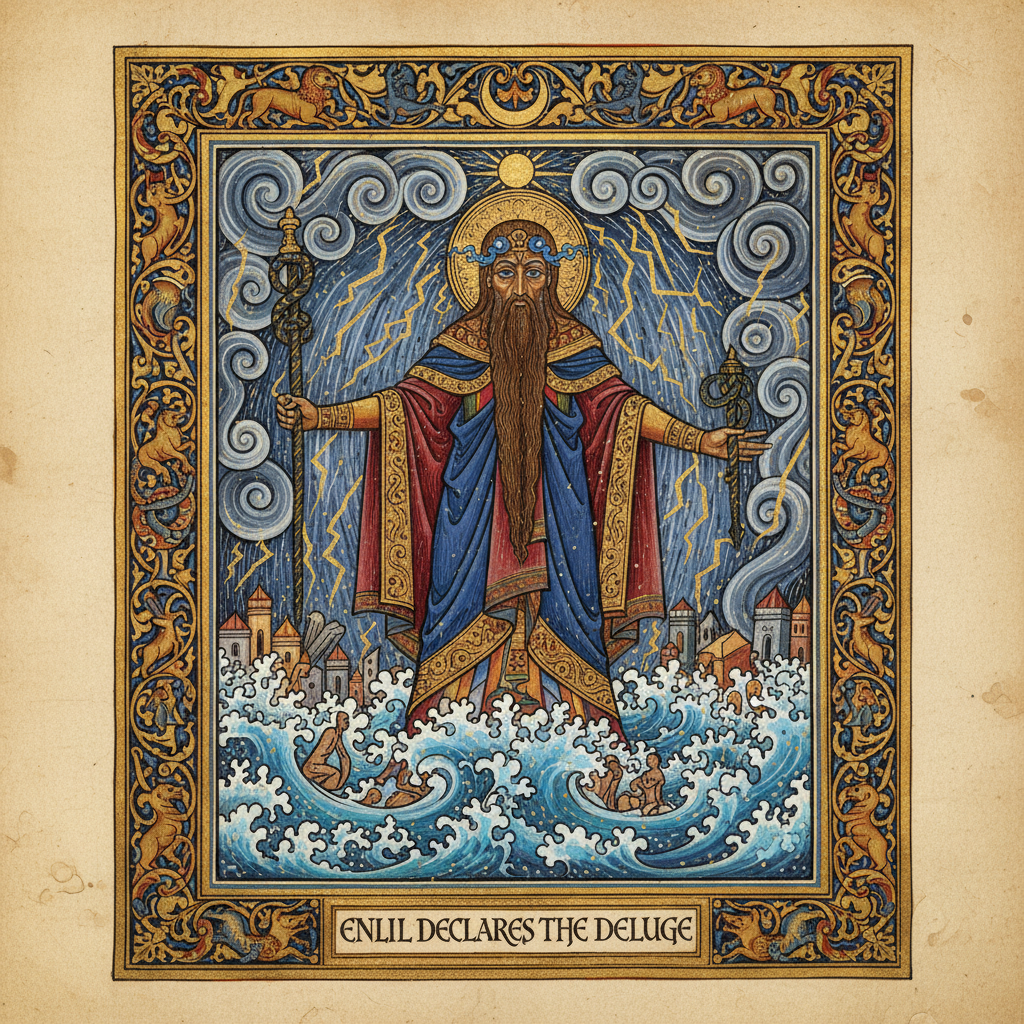
“The uproar of mankind is intolerable, and sleep is no longer possible by reason of the babel.” — Atrahasis (Enlil’s complaint before sending the Flood)
Enlil is the god who does things. Where Anu sits enthroned in abstract authority, Enlil is the executive power of heaven: he commands, punishes, rewards, and — most critically — sends the Great Flood. His motivation in the Atrahasis Epic is strikingly petty: humanity is too noisy and is keeping him awake. He tries plague, then drought, then finally the Flood to silence them. This maps directly onto Genesis 6:5-7, where YHWH “regrets” making humanity and resolves to destroy them with a flood. The parallels are not subtle: both are the chief active deity, both send a catastrophic flood, both are angry at humanity’s behavior, and both are ultimately circumvented by a wisdom figure who saves one family. Enlil IS the prototype of the wrathful, flood-sending God of Genesis.
1 min read
Atrahasis; Enuma Elish; Sumerian Flood Story; Enlil cult at Nippur