Contents
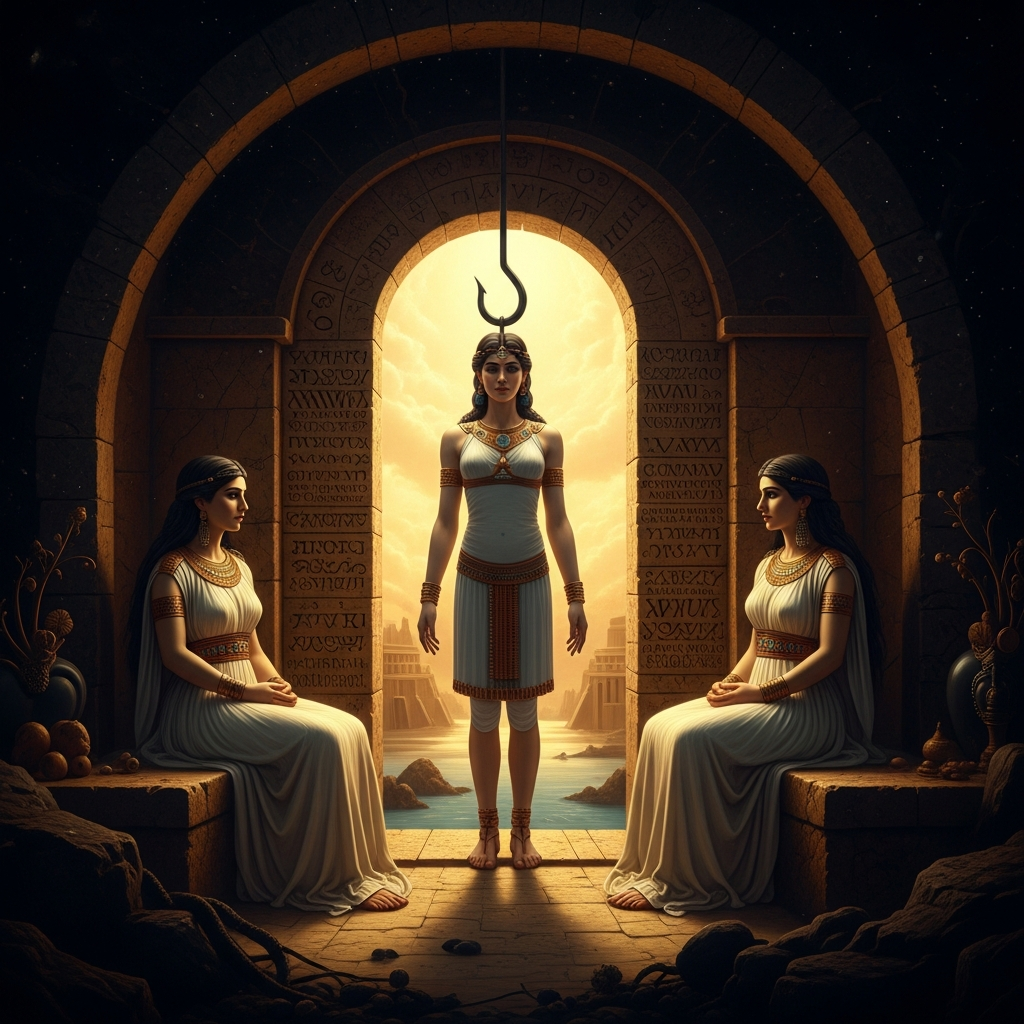
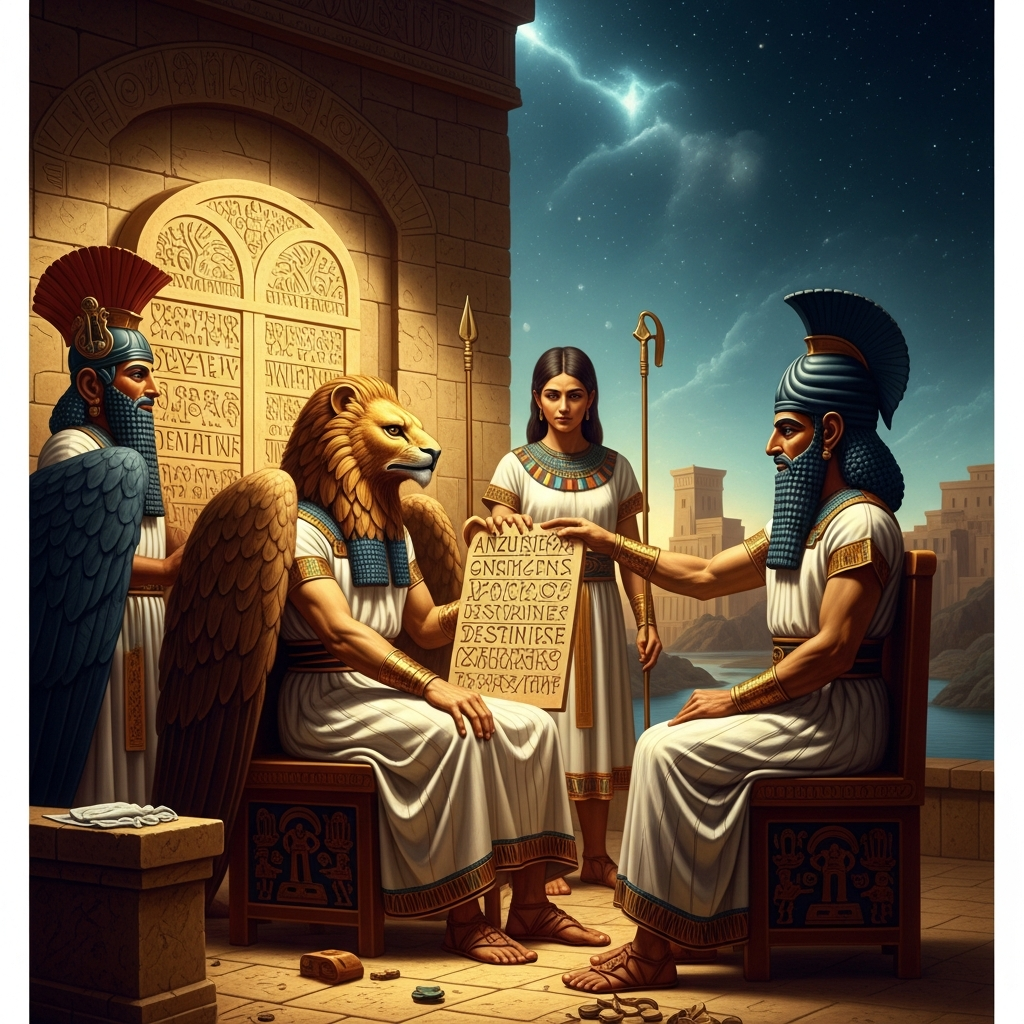
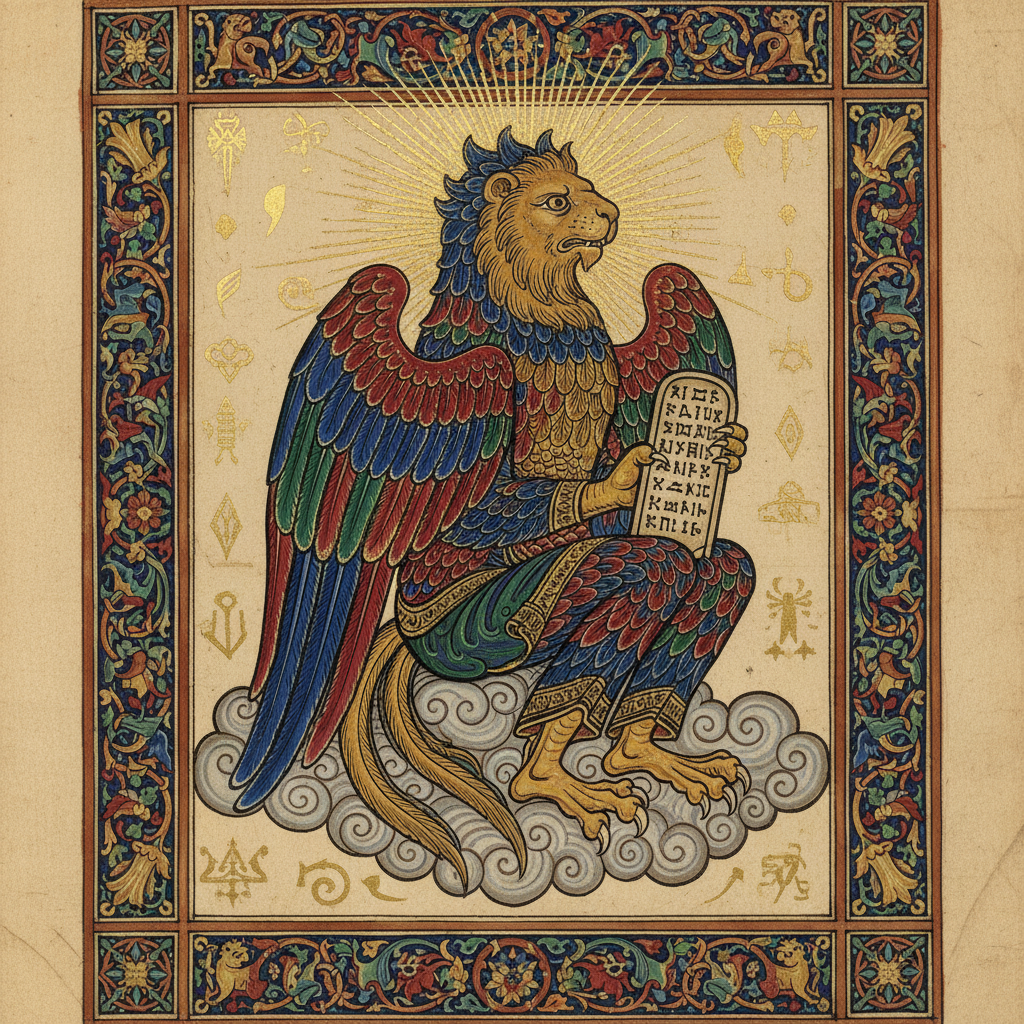
The lion-headed eagle Anzu served in the divine court of Enlil. He bathed the god each morning. He saw the Tablet of Destinies — the object that determined the fates of gods and humans alike — and stole it. For a moment, reality itself destabilized. Then the gods had to find someone brave enough to take it back.
- When
- Mythic time · Anzu Epic composed c. 2000-1000 BCE
- Where
- Enlil's court at Nippur · the mountains where Anzu fled
Every morning the lion-headed eagle bathed the god.
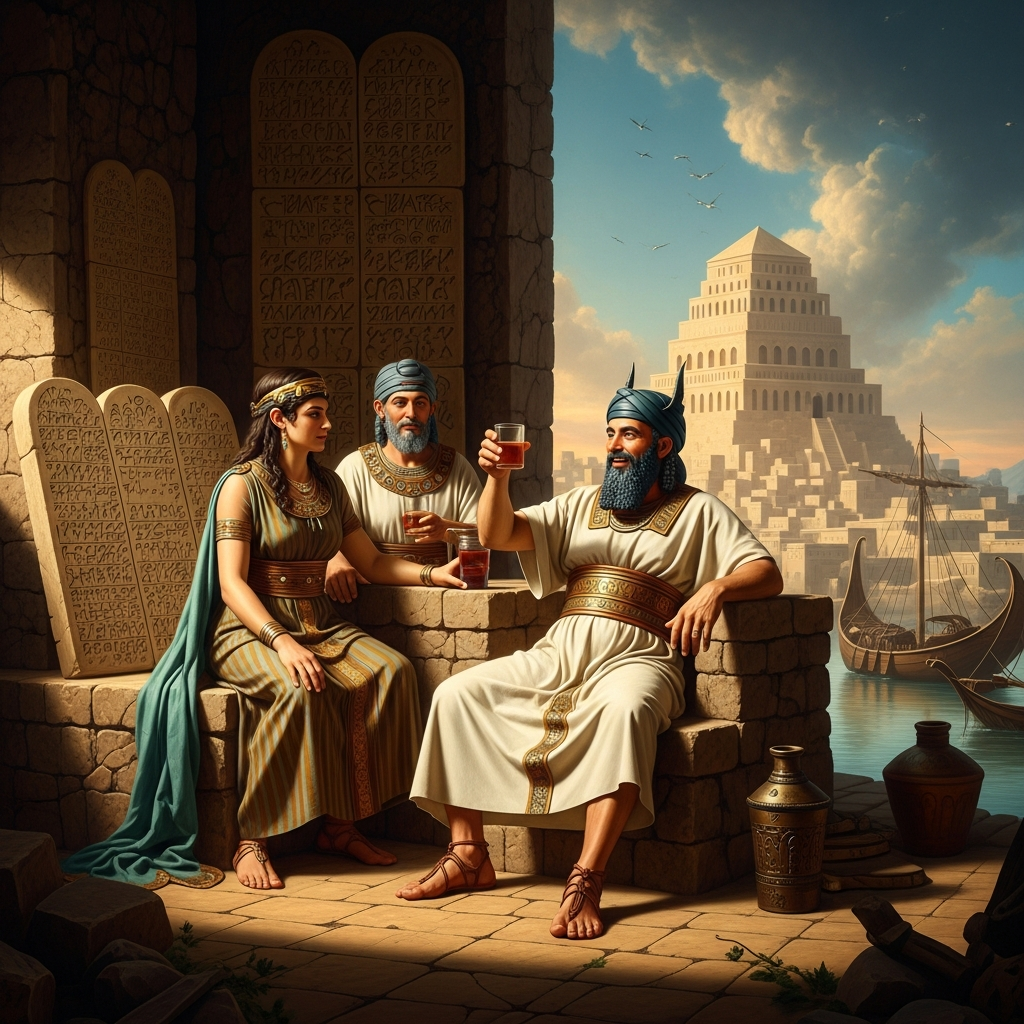
This was Anzu’s office in the divine court: to serve at the entrance to Enlil’s sanctuary, to carry out the ablutions, to attend the one who held the Tablet of Destinies and thereby held everything. The position was one of proximity to absolute power. You do not give such a position to someone who does not want it.
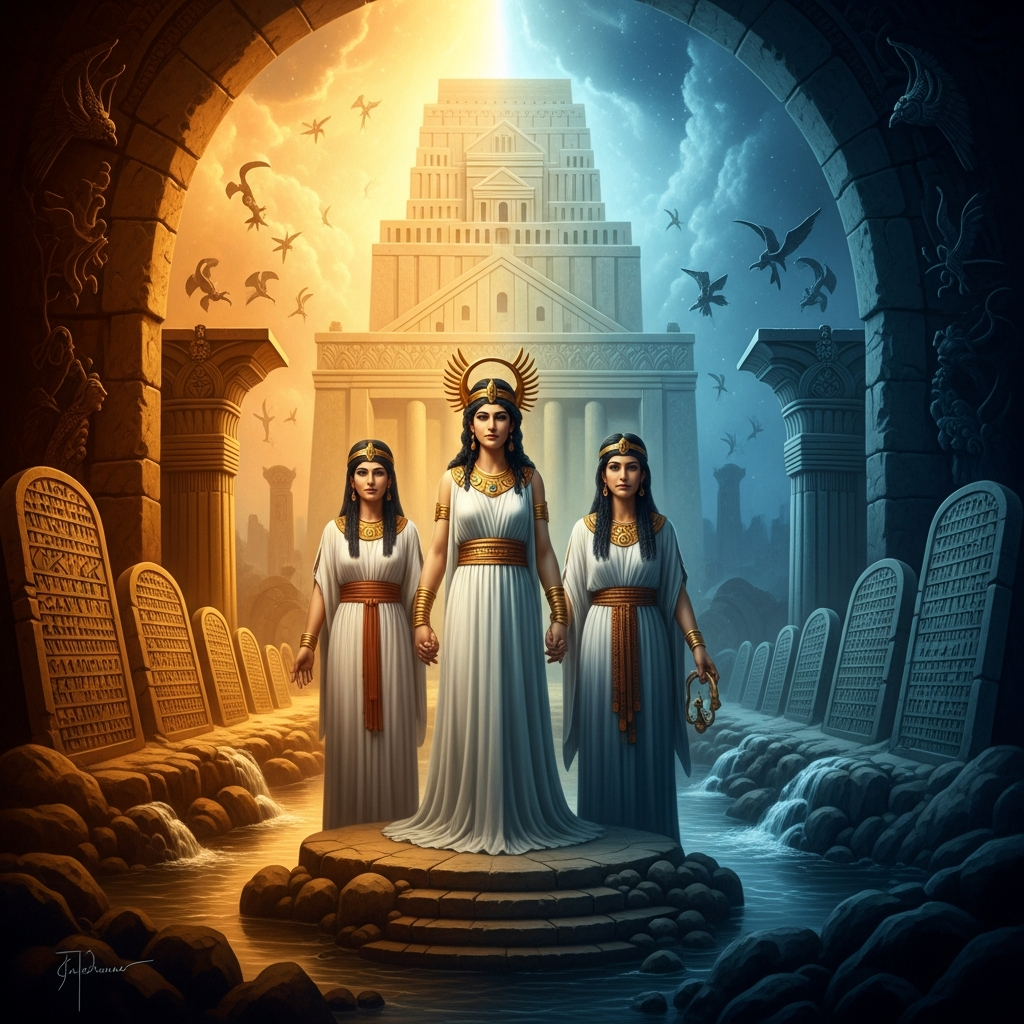
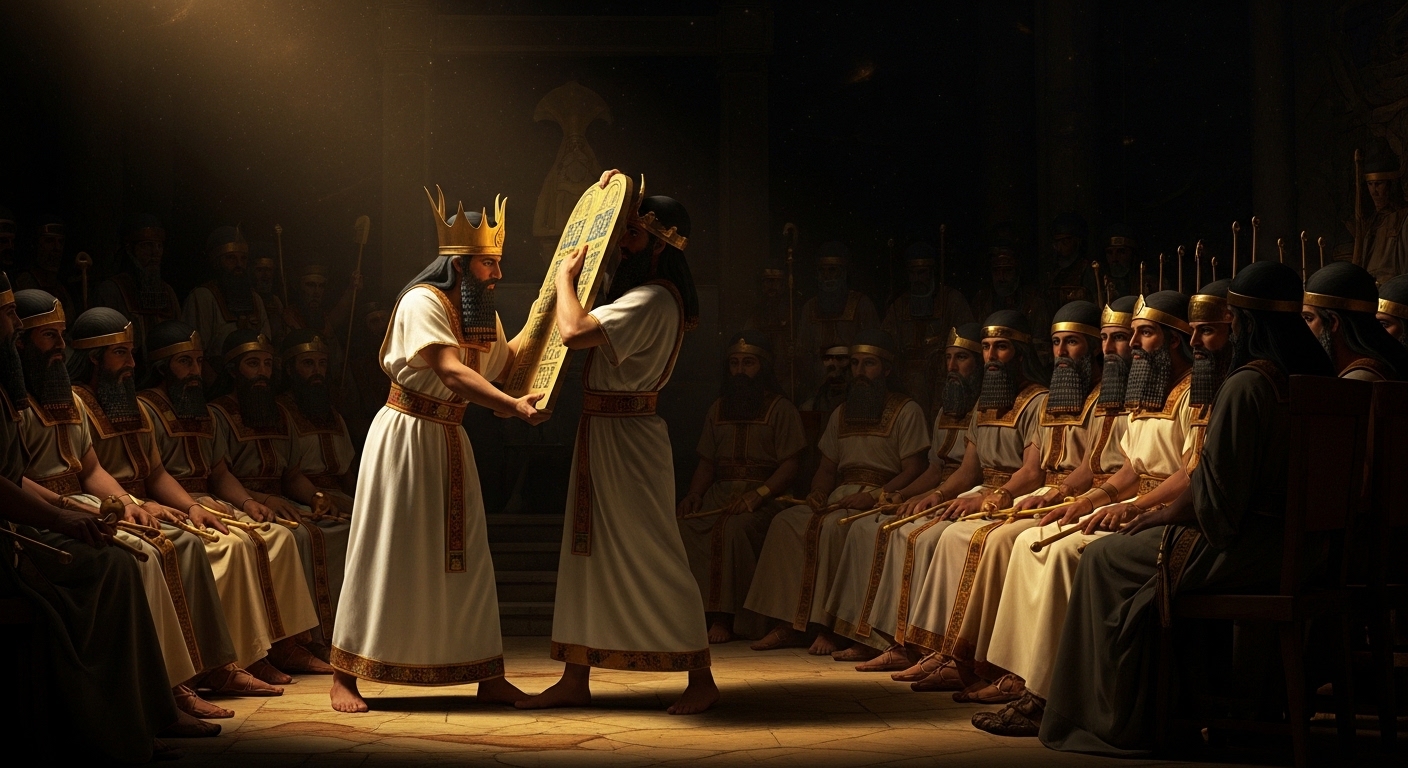
The Tablet of Destinies was not merely symbolic. In Mesopotamian theology, it was the mechanism by which fate was enacted — the document on which everything that would happen was written, the authority by which the god who held it could speak words that became irrevocably true. Enlil held it. When he wore it on his chest, his commands went out and the universe obeyed. His words were the words.
Anzu bathed him every morning. He saw the Tablet laid aside.
He thought: if I hold it, I am Enlil.
The logic is seductive and not entirely wrong. The Tablet was power. Power was the Tablet. Whoever held the Tablet held the ability to speak words that the cosmos would obey. Anzu was not born to rule — he was a creature of the between-spaces, half-lion, half-eagle, the thunderstorm made into animal form, real enough to serve in the court but not quite one of the great gods. He had been given proximity. He had not been given the thing itself.
He took it.
The moment he seized the Tablet from the bath-chamber threshold, the consequences were immediate and metaphysical. The Anzu Epic describes it with the economy of someone reporting an observable fact: Enlil’s faculties were paralyzed. His crown went slack on his head. His commands — which had been going out continuously into the world, maintaining the structure of things — fell silent. The fabric of established fate wobbled.
Anzu fled to the mountains.
In the divine assembly, the great gods looked at one another.
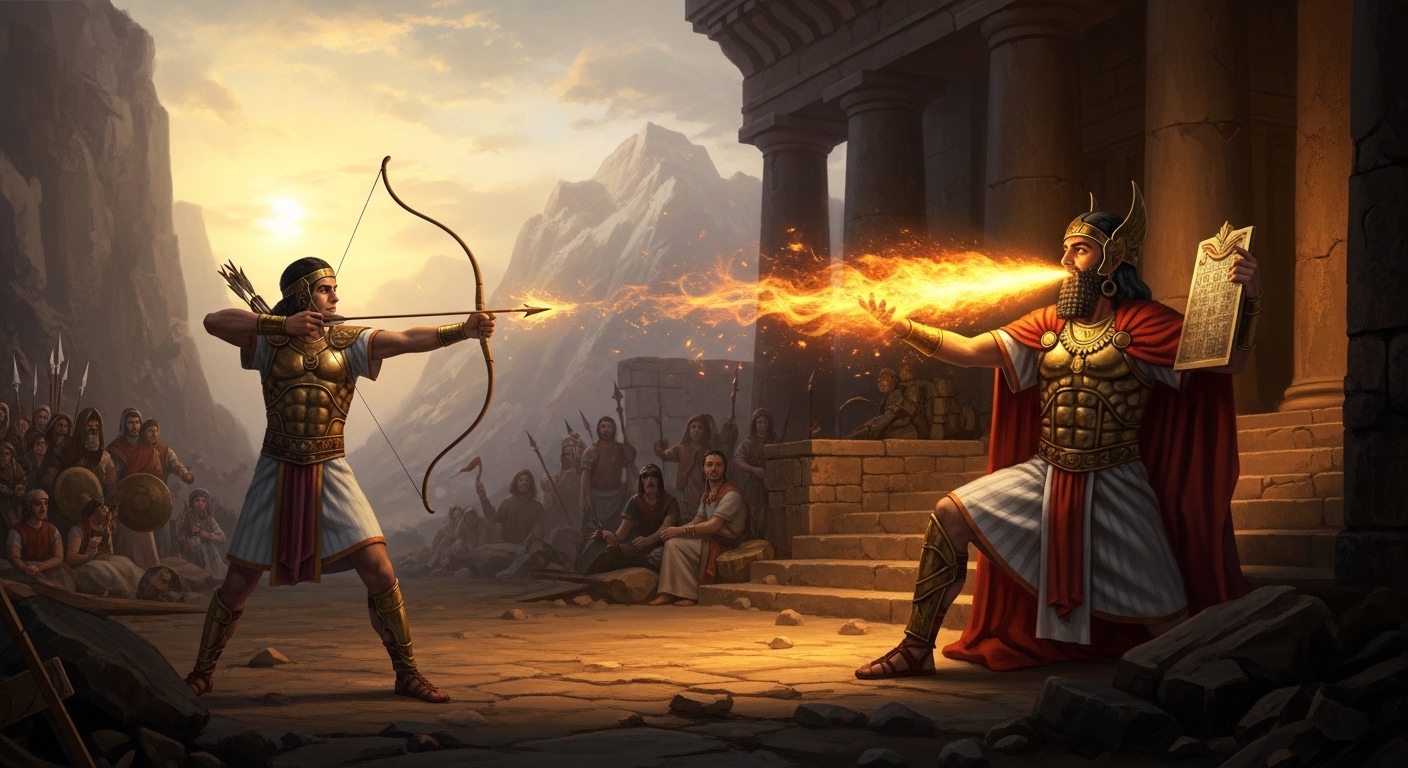
The problem was delicate. Anzu now held the Tablet. This meant that any weapon aimed at him was subject to fate as Anzu now possessed it — he could simply command the arrow to dissolve, the spear to shatter, the hero to fail. The Tablet was both the objective and the defense. You couldn’t take it back by force because the force would be undone by the thing you were trying to undo it from.
Anu asked three gods in succession to go. Each refused.
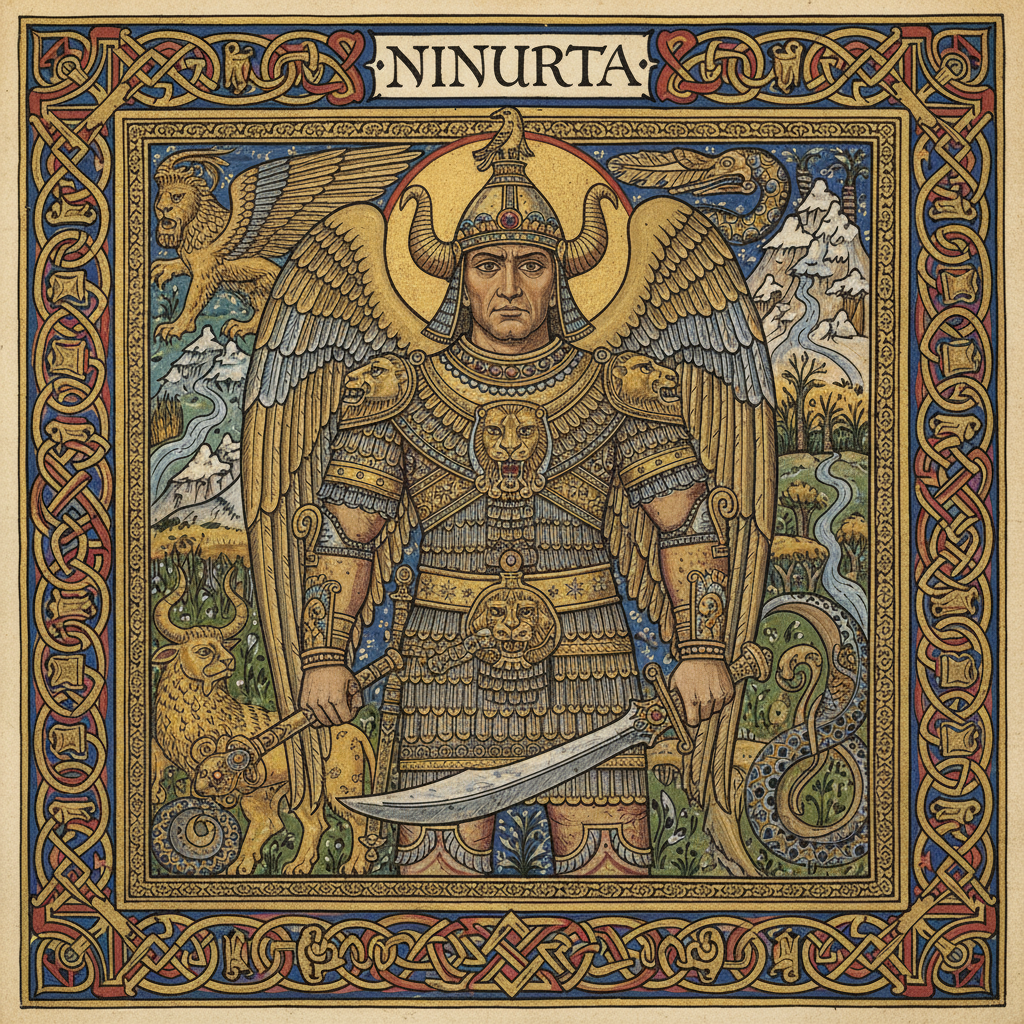
Then Ninurta’s mother — Belet-ili, or in some versions Mami — counseled a different approach. The hero must not simply attack. He must understand what he is dealing with.
Ninurta went.
The first arrow dissolved.
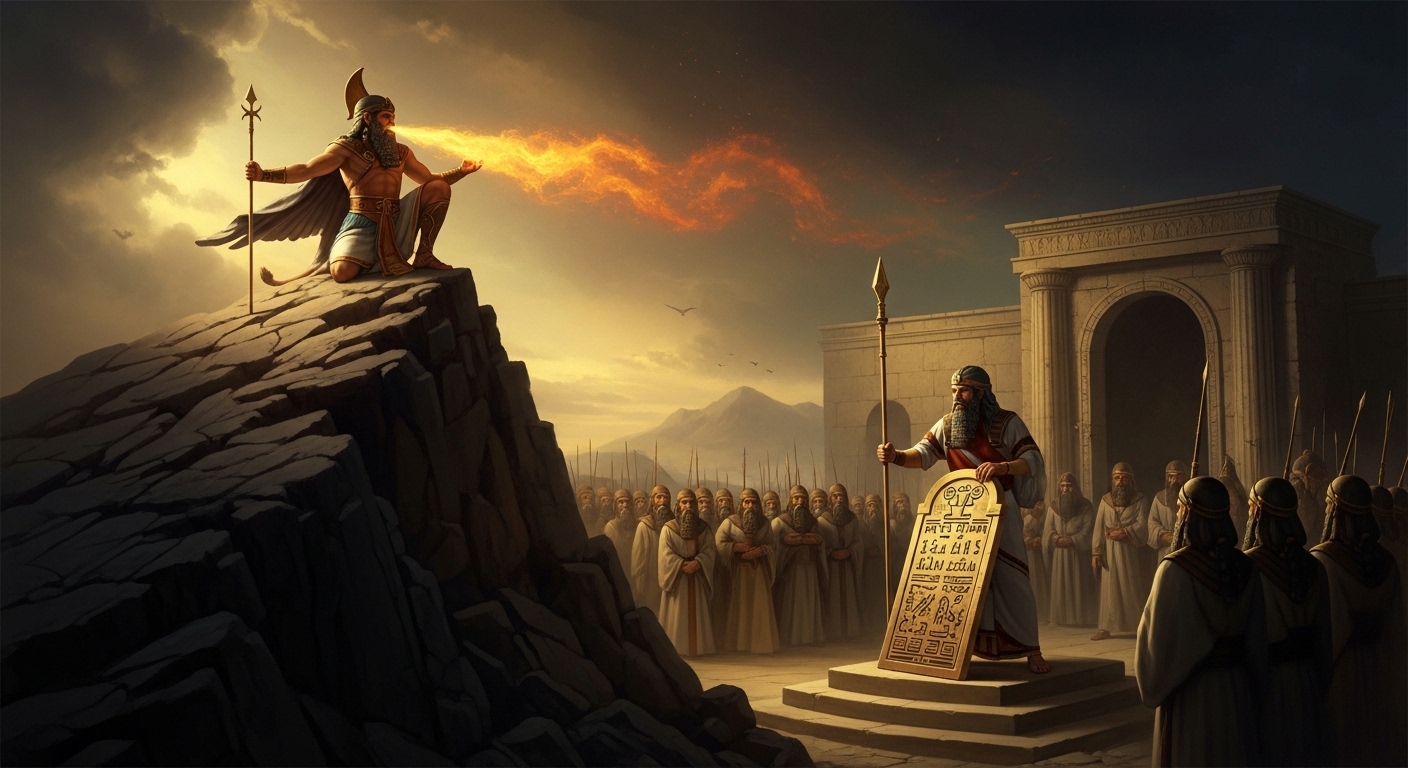
Ninurta had driven Anzu into the mountains, into the stronghold the eagle had built among the peaks. He fired his first arrow straight and true, and Anzu breathed at it — breathed the power of the Tablet, the power of destiny spoken — and the arrow became feathers and returned to the birds it came from and the shaft returned to the forest.
Ninurta’s mother sent counsel from the divine assembly: The Tablet makes Anzu’s breath fatal to your weapons. Make Anzu believe he has won the wing. Flatter his victory. Then strike the wing-feathers when he opens them.
This is the counter-weapon that works against the Tablet: not power, but misdirection. Anzu cannot command fate against a thing he does not perceive coming.
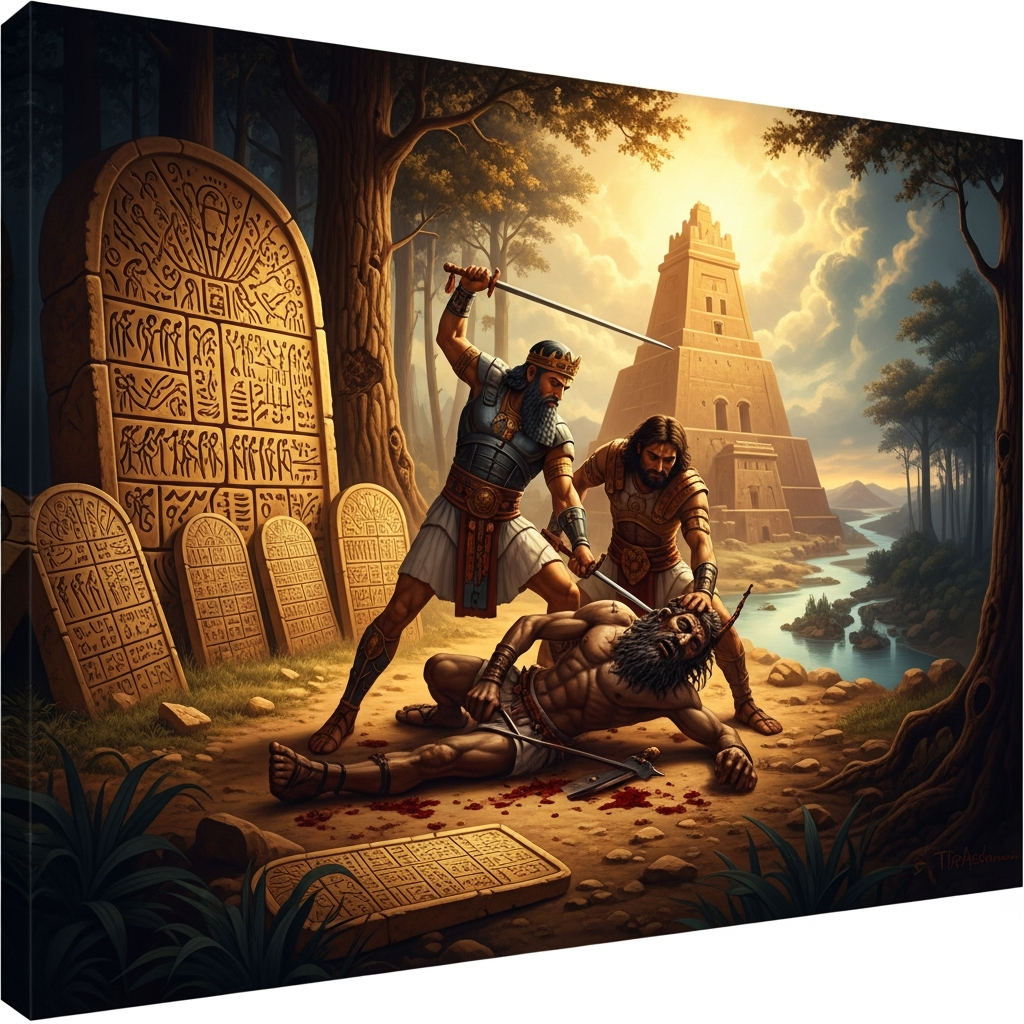
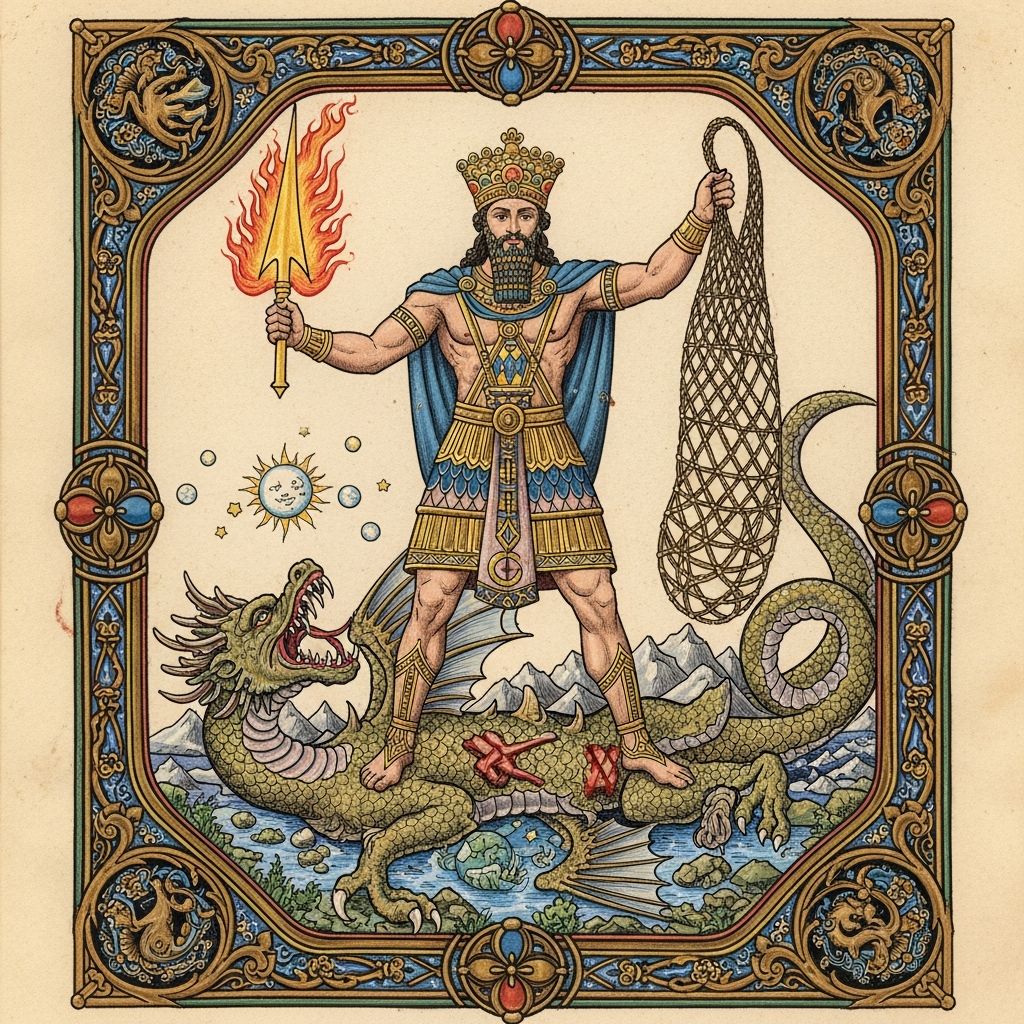
Ninurta did as instructed. He drove his second arrow into the wing — the part Anzu had extended in triumph, certain of his victory. The wing failed. Anzu fell.
The Tablet was recovered. The world reasserted itself. Enlil’s commands went out again into a cosmos that had been briefly holding its breath.
The Anzu myth exists in multiple versions across Mesopotamian history — the Old Babylonian fragments, the Standard Babylonian text, Sumerian hymns to Ninurta that reference the story. In some versions the hero is Marduk rather than Ninurta. In all versions the essential structure is the same: service-proximity, theft, cosmic disruption, heroic recovery.
What makes the myth theologically interesting is the Tablet itself.
The Mesopotamians understood fate as something written. Not metaphorically written — literally written, inscribed on a physical object, an artifact of the divine world that functioned as the master document from which all other documents derived their authority. A copy of the Tablet of Destinies does not appear in the archaeological record because the Tablet is not a historical object. But the metaphor tells you what the Mesopotamians believed about fate: it was specific, it was fixed, it was held by someone, and if the wrong someone held it, the consequences were catastrophic.
Anzu wanted to be the one who held it.
He was wrong — not morally wrong in any simple sense, but wrong in the way that a thing that belongs in one place and is moved to another is wrong. The Tablet did not belong with Anzu. His desire for it, real as it was, was the desire of a creature for a function it was not built to serve.
The hero retrieved it. Enlil wore it again. The world re-established its order.
And Anzu, the lion-headed eagle of the storm, returned to the between-spaces where creatures like him live: large enough to make the sky dark with their wings, close enough to the gods to see what they hold, outside the system that determines who is permitted to hold it.
Scenes
Echoes Across Traditions
Entities
Sources
- Anzu Epic (Standard Babylonian version, c. 1000 BCE; Old Babylonian fragments c. 1800 BCE)
- Cylinder seal representations from the Early Dynastic period, c. 2900 BCE
- Stephanie Dalley, Myths from Mesopotamia (Oxford, 1989)
- Sumerian Hymns to Ninurta (Lugal-e and Anzu references)