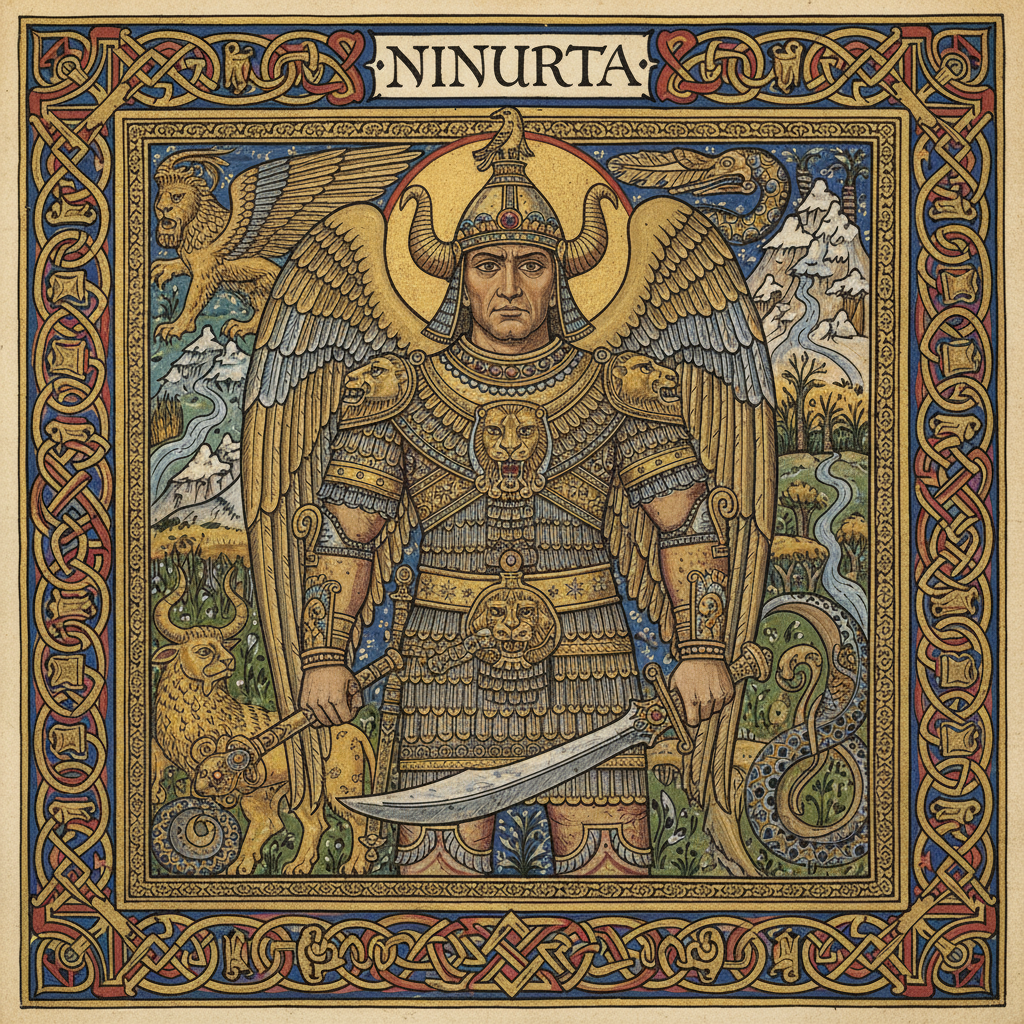
Combat Profile
Tablet of Destinies
Ninurta seizes cosmic authority, wielding the power of divine judgment to rewrite the fate of his enemies and reshape the battlefield itself.
Warrior of Order
Ninurta's presence channels the balance between destruction and harvest; he gains strength from conflict while simultaneously healing the land around him.
“Ninurta, the hero, the mighty one, who carries weapons that crush enemies. He defeated Asag, the monster of abomination, and brought order to the land.”
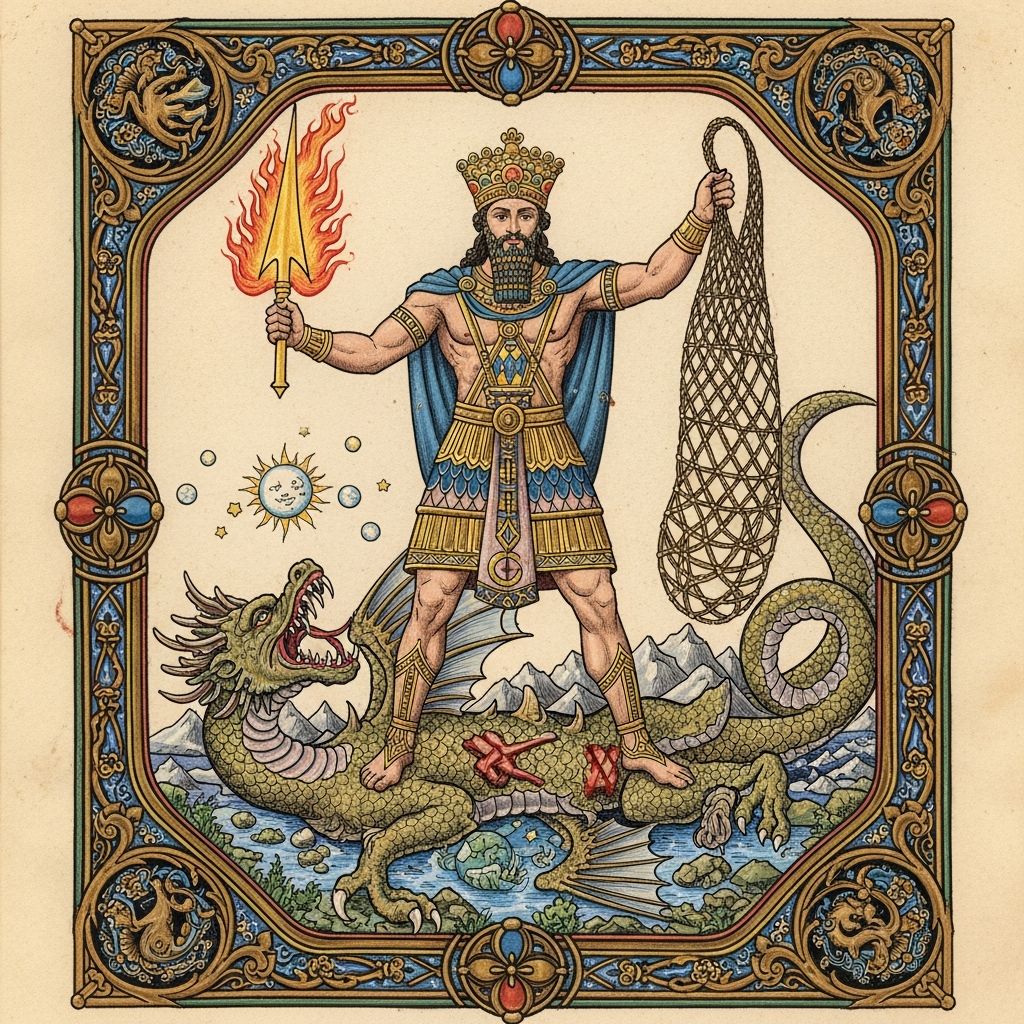
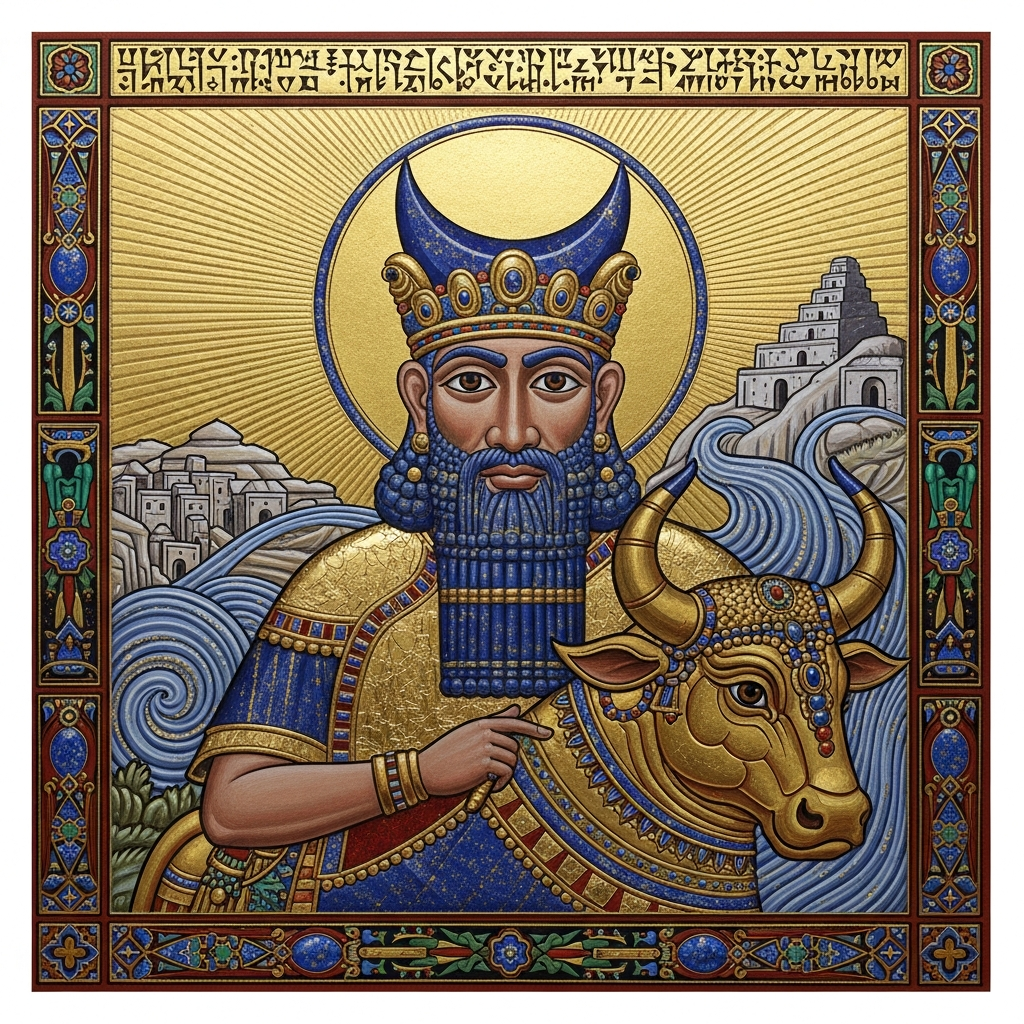
Ninurta is unique among Mesopotamian war gods because his violence serves restoration, not domination. Unlike Enlil, who destroys indiscriminately, Ninurta battles monsters and demons to protect civilization. His great victory in the Lugal-e is against Asag, a being so fundamentally wrong that rivers boil in his presence. Ninurta defeats him by piling stones, creating mountains to dam the primordial waters. He is also a farming god — hymns praise him for teaching humans to irrigate, to plow, to harvest. This makes him a warrior-farmer, combining the martial and agricultural virtues essential to Mesopotamian civilization. The biblical parallel is Joshua (whose name means “Yahweh saves”), the military commander who conquers the Promised Land but also divides it justly among tribes, and later becomes overseer of the law. Both are warriors whose violence establishes order, whose victories enable civilization, whose ultimate allegiance is to cosmic justice rather than personal glory.
1 min read
Lugal-e (Ninurta's Exploits); Sumerian hymns; ETCSL