Combat Profile
Plague Swarm
Asag unleashes a writhing mass of venomous serpents and insects that devastates all in their path, spreading pestilence and decay.
Abomination
Asag's mere presence warps the natural world, causing unnatural heat, drought, and disease to spread as an aura of cosmic horror.
“The Asag leapt up at the head of the battle. For a club it uprooted the sky, took it in its hand; like a snake it slid its head along the ground. The fish boiled in the rivers.”
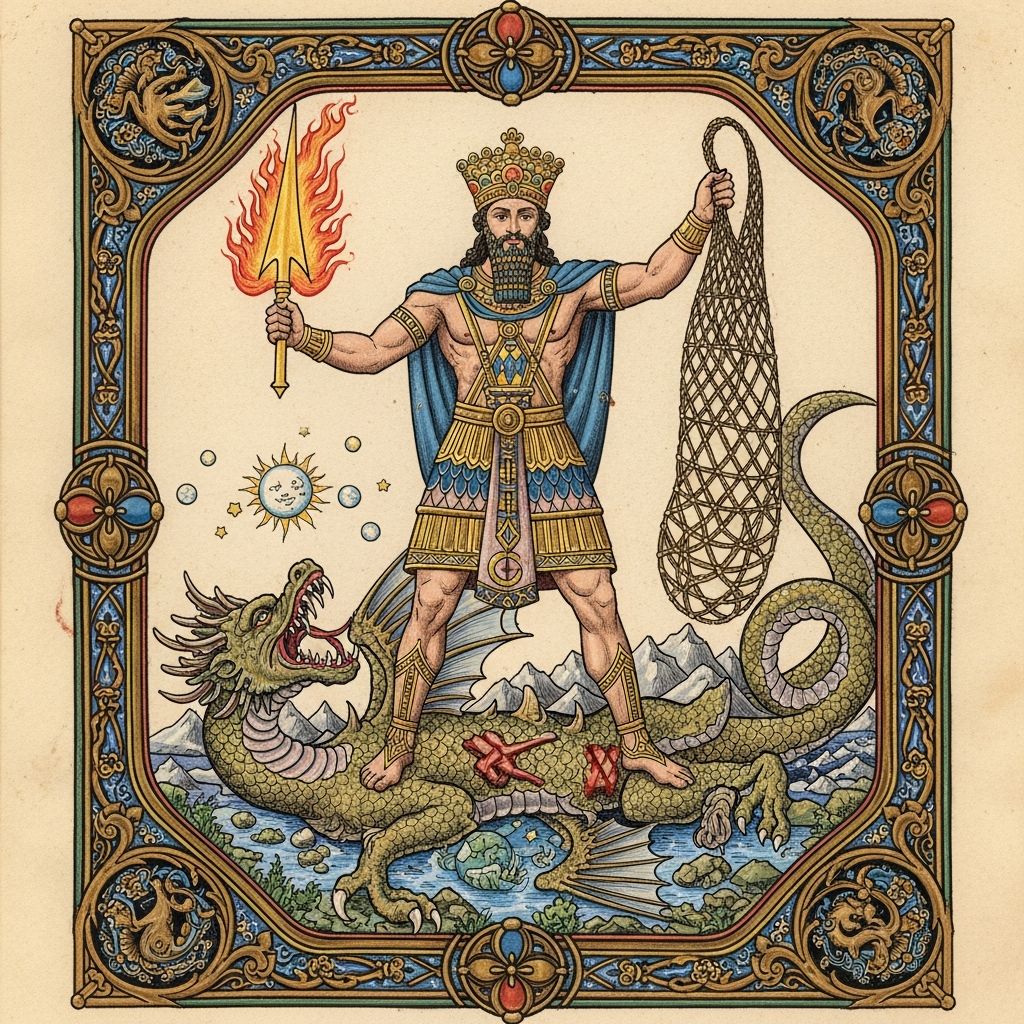
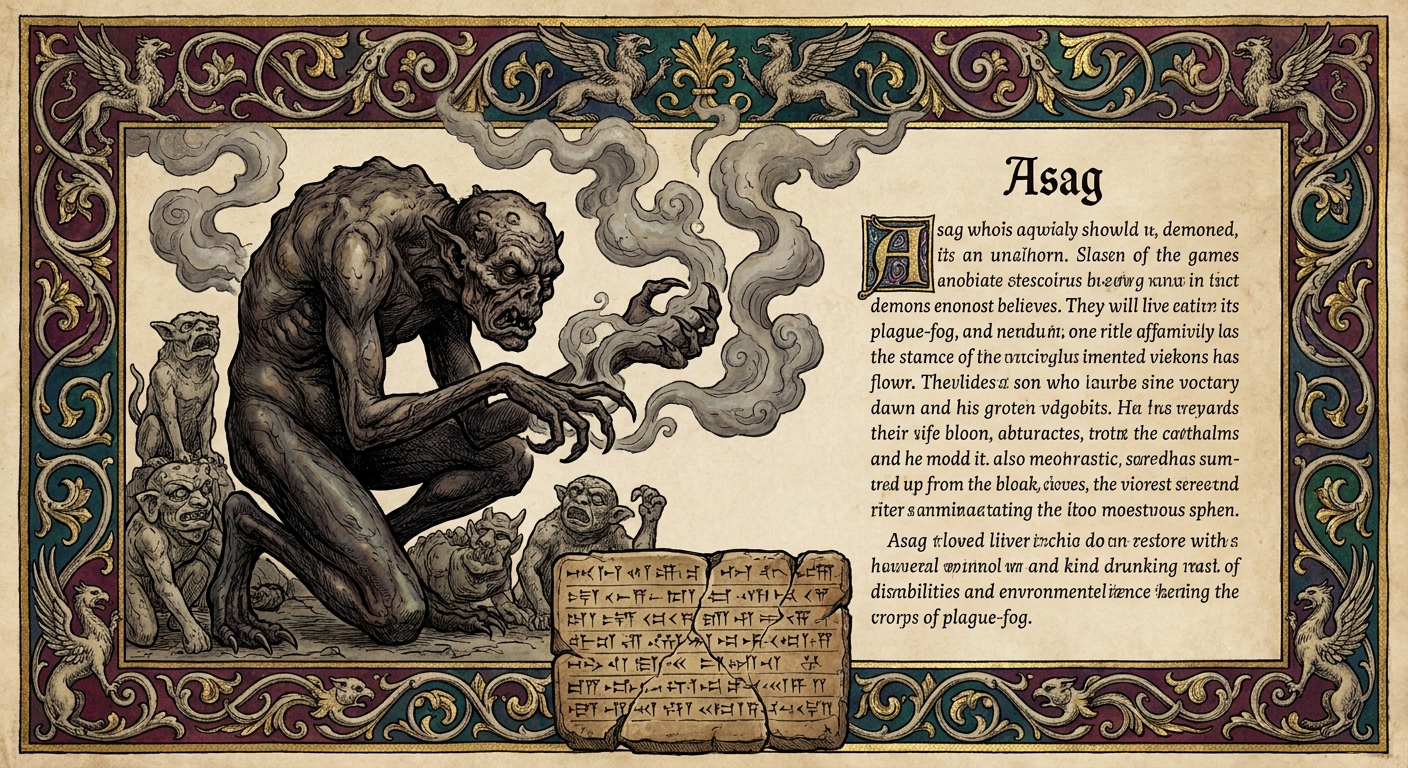
Asag is pure mythological horror: a demon so intrinsically wrong, so fundamentally an abomination, that his mere existence causes the natural world to malfunction. Rivers boil. Fish die. The landscape warps. He is defeated by the war god Ninurta in the epic Lugal-e, where Ninurta must pile up stones (creating mountains) to dam the primordial waters that Asag has unleashed. Asag has no direct biblical parallel, but he represents a Mesopotamian concept that permeates Scripture: the idea that demonic evil is not merely moral but ontological — that the presence of evil physically corrupts creation. This concept surfaces in the plagues of Egypt (water turning to blood, livestock dying, darkness covering the land), in the desolation prophecies of Isaiah, and in Revelation’s bowls of wrath that poison the seas and rivers.
1 min read
Lugal-e (Ninurta's exploits)