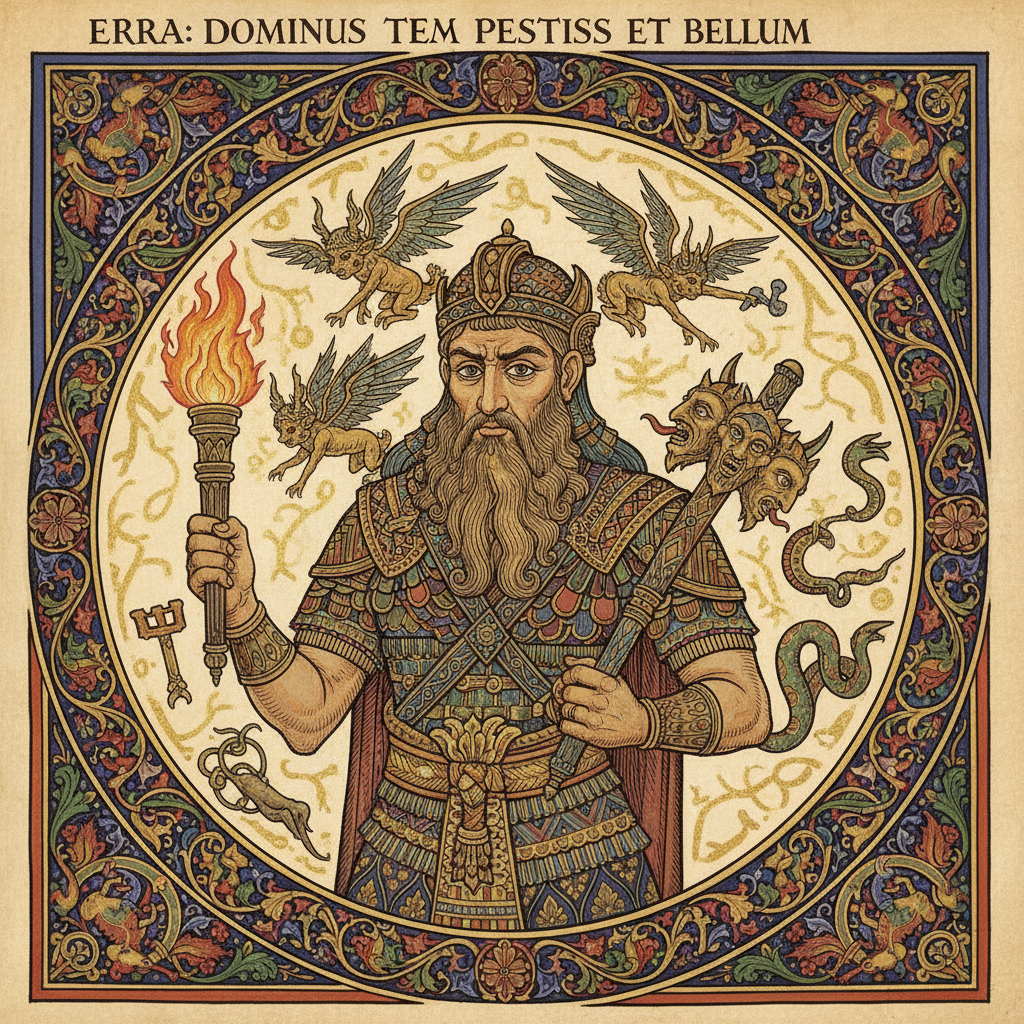
Combat Profile
Scorched Earth
Erra unleashes uncontrolled devastation in a wide area, dealing massive damage to all enemies and leaving lasting plague effects that persist across turns.
Pestilent Fury
Erra's presence spreads contagion and chaos; all enemies suffer reduced defense and healing effectiveness while in combat with him.
“I shall finish off the land and count it as ruins. I shall fell the cattle and fell the people. I shall make even the fish scarce in the sea.” — Erra
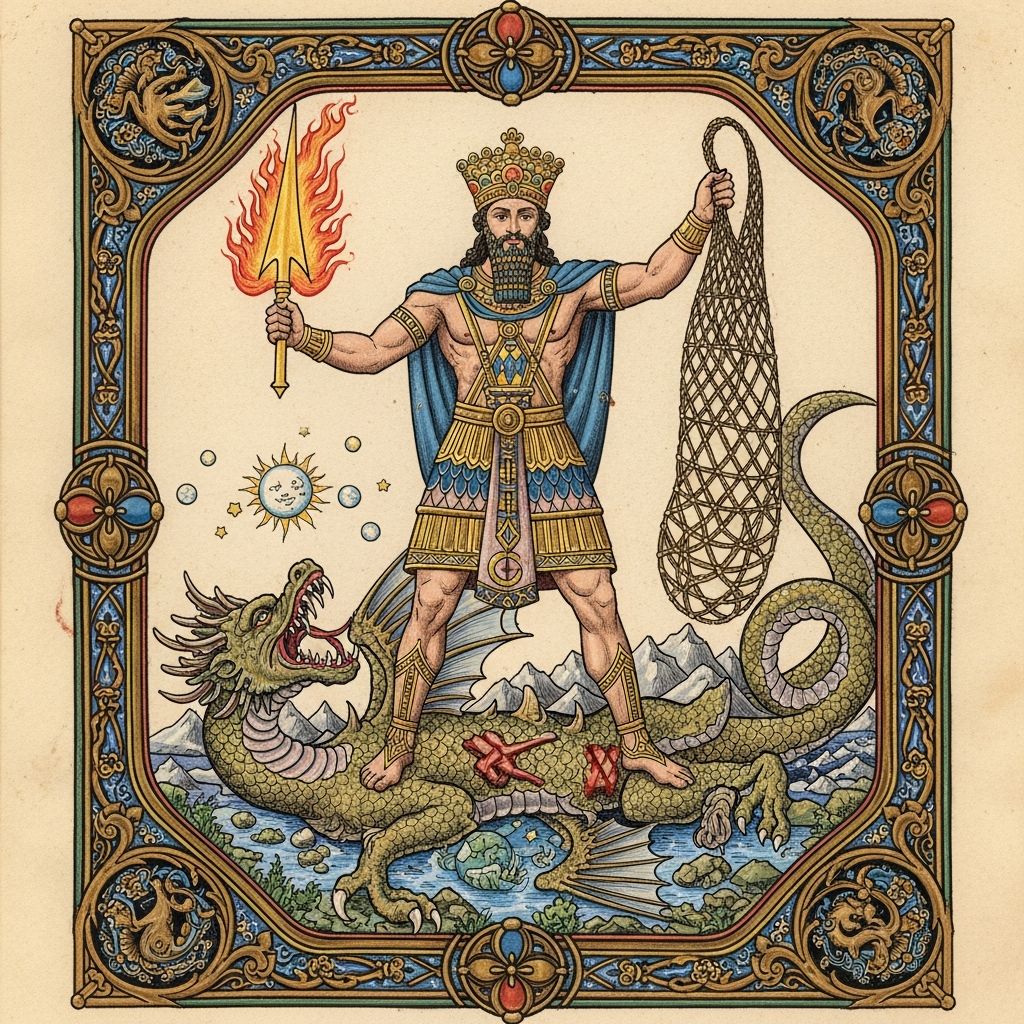
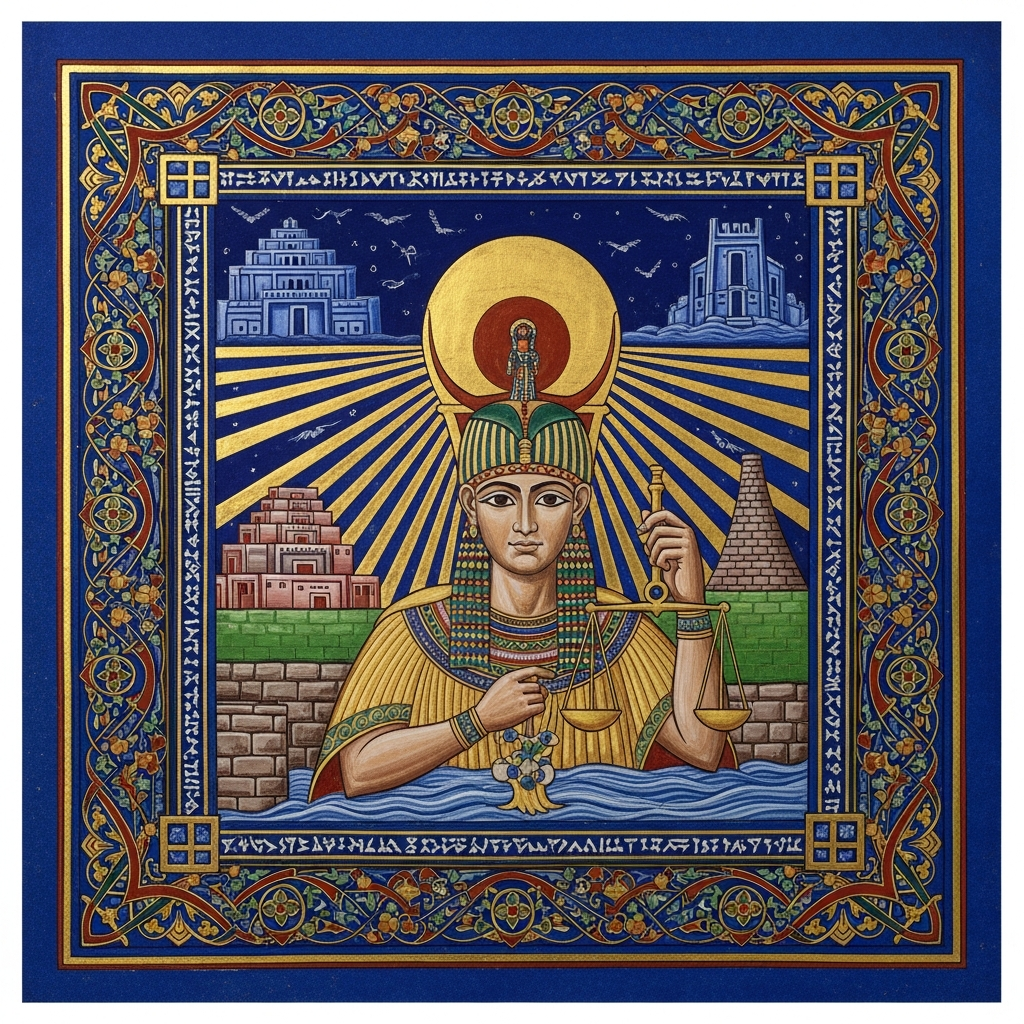
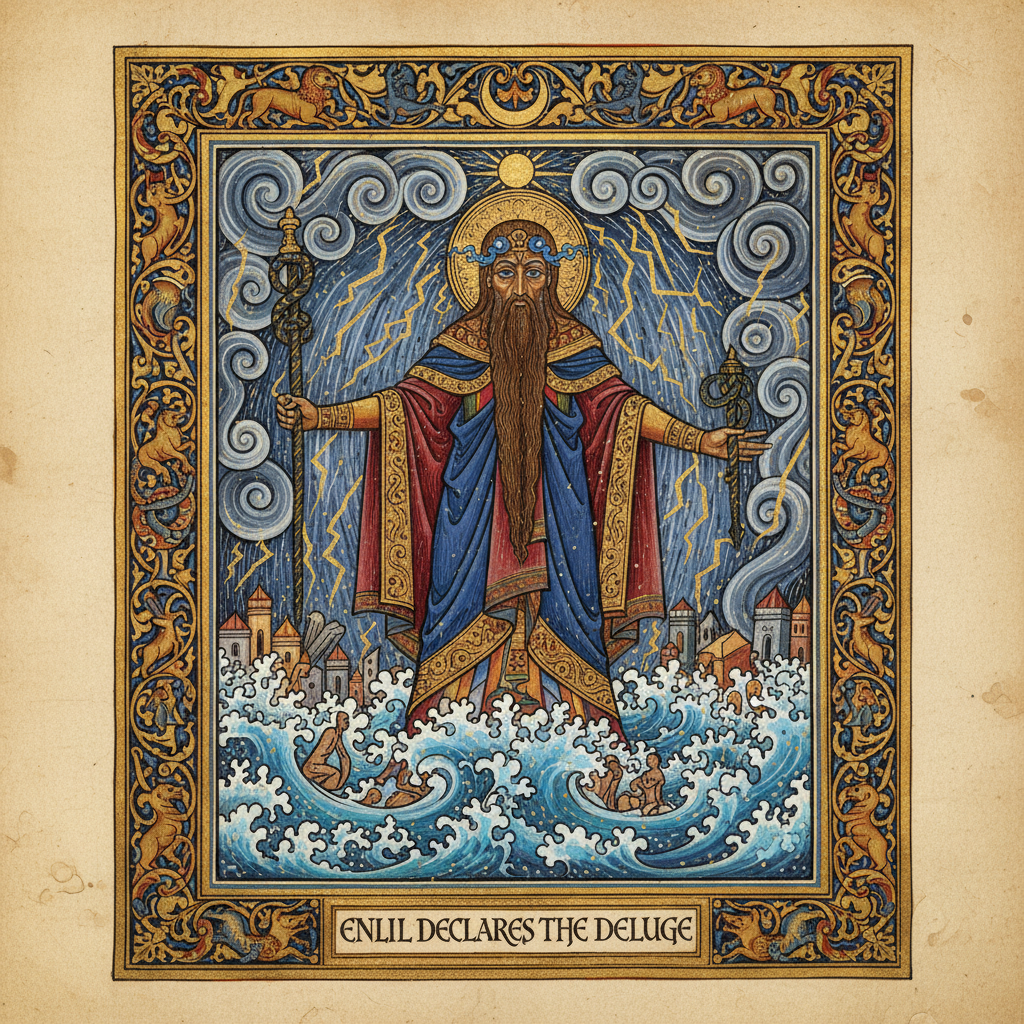
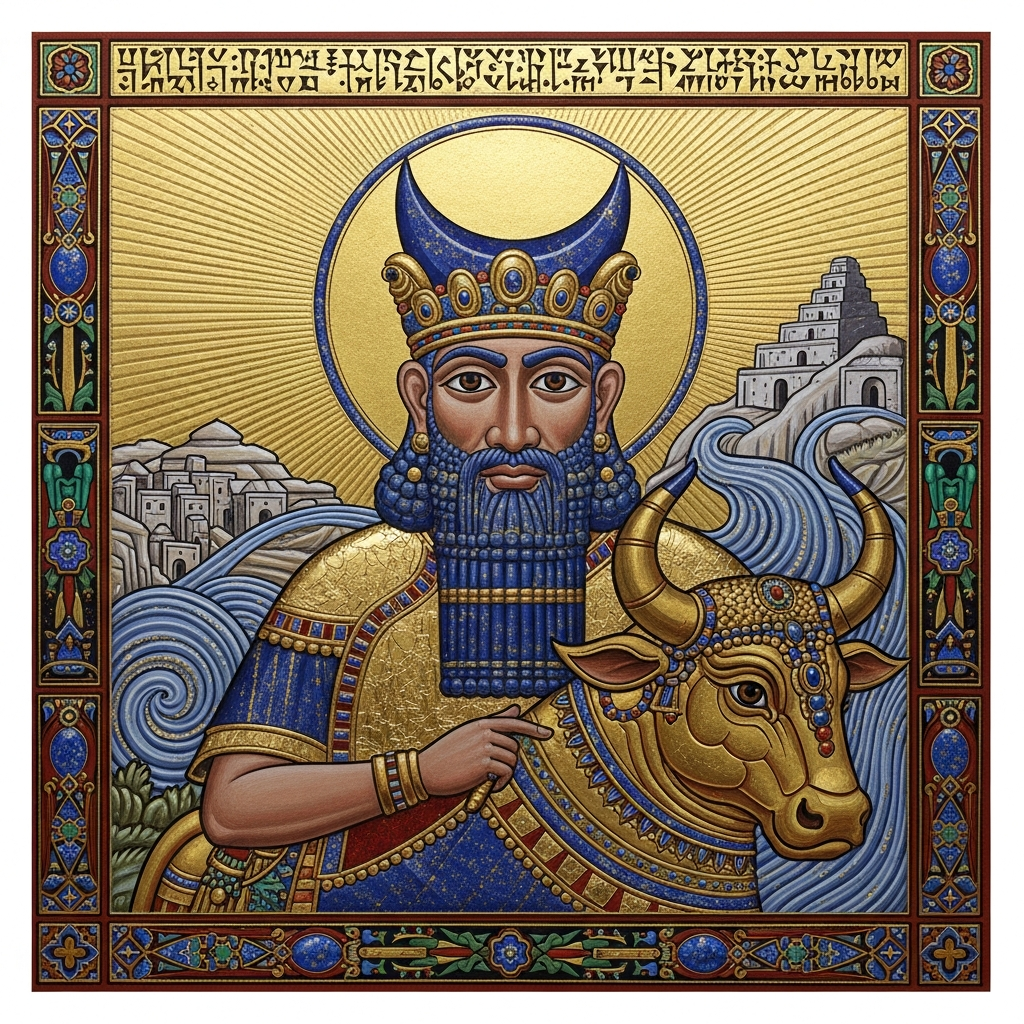
The Erra Epic is one of the most extraordinary texts in ancient literature because its protagonist is the villain (Erra Epic). Erra, the god of plague and mayhem, tricks Marduk into leaving his throne in Babylon by telling him his statue needs repair (Erra Epic). The moment Marduk departs, Erra goes berserk — unleashing plague, famine, and civil war on Babylon and the entire world (Erra Epic). His own vizier, Ishum, repeatedly tries to calm him, but Erra is beyond reason (Erra Epic). He destroys indiscriminately: the righteous and the wicked, temples and houses, soldiers and children (Erra Epic). Only after exhausting his fury does he relent. The text is remarkable for what it implies about the theology of suffering: sometimes the gods destroy not out of justice but out of uncontrolled rage, and the supreme god is simply not present to stop it (Erra Epic). The biblical parallel is the Angel of Death operating without restraint — except that in the Bible, destruction is always authorized by God. Erra represents a more terrifying possibility: that destruction can happen when God’s back is turned. The Book of Job circles this same theological problem — why does the righteous suffer? — but gives it a different answer. The Erra Epic’s answer is blunter: because a god went mad and no one stopped him (Erra Epic; Job).
1 min read
Erra Epic (Erra and Ishum); Benjamin Foster, *Before the Muses*; Luigi Cagni, *The Poem of Erra*