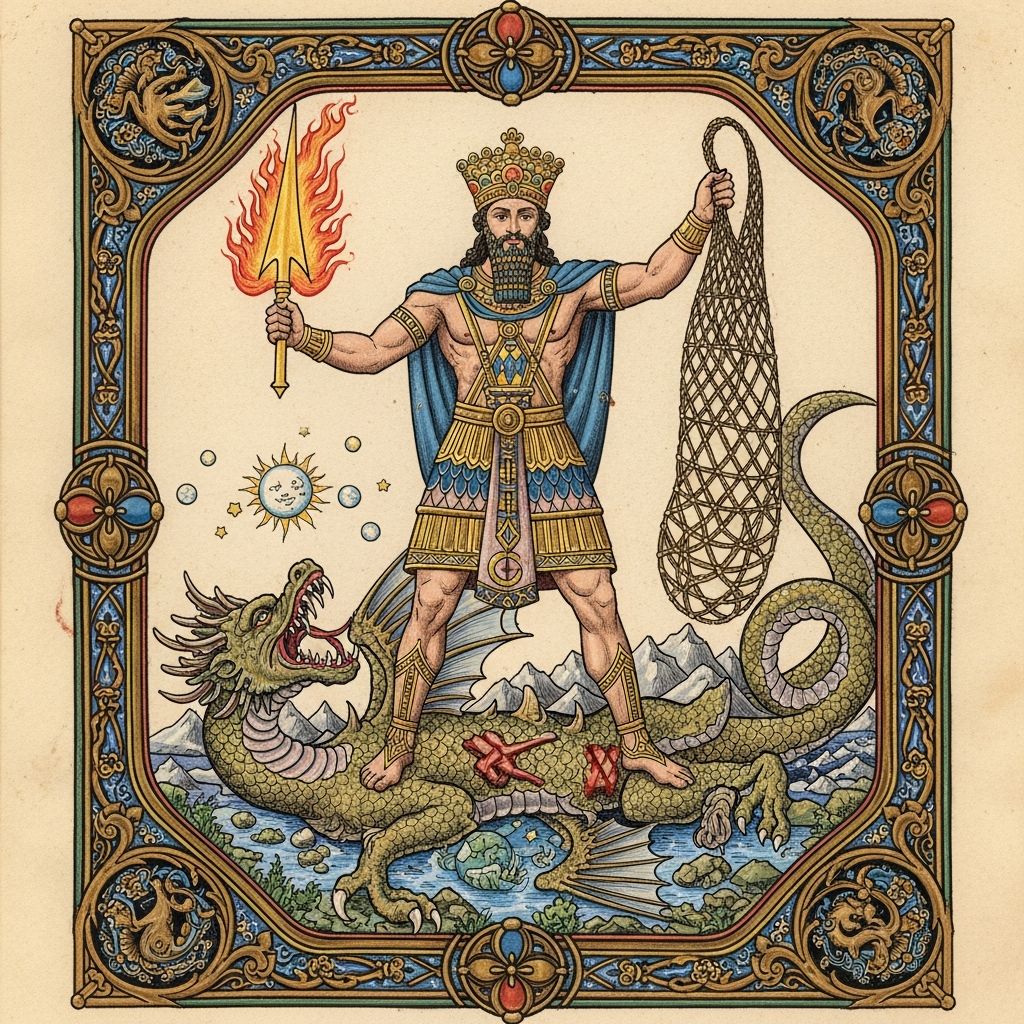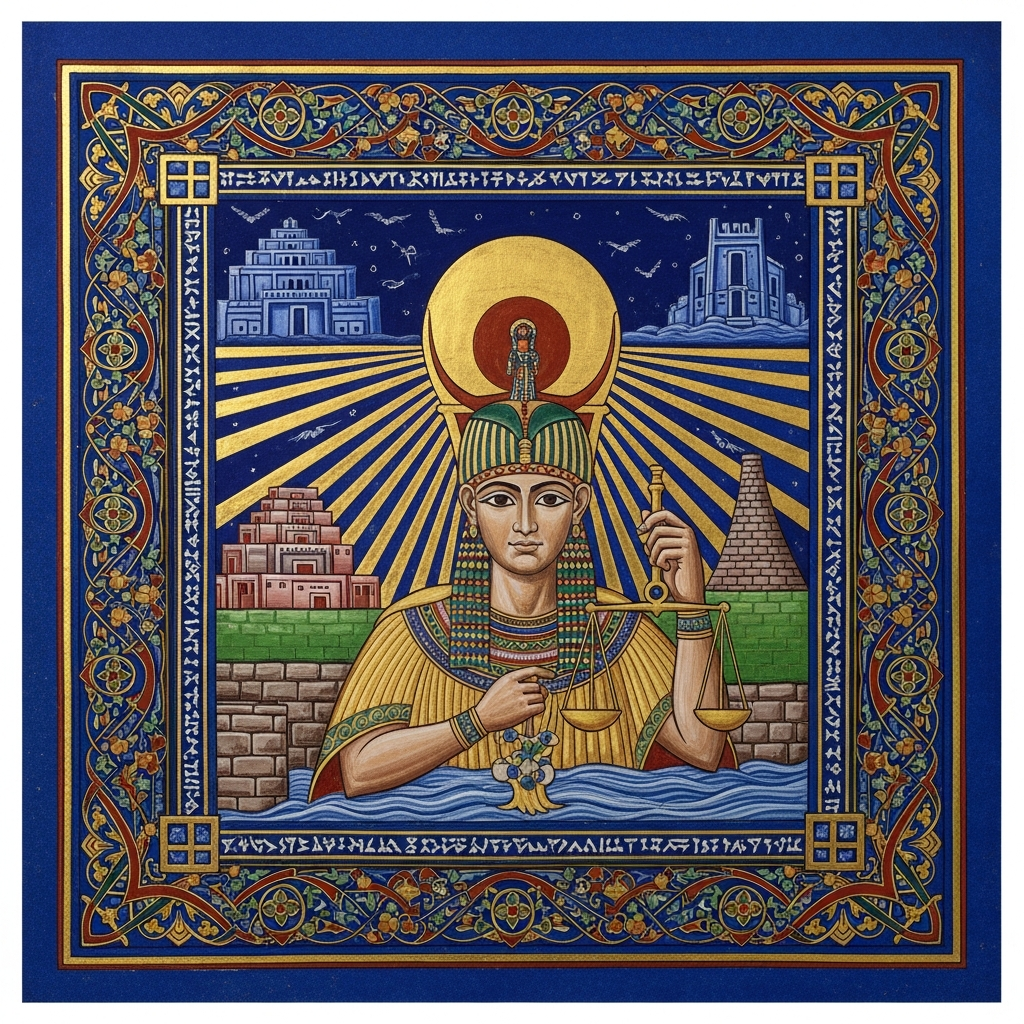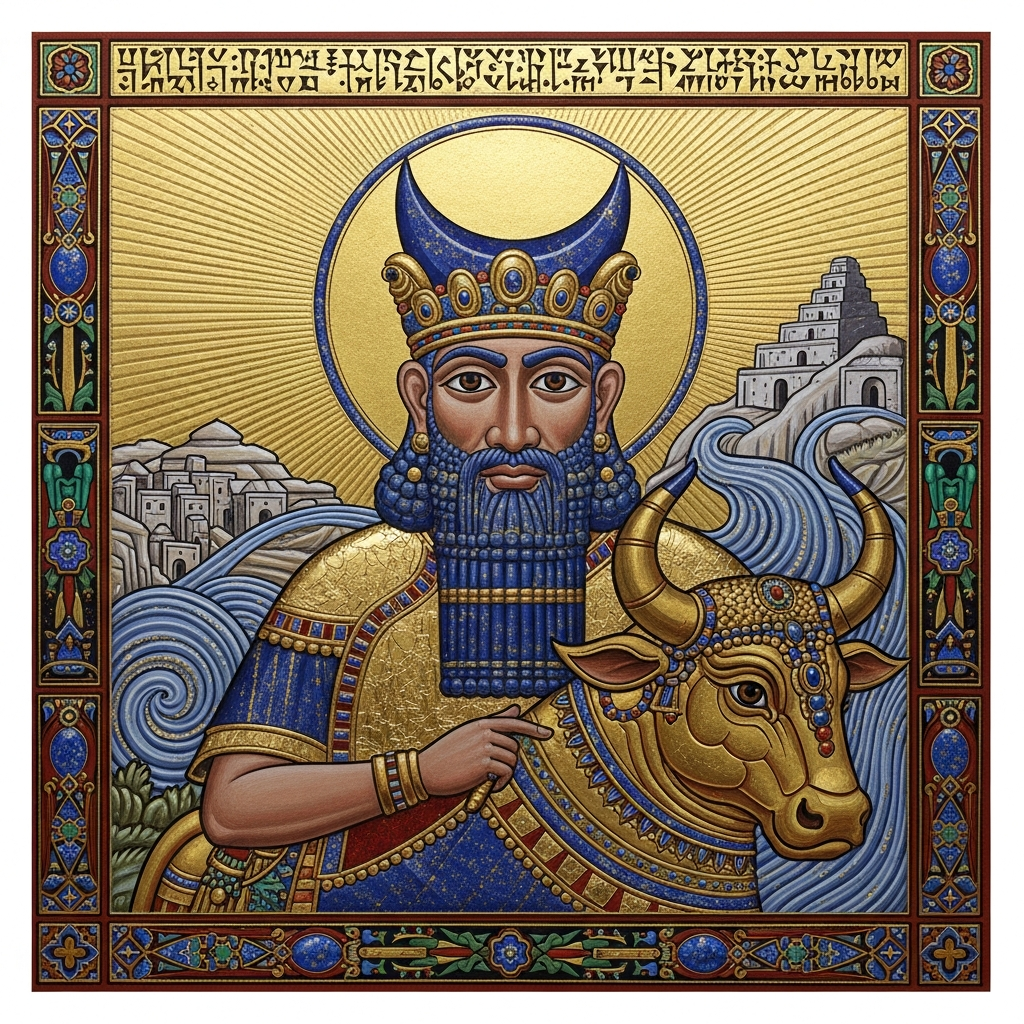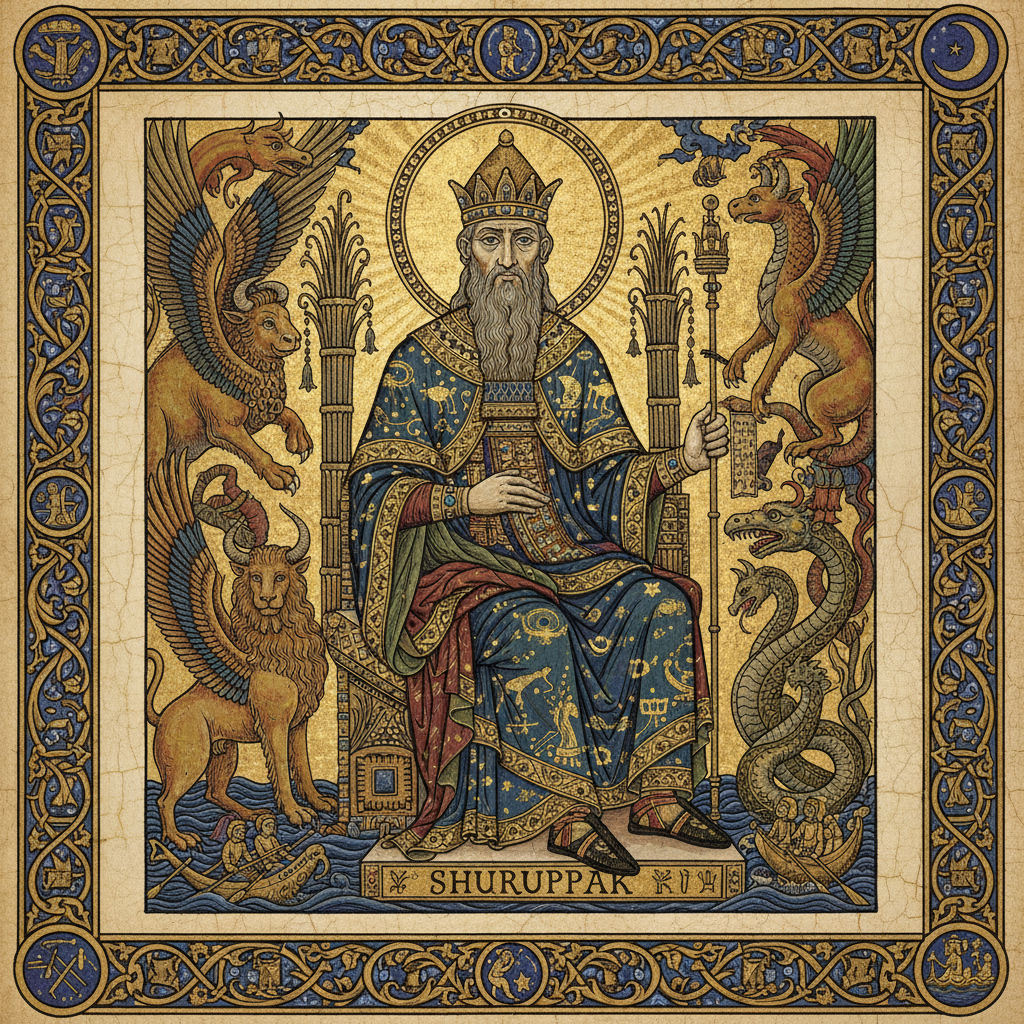
Combat Profile
Antediluvian Counsel
Grants allies foreknowledge of catastrophe and the wisdom to survive it, bypassing one fatal outcome per encounter
Righteous Patriarch
Shuruppak's presence radiates ethical clarity, causing deception to falter and righteous mortals to find courage in their convictions
“Do not commit robbery; do not kill. Do not sleep with your friend’s wife. Do not pick a quarrel. Do not drown in beer. In a house of quarrels, do not live. Shuruppak gave these instructions to his son Ziusudra.”
Shuruppak is the author of the oldest surviving wisdom text in human civilization — a set of moral instructions addressed to his son Ziusudra, the Sumerian Noah, composed approximately 2600 BCE (Instructions of Shuruppak). This makes it roughly 1,500 years older than the Book of Proverbs and over a millennium older than any part of the Torah. The correspondences are not subtle: “Do not commit robbery; do not kill” (Instructions of Shuruppak) anticipates the Decalogue (Exodus 20:13-15). “Do not sleep with your friend’s wife” mirrors Proverbs 6:29. “Do not drown in beer” echoes Proverbs 20:1 (“Wine is a mocker, strong drink a brawler”). The text is structured as a father instructing his son — the identical framing device of Proverbs 1-9 (“Hear, my son, your father’s instruction”) (Instructions of Shuruppak; Proverbs 1:8). Shuruppak demonstrates that the wisdom tradition credited to Solomon was already ancient when Solomon supposedly lived. The Instructions are not the source of Proverbs in a direct literary sense, but they prove that the genre, the structure, and many of the specific ethical commands of biblical wisdom literature were Mesopotamian before they were Israelite (Instructions of Shuruppak; Proverbs).
1 min read
Instructions of Shuruppak (ETCSL 5.6.1); Benjamin Foster, *Before the Muses*