Combat Profile
Decree of Heaven
Anu pronounces an irrevocable cosmic law that reshapes reality itself, binding all lesser beings to his will.
King of Gods
Anu's mere presence reinforces the cosmic hierarchy, granting him absolute authority over all divine and mortal authority structures.
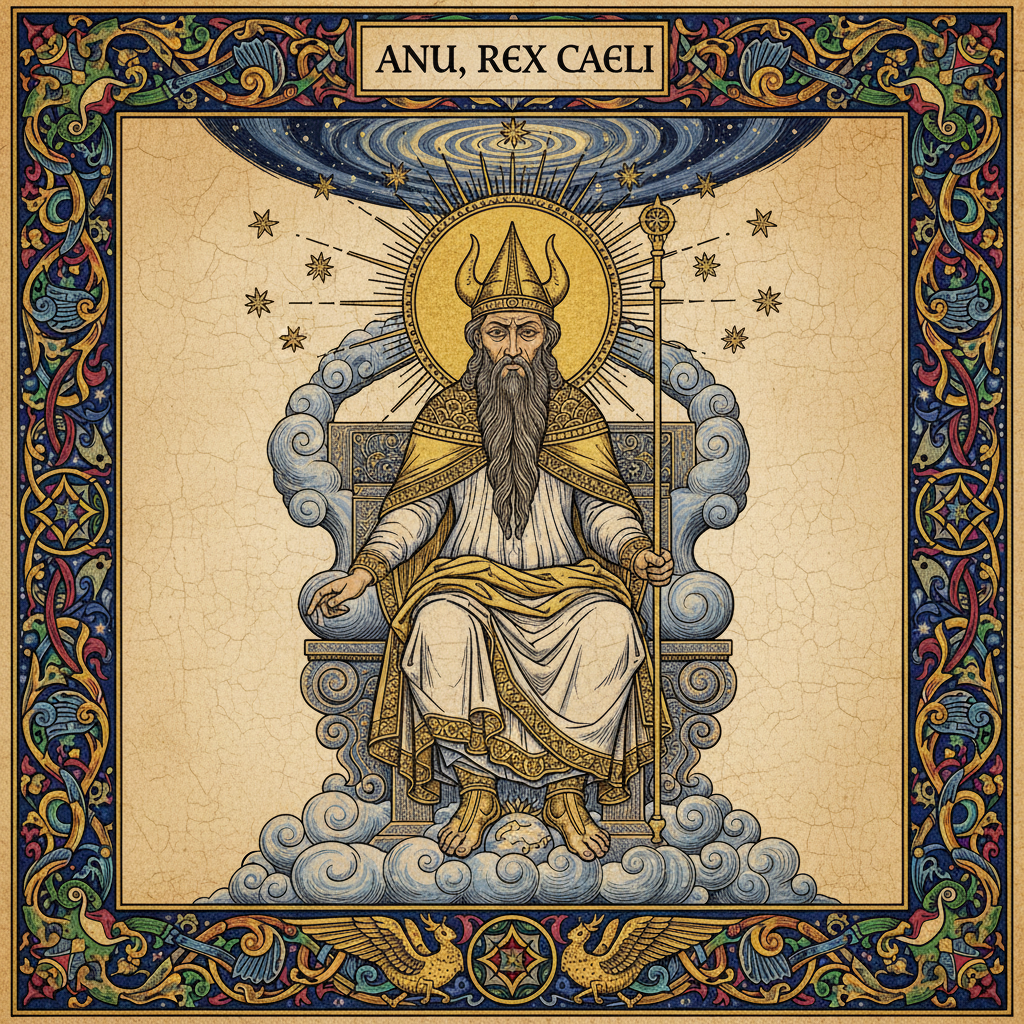
“Anu, the great father of the gods, king of heaven, lord of the constellations.”
Anu is the sky itself — distant, absolute, and almost entirely passive. He is the ultimate authority from whom all divine power descends, yet he rarely intervenes in human or even divine affairs. Think of him as the constitutional monarch of the cosmos: his name legitimizes everything, but he delegates nearly all action to Enlil and Enki. In the Enuma Elish, he cedes direct combat with Tiamat because even he cannot face her — it falls to his grandson Marduk. His parallel in biblical tradition is the concept of the Most High (Elyon), the distant supreme deity above the active god of storms and covenants. Deuteronomy 32:8 (Dead Sea Scrolls version) reads: “When the Most High divided the nations… he set the boundaries according to the number of the sons of God” — a passage that maps cleanly onto Anu dividing authority among his divine children.
1 min read
Enuma Elish; Anu cult at Uruk; Sumerian King List