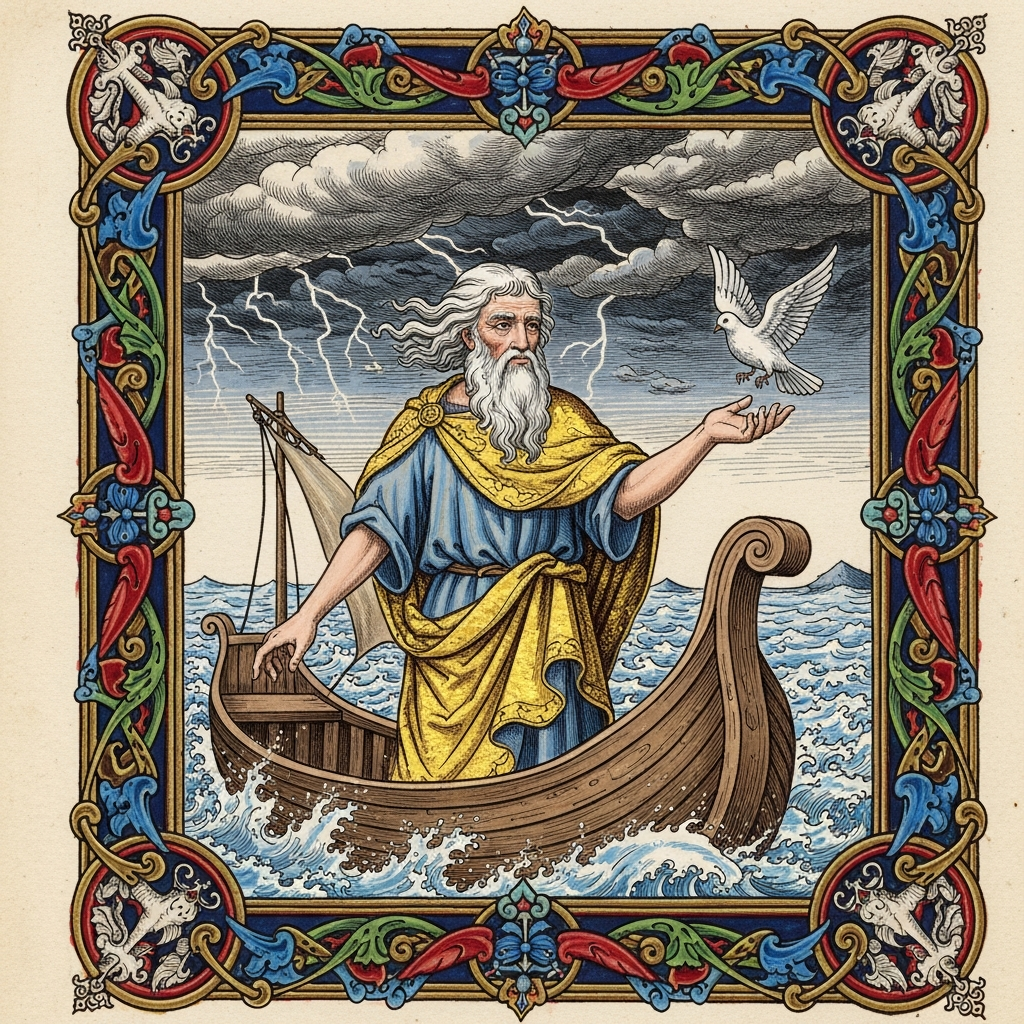
Combat Profile
Deluge's Mercy
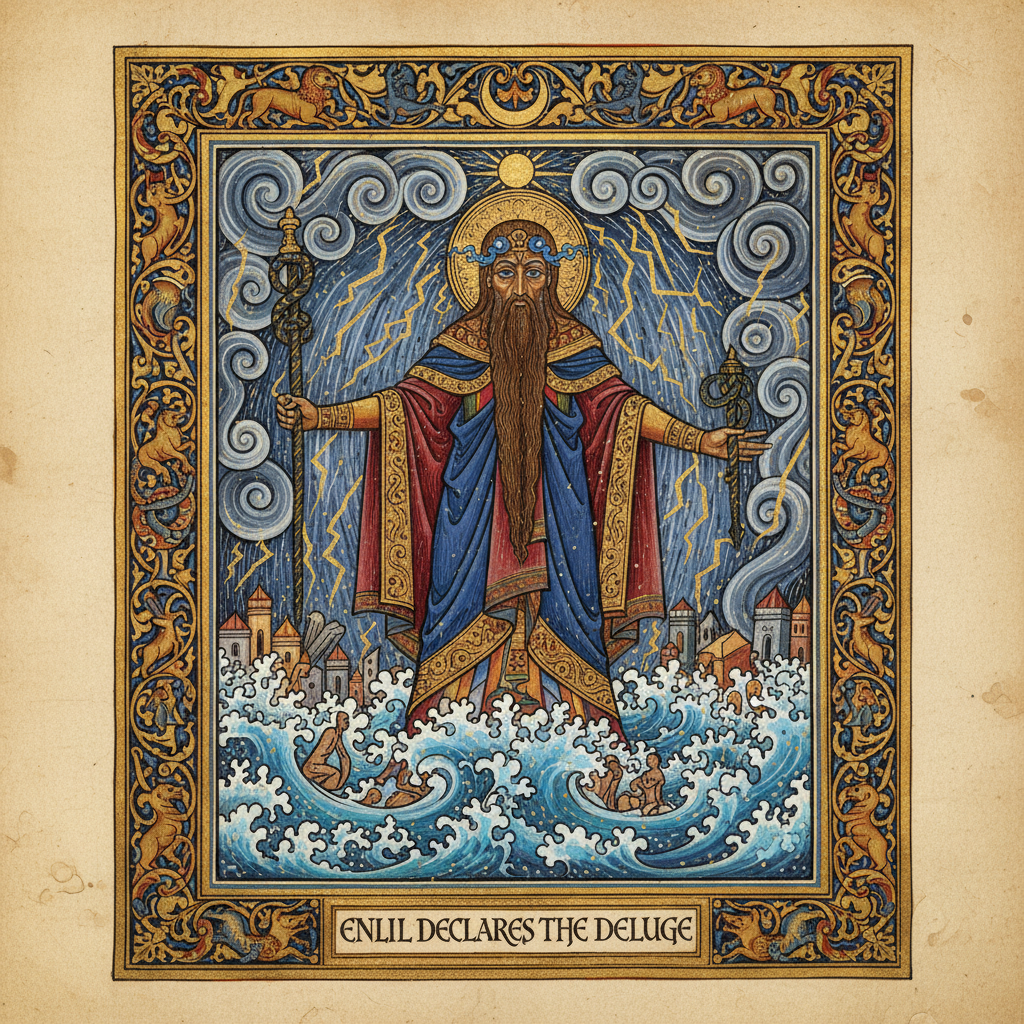
Utnapishtim summons a catastrophic flood that drowns foes but grants safe passage to the righteous, dealing massive damage while potentially sparing allies
Eternal Witness
Utnapishtim cannot be permanently killed and gains increasing power the longer he survives, reflecting his divine immortality granted by the gods
“Tear down the house and build a boat! Abandon wealth and seek living beings! Spurn possessions and keep alive living things! Load the seed of all living things into the boat.” — Enki to Utnapishtim (Gilgamesh XI)
Utnapishtim’s Flood account (Epic of Gilgamesh XI) is the single most important parallel between Mesopotamian and biblical literature. The correspondences are not thematic — they are structural and sequential: (1) the gods/God decide to destroy humanity (Epic of Gilgamesh XI), (2) one deity warns one righteous man (Epic of Gilgamesh XI; Atrahasis III), (3) he is told to build a specific boat, (4) he loads his family and animals, (5) the flood comes with devastating rain and storm, (6) the waters cover the earth (Epic of Gilgamesh XI), (7) the boat comes to rest on a mountain (Epic of Gilgamesh XI), (8) he sends out birds (dove, swallow, raven) to test for dry land (Epic of Gilgamesh XI), (9) he offers a sacrifice after disembarking, and (10) the gods/God smell the sacrifice and are pleased (Epic of Gilgamesh XI). This is not coincidence or archetype — this is literary dependence. The Genesis authors knew this story, likely encountered during the Babylonian Exile (6th century BCE), and rewrote it with YHWH as the sole divine actor (Genesis 6-9; Ezra 1).
1 min read
Epic of Gilgamesh XI; Atrahasis III